







From Ana María Regina Teuscher Perez to the mythical figure created by Antonio Velasco Piña: a journey through the recordings that transformed her story into music.
On October 2, 1968, Ana María Regina Teuscher Perez or Krüger, a first-year medical student at UNAM, died during the events that took place at the Plaza de las Tres Culturas in Tlatelolco. Documents later compiled by Mexico’s Federal Security Directorate list her among those who died and state that she was 19 years old. National Security Archive
There is also a haunting contemporary record. UNAM’s Historical Archive preserves a photograph published by Alerta magazine on October 12, 1968. It shows a young woman receiving medical attention at an emergency aid station. The caption identifies her as Ana María Teuscher Kruger and states that she died shortly afterward. The UNAM archive further identifies her as the student Ana María Regina Teuscher Kruger. IISUE UNAM
Her name, however, would take on a second life.
Nearly two decades later, writer Antonio Velasco Piña made Regina the central character of Regina: October 2 Is Not Forgotten, originally published in 1987. The novel transformed the political and social events of 1968 into an expansive narrative in which Mexican history intersects with Mesoamerican traditions, Tibetan Buddhism, ritual, spirituality, and the pursuit of a collective awakening. INBAL describes the work as a recreation of the 1968 student movement viewed primarily as a spiritual phenomenon. INBA
But the story of Regina did not remain confined to the pages of the book.
It also began to produce music.
Historical Regina / Literary Regina
It is important to distinguish between Ana María Regina Teuscher Krüger, the historical person, and Regina, the character constructed by Antonio Velasco Piña.
The Regina of Regina: October 2 Is Not Forgotten, by contrast, belongs to a literary construction that combines those historical events with a spiritual and mythical universe. Her training in Tibet, the lamas, her status as a dakini, the guardians of Mexican traditions, and her mission connected to the awakening of Mexico are all elements of Velasco Piña’s narrative. These elements recur throughout different editions of the novel and in institutional descriptions of the work. Google Books
This distinction is also essential when approaching the recordings that emerged later: rather than portraying the historical young woman, these musical works engage primarily with the mythical Regina constructed by the novel and, through her, with the memory of October 2.
One of the central places in this literary construction is Aldea de los Reyes, a small community in the State of Mexico. In the novel, Antonio Velasco Piña places Regina’s birth there on March 21, 1948, beneath the symbolic presence of Popocatépetl and Iztaccíhuatl. Her birth functions as a foundational episode, foreshadowing the spiritual mission the character would later undertake.
The connection between this place and the novel has endured beyond the pages of the book. In the community, a brick building bears a ceramic tile plaque with the inscription: “REGINA was born in this house at 12 noon on March 21, 1948.”
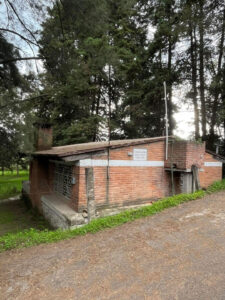
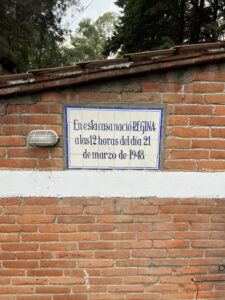
Photographs by Memo Constatino Quiroz
The site is particularly significant because it shows how the universe of the novel eventually extended into a physical space: a setting from the narrative that was later transformed into a site of memory associated with Regina.
Regina: October 2 Is Not Forgotten
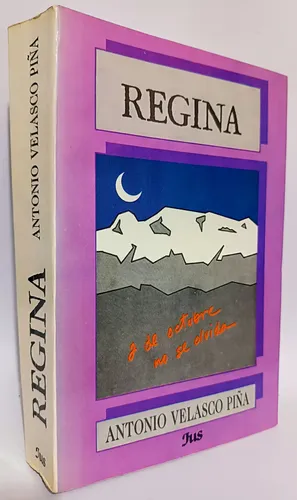
Published in 1987, Regina: October 2 Is Not Forgotten became Antonio Velasco Piña’s best-known and most frequently reissued work. INBA
The novel freely reconstructs Regina’s life and connects it with some of the defining events of the Mexican student movement of 1968.
In the narrative, Regina spends part of her formative years in Tibet, where she comes into contact with Eastern spiritual traditions. Upon returning to Mexico, she finds a country that, from the novel’s perspective, has lost its connection with its ancient sacred traditions.
The student movement is therefore presented not only as a political and social movement, but also as part of a process of transformation of consciousness.
Velasco Piña constructs a complex symbolic system around Regina in which Tibetan and Mesoamerican traditions, rituals, energy centers, pre-Hispanic figures, and the so-called Four Guardians of the Tradition converge.
The historical settings of the 1968 movement—Ciudad Universitaria, the demonstrations, the Zócalo, and ultimately Tlatelolco—thus coexist with a second, spiritual geography. The table of contents and text of different editions include chapters such as The Battle of Silence, The Sacred Name, The Feast of Victory, The Trial by Fire or the Massacre, The Legacy of Cuauhtémoc, The Celestial Queen, and The Sacrifice. Google Books
Within this interpretation, Regina’s death on October 2 becomes a sacrifice intended to awaken a collective consciousness.
This distinctive combination of history, fiction, and spirituality would ultimately create an imaginary world of its own. And within it, music would come to occupy a surprisingly important place.
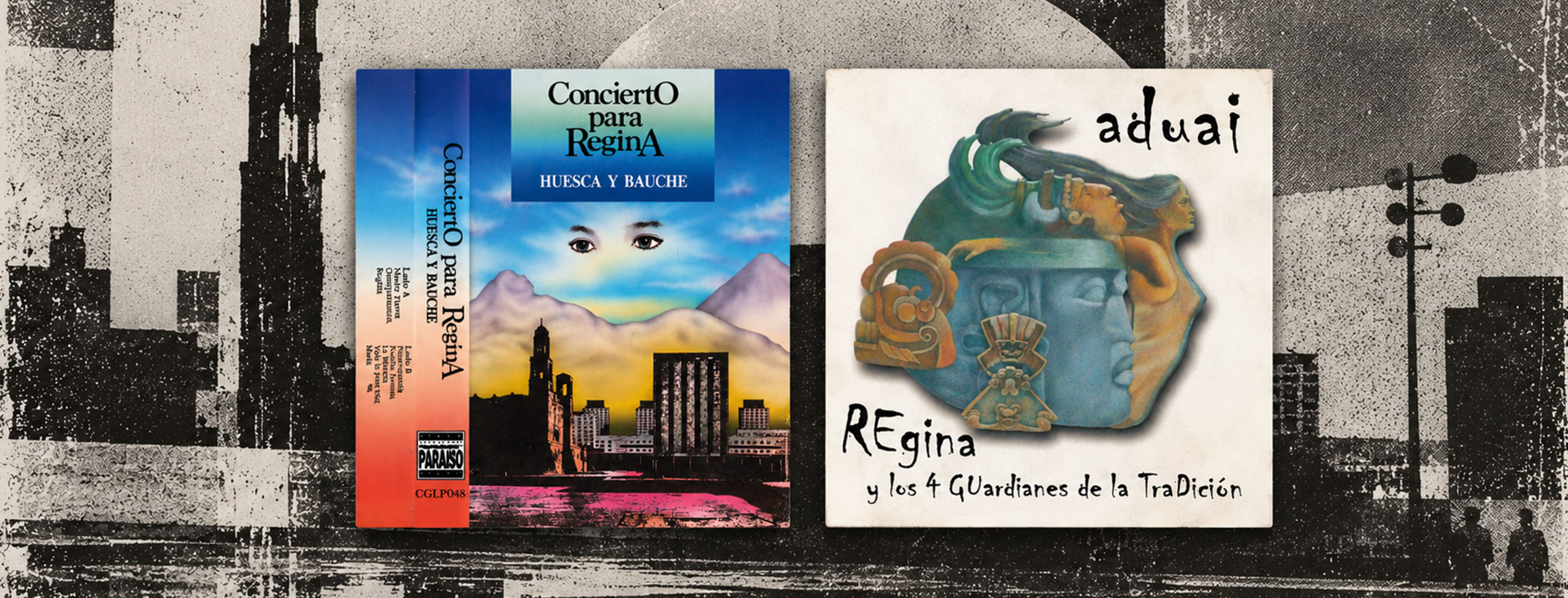
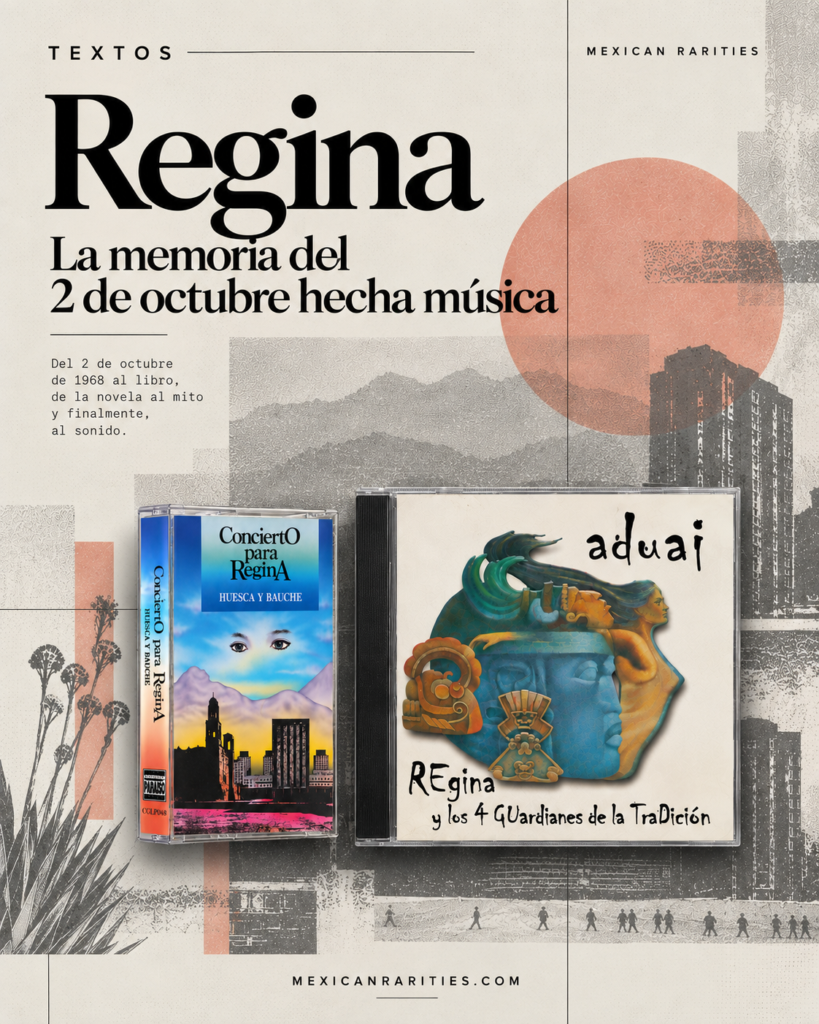
Huesca y Bauche — Concierto para Regina
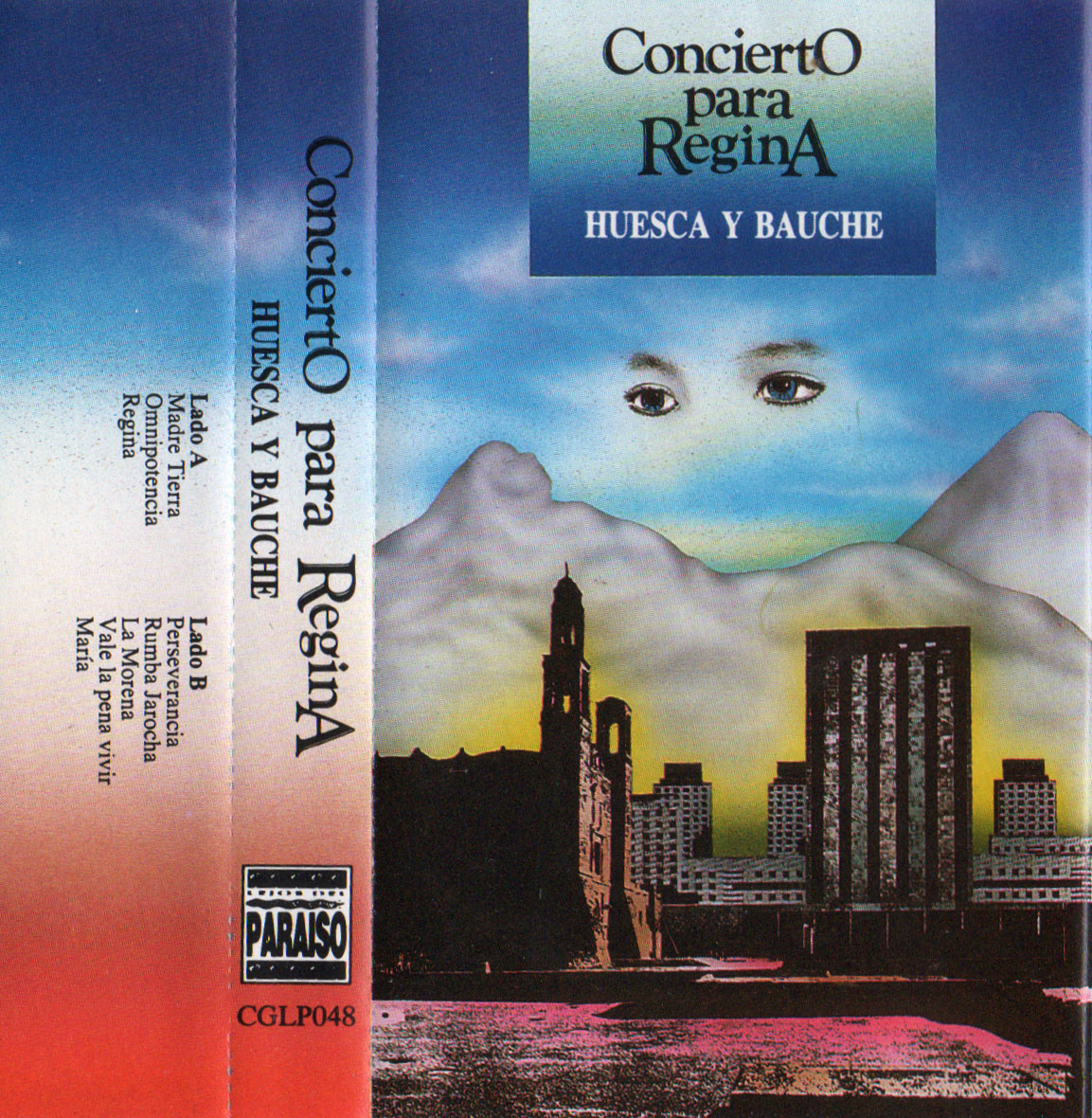
One of the earliest musical manifestations of this universe that we have been able to document appeared in the early 1990s:
Huesca y Bauche — Concierto para Regina.
The album was released by Grabaciones Lejos del Paraíso in 1992, although the credits on the release itself indicate that it was recorded in October 1989 at Metztli studio in Mexico City.
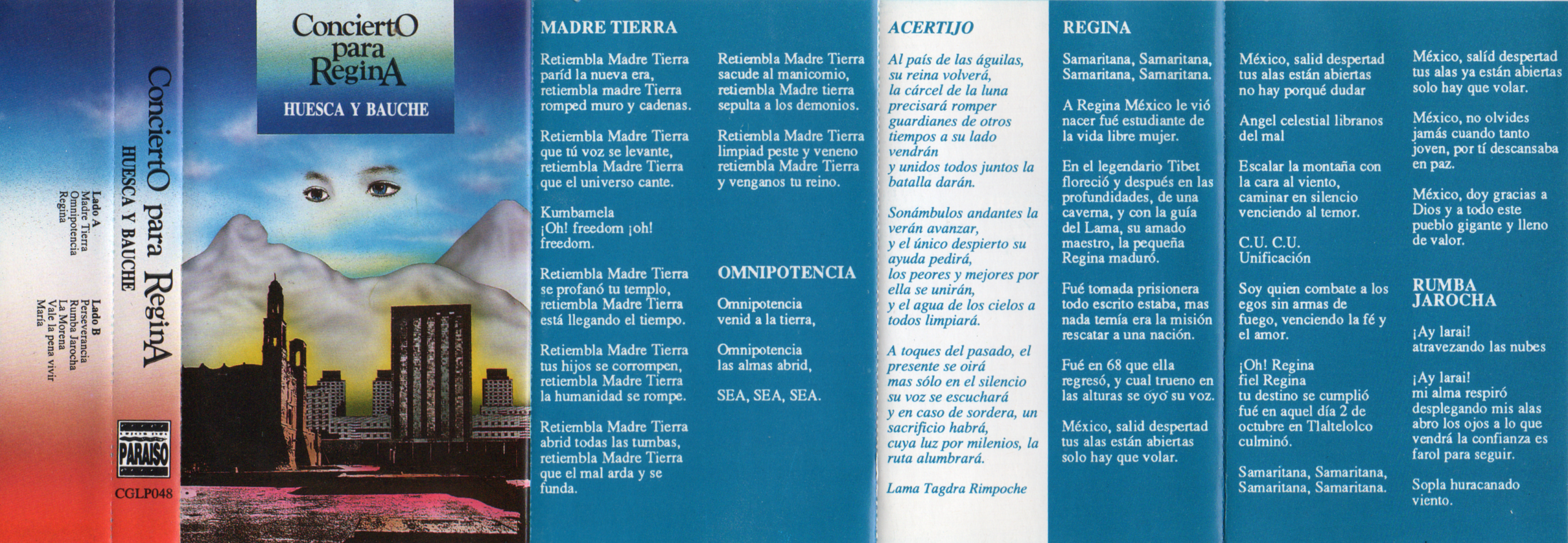 The compositions and musical arrangements are credited to Huesca y Bauche.
Hugo Huesca is credited with harp, violin, jarana, concert guitar, acoustic guitar, electric bass, Indigenous flute, congas, snare drums, drums, Indigenous percussion, keyboards, and harmonica.
Federico Luna plays electric bass and keyboards, while “El Maqui” is credited with guitarrón.
Vocals on “Regina” and “Madre Tierra” are performed by María Karunna; Maya Hill also contributes vocals on “Regina,” while José Roberto Hill provides the character’s spoken voice.
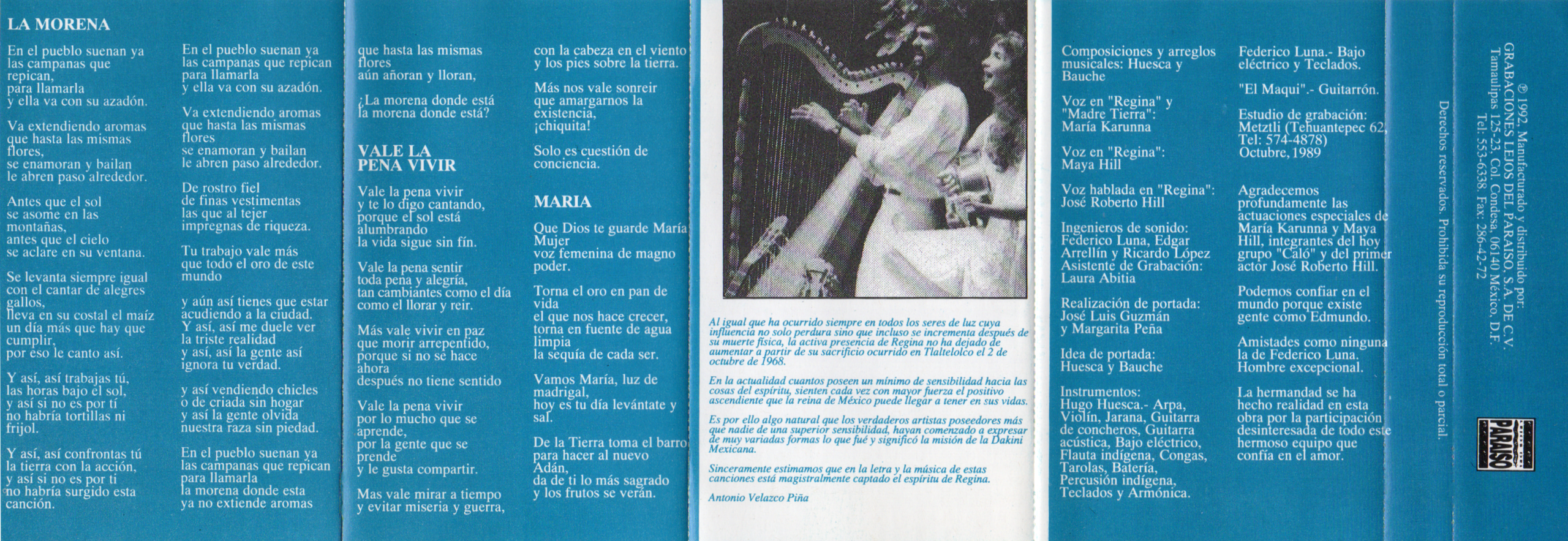
The recording brings together instruments associated with different traditions: harp, violin, jarana, and guitarrón coexist with Indigenous flute and percussion, electric bass, drums, and keyboards. Rather than attempting to reconstruct pre-Hispanic music, the album creates a hybrid space in which the traditional, the popular, the electronic, and the spiritual can coexist.
The pieces included on the album explore several of the central themes in Velasco Piña’s universe.
In “Madre Tierra”, for example, ideas of transformation, nature, and renewal emerge. “Acertijo” makes direct reference to the guardians, while “Regina” returns to the character and her symbolic relationship with Mexico.
The album also includes a text signed by Antonio Velasco Piña himself.
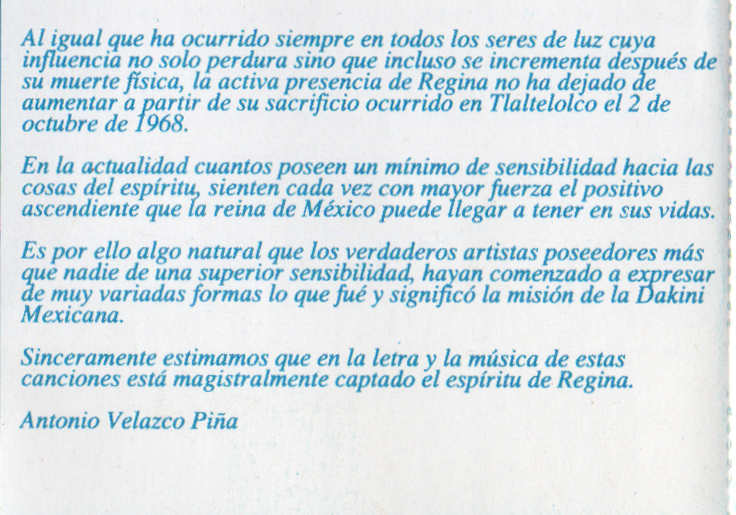
In it, the writer once again presents Regina’s death as a sacrifice that took place in Tlatelolco and states that her spiritual influence would continue beyond 1968.
This makes Concierto para Regina more than an album loosely inspired by a novel: it forms part of the expansion of Regina’s universe beyond the book itself.
There is also a particularly significant historical connection.
Margarita Bauche was involved in the 1968 student movement and took part musically in protests and demonstrations during that period. Years later, her voice and work would appear within a project devoted precisely to a spiritual reinterpretation of those events. Wikipedia
Historical memory, generational experience, and the later construction of the myth ultimately converge within a single recording.
Aduai — Regina y los 4 Guardianes de la Tradición
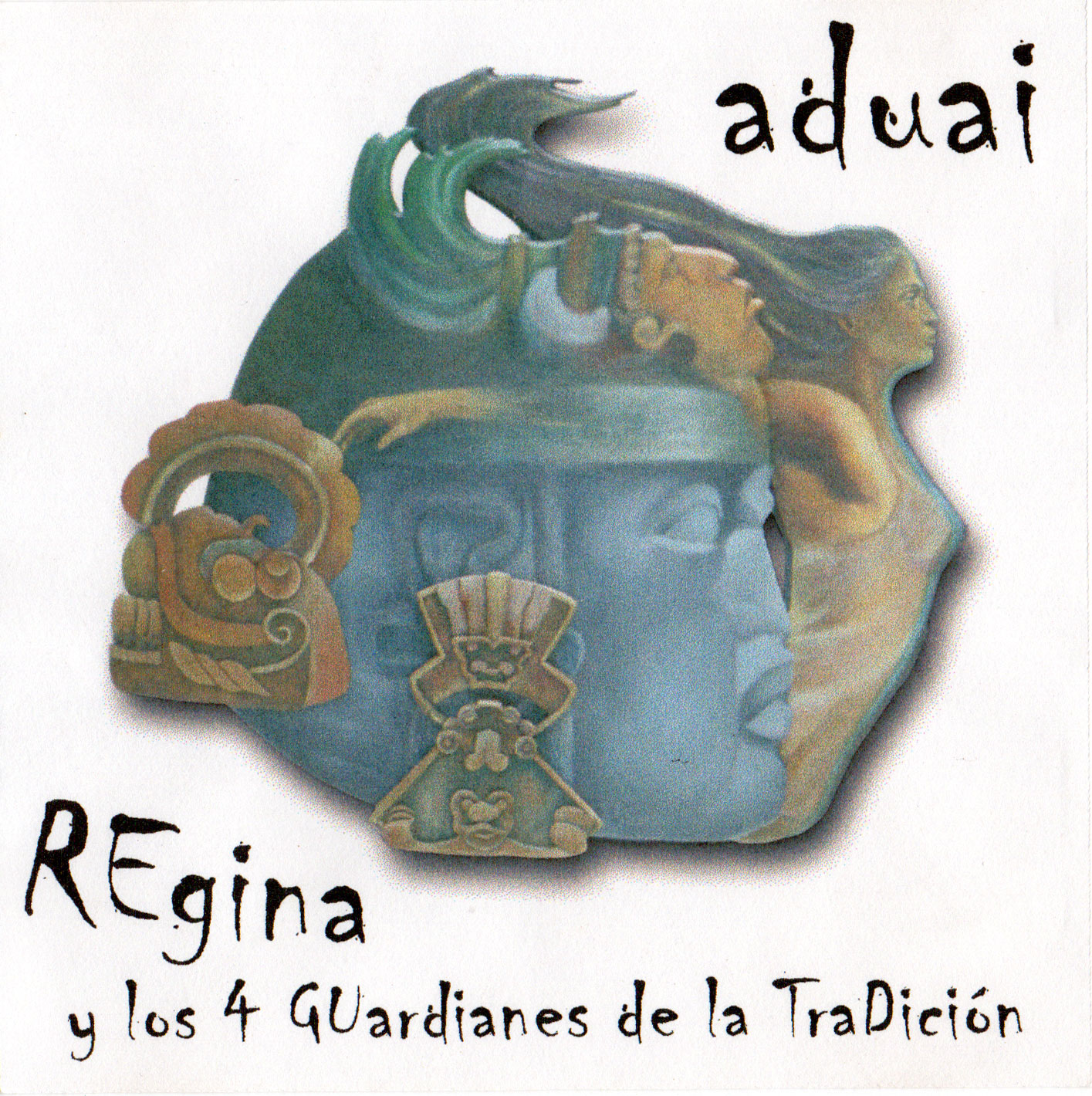
Another musical interpretation takes Regina’s imaginary world into an even more abstract territory.
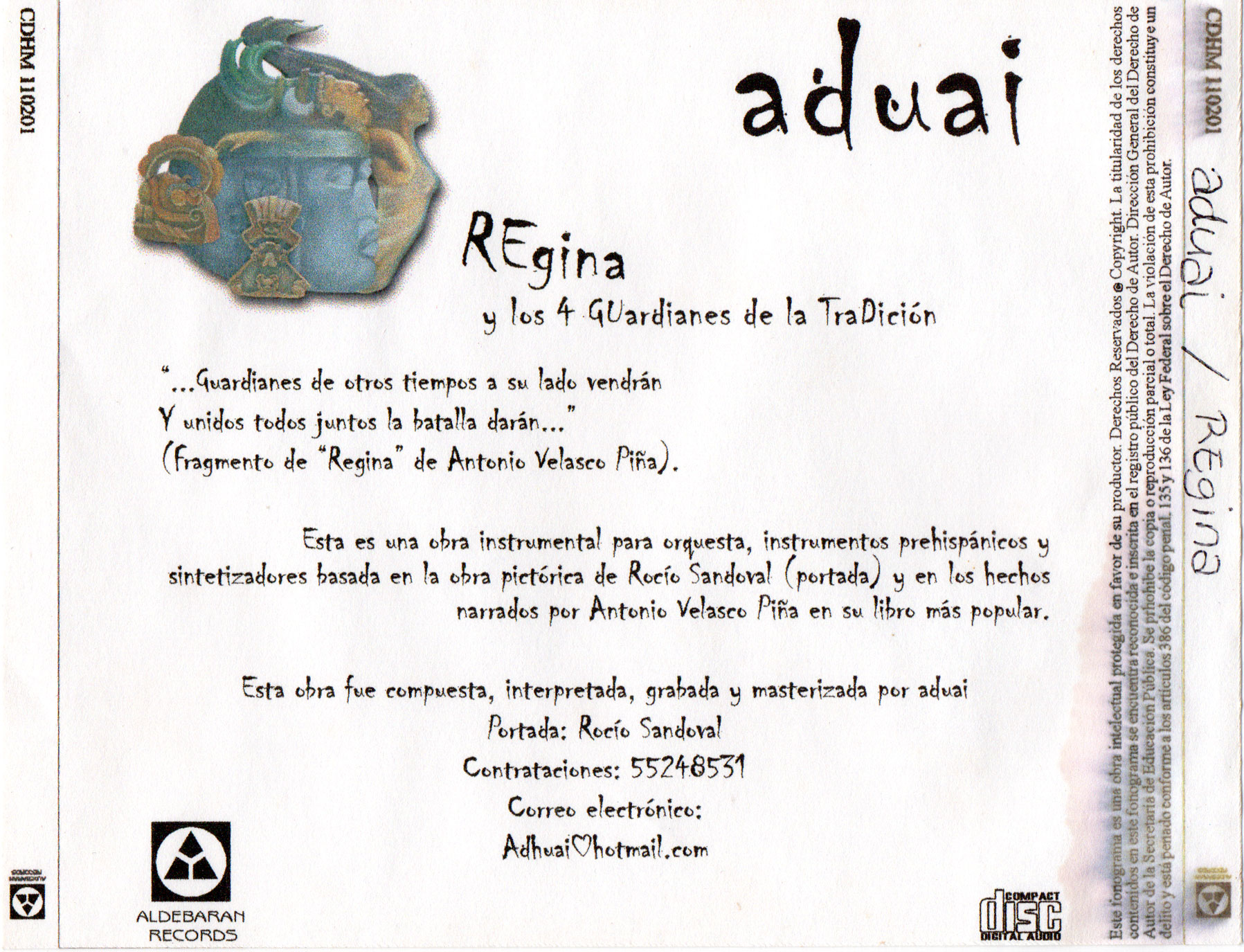
Regina y los 4 Guardianes de la Tradición, by Aduai, was released by Aldebarán Records and, as stated on its own back cover, establishes a direct connection with Velasco Piña’s work.
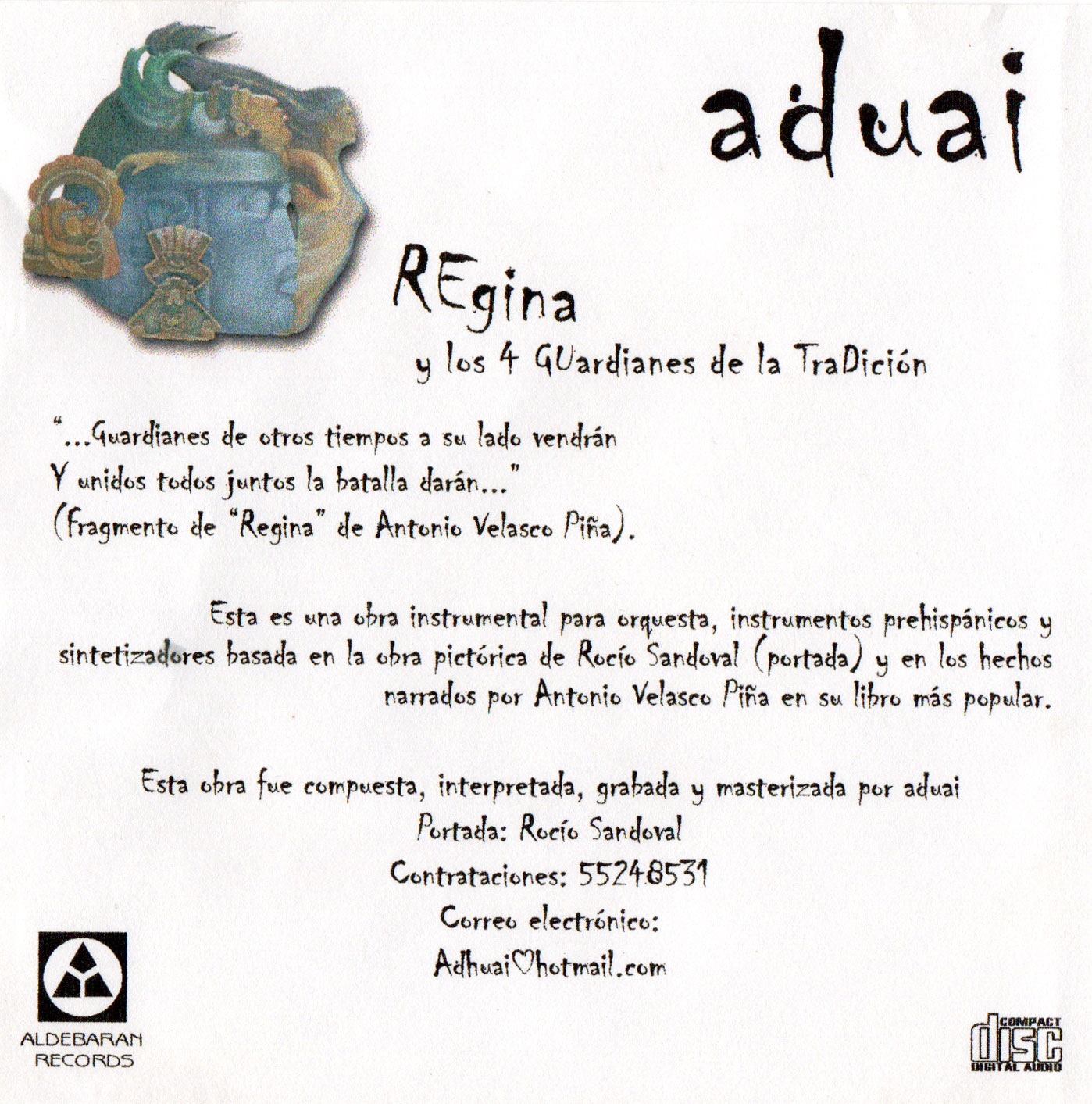
The album describes itself as an:
“instrumental work for orchestra, pre-Hispanic instruments, and synthesizers”
based on Rocío Sandoval’s artwork featured on the cover and on the events narrated by Antonio Velasco Piña.
The work was composed, performed, recorded, and mastered by Aduai.
Unlike Huesca y Bauche’s work, the song-based structure disappears here, giving way to an instrumental composition.
Orchestra. Pre-Hispanic instruments. Synthesizers.
Three sonic worlds—and, symbolically, three different temporalities—are layered together: a pre-Hispanic past reinterpreted through its instruments, the Western orchestral tradition, and contemporary electronic technology.
The title directly references one of the central elements of Velasco Piña’s narrative universe: the Four Guardians of the Tradition.
The back cover also includes an excerpt from the novel:
“Guardians from other times will come to her side / and together, united, they will fight the battle…”
If Concierto para Regina still remains close to song and popular music, Aduai seems to be pursuing something else: turning Regina’s spiritual world into a sonic space.
The synthesizers create atmospheres; the orchestra provides a narrative and monumental dimension; and the pre-Hispanic instruments serve as a link to the past that the novel itself seeks to recover.
The music stops telling Regina’s story literally and instead attempts to represent its ritual dimension.
Excerpt from the work, whose complete duration is 14:26 minutes.
Juan Gaspar — A Regina
The musical universe that emerged around Regina also found its way into the realm of concert guitar.
Mexican composer and guitarist Juan Gaspar created A Regina, a suite for guitar explicitly based on Antonio Velasco Piña’s Regina: October 2 Is Not Forgotten. The work was published by VP Music Media, whose catalog lists it as A Regina for guitar.
VP Music Media — Juan Gaspar catalog
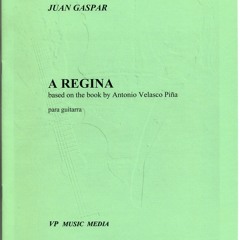
The publisher also preserves a recording of the work performed by Juan Gaspar, presented as a suite divided into three movements:
1. Vino con la primavera
2. Un ángel se la llevó
3. La flor en la nieve
The description accompanying the recording establishes a direct narrative relationship between each movement and Regina’s story. Vino con la primavera represents her birth in spring; Un ángel se la llevó, her death during the 1968 student movement; and La flor en la nieve, the image of Regina resting eternally somewhere on Iztaccíhuatl, where her friends bring flowers in her memory.
Listen to A Regina by Juan Gaspar on SoundCloud
The structure is particularly interesting because it condenses some of the story’s fundamental moments into three movements: birth, death, and enduring memory.
The composition was documented not only as a score and digital recording. A UPAEP publication dated February 2007 mentions a Juan Gaspar album that brought together works such as “Reminiscencias,” “A Regina,” and “Estilos.” The same source describes his compositions as a means of expressing experiences, memories, and impressions.
View the February 2007 UPAEP publication
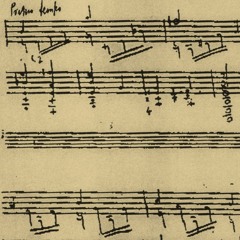
A Regina thus offers a very different approach from the previous works. In contrast to Huesca y Bauche’s combination of song, traditional and electric instruments, or Aduai’s world of orchestra, pre-Hispanic instruments, and synthesizers, Juan Gaspar reduces Regina’s soundscape to the intimacy of the guitar.
There is no need to represent the novel’s entire complex spiritual system. The three movements function as musical scenes: her arrival with spring, her death in 1968, and finally, the poetic image of a flower placed in the snow of Iztaccíhuatl.
A Soundtrack for Reading Regina
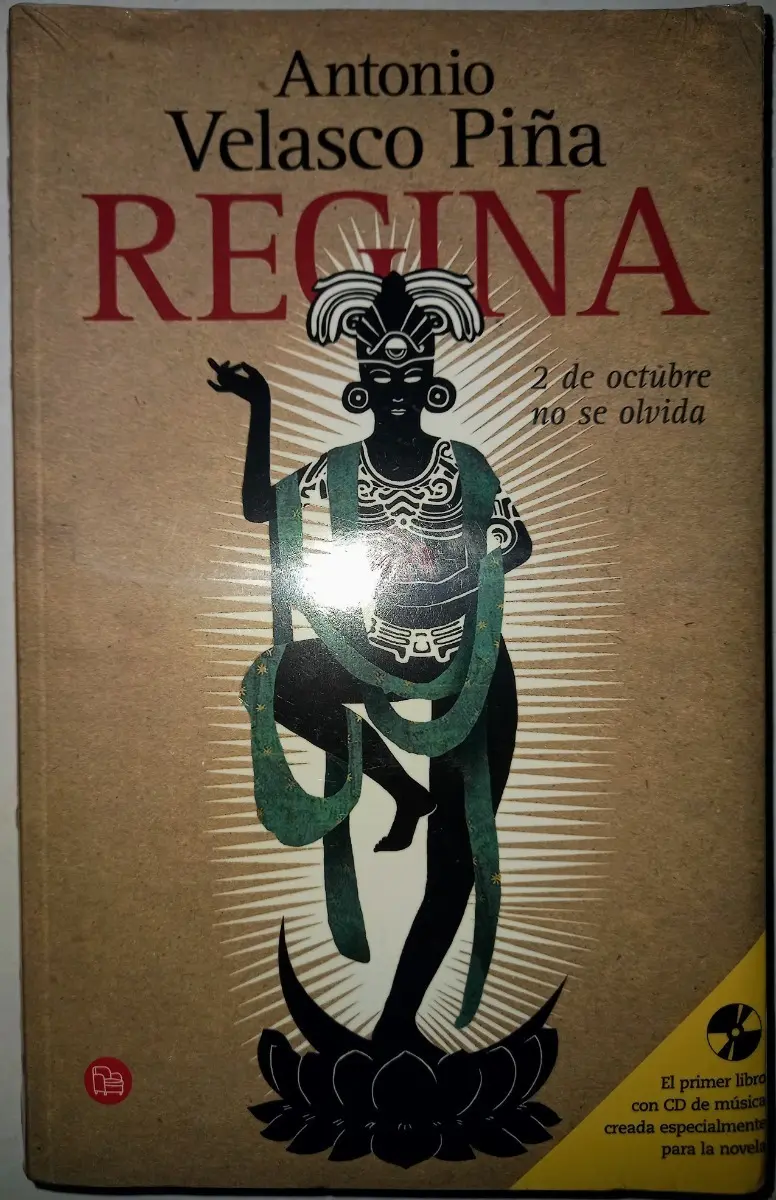
The relationship between the novel and music would later take an even more direct form.
Some editions of Regina: October 2 Is Not Forgotten were released with a CD conceived as a soundtrack for the book.
The music was created by Víctor Ávila Uribe and Santiago Ramírez Páez.
Unlike Concierto para Regina and Regina y los 4 Guardianes de la Tradición, the recording does not appear here as an independent work subsequently inspired by the character.
Its purpose is to directly accompany the reading experience.
The concept of a Book Soundtrack proposes a distinctive experience: transforming the book into a work that is not only read, but can also be listened to.
The instrumental music creates a parallel soundscape for the places, rituals, characters, and spiritual states described by Velasco Piña.
The relationship is reversed.
First, the novel produced an imaginary world capable of generating music. Now, that music returned physically to the book to become part of the reading experience.
The novel had acquired a soundscape of its own.
Regina: A Musical for a Nation Awakening
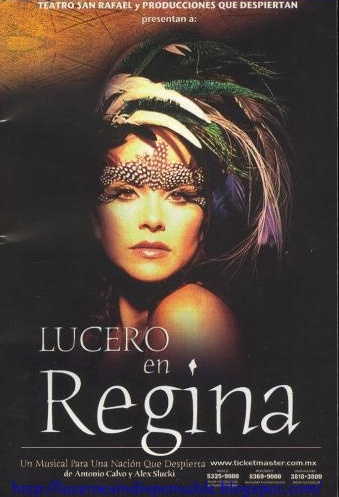
In 2003, Regina’s musical universe made the leap toward its most commercial expression.
On March 21 of that year, Regina: A Musical for a Nation Awakening premiered at the Teatro San Rafael in Mexico City. Based on Antonio Velasco Piña’s novel, the production starred Lucero in the title role. Contemporary press coverage documented both the premiere and Lucero’s performance as Regina. El Universo
The music and libretto were associated with Antonio Calvo, with Alex Slucki also contributing to the development of the production. Contemporary sources from 2003 document both of them as part of its creative team. La Jornada
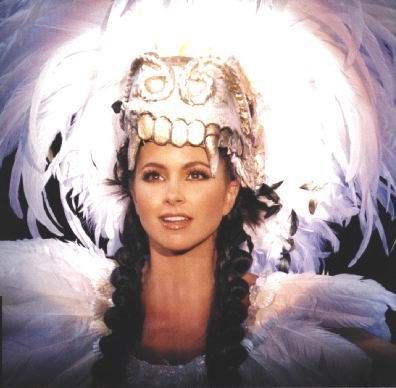
The universe that Huesca y Bauche had brought into the realm of song and Indigenous instruments, and that Aduai had transformed into an instrumental and electronic experience, finally enters the world of large-scale musical theater.
Regina literally acquires a voice and a body on stage.
The story can now be represented through actors, songs, choreography, sets, and spectacle.
The project also produced a musical recording featuring songs such as Ciudad inhumana, Digan por qué, Hechizo de luna, Lama la, Luz de mi verdad, Viva Regina, La cárcel de China, Gloria, Libres, Amanecer, Con un solo pensamiento, and Mira con los ojos de la esencia.
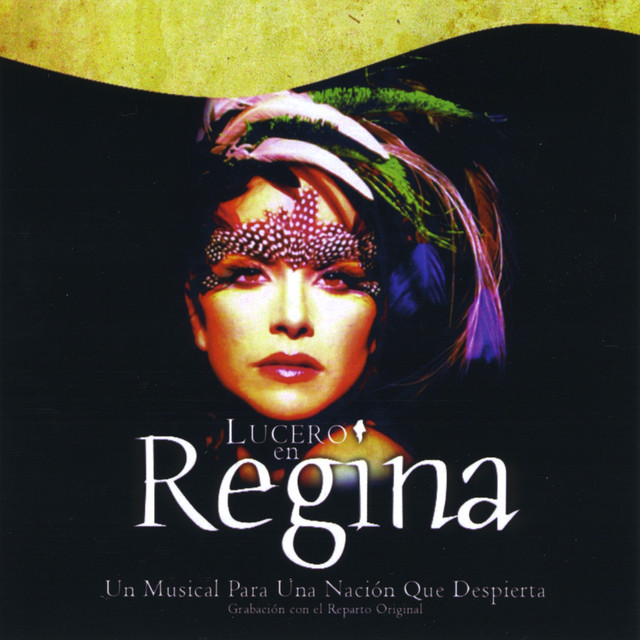
The distance from the young woman who died in Tlatelolco in 1968 is enormous at this point.
Thirty-five years later, Regina had become the protagonist of a musical.
But it is precisely this distance that reveals just how far the imaginary world constructed around her name had expanded.
Cosmic Love Regina — Regina Arrives in Japan
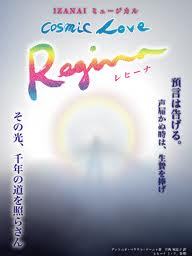
Regina’s musical story did not end in Mexico. Five years after the 2003 Mexican musical, the character reached the stages of Japan through a new production developed by SUGA IZANAI, known as Cosmic Love Regina.
The origins of the project can be traced back to 2006, when Yuichiro Kunitomo encountered Regina’s story through a kamishibai, a Japanese form of storytelling accompanied by illustrations. The encounter led him to read the novel and, in September 2007, to travel through Mexico for ten days with Suga Kunitomo. During their journey, they visited places associated with the world of Regina, including Palenque, Teotihuacán, Tlatelolco, and Aldea de los Reyes. They also met Chieko Takenishi, the translator of the novel into Japanese.
Yuichiro Kunitomo — account of the encounter with Regina and the trip to Mexico
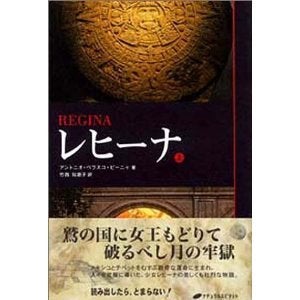
During that trip, they also met Antonio Calvo, composer and creative force behind the Mexican musical, and later Antonio Velasco Piña. According to Kunitomo’s account, Calvo gave them permission to use the songs and materials associated with his production. After returning to Japan, work began on IZANAI Musical Regina, which was later documented as Cosmic Love Regina.
The production began performances in 2008 and toured Japan between 2008 and 2009. Suga Kunitomo was responsible for the script, direction, and choreography, while Hiroki Okano oversaw the musical production and direction. Musicians and composers associated with the project included AIKA, Pauchi Sasaki, K. Alan Roth, and Lei’ohu. Yuichiro Kunitomo portrayed Regina and also contributed to the choreography and served as assistant director.
Yuichiro Kunitomo — memories of IZANAI Musical Regina
Hiroki Okano — music direction work

The tour brought the production to several cities across Japan. Documented performances took place in Sasebo, Niigata, Wakayama, Iwakuni, Kochi, and Kagawa between December 2008 and April 2009.
Cosmic Love Regina — credits and dates for the Japanese production
Regina’s arrival in Japan was also documented in academic research. In 2012, Lizette Y. Campechano Moreno examined the phenomenon in Cuicuilco, an academic journal then published by Mexico’s National School of Anthropology and History. Her research notes that Velasco Piña’s novel had found followers in Japan and had been adapted for the stage under the title Cosmic Love Regina.
The article also analyzes a Japanese image from 2009 featuring an actress portraying Regina, the banner of the María Regina Conchero dance group, and flowers beside a memorial stele in Tlatelolco. The combination is significant: Mexico, Japan, the literary character, spirituality, and the memory of 1968 are brought together within a single representation.
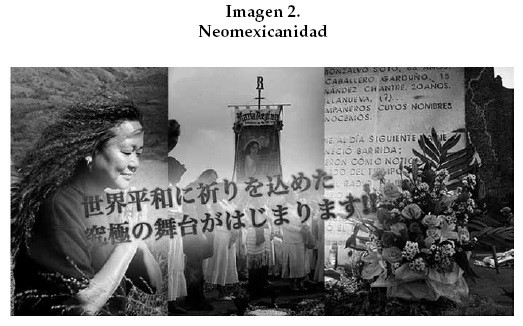
Campechano situates this appropriation within neo-Mexicanism, characterized by the combination of pre-Hispanic Mexican references with different spiritual traditions and elements associated with the New Age. From this perspective, Regina’s journey to Japan shows how the universe constructed by Velasco Piña could acquire new meanings when brought into contact with a different cultural context.
The Japanese adaptation thus represents another transformation of the character. Regina had not only moved from the novel into music and from music onto the stage: her imaginary world was now crossing borders, reinterpreted through music, dance, and spirituality within a different cultural context.
In Cosmic Love Regina, the myth had not only acquired a sound.
It had begun to travel.
Citlalmina — When Regina Became Dance
The universe that emerged around Regina also found expression beyond records and musical theater: Citlalmina, a practice developed by Nicolás Núñez and UNAM’s Taller de Investigación Teatral (Theater Research Workshop) through the encounter between Mexican Conchero dance and the Tibetan Black Hat Dance.
Citlalmina’s connection to Regina was documented in Yanitsa Ixtlaccihuatl Buendía de Llaca’s research on the movement that emerged around the work of Antonio Velasco Piña. The author identifies Citlalmina as a characteristic dance of the Regina movement and documents its practice within this context, while noting that Núñez was not himself directly part of the movement.
Yanitsa Ixtlaccihuatl Buendía de Llaca — research on the Regina movement
Reference archive and images:
Núñez Archive — Citlalmina / University of Huddersfield
Citlalmina is particularly interesting within this history because it possesses a sonic structure of its own. Eilon Morris’s documentation describes an opening with conch shells (atekokoli) and vibratory chanting, followed by cycles of Conchero and Tibetan dance. Drums appear in some cycles, and certain performances conclude with a traditional Nahuatl chant dedicated to Tloque Nahuaque, although Morris notes that this chant is not a fixed element of the practice.
Watch audiovisual documentation of Citlalmina
The recording is particularly valuable because it makes it possible to hear Citlalmina’s soundscape: conch shells, percussion, voice, rhythm, and movement all form part of the same ritual structure.
The connection became visible once again on October 2, 2018, when Citlalmina was included in Flores y Cantos por la Memoria (Flowers and Songs for Memory), an event held at the Plaza de las Tres Culturas to commemorate the fiftieth anniversary of Tlatelolco. The program brought together ceremonies, dance, and music, with Citlalmina, performed by Nicolás Núñez’s group, announced among the first activities of the day.
La Jornada — October 2, 2018 commemoration
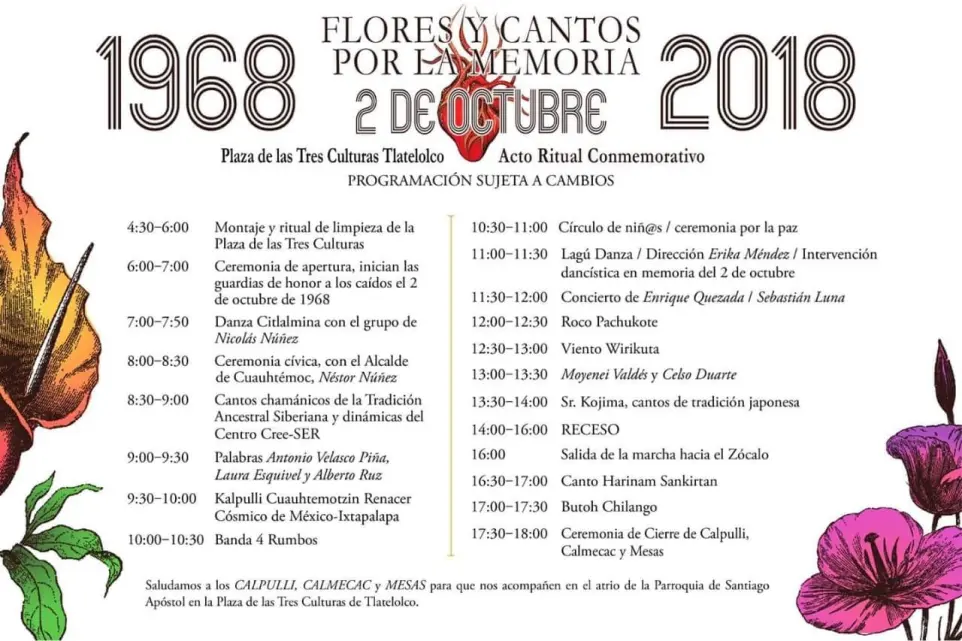 Poster and reference material:
Flores y Cantos por la Memoria — poster and program
The connection to Regina was not accidental. Alberto Ruz Buenfil later recounted that Antonio Velasco Piña had asked him to organize the gathering and linked its purpose to the memory of “October 2 is not forgotten” present in his work.
Alberto Ruz Buenfil — El Correo de los Cuatro Vientos: Ecos de Tlatelolco
Citlalmina thus occupies a singular place within this journey. It is neither a record about Regina nor a musical adaptation of the novel, but rather a bodily, sonic, and ritual practice that eventually became connected to the movement that emerged around Velasco Piña’s books.
In 2018, fifty years after Tlatelolco, Citlalmina returned to the Plaza de las Tres Culturas.
A Memory That Changes Its Sound
Taken together, these works are not simply adaptations of the same book. They are different ways of imagining Regina through sound.
Song, guitar, orchestra, pre-Hispanic instruments, synthesizers, musical theater, dance, and ritual all become part of the same journey. The languages and contexts change—even the country—but a common pursuit remains: to make perceptible concepts that are essentially invisible in the novel.
Consciousness.
Memory.
Tradition.
Sacrifice.
Awakening.
The coexistence of seemingly distant elements—pre-Hispanic instruments and synthesizers, Tibetan spirituality and Mesoamerican traditions, popular music and ritual—does not arise solely from the musicians.
The mixture is already contained within the novel.
The music simply makes it audible.
From October 2 to Sound
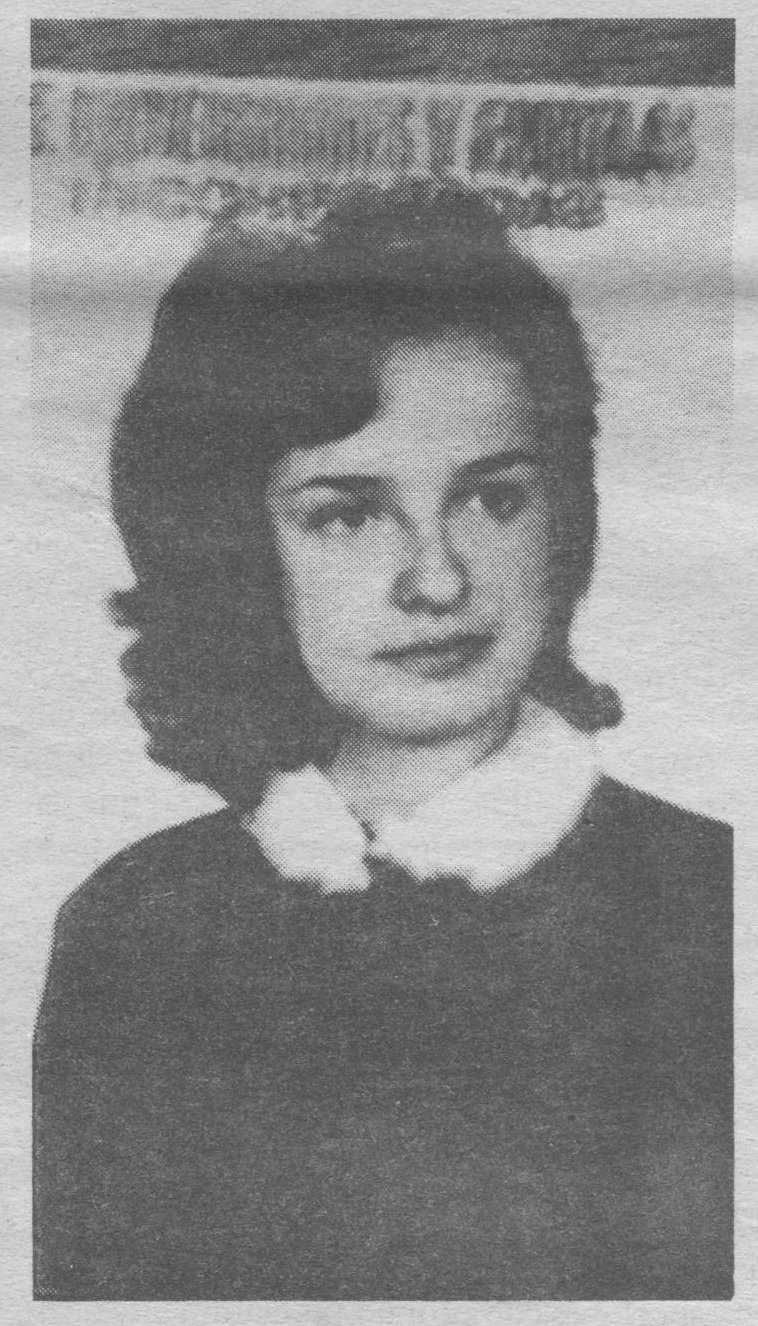
At sixteen, three years before her death…
Before the novel, before the records, and before the musical, there was Ana María Regina Teuscher Krüger.
She was 19 years old, studied medicine at UNAM, and died in Tlatelolco on October 2, 1968. The historical record allows us to state that much with certainty. National Security Archive
Then another Regina emerged.
The one Antonio Velasco Piña constructed in 1987 from that historical figure, transforming her into the protagonist of a narrative about spirituality, Mexican identity, and collective awakening. A work that INBAL itself recognizes as difficult to place within the conventional boundaries between history and narrative. INBA
And then yet another Regina emerged.
Regina in sound.
The one who sings.
The one who speaks among jaranas, harps, and percussion.
The one who emerges among pre-Hispanic instruments and synthesizers.
The one who transforms three moments of her story into a guitar suite.
The one who accompanies the reading of a novel from a CD.
The one who takes the stage as a musical.
The one who travels all the way to Japan.
And the one who ultimately finds another form of existence through dance, body, and ritual.
More than half a century after October 2, these recordings can be heard as documents of another history: the history of the ways in which cultural memory transforms an event, interprets it, mythologizes it, and transmits it anew.
Separating the historical young woman from the literary character does not diminish the interest of these works. On the contrary, it allows us to understand more clearly the complex journey that transformed a victim of Tlatelolco into a recurring figure within a small but singular body of Mexican music.
A story that begins on October 2, 1968.
Then it becomes a book.
Then a myth.
Then sound.
And it continues to transform.