







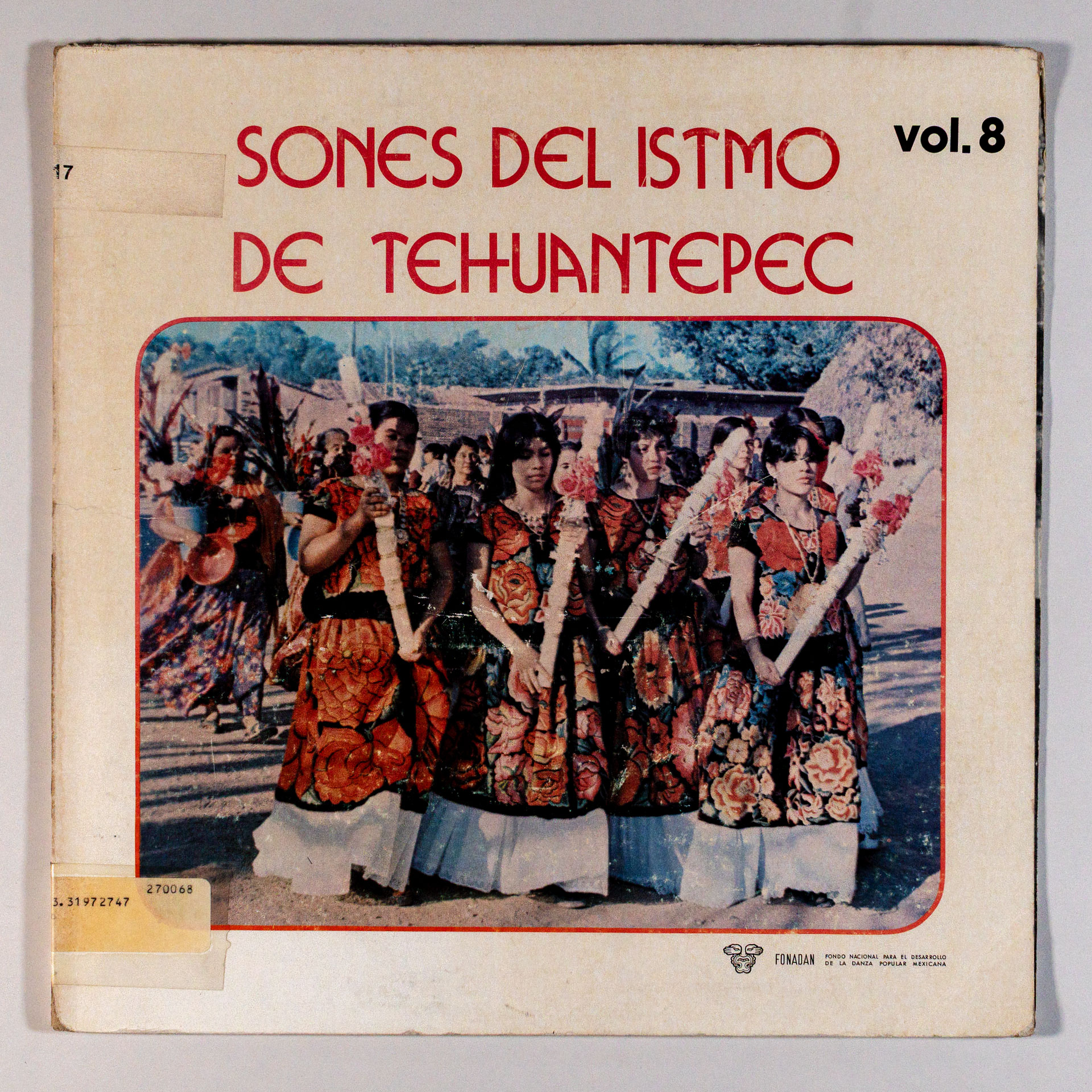
SONES FROM ISTHMUS OF TEHUANTEPEC
FONADAN
|
Label: FONADAN MC-1176 Format: Vinyl LP Album 12" 33 1/3 rpm Gatefold Compilation |
Country: Mexico Genre: Folk World & Country |
Info:
SONES FROM ISTHMUS OF TEHUANTEPEC
VOL. 8
FONADAN
National Fund for the Development of Mexican Popular Dance.
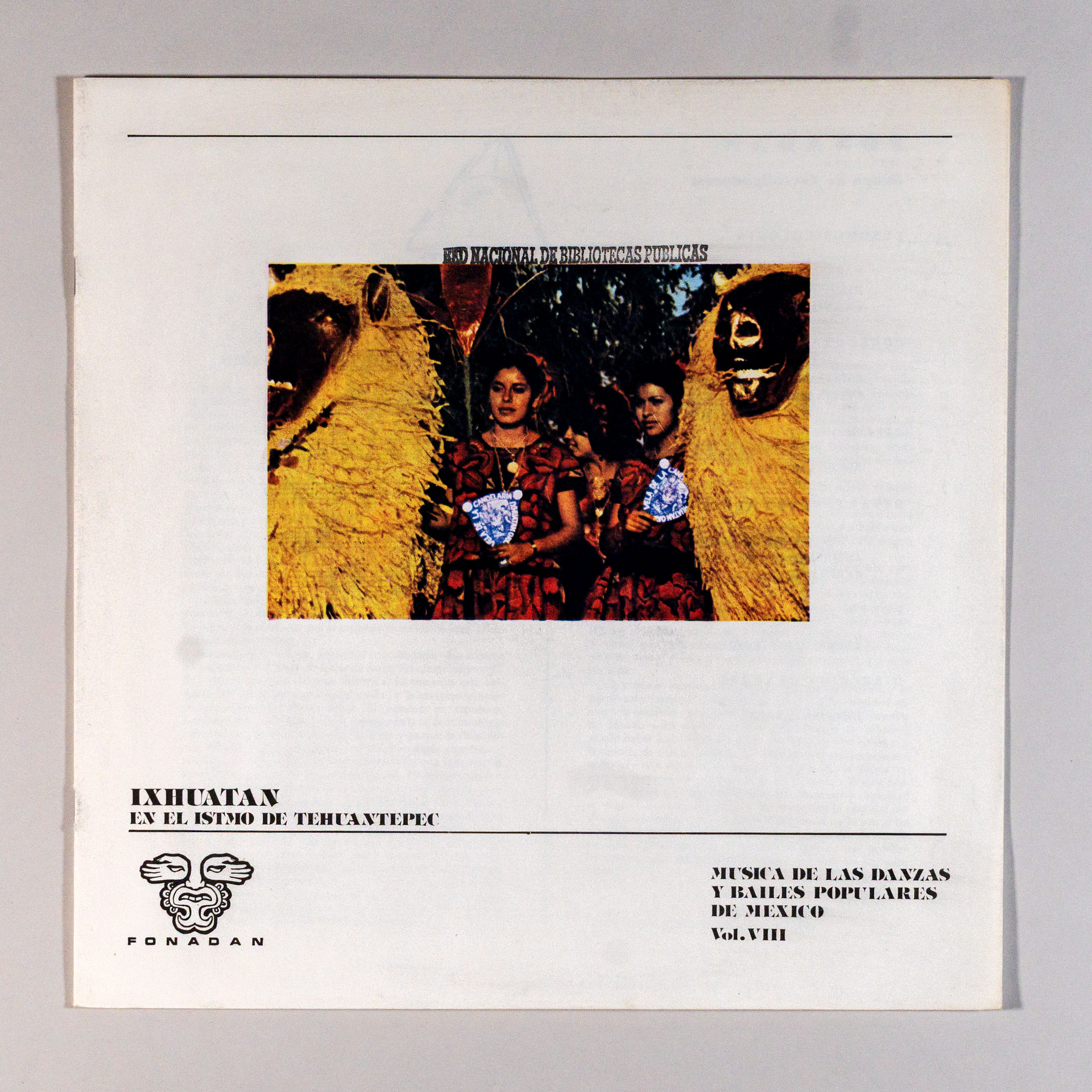
IXHUATAN
ON THE ISTHMUS OF TEHUANTEPEC
MÚSICA DE LAS DANZAS Y BAILES POPULARES DE MÉXICO
FONADAN
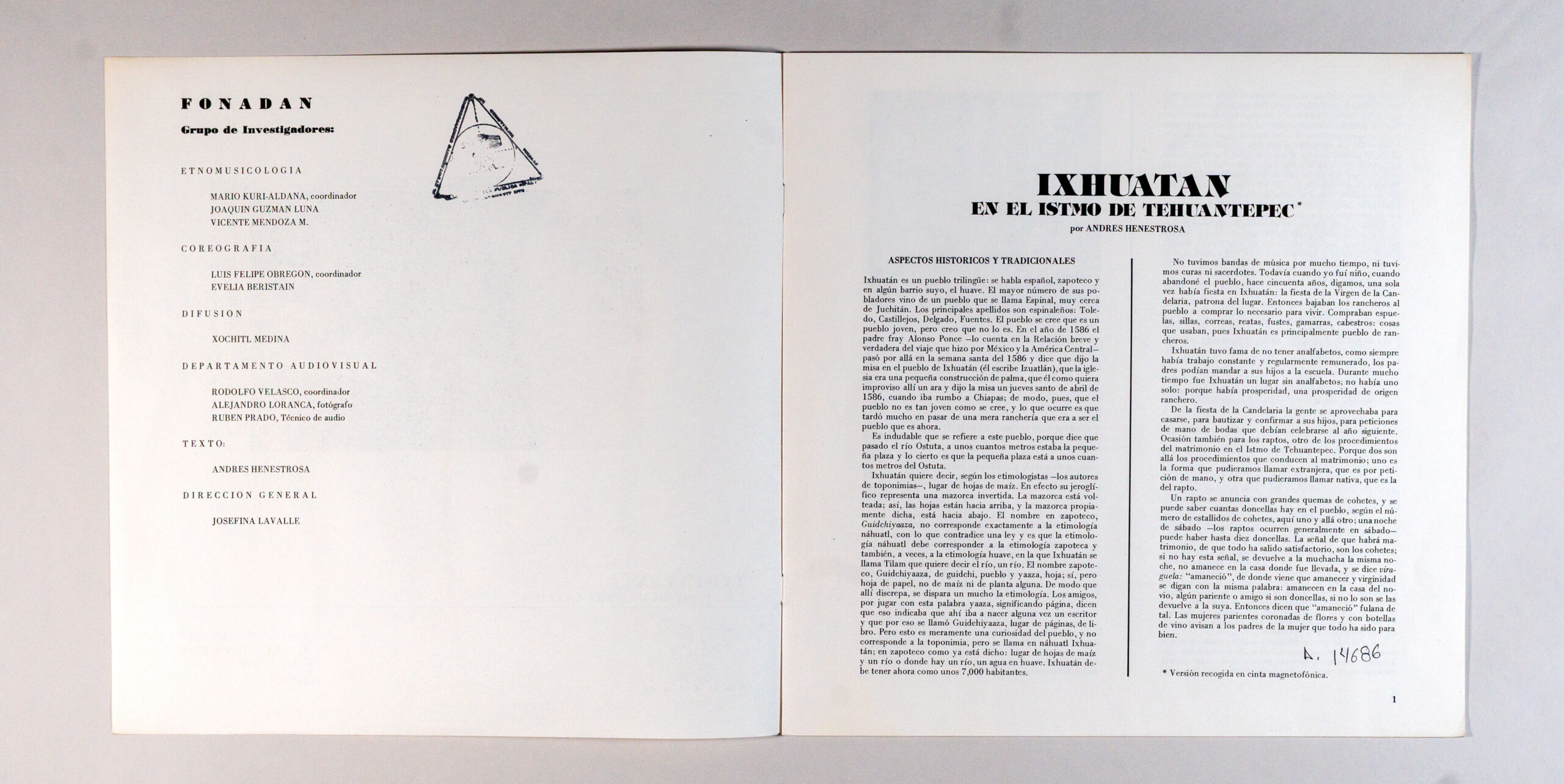
Grupo de Investigadores:
Research Group:
ETHNOMUSICOLOGY:
MARIO KURI-ALDANA, Coordinator
JOAQUÍN GUZMÁN LUNA
VICENTE MENDOZA M.
CHOREOGRAPHY:
LUIS FELIPE OBREGÓN, Coordinator
EVELIA BERISTAIN
DIFFUSION:
XOCHITL MEDINA, Coordinator
AUDIOVISUAL DEPARTMENT:
RODOLFO VELASCO, Coordinator
ALEJANDRO LORANCA, Photographer
RUBEN PRADO, Audio technician
TEXT:
ANDRÉS HENESTROSA
GENERAL DIRECTORATE:
JOSEFINA LAVALLE
IXHUATAN
ON THE ISTHMUS OF TEHUANTEPEC
by ANDRES HENESTROSA
HISTORICAL AND TRADITIONAL ASPECTS
Ixhuatán is a trilingual town: they speak Spanish, Zapotec and in some of their neighborhoods, Huave. The largest number of its inhabitants came from a town called Espinal, very close to Juchitán. The main surnames are from Espinal: Toledo, Castillejos, Delgado, Fuentes. The town believes that it is a young town, but I think it is not. In the year 1586, Father Fray Alonso Ponce —he tells it in the Brief and True Account of the trip he made through Mexico and Central America— passed through there during Holy Week in 1586 and says that he said mass in the town of Ixhuatán (he writes Izuatlán), that the church was a small construction made of palm, that he improvised an altar there and said mass on Holy Thursday in April 1586, when he was on his way to Chiapas; so, then, that the town is not as young as it is believed, and what happens is that it took a long time to go from a mere ranchería that it was to be the town that it is now.
There is no doubt that he is referring to this town, because he says that after the Ostuta river, a few meters away was the small plaza and the truth is that the small plaza is a few meters from the Ostuta.
Ixhuatán means, according to etymologists —the authors of place names—, place of corn leaves. Indeed, its hieroglyph represents an inverted ear. The cob is turned over; thus, the leaves are up, and the ear itself is down. The name in Zapotec, Guidchiyaaza, does not correspond exactly to the Nahuatl etymology, which contradicts a law and that is that the Nahuatl etymology must correspond to the Zapotec etymology and also, sometimes, to the Huave etymology, in which Ixhuatán is called Tilam which means the river, a river. The Zapotec name, Guidchiyaaza, from guidchi, town, and yaaza, leaf; yes, but a sheet of paper, not corn or any plant. So that there disagrees, the etymology is shot a lot. The friends, by playing with this word yaaza, meaning page, say that this indicated that a writer was going to be born there sometime and that is why it was called Guidchiyaaza, place of pages, of book. But this is merely a curiosity of the town, and it does not correspond to the toponymy, but it is called Ixhuatán in Nahuatl; In Zapotec, as it has already been said: place of corn leaves and a river or where there is a river, a water in Huave, Ixhuatán must now have about 7,000 inhabitants.
We did not have music bands for a long time, nor did we have priests or priests. Even when I was a child, when I left the town, let’s say fifty years ago, there was a festival only once in Ixhuatán: the festival of the Virgen de la Candelaria, patron saint of the place. Then the ranchers would go down to the town to buy what they needed to live. They bought spurs, saddles, thongs, ropes, shafts, gamarras, halters: things they used, since Ixhuatán is mainly a town of ranchers.
Ixhuatán was famous for not having illiterates, as there was always constant and regularly paid work, parents could send their children to school. For a long time Ixhuatán was a place without illiterates; there wasn’t just one: because there was prosperity, a prosperity of rancher origin.
People took advantage of the Candelaria festival to get married, to baptize and confirm their children, and to petition for weddings that were to be celebrated the following year. Occasion also for kidnappings, another of the marriage procedures in the Isthmus of Tehuantepec. Because there are two procedures that lead to marriage; one is the form that we could call foreign, which is by request for a hand, and another that we could call native, which is that of kidnapping.
A kidnapping is announced with great fireworks from rockets, and you can tell how many maidens there are in the town, according to the number of rocket bursts, here one and there another; on a Saturday night—kidnappings generally occur on a Saturday—there may be as many as ten maidens. The sign that there will be a marriage, that everything has turned out satisfactorily, are the rockets; If there is no signal, the girl is returned the same night, dawn does not rise in the house where she was taken, and viraguela is said: “dawn”, from which dawn and virginity are said with the same word: dawn in the house of the groom, a relative or friend if they are maidens, if they are not, he returns them to his. So they say that so-and-so “woke up.” The female relatives crowned with flowers and with bottles of wine warn the woman’s parents that everything has been for the best.
* Version collected on magnetic tape.
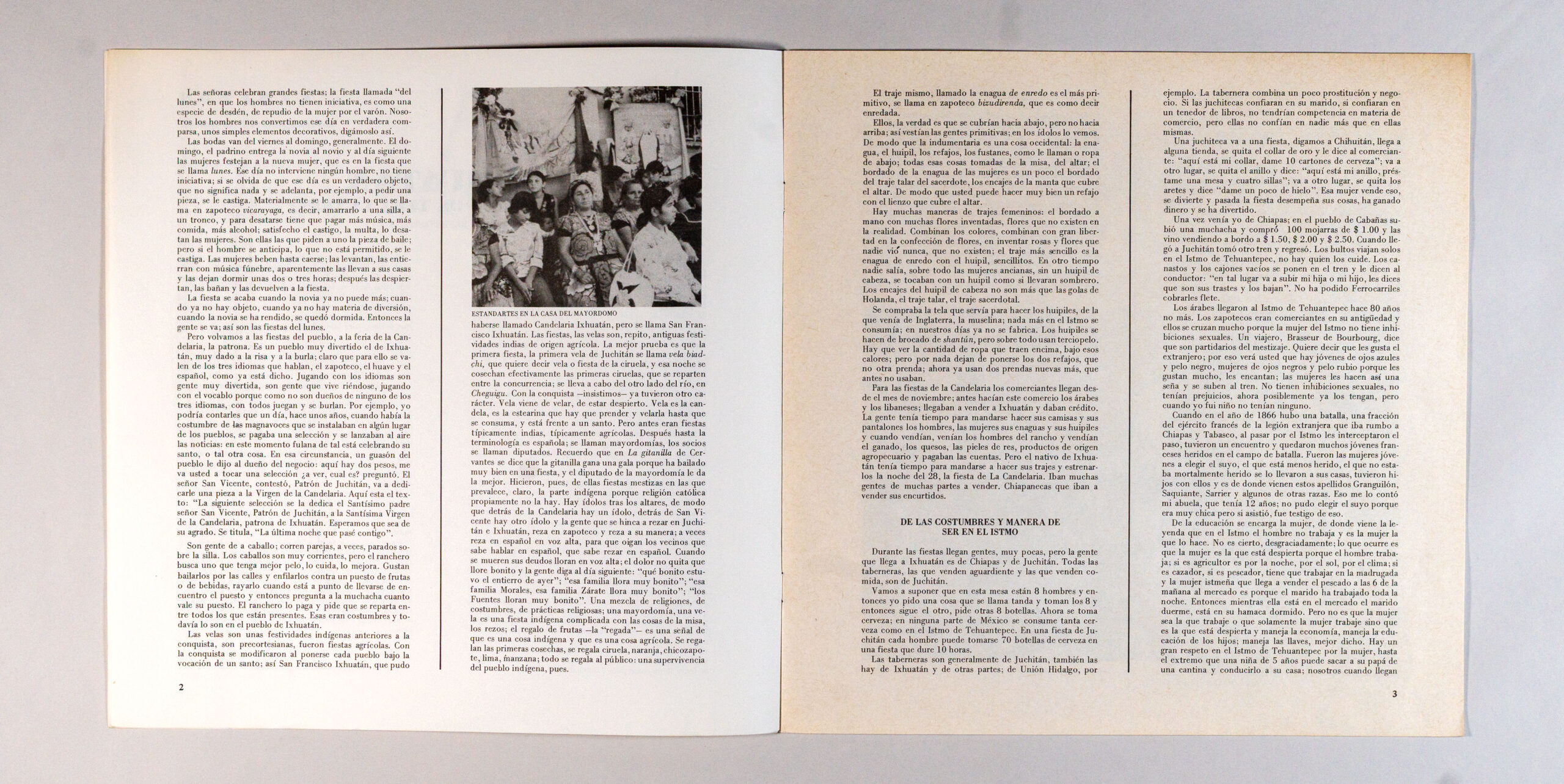
The ladies celebrate big parties; the so-called “Monday” party, in which men have no initiative, is like a kind of disdain, a repudiation of women by men. We men became that day a true troupe, some simple decorative elements, let’s put it that way.
Weddings go from Friday to Sunday, generally. On Sunday, the godfather delivers the bride to the groom and the next day the women celebrate the new woman, which is at the party called Monday. That day no man intervenes, he has no initiative; If he forgets that he is a real object that day, that it means nothing and he goes ahead, for example, to ask for a piece, he is punished. Materially, he is tied, which is called vicarayaga in Zapotec, that is, tied to a chair, to a log, and to untie himself he has to pay for more music, more food, more alcohol; Once the punishment, the fine, is satisfied, the women unleash it. They are the ones who ask you for the dance piece; but if the man anticipates, which is not allowed, he is punished. The women drink until they drop; they pick them up, bury them with funeral music, apparently take them home and let them sleep for two or three hours; then they wake them up, bathe them and return them to the party.
The party ends when the bride can’t take it anymore; when there is no longer an object, when there is no longer a matter of fun, when the bride has given up, she fell asleep. So people leave; So are the holidays on Monday.
But let’s go back to the village festivals, to the Candelaria fair, the patron saint. Ixhuatán is a very funny town, very given to laughter and mockery; Of course, for this they use the three languages they speak, Zapotec, Huave and Spanish, as already mentioned. Playing with languages they are very funny people, they are people who live laughing, playing with the word because since they don’t own any of the three languages, they play with all of them and make fun of them. For example, I could tell you that one day, a few years ago, when there was the custom of magnavoxes that were installed somewhere in the towns, a selection was paid and the news was released on the air: at this moment so-and-so is celebrating their saint, or something else. In that circumstance, a joker from the town told the business owner: here are two pesos, are you going to play a selection to see, what is it? he asked him. Mr. San Vicente, he replied, Patron of Juchitán, is going to dedicate a piece to the Virgin of Candelaria. Here is the text: “The following selection is dedicated by the Holy Father, Mr. San Vicente, Patron Saint of Juchitán, to the Blessed Virgin of Candelaria, patron saint of Ixhuatán. We hope you like it. It is entitled, “The last night that I spent with you”.
They are people on horseback; they run in pairs, sometimes standing on the chair. The horses are very ordinary, but the rancher looks for one with better hair, he takes care of it, improves it. They like to dance them through the streets and line them up against a fruit or drink stall, scratch it when they are about to take the stall and then ask the girl how much her stall is worth. The rancher pays for it and asks that it be divided among all those present. Those were customs and still are in the town of Ixhuatán.
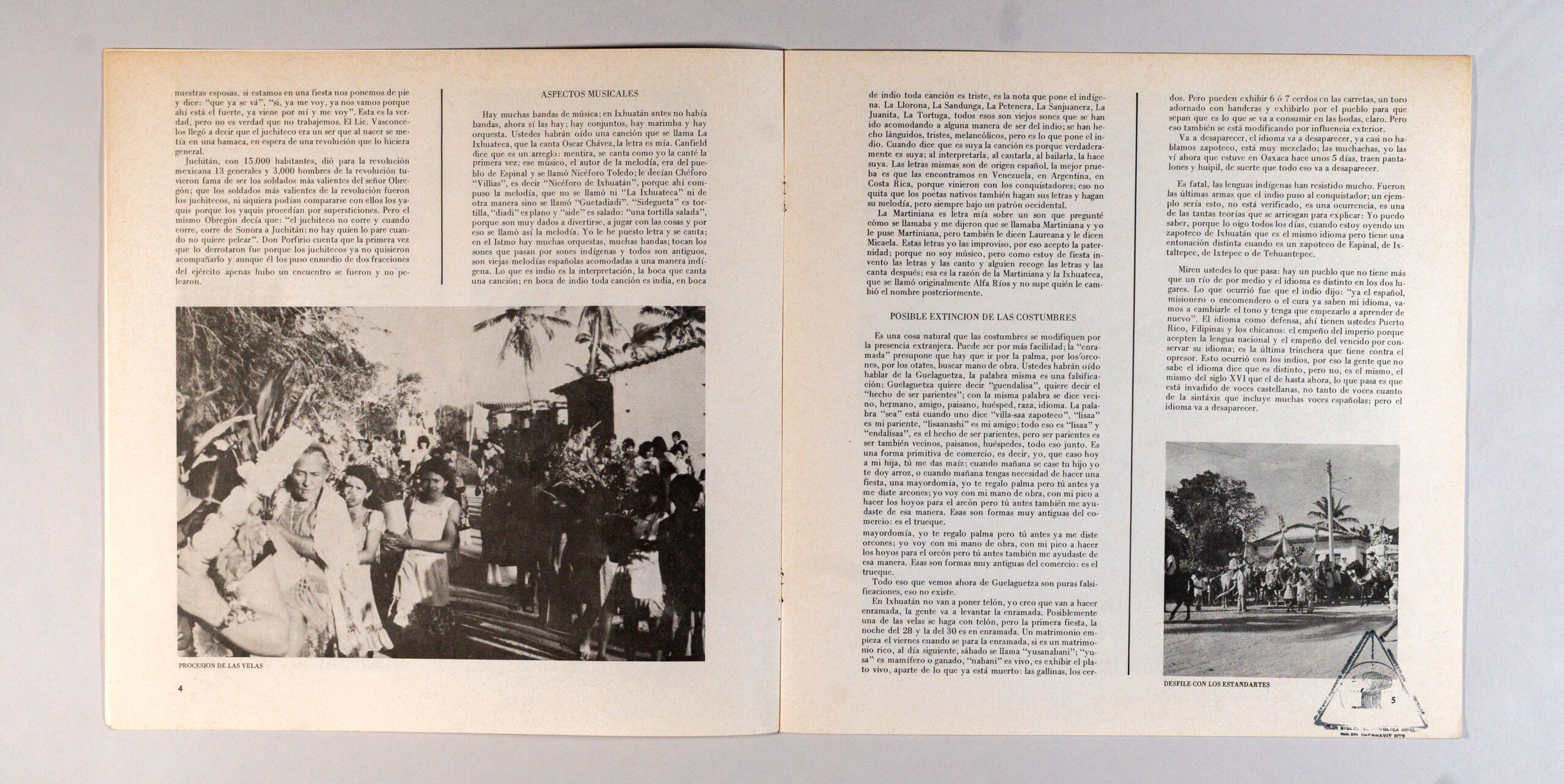
The candles are indigenous festivities prior to the conquest, they are pre-Cortesian, they were agricultural festivals. With the conquest they were modified by placing each town under the vocation of a saint; thus San Francisco Ixhuatán, who could have been called Candelaria Ixhuatán, but is called San Francisco Ixhuatán. The parties, the candles are, I repeat, ancient Indian festivities of agricultural origin. The best proof is that the first festival, the first candle in Juchitán, is called vela biadchi, which means candle or plum festival, and that night the first plums are actually harvested, which are distributed among the crowd; It takes place on the other side of the river, in Cheguigu. With the conquest —we insist— they already had another character. Vela comes from watching, from being awake. Vela is the candle, it is the stearin that must be lit and watched over until it is consumed, and it is in front of a saint. But before they were typically Indian, typically agricultural festivals. Then even the terminology is Spanish; are called mayordomías, the partners are called deputies. I remember that in La gitanilla de Cervantes it is said that the gypsy girl wins a gala because she has danced very well at a party, and the mayordomía deputy gives her the best. So, they made mestizo festivals of them in which, of course, the indigenous part prevails because the Catholic religion itself does not exist. There are idols behind the altars, so that behind Candelaria there is an idol, behind San Vicente there is another idol and the people who kneel to pray in Juchitán and Ixhuatán, pray in Zapotec and pray in their own way; Sometimes she prays in Spanish out loud, so that the neighbors can hear that she knows how to speak Spanish, that she knows how to pray in Spanish. When their relatives die they cry aloud; the pain does not mean that I cry beautifully and people say the next day: “how beautiful was yesterday’s funeral”; “That family cries very beautifully”; “That Morales family, that Zárate family cries very beautifully”; “The Fuentes cry very beautifully”. A mix of religions, customs, religious practices; a stewardship, a candle is a complicated indigenous party with the things of the mass, the prayers; the gift of fruit —the “irrigated” one— is a sign that it is an indigenous thing and that it is an agricultural thing. The first harvests are given away, plums, oranges, chicozapotes, limes, apples; everything is given to the public: a survival of the indigenous people, then.
The costume itself, called the petticoat of entanglement is the most primitive, it is called in Zapotec bizu direnda, which is like saying entangled.
They, the truth is that they covered themselves downwards, but not upwards; this is how the primitive peoples dressed; in idols we see it. So that the clothing is a western thing: the petticoat, the huipil, the skirts, the fustanes, as they call it or undergarment; all those things taken from the mass, from the altar; the embroidery on the women’s petticoat is a bit like the embroidery on the priest’s robe, the lace on the blanket that covers the altar.
So you can very well make a skirt with the cloth that covers the altar. There are many ways of women’s costumes: hand embroidery with many invented flowers, flowers that do not exist in reality. They combine colors, they combine with great freedom in making flowers, in inventing roses and flowers that no one has ever seen, that don’t exist; The simplest costume is the petticoat mixed with the huipil, simple. In another time, no one went out, especially the elderly women, without a huipil on their heads, they wore a huipil as if they were wearing a hat. The lace of the head huipil are nothing more than the golas of Holland, the talar costume, the priestly costume.
The cloth that was used to make the huipiles was bought, from the one that came from England, the muslin; nothing else on the Isthmus was consumed; nowadays it is no longer manufactured. The huipiles are made of shantung brocade, but mostly velvet. You have to see the amount of clothes they wear, under those heats; but for nothing they fail to put on the two skirts, just another garment; Now they already wear two more new garments, which they did not wear before.
For the Candelaria festivities, the merchants arrive from the month of November; Before, the Arabs and the Lebanese did this trade; They came to sell to Ixhuatán and gave credit. The people had time to have the men make their shirts and pants, the women their petticoats and huipiles, and when they sold, the men from the ranch came and sold the cattle, cheeses, beef skins, products of agricultural origin, and paid the bills. But the native of Ixhuatán had time to have his costumes made and premiere them on the night of the 28th, the La Candelaria party. Many people came from many parts to sell. Chiapas who were going to sell their pickles.
OF THE CUSTOMS AND WAY OF BEING IN THE ISTHMUS
During the festivities people arrive, very few, but the people who arrive in Ixhuatán are from Chiapas and Juchitán. All the innkeepers, those that sell brandy and those that sell food, are from Juchitán.
Let’s suppose that there are 8 men at this table and then I ask for something called a batch and they drink all 8 of them and then the other one follows and asks for another 8 bottles. Now beer is drunk; nowhere in Mexico is as much beer consumed as on the Isthmus of Tehuantepec. At a party in Juchitán, each man can drink 70 bottles of beer at a party that lasts 10 hours.
The innkeepers are generally from Juchitán, there are also some from Ixhuatán and other parts; from Union Hidalgo, for example. The innkeeper combines a bit of prostitution and business. If the Juchitecas trusted their husbands, if they trusted a bookkeeper, they would have no competition in matters of commerce, but they don’t trust anyone but themselves.
A Juchiteca woman at a party, let’s say in Chihuitán, arrives at a store, takes off her gold necklace and tells the merchant: “Here is my necklace, give me 10 cartons of beer”; she goes to another place, takes off her ring and says: “here is my ring, lend me a table and four chairs”; she goes to another place, she takes off her earrings and says “give me some ice”. That woman sells that, she has fun and after the party she performs her things, she has earned money and has had fun.
Once I came from Chiapas; In the town of Cabañas a girl went up and bought 100 mojarras for $1.00 and sold them on board for $1.50, $2.00 and $2.50. When she got to Juchitán she took another train and came back. The packages travel alone on the Isthmus of Tehuantepec, there is no one to take care of them. The empty baskets and crates are put on the train and the driver is told: “My daughter or son is going to get on such a place, you tell them that they are their dishes and they get them off.” Railways have not been able to collect freight from them.
The Arabs arrived at the Isthmus of Tehuantepec no more than 80 years ago. The Zapotecs were merchants in their ancient times and they intersect a lot because the woman of the Isthmus has no sexual inhibitions. A traveler, Brasseur de Bourbourg, says that they are in favor of miscegenation. He means that they like the foreigner; that is why he will see that there are young men with blue eyes and black hair, women with black eyes and blond hair because they like them very much, they love them; the women thus make a sign to them and they get on the train. They don’t have sexual inhibitions, they weren’t prejudiced, now they probably are, but when I was a kid they didn’t have any.
When in the year 1866 there was a battle, a fraction of the French army of the foreign legion that was heading towards Chiapas and Tabasco, as they passed through the Isthmus, they intercepted their way, they had a meeting and many French youths were left wounded in the battlefield. battle. The young women went to choose theirs, the one that is less injured, the one that was not mortally wounded, they took it to their homes, they had children with them and that is where these surnames Granguilón, Saquiante, Sarrier and some of other breeds come from. That was told to me by my grandmother, who was 12 years old; she couldn’t choose hers because she was too young but she did attend, she witnessed that.
The woman is in charge of education, from which comes the legend that in the Isthmus the man does not work and it is the woman who does. It is not true, unfortunately; what happens is that the woman is the one who is awake because the man works; if he is a farmer, he is at night, because of the sun, because of the weather; If he is a hunter, if he is a fisherman, he has to work at dawn and the Isthmian woman who comes to sell the fish at 6 in the morning at the market is because her husband has worked all night. So while she is in the market the husband sleeps, he is in his hammock asleep. But it is not that the woman is the one who works or that only the woman works, but that she is the one who is awake and manages the economy, she manages the education of the children; she handles the keys, rather. There is great respect for women on the Isthmus of Tehuantepec, to the point that a 5-year-old girl can take her father out of a cantina and lead him to her house; when our wives arrive, if we are at a party we stand up and say: “he’s leaving now”, “yes, I’m leaving now, we’re leaving now because the fort is there, he’s coming for me and I’m leaving”. This is the truth, but it is not true that we do not work. Lic. Vasconcelos went so far as to say that the Juchiteco was a being that was born in a hammock, waiting for a revolution that would make him general.
Juchitán, with 15,000 inhabitants, gave 13 generals for the Mexican revolution and 3,000 men of the revolution were reputed to be the bravest soldiers of Mr. Obregón; that the bravest soldiers of the revolution were the Juchitecos, not even the Yaquis could be compared to them because the Yaquis acted out of superstitions. But Obregón himself said that: “the Juchiteco does not run and when he runs, he runs from Sonora to Juchitán; there is no one to stop him when he does not want to fight.” Don Porfirio tells that the first time they defeated him it was because the Juchitecos no longer wanted to accompany him and although he put them in the middle of two factions of the army as soon as there was a meeting they left and did not fight.
MUSICAL ASPECTS
There are many music bands; In Ixhuatán before there were no gangs, now there are; there are ensembles, there is a marimba and there is an orchestra. You will have heard a song called La Ixhuateca, sung by Oscar Chávez, the lyrics are mine. Canfield says it’s an arrangement: a lie, it’s sung the way I sang it the first time; That musician, the author of the melody, was from the town of Espinal and his name was Nicéforo Toledo; they called him Chéforo “Villias”, that is to say “Nicéforo de Ixhuatán”, ‘because there he composed the melody, which was not called “La Ixhuateca” or otherwise, but was called “Guetadiadi”. “Sidegueta” is tortilla, “diadi” is flat and “side” is salty: “a salty tortilla”, because they are very given to having fun, playing with things and that is why the melody was called that. I have put words to it and it is sung; on the Isthmus there are many orchestras, many bands; they play the sones that pass for indigenous sones and they are all old, they are old Spanish melodies adapted to an indigenous way. What is Indian is the interpretation, the mouth sings a song; in the mouth of an indian every song is indian, in the mouth of an indian every song is sad, it is the note that the indigenous puts on. La Llorona, La Sandunga, La Petenera, La Sanjuanera, La Juanita, La Tortuga, all of these are old songs that have gradually adapted to some way of being of the Indian; they have become languid, sad, melancholic, but that is what the Indian puts on. When he says the song is his, it’s because it truly is his; by interpreting it, by singing it, by dancing it, he makes it his own. The letters themselves are of Spanish origin, the best proof is that we find them in Venezuela, in Argentina, in Costa Rica, because they came with the conquerors; that does not mean that the native poets also write their lyrics and make their melody, but always under a western pattern.
La Martiniana is my lyrics about a son that I asked what was called and they told me it was called Martiniana and I named it Martiniana, but they also call it Laureana and they call it Micaela. I improvise these lyrics, that’s why he accepted paternity; because I’m not a musician, but since I’m partying I make up the lyrics and sing them and someone picks up the lyrics and sings them later; that is the reason for the Martiniana and the Ixhuateca, which were originally called Alfa Ríos and I did not know who later changed the name.
POSSIBLE EXTINCTION OF CUSTOMS
It is a natural thing that customs are modified by the foreign presence. It may be for more ease; the “enramada” presupposes that you have to go through the palm, through the pitchforks, through the otates, to look for labor. You will have heard of the Guelaguetza, the word itself is a fake; Guelaguetza means “guendaliza”, it means the “fact of being relatives”; With the same word we say neighbor, brother, friend, countryman, guest, race, language. The word “sea” is there when one says “villasaa Zapotec”, “lisaa” is my relative, “lisaanashi” is my friend; all that is “lisaa”; and “endalisaa” is the fact of being relatives, but being relatives is also being neighbors, countrymen, guests, all of that together. It is a primitive form of trade, that is, I, who is marrying my daughter today, you give me corn; When your son gets married tomorrow I’ll give you rice, or when tomorrow you need to throw a party, stewardship, I’ll give you palm trees but you already gave me pitchforks before; I go with my labor, with my pick to make the holes for the pitchfork, but you also helped me that way before. Those are very old forms of trade: it is barter.
Stewardship, I give you palm but you already gave me chests before; I go with my labor, with my pick to make the holes for the chest, but you also helped me that way before. Those are very old forms of trade: it is barter.
All that we see now of Guelaguetza are pure falsifications, that does not exist.
In Ixhuatán they are not going to put up a curtain, I think they are going to make a bower, the people are going to raise the bower. Possibly one of the candles is made with a curtain, but the first party, the night of the 28th and the night of the 30th, is in a bower. A marriage begins on Friday when the bower stops, if it is a rich couple, the next day, Saturday, is called “yusanabani”; “yusa” is mammal or cattle, “nabani” is alive, it is to display the live dish, apart from what is already dead: the chickens, the pigs. But they can display 6 or 7 pigs in the carts, a bull decorated with flags and exhibit it around the town so they know what is going to be consumed at weddings, of course. But that is also being modified by outside influence.
It is going to disappear, the language is going to disappear, we hardly speak Zapotec anymore, it is very mixed; The girls, I saw them now that I was in Oaxaca about 5 days ago, they wear pants and a huipil, so all that is going to disappear.
It is fatal, the indigenous languages have resisted a lot. They were the last weapons that the Indian placed on the conqueror; An example would be this, it is not verified, it is an occurrence, it is one of the many theories that are risked to explain: I can know, because I hear it every day, when I am listening to a Zapotec from Ixhuatán that is the same language but has a different intonation when he is a Zapotec from Espinal, from Ixtaltepec, from Ixtepec or from Tehuantepec.
Look at what happens: there is a town that has only one river in between and the language is different in the two places. What happened was that the Indian said: “The Spanish, missionary or encomendero or the priest already know my language, we are going to change the tone and I have to start learning it again.” The language as a defense, there you have Puerto Rico, the Philippines and the Chicanos: the commitment of the empire to accept the national language and the commitment of the defeated to preserve their language; it is the last trench he has against the oppressor. This happened with the Indians, that’s why people who don’t know the language say it’s different, but no, it’s the same, the same from the 16th century as it has been until now, what happens is that it’s invaded by Castilian voices, no both of voices and of the syntax that includes many Spanish voices; but the language will disappear.
OTHER ASPECTS OF LIFE ON THE ISTHMUS
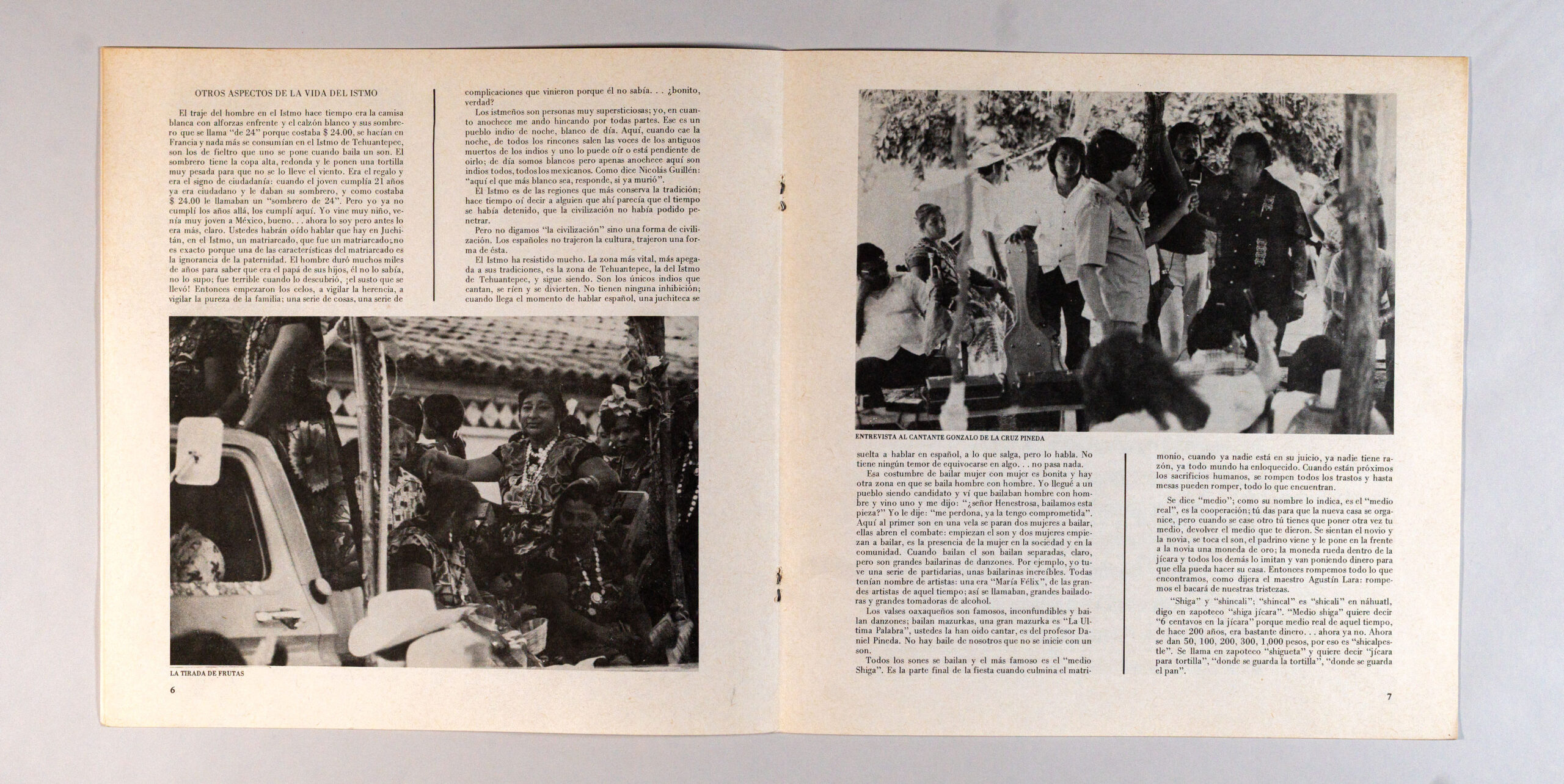
The man’s attire on the Isthmus long ago was a white shirt with tucks in front and white pants and his hat, which is called “24” because it cost $24.00, they were made in France and they were only eaten on the Isthmus of Tehuantepec. They are the felt ones that one wears when dancing a son. The hat has a high, round crown and they put a very heavy tortilla on it so that the wind does not blow it away. It was the gift and it was the sign of citizenship: when the young man turned 21 he was already a citizen and they gave him his hat, and since it cost $24.00 they called it a “24 hat.” But I no longer fulfilled my years there, I fulfilled them here. I came very young, I came to Mexico very young, well… now I am, but before it was more so, of course. You will have heard that there is a matriarchy in Juchitán, on the Isthmus, which was a matriarchy; it is not exact because one of the characteristics of the matriarchy is ignorance of paternity. The man lasted many thousands of years to know that he was the father of his children, he did not know it, he did not know it; it was terrible when he discovered it, the shock he got! Then jealousy began, to watch over the inheritance, to watch over the purity of the family; a series of things, a series of complications that arose because he didn’t know… nice, right?
The istmens are very superstitious people; Me, as soon as night falls, I’m kneeling everywhere. That is an Indian town at night, white by day. Here, when night falls, the voices of the ancient dead of the Indians come out from every corner and one can hear it or is waiting to hear it; During the day we are white but as soon as it gets dark here they are all Indians, all the Mexicans. As Nicolás Guillén says: “here who is whitest, answers, if he already died.”
The Isthmus is one of the regions that preserves the tradition the most; Some time ago I heard someone say that there it seemed that time had stopped, that civilization had not been able to penetrate.
But let’s not say “civilization” but a form of civilization. The Spanish did not bring culture, they brought a form of it.
The Isthmus has resisted a lot. The most vital area, most attached to its traditions, is the area of Tehuantepec, that of the Isthmus of Tehuantepec, and it still is. They are the only Indians who sing, laugh and have fun. They have no inhibitions; When the time comes to speak Spanish, a woman from Juchite starts to speak Spanish, whatever comes her way, but she does speak it. She has no fear of being wrong about something… nothing happens.
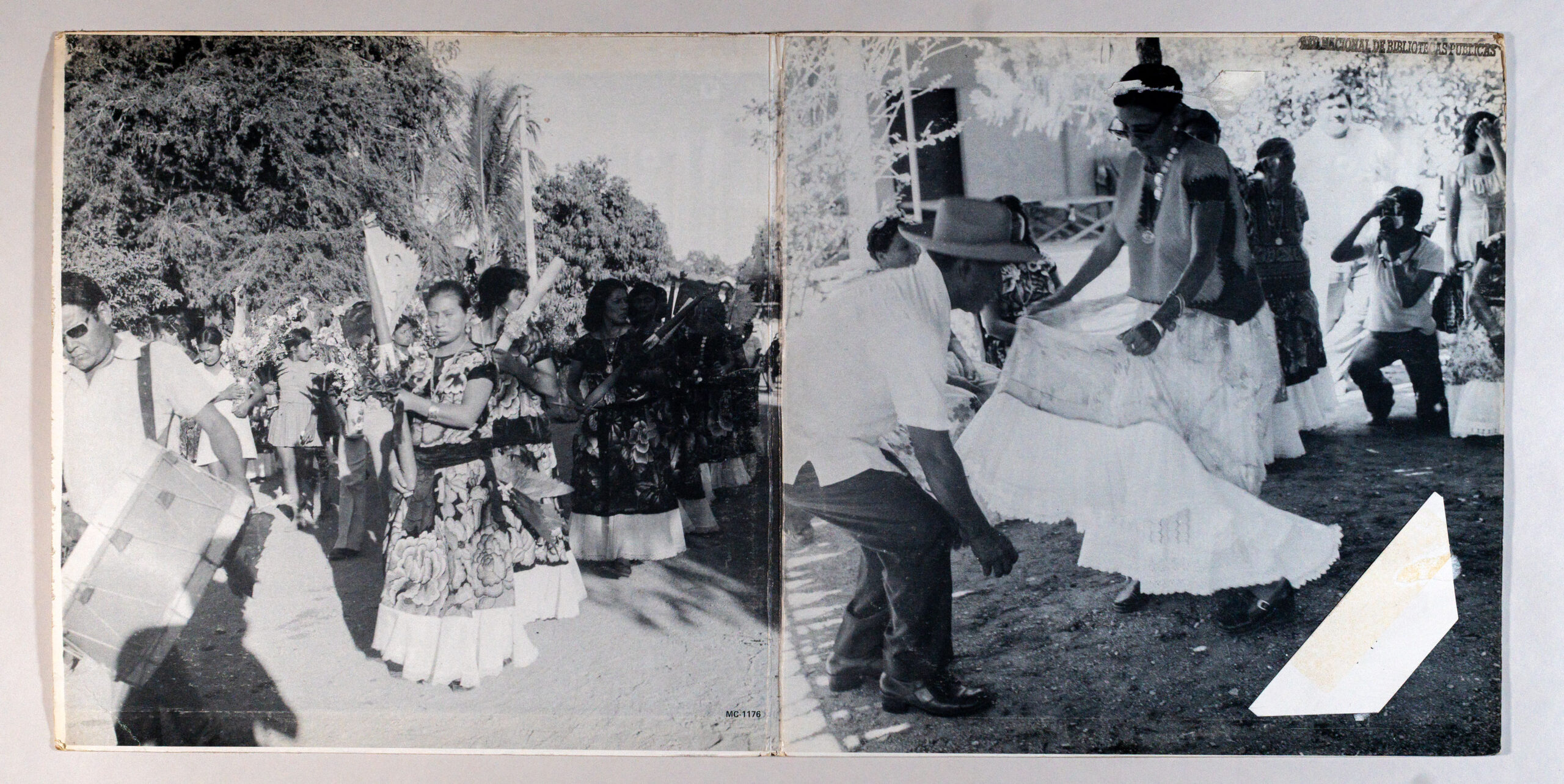
This custom of dancing women with women is beautiful and there is another area where men dance with men. I arrived in a town as a candidate and I saw that they were dancing man with man and one came and said to me: “Mr. Henestrosa, shall we dance this piece?” I told him: “excuse me, I already have her engaged.” Here at the first son in a candle two women stop to dance, they open the fight: they start the son and two women begin to dance, it is the presence of women in society and in the community. When they dance the son they dance separately, of course, but they are great danzon dancers. For example, I had a series of supporters, incredible dancers. They all had artists’ names: one was “María Félix”, one of the great artists of that time; that’s what they were called, great dancers and great drinkers of alcohol.
Oaxacan waltzes are famous, unmistakable and they dance danzones; they dance mazurkas, a great mazurka is “La Última Palabra”, you have heard it sung, it is by Professor Daniel Pineda. There is no dance of ours that does not begin with a sound.
All the sones are danced and the most famous is the “half Xhiga”. It is the final part of the party when the marriage culminates, when no one is in their right mind, no one is right, and everyone has gone crazy. When the human sacrifices are close, all the junk is broken and even tables can be broken, everything they find.
It is said “medium”; as its name indicates, it is the “real means”, it is cooperation; You give so that the new house can be organized, but when someone else gets married you have to put your money back, return the money they gave you. The bride and groom sit down, the son is played, the best man comes and puts a gold coin on the bride’s forehead; The coin rolls inside the gourd and all the others imitate it and put money so that she can build her house. Then we break everything we find, as the teacher Agustín Lara said: we break the baccarat of our sadness.
“Shiga” and “shinkali”; “shincal” is “shicali” in Nahuatl, I mean “shiga jícara” in Zapotec. “Medio xhiga” means “6 cents in the gourd” because half a real at that time, 200 years ago, was a lot of money… not anymore. Now they give 50, 100, 200, 300, 1,000 pesos, that’s why it’s “xicalpestle”. It is called “shigueta” in Zapotec and means “tortilla gourd”, “where the tortilla is kept”, “where the bread is kept”.
Then you have to get them drunk, it’s the last sound, the party ends there, then everything breaks because they are going to start a new life and buy the junk again. The women go around hiding their tables, their valuables. And they buy especially cantaritos to break; but when they run out you take what you find.
It breaks account pot they find.
The authentic istmeno sones are slow and deliberate.
The boys dance it agitatedly and that’s not the son; the son is very slow, you almost walk, you dance slowly. They all have tap dance, which is where the son brightens up slightly, but the rest is very slow.
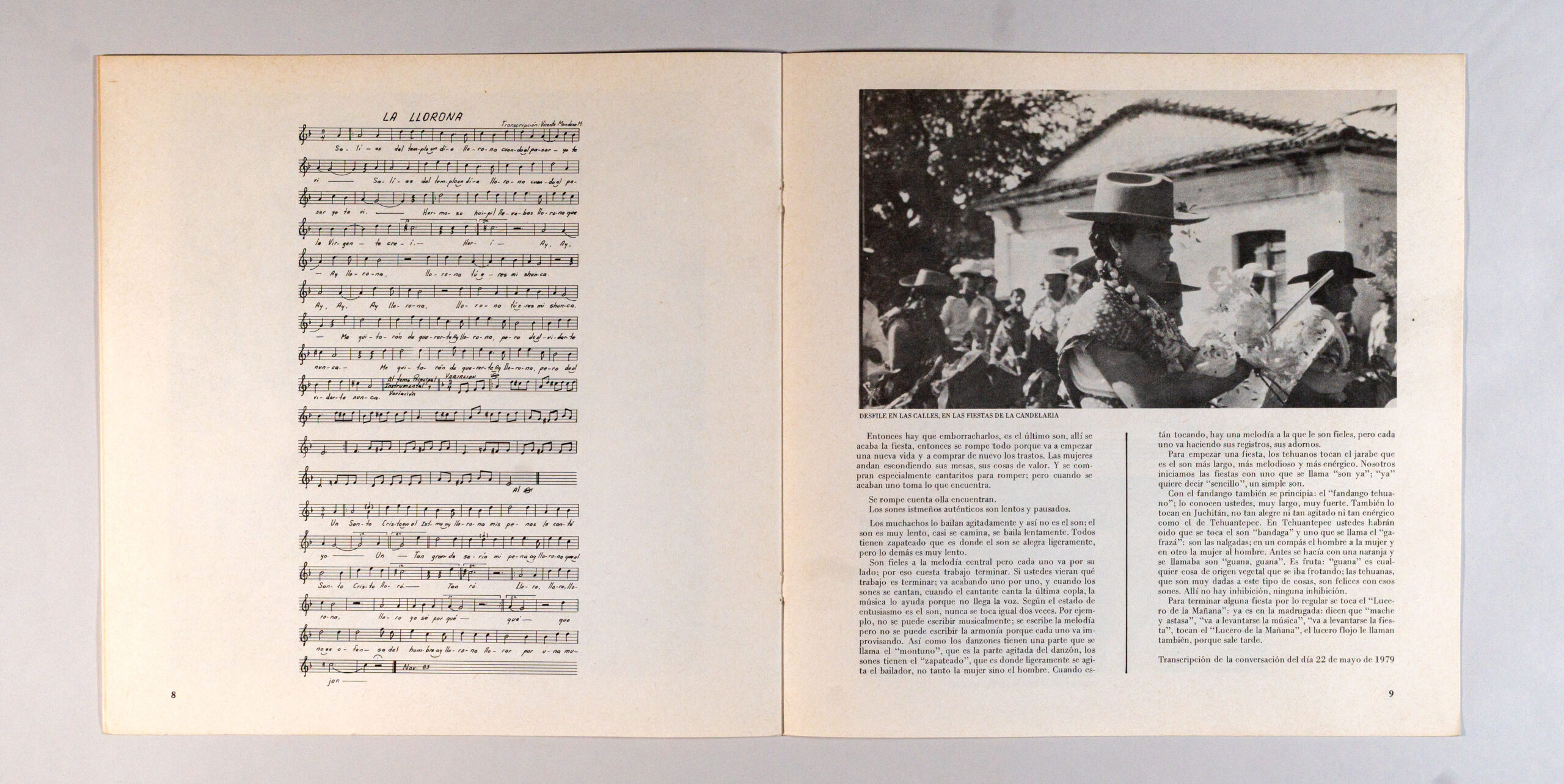
They are faithful to the central melody but each one goes their own way; that’s why it’s hard to finish. If you could see what a job it is to finish; it ends one by one, and when the sones are sung, when the singer sings the last couplet, the music helps him because the voice does not reach. According to the state of enthusiasm is the son, it is never played the same twice. For example, you can’t write musically; the melody is written but the harmony cannot be written because each one improvises. Just as the danzones have a part called the “montuno”, which is the agitated part of the danzon, the sones have the “zapateado”, which is where the dancer shakes slightly, not so much the woman but the man. When they are playing, there is a melody to which they are faithful, but each one makes their registers, their decorations.
To start a party, the Tehuanos play the syrup, which is the longest, most melodious and most energetic son. We start the festivities with one called “they are already”; “ya” means “simple”, a simple sound.
It also begins with the fandango: the “tehuano fandango”; You know it, very long, very strong. They also play it in Juchitán, not as happy or as agitated or as energetic as the one in Tehuantepec. In Tehuantepec you will have heard that the son “bandaga” is played and one that is called the “gafrazá”: they are spanking; in one compass the man to the woman and in another the woman to the man. Before it was made with an orange and it was called “guana, guana”. It is fruit: “guana” is anything of vegetable origin that was rubbed; Tehuanas, who are very given to this type of thing, are happy with those sones. There is no inhibition there, no inhibition.
To end a party, the “Morning Star” is usually played: it is already at dawn: they say that “maché and astasa”, “the music is going to rise”, “the party is going to rise”, they play the ” Star of the Morning”, they also call him the lazy star, because he comes out late.
Transcription of the conversation of May 22, 1979.
THE CRYING GIRL
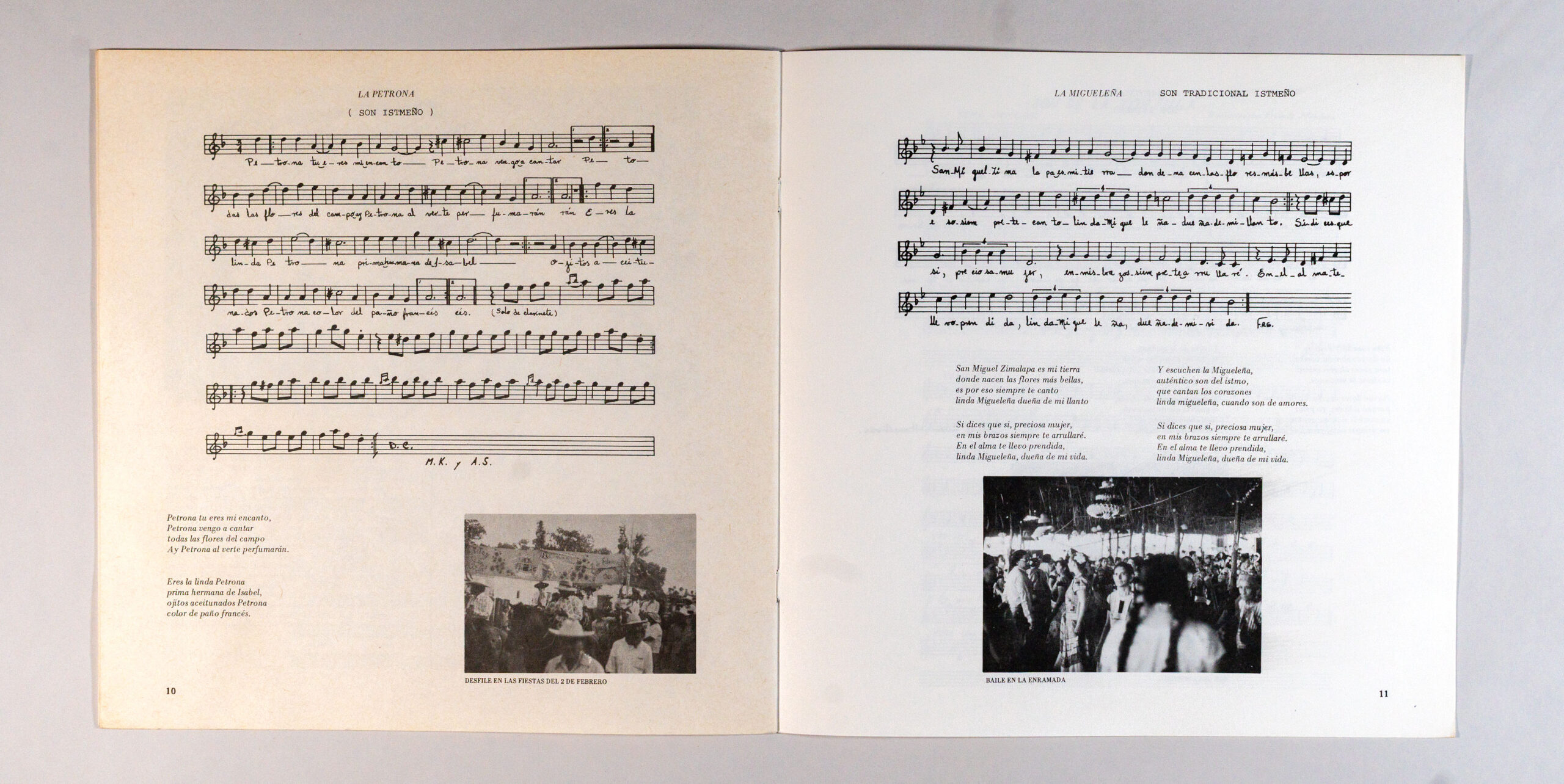
THE PETRONA
(ISTMENO SOUND)
Petrona you are my charm
Petrona I come to sing
all the flowers of the field
Oh Petrona when they see you they will perfume.
You are the beautiful Petrona
Elizabeth’s cousin,
petrona olive eyes
French cloth color.
THE MIGUELENA
(ISTMENO TRADITIONAL SOUND)
San Miguel Zimalapa is my land
where the most beautiful flowers are born,
that’s why I always sing to you
cute Migueleña owner of my crying
If you say yes, precious woman,
In my arms I will always lull you.
In my soul I carry you on
beautiful Migueleña, owner of my life.
And listen to the Migueleña,
authentic son of the isthmus,
that sing the hearts
cute migueleña, when they are in love.
If you say yes, precious woman,
In my arms I will always lull you.
In my soul I carry you on
beautiful Migueleña, owner of my life.
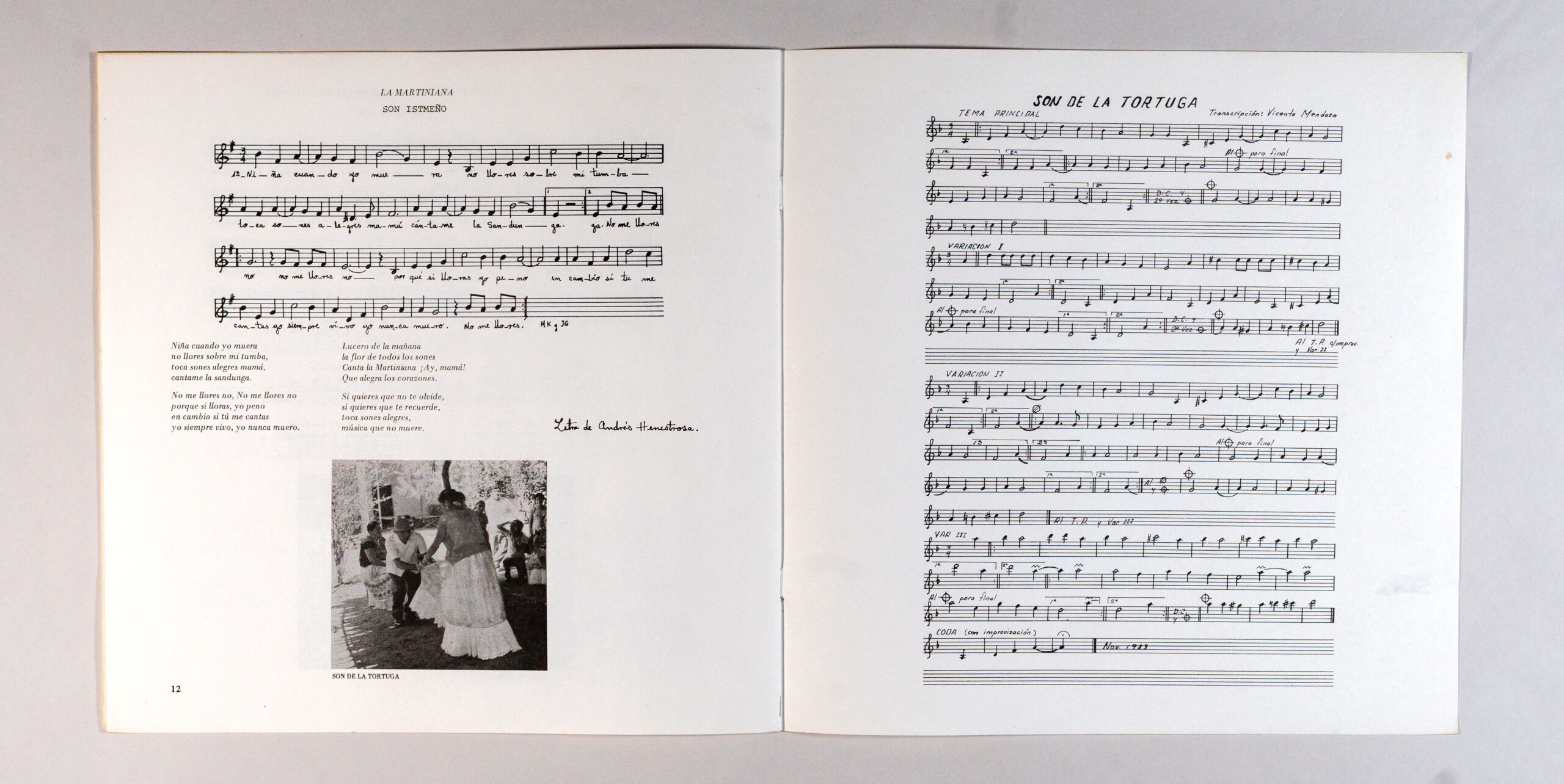
THE MARTINIAN
(ISTMENO SOUND)
Girl when i die
don’t cry on my grave
play happy tunes mom,
sing me the sandunga
Don’t cry to me no, don’t cry to me no
because if you cry, I regret
instead if you sing to me
I always live, I never die.
Morning star
the flower of all sounds
Sing the Martiniana Oh, mom!
What makes hearts happy.
If you want me not to forget you,
if you want me to remember you
play happy tunes,
music that does not die
Lyrics by Andrés Henestrosa
TURTLE SOUND
FONADAN
National Fund for the Development of Mexican Popular Dance.
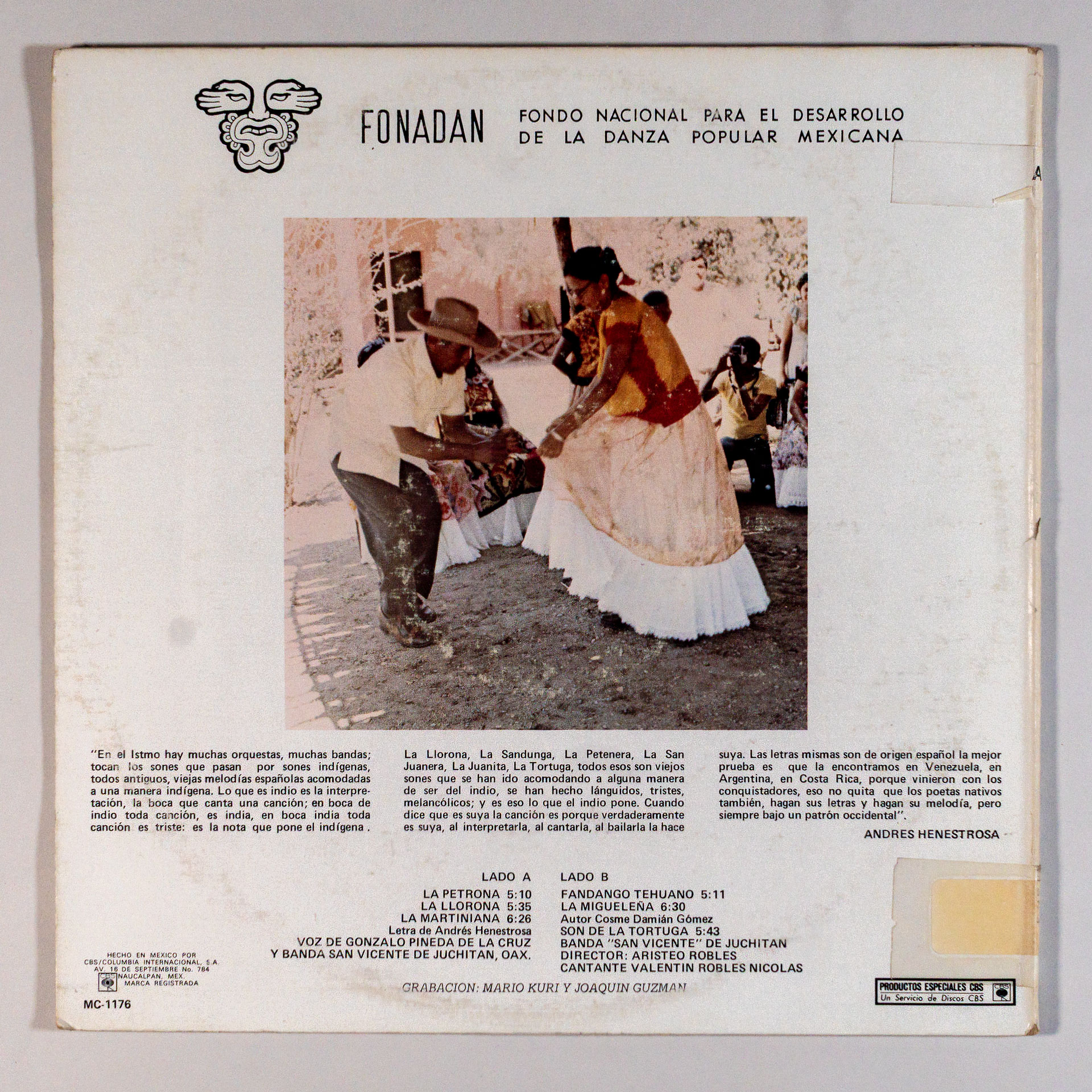
“In the Isthmus there are many orchestras, many bands; they play sones that pass for indigenous sones, all old, old Spanish melodies adapted to an indigenous way. What is Indian is the interpretation, the mouth that sings a song; in the mouth of Indian every song is Indian, in the Indian mouth every song is sad: it is the note that the indigenous puts.
La Llorona, La Sandunga, La Petenera, La Sanjuanera, La Juanita, La Tortuga, all of these are old songs that have gradually adapted to some way of being of the Indian, they have become languid, sad, melancholic; and that is what the Indian puts. When he says that the song is his, it is because he truly is his, by interpreting it, by singing it, by dancing it, he makes it his. The lyrics themselves are of Spanish origin, the best proof is that we find them in Venezuela, in Argentina, in Costa Rica, because they came with the conquerors, that does not mean that the native poets also do their lyrics and do their melody, but always under a western pattern”.
ANDRES HENESTROSA
A SIDE
THE PETRONA 5:10
THE CRYING GIRL 5:35
THE MARTINIAN 6:26
Lyrics by Andrés Henestrosa
VOICE OF GONZALO PINEDA DE LA CRUZ
AND SAN VICENTE DE JUCHITÁN BAND, OAXACA.
B SIDE
TEHUAN FANDANGO 5:11
THE MIGUELENA 6:30
Author Cosme Damián Gómez
SOUND OF THE TURTLE 5:43
“SAN VICENTE” BAND FROM JUCHITAN
DIRECTOR: ARISTEO ROBLES
SINGER VALENTIN ROBLES NICOLAS
RECORDING: MARIO KURI AND JOAQUÍN GUZMÁN
MADE IN MEXICO BY CBS/COLUMBIA INTERNACIONAL, S. A.
AV. 16 DE SEPTIEMBRE No. 784
NAUCALPAN, MEX.
CBS TRADEMARK
MC–1176
CBS SPECIAL PRODUCTS
A CBS Record Service
Gallery:


Tracklist:
SOUNDS FROM ISTHMUS OF TEHUANTEPEC
SIDE 1
- A1 The Petrona 5:10
Performer(s): Gonzalo Pineda De La Cruz – voice & Band San Vicente De Juchitán, Oaxaca. - A2 The Crying Girl 5:35
Performer(s): Gonzalo Pineda De La Cruz – voice & Band San Vicente De Juchitán, Oaxaca. - A3 The Martinian 6:26
Performer(s): Gonzalo Pineda De La Cruz – voice & Band San Vicente De Juchitán, Oaxaca.
SIDE 2
- B1 Tehuan Fandango 5:11
Performer(s): Band “San Vicente” from Juchitán; Aristeo Robles – Director; Valentin Robles Nicolas – Singer. - B2 The Miguelena 6:30
Performer(s): Band “San Vicente” from Juchitán; Aristeo Robles – Director; Valentin Robles Nicolas – Singer. - B3 Sound Of The Turtle 5:43
Performer(s): Band “San Vicente” from Juchitán; Aristeo Robles – Director; Valentin Robles Nicolas – Singer.
Credits:
ETHNOMUSICOLOGY: Mario Kuri-Aldana, coordinator; Joaquin Guzman Luna; Vincent Mendoza M.
CHOREOGRAPHY: Luis Felipe Obregón, coordinator; Evelia Beristain.
DISSEMINATION: Xóchitl Medina, coordinator.
AUDIOVISUAL DEPARTMENT: Rodolfo Velazco R, Coordinator; Alejandro Loranca, Photographer; Rubén Prado, Audio Technician.
GENERAL MANAGEMENT: Josefina Lavalle.
TEXT: Andrés Henestrosa.