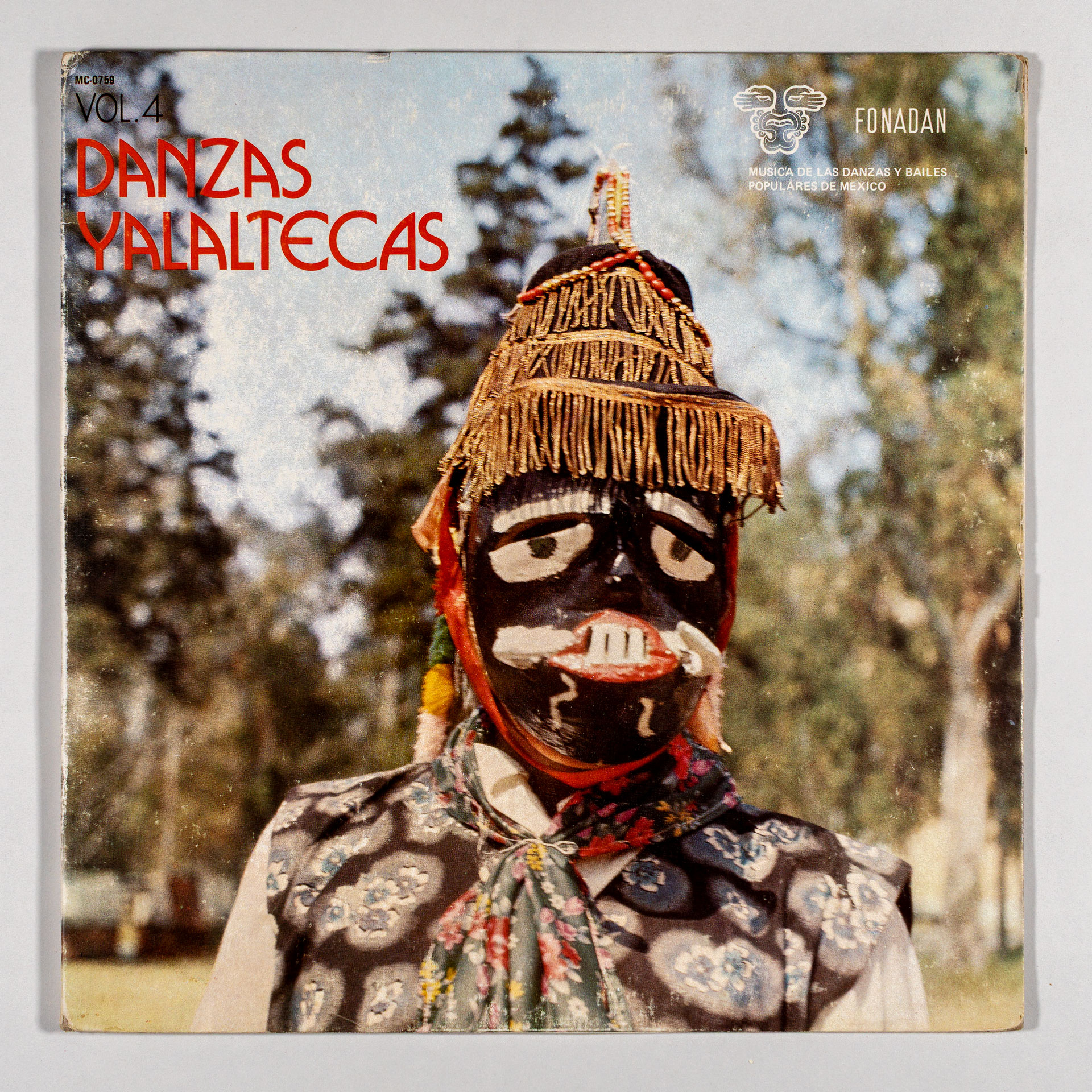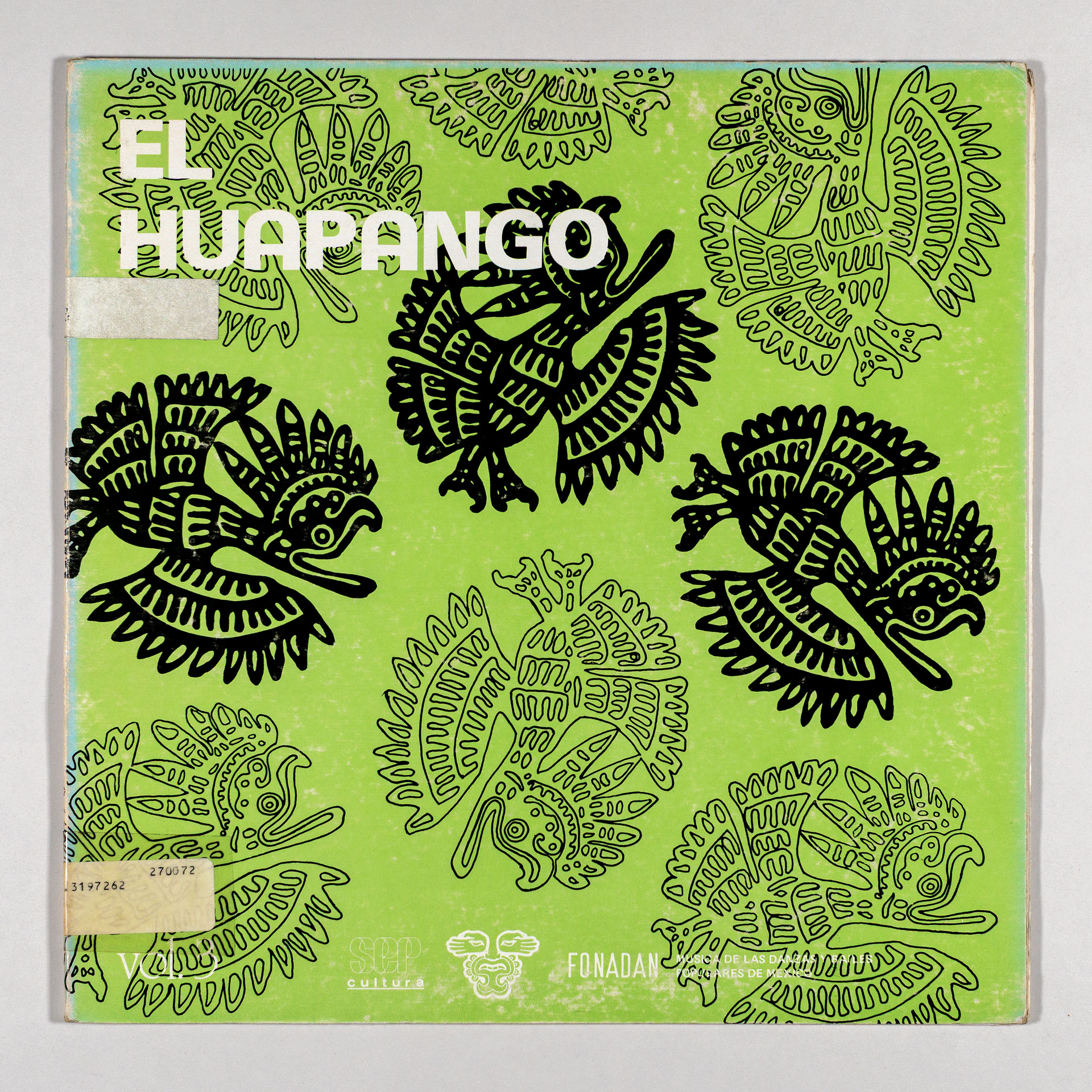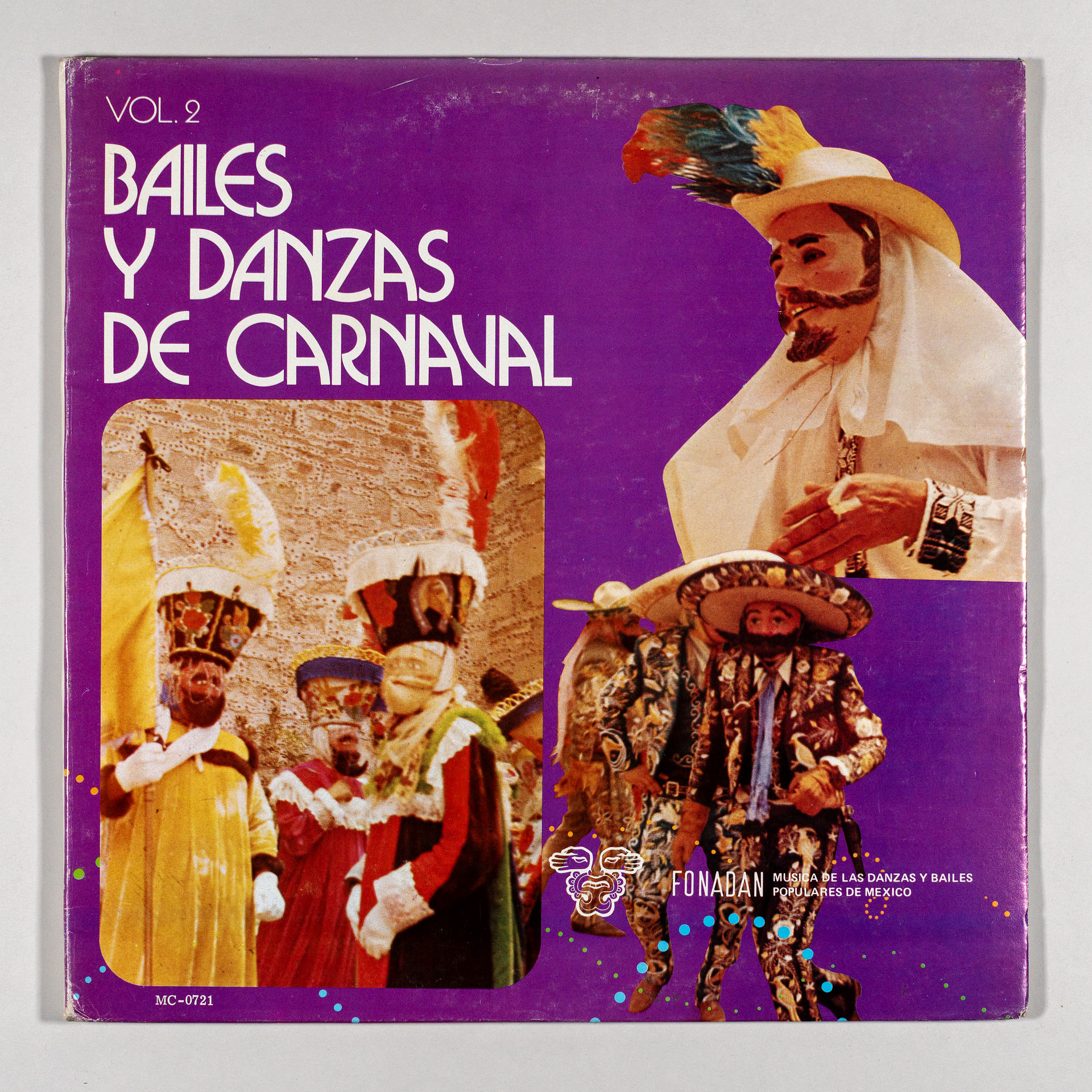








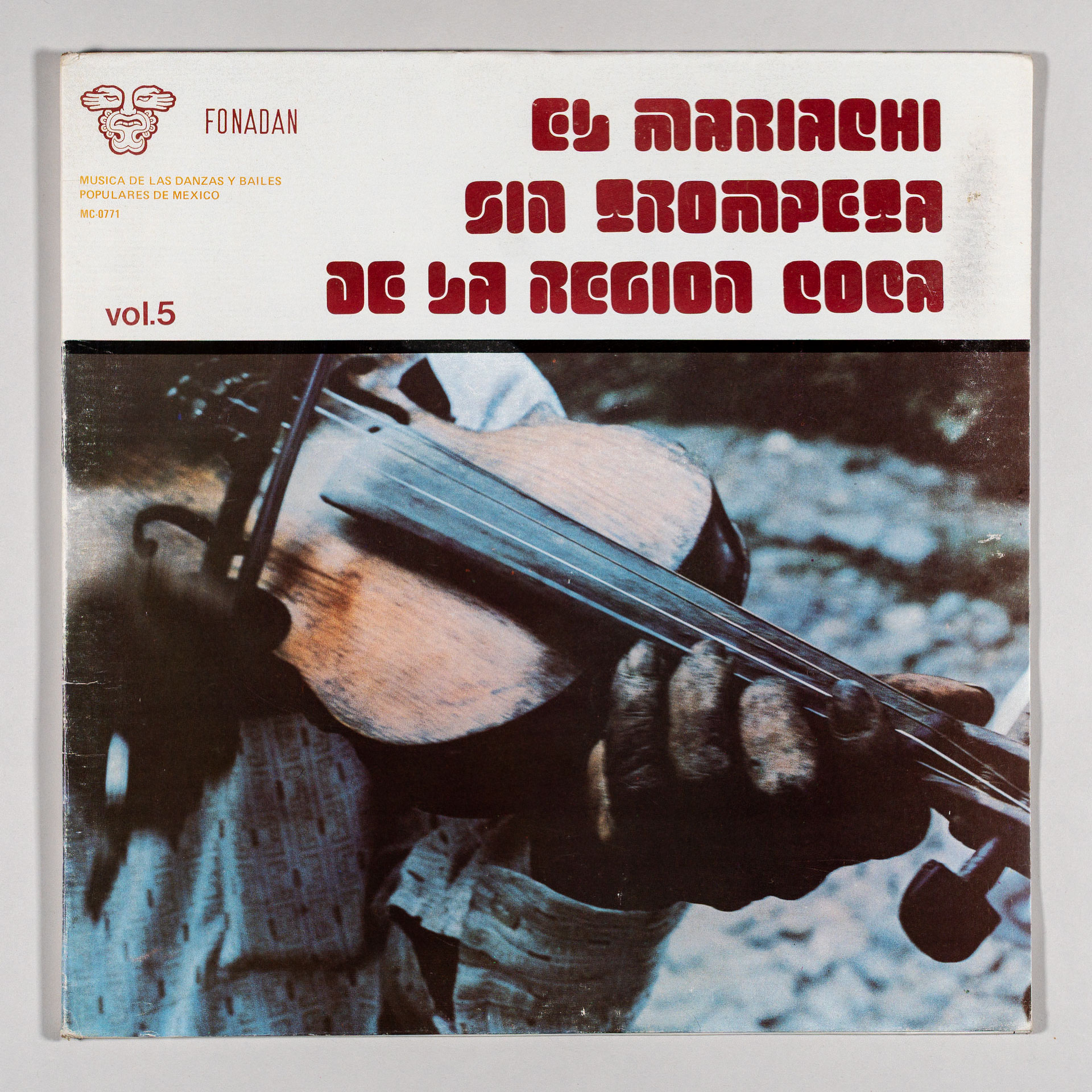
THE MARIACHI WITHOUT TRUMPET FROM THE COCA REGION
FONADAN
|
Label: FONADAN MC-0771 Format: Vinyl LP Album 12" 33 1/3 rpm Gatefold Compilation |
Country: Mexico Genre: Folk World & Country |
Info:
THE MARIACHI WITHOUT TRUMPET FROM THE COCA REGION
FONADAN
National Fund for the Development of Mexican Popular Dance.
MC-0771
MUSIC OF THE DANCES AND POPULAR DANCES OF MEXICO
VOL. 5
3rd Edition
This record is the result of the work carried out by the FONADAN research body.
ETHNOMUSICOLOGY:
MARIO KURI-ALDANA, Coordinator
JOAQUÍN GUZMÁN LUNA
VICENTE MENDOZA R.
CHOREOGRAPHY:
LUIS FELIPE OBREGÓN, Coordinator
EVELIA BERISTAIN
DIFFUSION:
XOCHITL MEDINA, Coordinator
AUDIOVISUAL DEPARTMENT:
RODOLFO VELASCO, Coordinator
ALEJANDRO LORANCA, Photographer
RUBEN PRADO, Audio technician
GENERAL DIRECTORATE:
JOSEFINA LAVALLE
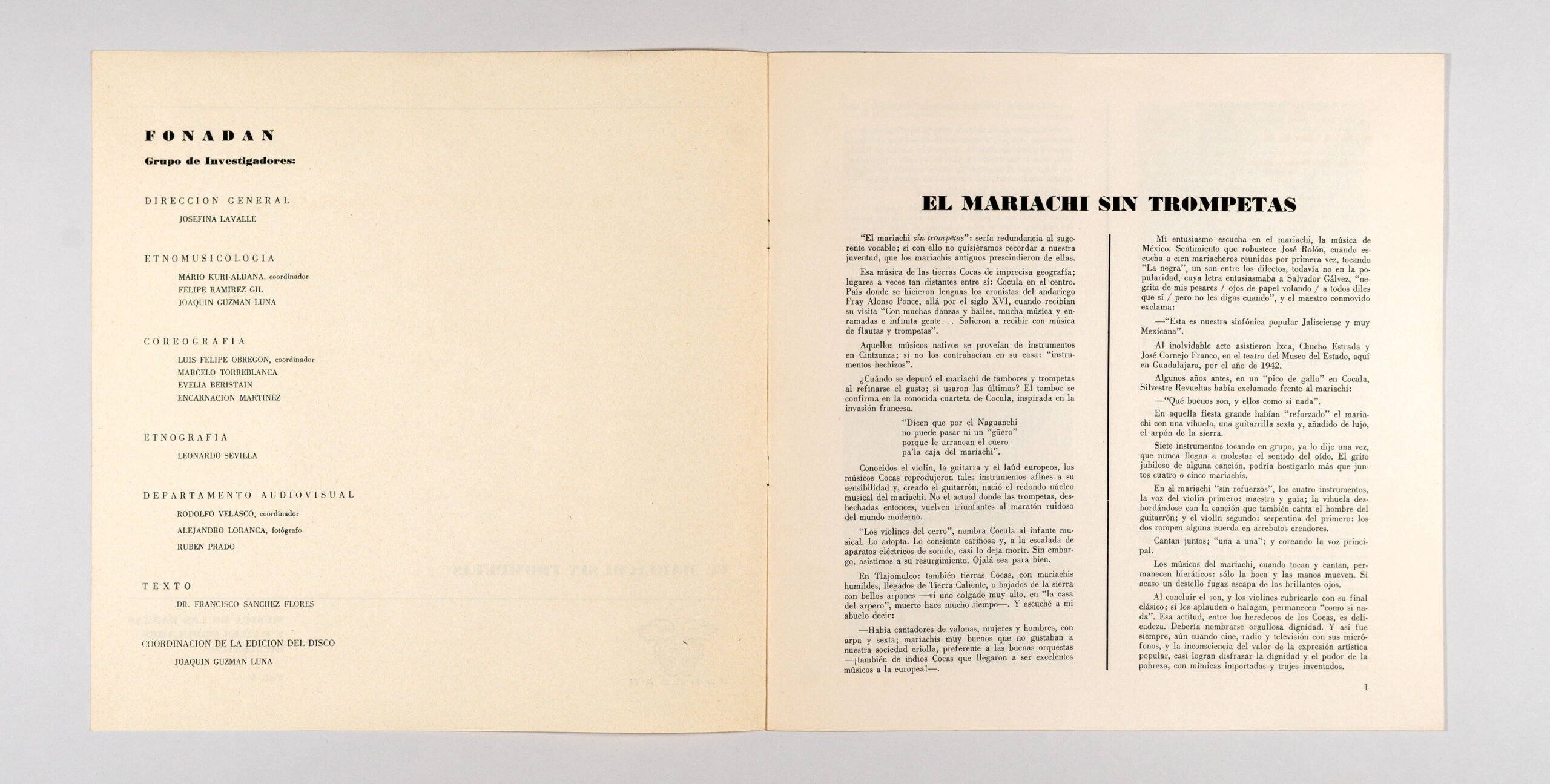
THE MARIACHI WITHOUT TRUMPET
“The mariachi without trumpets”: would be redundancy to the suggestive word; if with this we did not want to remind our youth, that the ancient mariachis dispensed with them.
That music from the Cocas lands of imprecise geography; places sometimes so distant from each other: Cocula in the center. Country where the chroniclers of the wanderer Fray Alonso Ponce made tongues, back in the 16th century, when they received his visit “With many dances and dances, much music and bowers and infinite people… They came out to receive with music from flutes and trumpets” .
Those native musicians provided themselves with instruments in Cintzunza; if they did not counteract them at home: “instruments spells”.
When was the mariachi of drums and trumpets purified when the taste was refined; did you use the latest ones? The drum is confirmed in the well-known Cocula quatrain, inspired by the French invasion.
“They say that because of the Naguanchi
not even a “güero” can pass
because they tear the skin
for the mariachi box”.
Known for the European violin, guitar and lute, the Cocas musicians reproduced such instruments similar to their sensibility and, with the creation of the guitarrón, the well-rounded musical nucleus of the mariachi was born. Not the current one where the trumpets, discarded then, return triumphantly to the noisy marathon of the modern world.
“The violins of the hill”, Cocula names the musical infant. He adopts it. She dotes on him lovingly and, escalating from electrical sound devices, she nearly lets him die. However, we are witnessing his resurgence. Hopefully it’s for the best.
In Tlajomulco: also Coca lands, with humble mariachis, who came from Tierra Caliente, or came down from the mountains with beautiful harpoons – I saw one hanging very high, in “the house of the harper”, dead a long time ago. And I heard my grandfather say:
–There were walloon singers, women and men, with harp and sixth; very good mariachis that our Creole society did not like, preferring to good orchestras –also made up of Coca Indians who became excellent European-style musicians!–.
My enthusiasm listens in the mariachi, the music of Mexico. A feeling strengthened by José Rolón, when he listens to a hundred mariacheros gathered for the first time, playing “La negra”, a son among the beloved, not yet popular, whose lyrics excited Salvador Gálvez, “bold of my sorrows / paper eyes flying / tell everyone yes / but don’t tell them when”, and the moved teacher exclaims:
–”This is our Jalisco and very Mexican popular symphony”.
The unforgettable act was attended by Ixca, Chucho Estrada and José Cornejo Franco, in the theater of the State Museum, here in Guadalajara, in the year 1942.
A few years earlier, at a “pico de gallo” in Cocula, Silvestre Revueltas had exclaimed in front of the mariachi:
–”How good they are, and they as if nothing”.
At that big party they had “reinforced” the mariachi with a vihuela, a sixth guitar and, added luxury, the saw harpoon.
Seven instruments playing in a group, I already said it once, that never bother the sense of hearing. The jubilant shout of some song could harass him more than four or five mariachis put together.
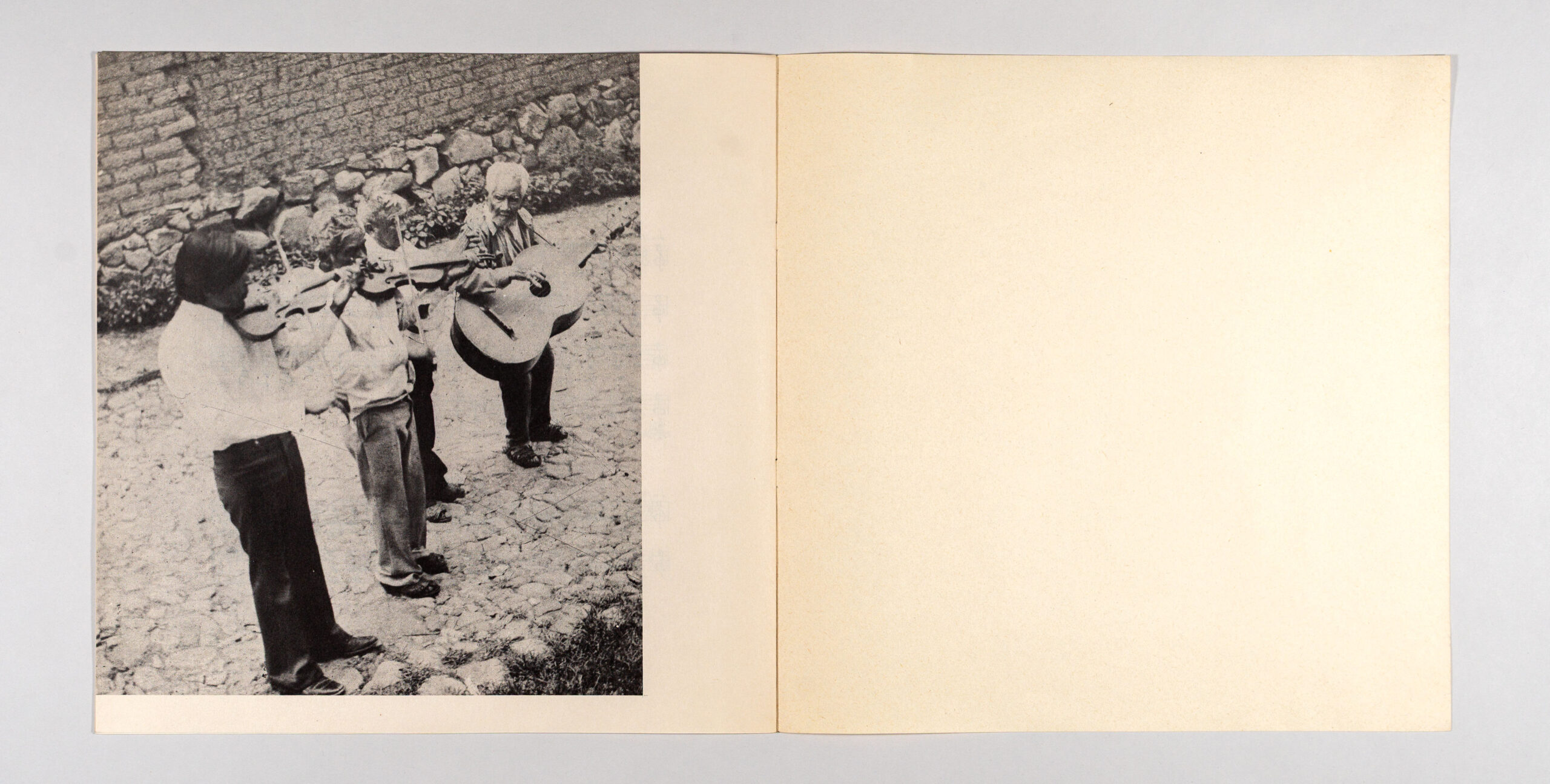
In the mariachi “without reinforcements”, the four instruments, the violin’s voice first: teacher and guide; the vihuela overflowing with the song that the man with the guitarrón also sings; and the second violin: serpentine of the first: the two break a string in creative outbursts.
They sing together; “one by one”; and chanting the lead vocal.
The mariachi musicians, when they play and sing, remain hieratic: only their mouths and hands move. If by chance a fleeting glimmer escapes from the bright eyes.
At the end of the son, and the violins sign it with its classic finale; if they are applauded or praised, they remain “business as usual.” That attitude, among the heirs of the Cocas, is delicacy. It should be named proud dignity. And so it always was, even when cinema, radio and television with their microphones, and the unconsciousness of the value of popular artistic expression, almost managed to disguise the dignity and modesty of poverty, with imported mimicry and invented costumes.
A mariachi from Cocula playing old songs! Heriberto García, Mayor of the H. Ayuntamiento de Guadalajara, through Professor Mata, invited us to listen to him. We went there with Pancho Espinosa.
There were seven musicians gathered to illustrate, with old sounds, the Round Table that would end the “Fourth Cycle of Information Conferences on Guadalajara.” They were waiting under the very long arcades of the Municipal Palace of Cocula, in front of the Parish, whose tower no longer culminates the enormous “bottle of red clay” so suggestive and unique.
Mr. Municipal President Carlos Ramírez Corona, made the group available to us.
In an acceptable improvised concert: the mariachi, with three more musicians, made us listen to almost forgotten sounds and others unknown to me.
Pancho and Professor Mata, we consider prudent to continue rehearsing, until the day of his presentation in Guadalajara.
FONADAN approved my request so that this music by Cocula would not be lost.
The staff of the corresponding office questioned me and I had to answer questions from musicologist technicians.
We consider that mariachi to be extraordinary, due to its collection of ancient sounds that had to be preserved.
It was distressing to me that such a treasure was only in Pancho’s head, and his groupmates worked hard to remember and the youngest to learn them; but very slowly. Nothing written. Not even the lyrics. Only Pancho with his vihuela accompanying himself the complicated turns of the intersongs of forgotten sones, in a strange humming, hardly understandable. That is how many mariachi pieces must have been born, and that is how the groupmates would learn them.
In the house in the “la guitarrilla” neighborhood, I found only four musicians: the classic number in Don Jesús’ mariachi.
“The reinforcements”, which I did not call, damaged the group: so much so that they had displaced Don Jesús as “an old man who can barely hold his century, and not the guitarrón”. Don Jesús is ninety years old.
And the surprise began: they played sounds from previous rehearsals that seemed different, and other “new” ones for me.
“From the time of my teacher Don Salvador Flores,” Don Jesus told me.
The violin first recreates interspersed variations on the song.
Macario: without a backup partner, he alone, he’s in his element: a few minutes ago his rough peasant hands carefully unwrapped the old violin.
—”It’s a spell; but very well done “—he told me and continued spontaneously:
—”Since it stays hanging for so long, it deafens. It doesn’t sound like it always does; or it will be my fingers that become clumsy. It’s getting old now. I bought it from Pancho Alba’s family, when he died, and I went from second to first violin, place that he occupied. I had followed him the baths and learned many variants and decorations in sones and syrups”.
Don Jesús Salinas Hernández talks:
—”All my life I have played the guitarrón. I was in my fifteenth year when I joined Don Salvador Flores, a man from El Saucillo, wise in music, player of all instruments: even the harmonica in the Parish. They wanted him for the best gigs in Cocula and its surroundings: the haciendas of La Sauceda, Estipac and Santiago Many times we were hired by rich landowners from distant lands, among others, San Cayetano and La Chacona, next to Tlajomulco, where the best mariachis came, when those who were there They were transformed into orchestras. They were famous for their cover-ups with rich people even from Guadalajara. “Would the mariachi who took my uncle Don Manuel for a walk to my grandparents’ ranch be from Cocula? If so, I have the honor of having danced then, my first syrup with Doña Laura, my uncle’s friend: accompanied by a very good mariachi.Those who came down from the mountains or came up from the coast, were poorer every year, and only played kitesurfing, cockfights and stalls of happy girls.
The musicians of the orchestras of Tlajomulco: did they overcome the indigenous guideline? They stopped being “lyrical” and, European-style musicians, were famous for many leagues around. The Mejía brothers are exceptional: Máximo and Cheto: also of the Coca race, so much so that my father gave them a violin and took them to Guadalajara. They read at first sight all the scores they were shown, and Cheto played like the best soloist.
“‘It was,'” my father concluded. Such a feat was at the beginning of the century.
My judgment is confirmed when I remember the music of the syrups, in the great dances of the National Holidays; as if they played many mariachis together, among the perfect orchestra, with twenty teachers, even timbaleros. We hear the same now: magnificent musical groups, like orchestras or bands with a hidden flavor of mariachi.
Don Jesús continues his talk:
—”From what I remember, there were four mariachis that Cocula and its surroundings always had. We were directed by Cristóbal Figueroa, Antonio Partida and Leocadio Cabrera. Mine, with Pancho as second.” —I ask him about the instruments that the conductors played.
—”It’s curious: everyone plays the guitarrón, even me. This is because ever since I was a boy, my teacher, Don Salvador, made me play it.” Changing the subject, he talks about his musicians:
—”Macario has his genius; but as second violin, I did it first, and his place was filled by Zenén Ruiz Casillas, a bricklayer by trade. The boy promises; although Macario is not very willing to teach him his tricks to master that violin that seems secondary instrument, and is a complement to the first, and to all the mariachi”.
I ask him about the harpoon from that distant “pico de gallo” offered to Silvestre Revueltas at the Vidrio family home.
—”I remember. Everything is known here. It was Filomeno Castillo, the only harpoon of the course. The solo, enough to cheer up parties, even at dawn; let’s not say playing as a guest. If memory serves me correctly, it was Leocadio’s mariachi Cabrera the one who played at that party”. —Concludes the presentation of his people:
—”I already told you about Pancho Cisneros: he is my partner in command; he plays the vihuela as you can see; although a long time ago we all used the sixth: medium-sized guitarrilla, instead of the vihuela. They stopped making them in Paracho, where They supplied us with instruments, when we didn’t have someone here to make them”.
They brought fine violins, although Macario is better off playing his old spell violin—bewitched violin. Different in sound from classical violins. In this instrument made wrong by the people, rough fingers on the strings; the aggressive bow that plays them in its strong, peasant way. Clean sounds intertwine consubstantial rudeness: flat according to the dominant finesse. The rough and delicate interwoven! Form and essence of the mariachi Coca, listened to since I was a child, without understanding my love for his music.
The words of the song did not interest me then: human voices were extraordinary instruments: easy contact to better understand the musical whole.
The mariachis: from their creation, until when increasingly perfect phonographs and substitutes burst in, they were the solace of the people, looking at themselves in the mirror of songs where delicacy reigns even in lewd sounds by exception: “La gallina” and “El chilero”, and the song never fell into the rude saying of the composers of impudent romanticism. Fortunately, the chastened people retain their modesty.
The mariachi “Cocula Coculán” had surpassed itself. The last rehearsal satisfied me.
The next day, Josefina Lavalle and her work group; still all of friendly presence, disturbed “the four”; However, once the ice was broken with the celebrated “pico de gallo”, the miracle happened:
Macario walks the entire bow on the strings of his spell violin, and elicits tones never imagined.
The native instrument, which he assured eight days ago was deafened, seems to be made of glass.
Zenén: clean your hands of lime, he is not far behind the fiery violin first, to whom his, sometimes, talks about you.
Don Jesús: stand up! With everything and his gnarled hands, he behaves like in the good old days, playing the guitarrón.
And Pancho: he would never have believed it: his voice is clear, his hand is looser, he seems to be playing with the graceful instrument.
He plays and sings the mariachi: “the four solos”.
The violins even with out of tune corrected on the fly, I wouldn’t know if they were provoked; silences cut by knives leave the vihuela trembling; the guitarrón strums its deep bass and the voices sing without melodrama, intoned and serious in their communication.
As a child I heard the judgment of the people on the religious singers and the singers of romances and songs in theaters and parties; “they sing opera,” they said then.
The gananes: finished their rough task, stationed on one of the four street corners at the ends of the town, sang loudly, first and second voices, in a resounding cry, spearing the moon and, very long ends cut off as in a complaint . Never a falsetto, except for some inopportune “rooster”.
This is how Pancho sings, although his voice is average, with strange nuances and sometimes incomprehensible words; however: he refers to an event that happened at the Hacienda del Limón, last century, as if it had happened yesterday.
“The sound of the salad”, could it be the name imposed by the composers of the lyrics?: happy missionaries who, without embarrassment, accompanied the cowboys and foremen to capture an ox raised in the mountains. “That’s how the boss ordered it.” And one of the parents, riding “on the mule of the accoutrement”, with her nickname: “la perra”, “trajimó” together with everyone until he found it.
The exceptional son begins, the first voice with a strange command:
—”Put water on it with sprinklers, the watermelon dries up. Throw water on it with sprinklers, the watermelon dries up.” —And the chorus answers with mischievous taste:
—”Put some water on yours, and I’ll water mine. —Put some water on yours, and I’ll water mine.” —And they all fix the geography of the event:
—”At the Hacienda del Limón…” —and the persistent cry of the guaco makes the atmosphere of the hot and intricate jungle… Pancho and don Jesús sing in one like a singsong or litany, the story of the rough struggle of the laborers in cattle ranches of the last century.
The end of the son, successful, has the strange apology of the father brothers, in Misiones, who ask for “mercy for their skins” (Sic). And a kind of wonderful joy target.
This sound speaks clearly of the presence of a mariachi in that region of “La Tierra Caliente”. And if we understand its essence, we will fully enjoy it, set between two displays of indigenous Coca inspiration:
The irrigation order and the final target.
And the technical gentlemen are engrossed and work tirelessly. They are already sweating: we are in May, and “the four of us as if nothing had happened”; I remember the distant words of Revueltas.
We do not hide our surprise. The work session is prolonged. No string breaks in this marathon of playing sones which are more complicated than their “intersongs”.
As tapes go, tapes come.
The “pico de gallo” restores strength to the already admired four, and to us.
Don Jesús had to sit down, not without protest, at affectionate insistence; but as soon as he has to play his original instrument again, as in the good old days he says:
—”With your permission, ma’am” —and he stands up.
The heifer.
Salad.
The Peach.
The little owl.
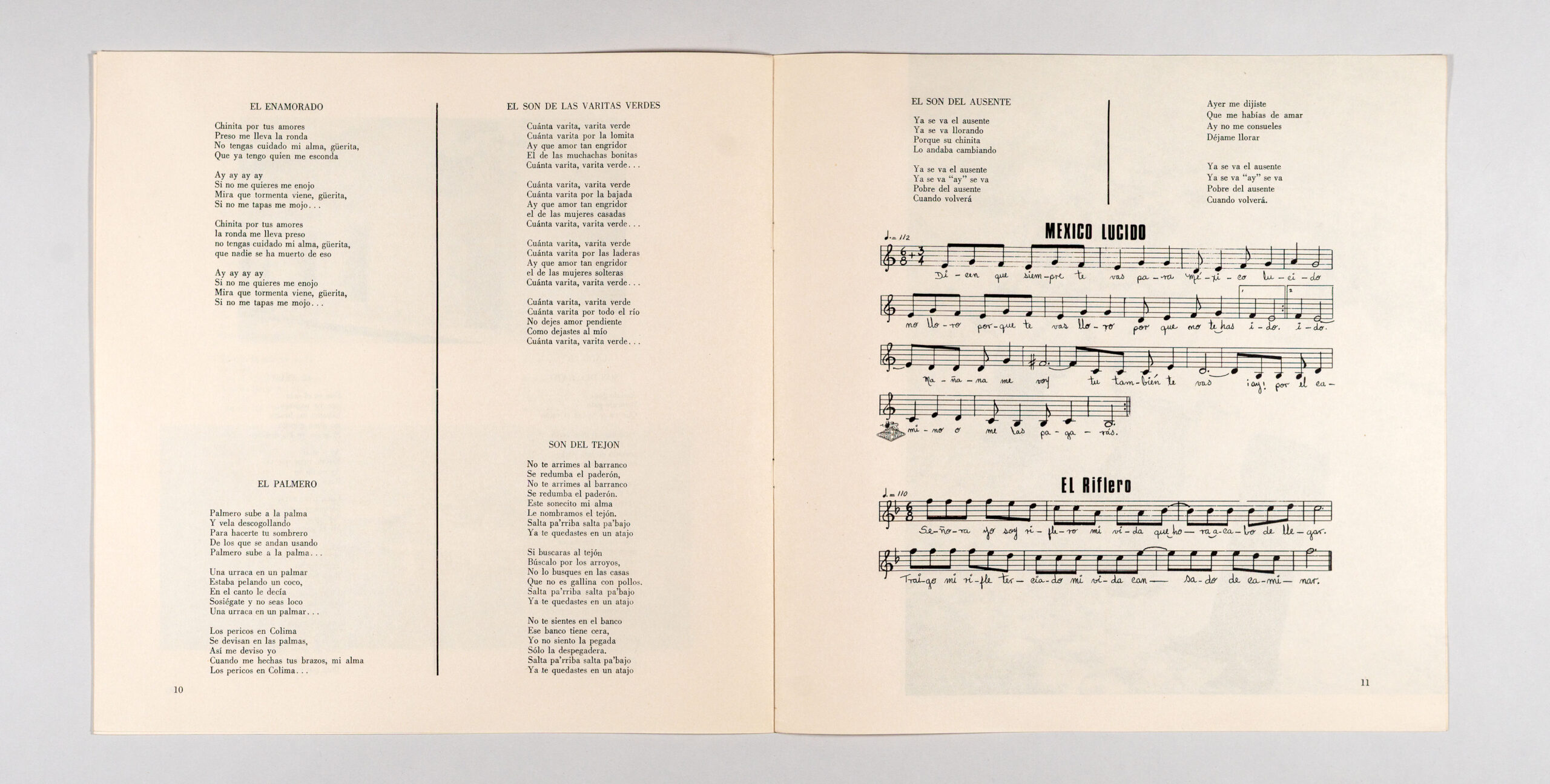
The rifleman.
Lucid Mexico.
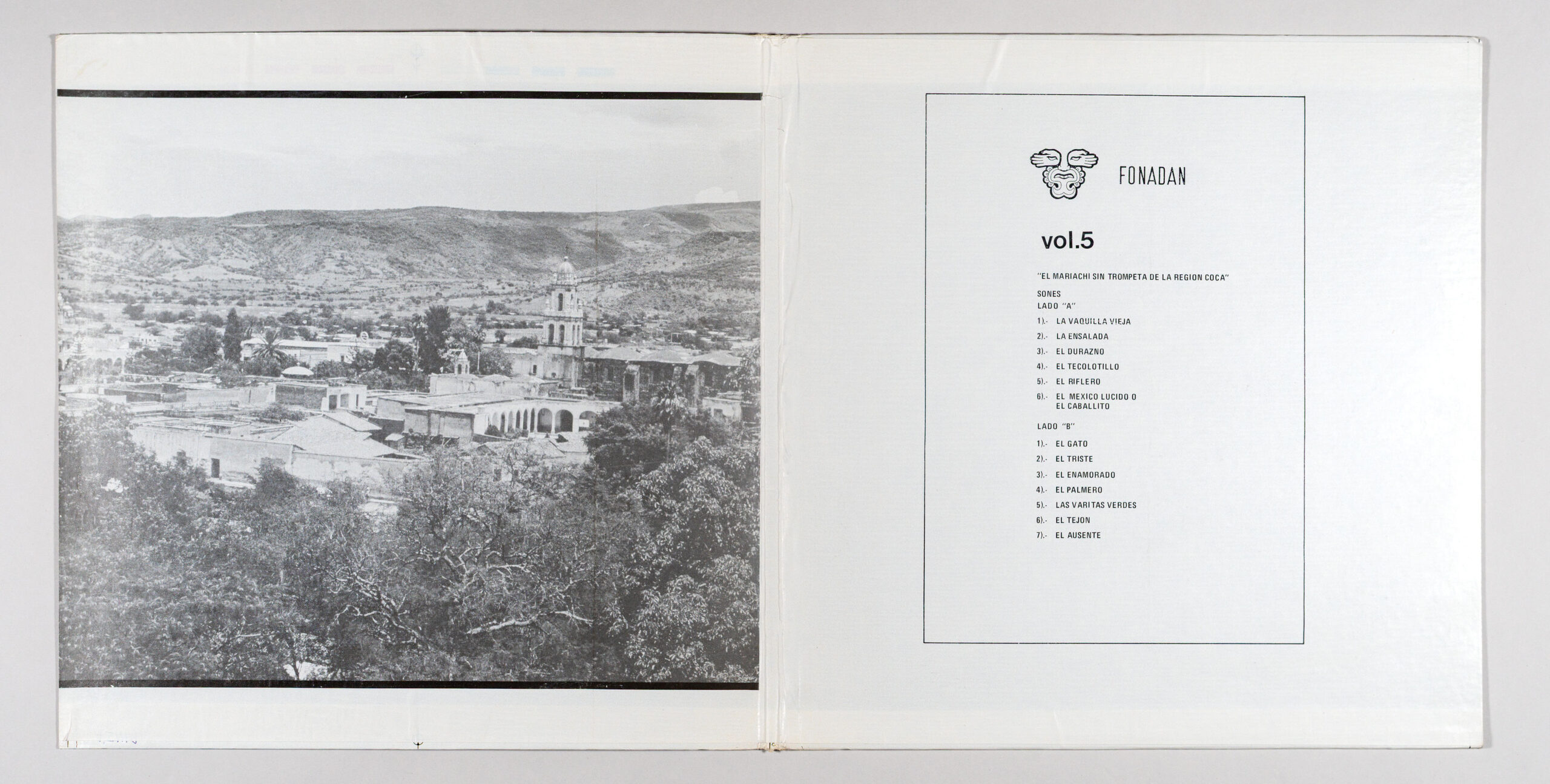
The cat.
The sad.
The lover.
The clapper.
The green wands.
Badger.
The absent.
Thirteen sones, a lucky number?, which I will in no way analyze with the critical scalpel of musicologists: I am not, nor are the vast majority of those who perhaps read these lines, daughters of my enthusiasm for what is proudly ours.
If it is necessary for my friends to offer an understandable account of what “El mariachi sin trumpetas” is musically, we transcribe the lyrics of some sones.
Let us live with so many forgotten or anonymous musicians, poets, their world of hardship, misery and even slavery, transmuted into their contagious joy; and let’s spread this music to our children, so profoundly Mexican, that it doesn’t need strange incentives to prevail.
Doctor Francisco Sanchez Flores.
“A” SIDE
THE SOUND OF THE HEIF
The heifer that I am looking for
it is not painted nor is it red
it’s a muddy cow
of the locked keys
oh, but yes, but no
you will tell him that he left
but yes, but no
you will tell him, i will tell him
You will tell the foreman
come for the plan
let the heifer dumbbell
with the gallant halter
oh, but yes, but no
you will tell him that he left
but yes, but no
you will tell him, i will tell him
Cowboys and caporals and
put the sense alert
that above the waterhole
there is a dead heifer
oh, but yes, but no
you will tell him that he left
but yes, but no
you will tell him, i will tell him
For “ay” comes the heifer
for “ay” it comes tilting
a calf “trai” at the foot
and another that is godsoning
oh, but yes, but no
you will tell him that he left
but yes, but no
You will tell him, I will tell him.
SOUND OF THE SALAD
Pour water sprinklers
Pour water sprinklers
That the watermelon dries up
That the watermelon dries up
Pour water on yours
That I will water mine
Pour water on yours
That I will water mine
At the Lemon farm
A winnowing has been offered
with all the cowgirl
They went to the Lemon
on this certain occasion
An ox rabbit followed
With determination they ran it
because the master arranged it
The foreman proposed
That that ox did hold on
A fandango formed them
with three bottles of wine
Drinking did not suit them
because he has been very bad
Here comes the foreman
on a muddy horse
Nice big and beautiful
That even gave off sparks
This will guide you
For owning the land
Contreras like a bitch
He also forced himself to help
in the middle of the race
The bitch wanted to pee
easy is to reach
Saddled the gray torilla
Firm then as an eagle
On the mule of the avio
She grabbed it with such verve
The whole hill was busy
The whole region walked
Within reach of that ox
fixed to the law
That the foreman sent them
The neglected ox was
When at the point they fell
It’s shame among cowboys
The one that an animal leaves
He has reached the line
His desire was very good
everyone grabbed tail
as by way of argument
This salad is composed
For all the missionaries
Cowboys and caporals
Have mercy on your hides
At the Lemon farm.
THE PEACH
Figs and peaches
On the tree they ripen
The eyes that love each other
From afar they greet each other
I have to eat a peach
From the trees of Puebla
I have to get away with my idea
Even if I don’t return to my land
I have to eat a peach
From the root to the bone
Doesn’t make her brunette
It will be my pleasure and that’s why
The willows in the boulevard
They sway with the air
This is how jealousy sways
Inside my heart
The willows among the pines
they sway sadly
Well we didn’t love each other that much
why did we hate each other
I’m leaving tomorrow tomorrow
There in Santa Ana I wait for you
There in the cane fields
You will hear the goldfinches sing.
SOUND OF THE TECHOLOTILLO
Owl bird
early bird
you will take him a letter
to the owner of my love
ticuruy guinea pig
ticuruy guinea pig
owl bird
early bird
you will take him a letter
to the owner of my love
There was a little owl
on a branch singing
the armadillo replied
in the shell you are giving me
ticuruy guinea pig
ticuruy guinea pig
the armadillo replied
in the shell you are giving me
if i were owl
I would not bother to fly
I was in my little nest
just raising me
ticuruy guinea pig
ticuruy guinea pig
if i were owl
I would not bother to fly
I was in my little nest
just raised me
THE RIFLEMAN
Lady, I am a rifleman
my life
What time did I just arrive
I bring my shotgun
my life
tired of walking
Lady, I am a rifleman
my life
I’m coming to the bridge
Composing my guaraches
my life
to keep walking
you are the one you told me
my life
What were you going to see first?
the stars on the ground
my life
what to stop me from loving
you are the one you told me
my life
With the soul you adored me
at all hours of the day
my life
When you “saw” me you cried.
LUCID MEXICO
—Music for “El Caballito”—
They say that you always leave
for Mexico lucid
I don’t cry because you’re leaving
I cry because you haven’t left
I’m going tomorrow
you are leaving too
“ouch” by the way
you will pay me
I come from lands below
Arriving store by store
and I have not been able to find
woman that affection has
I’m going tomorrow
you are leaving too
“ouch” by the way
you will pay me
you say you love me very much
don’t take me up so high
than the leaves on the tree
they don’t last a lifetime
I’m going tomorrow
you are leaving too
“ouch” by the way
you will pay me.
“B” SIDE
SOUND OF THE CAT
Come on cat
jump cat
That the mouse has already left you
I had my green cat
my life
sitting on a pad
meow meow meow
for catching a rat
my life
grabbed a jumper
meow meow meow
oh what the hell cat
and can’t find what to do
meow meow meow
for catching a rat
grabbed a jumper
I would like to be a white cat
to enter through your window
to be caressing you
all week
I would like to be a white cat
to enter through your window
to be caressing you
before dawn.
THE SAD
this is the heat
that I suffer
give me your arms
my little soul
If anything I deserve them
oh yes yes yes
That has nothing to do
oh no no no
I cry for that woman
how sad i am
Because you are leaving
“oh” by the way my life
You will pay me
oh yes yes yes
That has nothing to do
oh no no no
I cry for that woman
how sad i am
I can’t find what to do
lost drunk, my life
for that woman
oh yes yes yes
That has nothing to do
oh no no no
I cry for that woman.
THE LOVERS
Chinita for your loves
Prisoner takes me round
Don’t be careful my soul, güerita,
That I already have someone to hide me
Ay, ay, ay, ay
If you don’t love me I get angry
Look what a storm is coming, little girl
If you don’t cover me, I’ll get wet..
Chinita for your loves
the round takes me prisoner
don’t be careful my soul, little girl,
that no one has died of esc
Ay, ay, ay, ay
If you don’t love me I get angry
Look what a storm is coming, little girl
If you don’t cover me, I’ll get wet…
THE PALM TREE
Palmero climbs to the palm
And candle unraveling
to make your hat
Of those that are being used
Palmero goes up to the palm…
A magpie in a palm grove
She was shelling a coconut,
In her singing she told him
calm down and don’t be crazy
A magpie in a palm grove…
The parakeets in Colima
They are devised in the palms,
This is how I see myself
When you made me your arms, my soul
The parrots in Colima…
THE SOUND OF THE GREEN WANDS
How much wand, green wand
How much wand for the mound
Oh what a love so angry
The one with the pretty girls
How much wand, green wand…
How much wand, green wand
How much wand for the descent
Oh what a love so angry
that of married women
How much wand, green wand…
How much wand, green wand
How much wand down the slopes
Oh what a love so angry
the single women
How much wand, green wand…
How much wand, green wand
How much wand for the whole river
Do not leave pending love
how did you leave mine
How much wand, green wand…
SOUND OF THE BADGER
Don’t go to the ravine
The paderón is reduced,
Don’t go to the ravine
The paderón is reduced.
This little sound my soul
We named him the badger.
jump up jump down
You already stayed in a shortcut
If you were looking for the badger
Look for him by the streams,
Don’t look for it in the houses
That is not chicken with chickens.
jump up jump down
You already stayed in a shortcut
Don’t sit on the bench
That bank has wax,
I don’t feel the hit
Just the peel off.
jump up jump down
You already stayed in a shortcut
THE SOUND OF THE ABSENT
the absentee is already leaving
he’s already crying
because his chinita
I was changing it
the absentee is already leaving
It’s gone “oh” it’s gone
poor absentee
when she will return
Yesterday you told me
that you had to love me
oh don’t comfort me
Let me cry
The absentee is already leaving
It’s gone “oh” it’s gone
poor absentee
when will he return
LUCID MEXICO
THE RIFLEMAN
FONADAN, National Fund for the Development of Mexican Popular Dance, SEP culture
GENERAL DIRECTORATE:
JOSEFINA LAVALLE
“THE MARIACHI WITHOUT TRUMPETS FROM THE COCA REGION”
My enthusiasm listens in the mariachi, the music of Mexico. A feeling strengthened by José Rolón, when he listens to a hundred mariacheros gathered for the first time, playing “La negra”, a beloved son, not yet popular, whose lyrics excited Salvador Gálvez, “bold of my sorrows / paper eyes flying / tell everyone yes / but don’t tell them when”, and the moved teacher exclaims:
—- “This is our Jaliscian and very Mexican popular symphony.” The unforgettable act was attended by ixca, Chucho Estrada and José Cornejo Franco, in the theater of the State Museum, here in Guadalajara, in the year 1942.
A few years earlier, at a “pico de Gallo” in Cocula, Silvestre Revueltas had exclaimed in front of the mariachi:
— “How good they are, and they as if nothing”.
At that big party they had “reinforced” the mariachi with a vihuela, a sixth guitar and, added luxury, the saw harpoon.
Seven instruments playing in a group, I already said it once, that never bother the sense of hearing. The jubilant shout of some song could harass him more than four or five mariachis put together.
In the mariachi “without reinforcements”, the four instruments, the violin’s voice first: teacher and guide; the vihuela overflowing with the song that the man with the guitarrón also sings; and the second violin: serpentine of the first: the two break a string in creative outbursts.
They sing together; “one by one”; and chanting the lead vocal.
The mariachi musicians, when they play and sing, remain hieratic: only their mouths and hands move. If by chance a fleeting glimmer escapes from the bright eyes.
At the end of the son, and the violins sign it with its classic finale; if they are applauded or praised, they remain “business as usual.” That attitude, among the heirs of the Cocas, is delicacy. It should be named proud dignity. And so it always was, even when cinema, radio and television with their microphones, and the unconsciousness of the value of popular artistic expression, almost managed to disguise the dignity and modesty of poverty, with imported mimicry and invented costumes.
A mariachi from Cocula playing old sounds!
Dr. Francisco Sánchez Flores
“A” Side
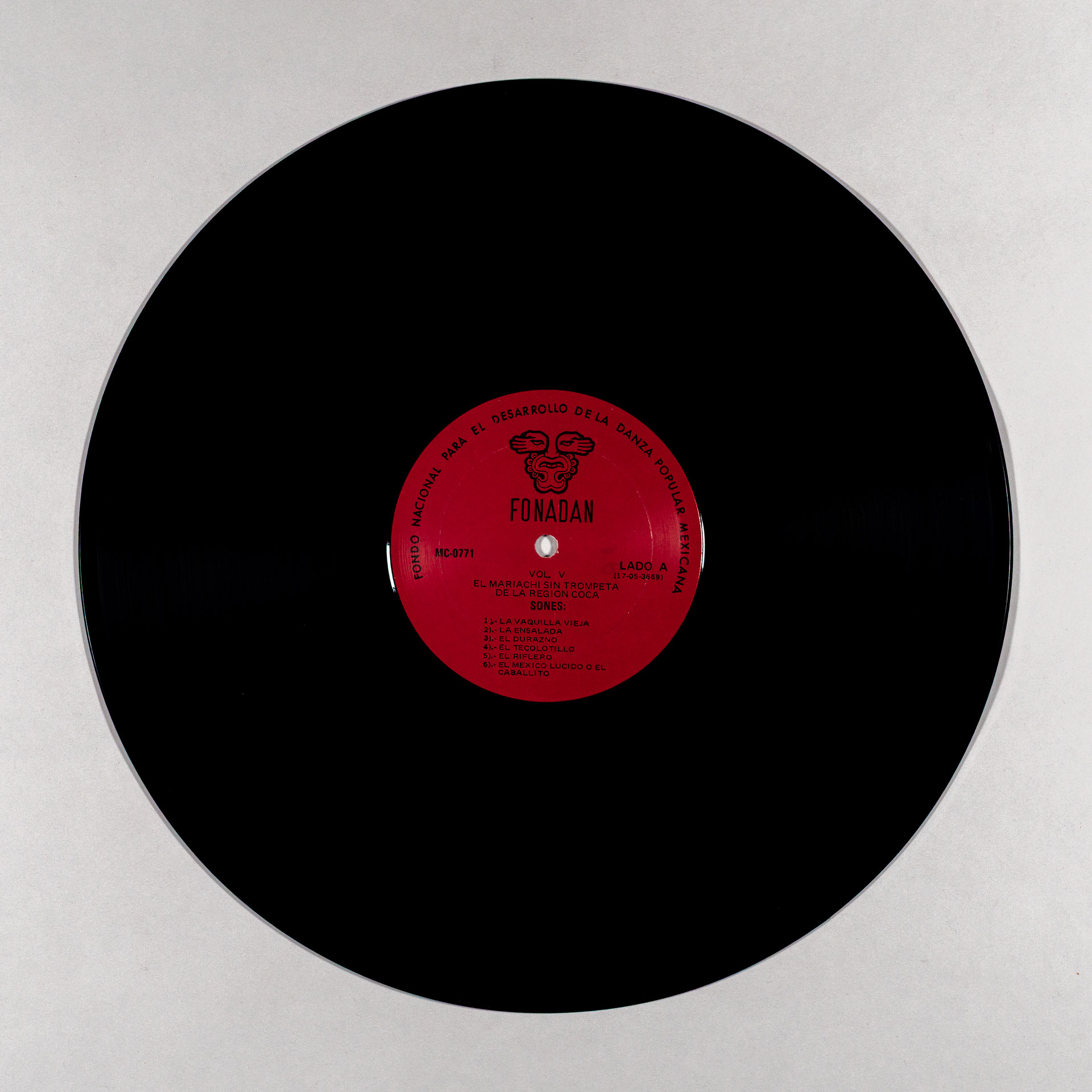
1).- THE OLD HEIF
2).- THE SALAD
3).- THE PEACH
4).- THE OWNED OWN
5).- THE RIFLEMAN
6).- THE LUCID MEXICO OR THE LITTLE HORSE
“B” Side
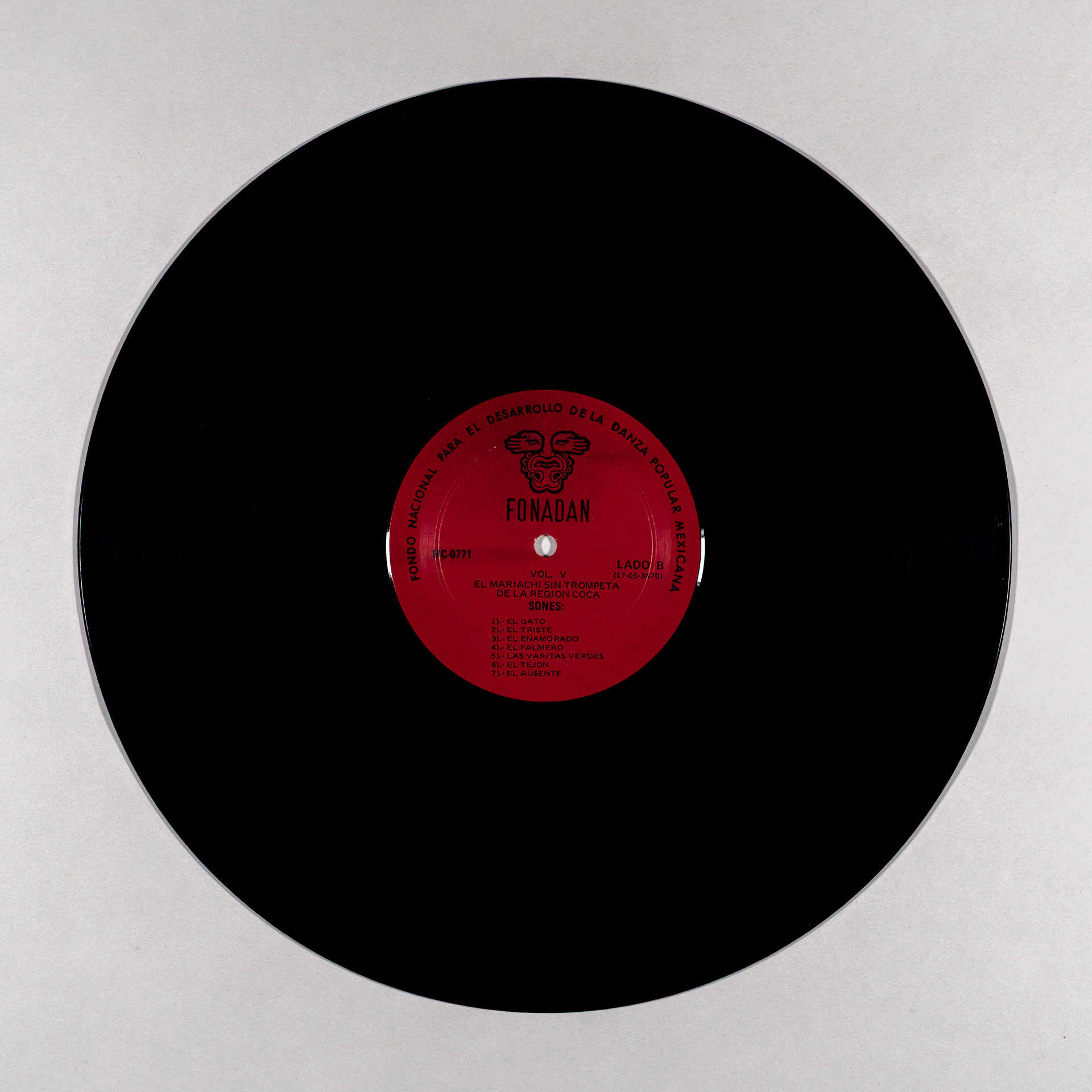
1).- THE CAT
2).- THE SAD
3).- THE LOVERS
4).- THE PALM TREE
5).- THE GREEN WANDS
6).- THE BADGER
7).- THE ABSENT
INCLUDES EXPLANATORY BROCHURE
Rights registered in accordance with the law.
Total or partial reproduction is prohibited
MADE IN MEXICO BY CBS/COLUMBIA INTERNACIONAL, S.A.
AV. SEPTEMBER 16 No. 784
NAUCALPAN, MEX.
CBS TRADEMARK
FONADAN
National Fund for the Development of Mexican Popular Dance.
Morena 215 – Tel. 536-03-98
Col. del Valle C.P. 03100
México, D. F.
CBS SPECIAL PRODUCTS
A CBS Record Service
MC-0771
Gallery:
Tracklist:
THE MARIACHI WITHOUT TRUMPET FROM THE COCA REGION
SIDE 1
- A1 The Old Heifer
Performer(s): The Mariachi Without Trumpets of the Coca Region - A2 The Salad
Performer(s): The Mariachi Without Trumpets of the Coca Region - A3 The Peach
Performer(s): The Mariachi Without Trumpets of the Coca Region - A4 El colotillo
Performer(s): The Mariachi Without Trumpets of the Coca Region - A5 The Rifleman
Performer(s): The Mariachi Without Trumpets of the Coca Region - A6 The Lucid Mexico Or The Little Horse
Performer(s): The Mariachi Without Trumpets of the Coca Region
SIDE 2
- B1 The Cat
Performer(s): The Mariachi Without Trumpets of the Coca Region - B2 The Sad
Performer(s): The Mariachi Without Trumpets of the Coca Region - B3 The Lover
Performer(s): The Mariachi Without Trumpets of the Coca Region - B4 El Palmero
Performer(s): The Mariachi Without Trumpets of the Coca Region - B5 The Green Wands
Performer(s): The Mariachi Without Trumpets of the Coca Region - B6 The Badger
Performer(s): The Mariachi Without Trumpets of the Coca Region - B7 The Absent One
Performer(s): The Mariachi Without Trumpets of the Coca Region
Credits:
ETHNOMUSICOLOGY: Mario Kuri-Aldana, coordinator; Joaquin Guzman Luna; Vincent Mendoza R.
CHOREOGRAPHY: Luis Felipe Obregón, coordinator; Evelia Beristain.
DISSEMINATION: Xóchitl Medina, coordinator.
AUDIOVISUAL DEPARTMENT: Rodolfo Velazco R, Coordinator; Alejandro Loranca, Photographer; Rubén Prado, Audio Technician.
GENERAL MANAGEMENT: Josefina Lavalle.