





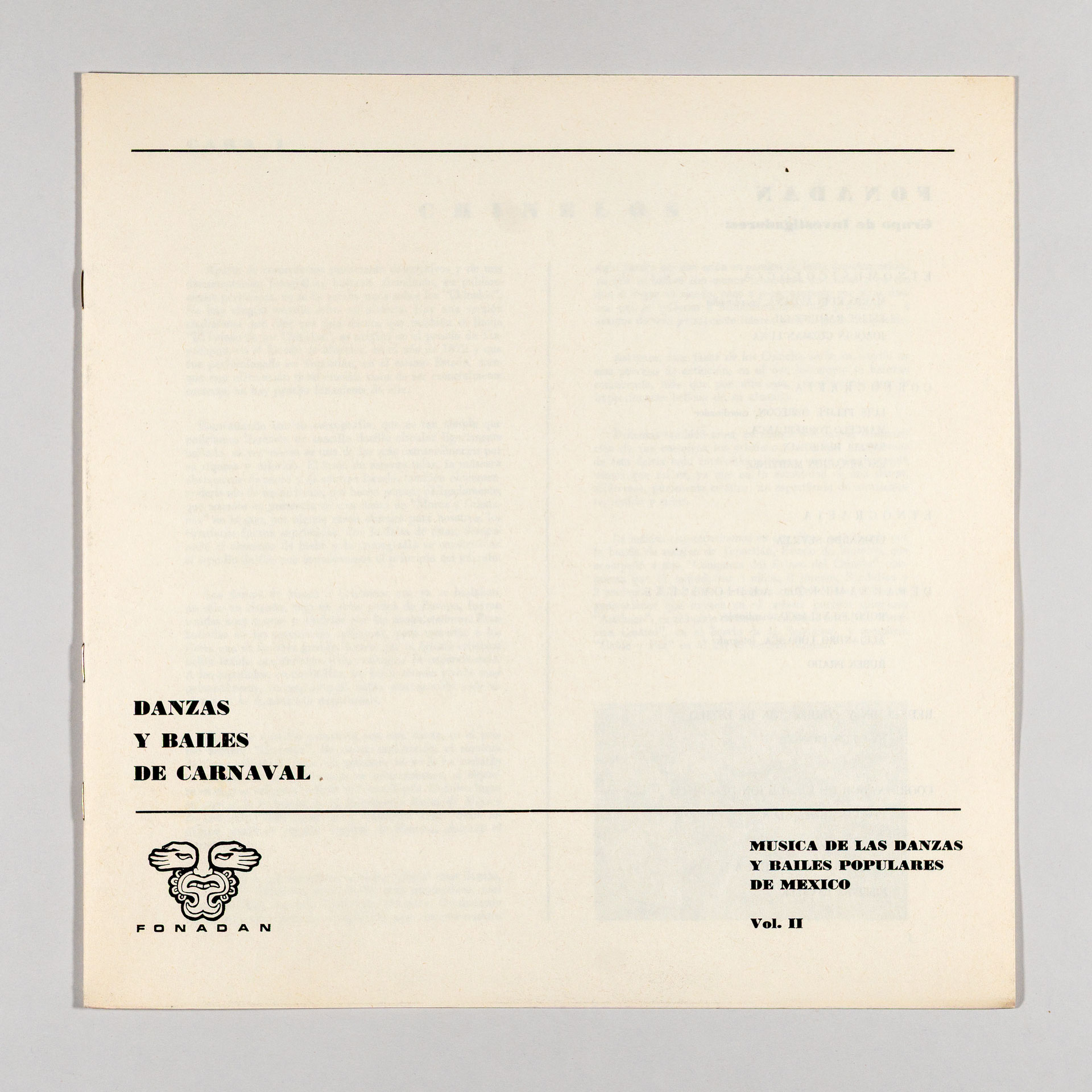
Carnival Dances — Volume II
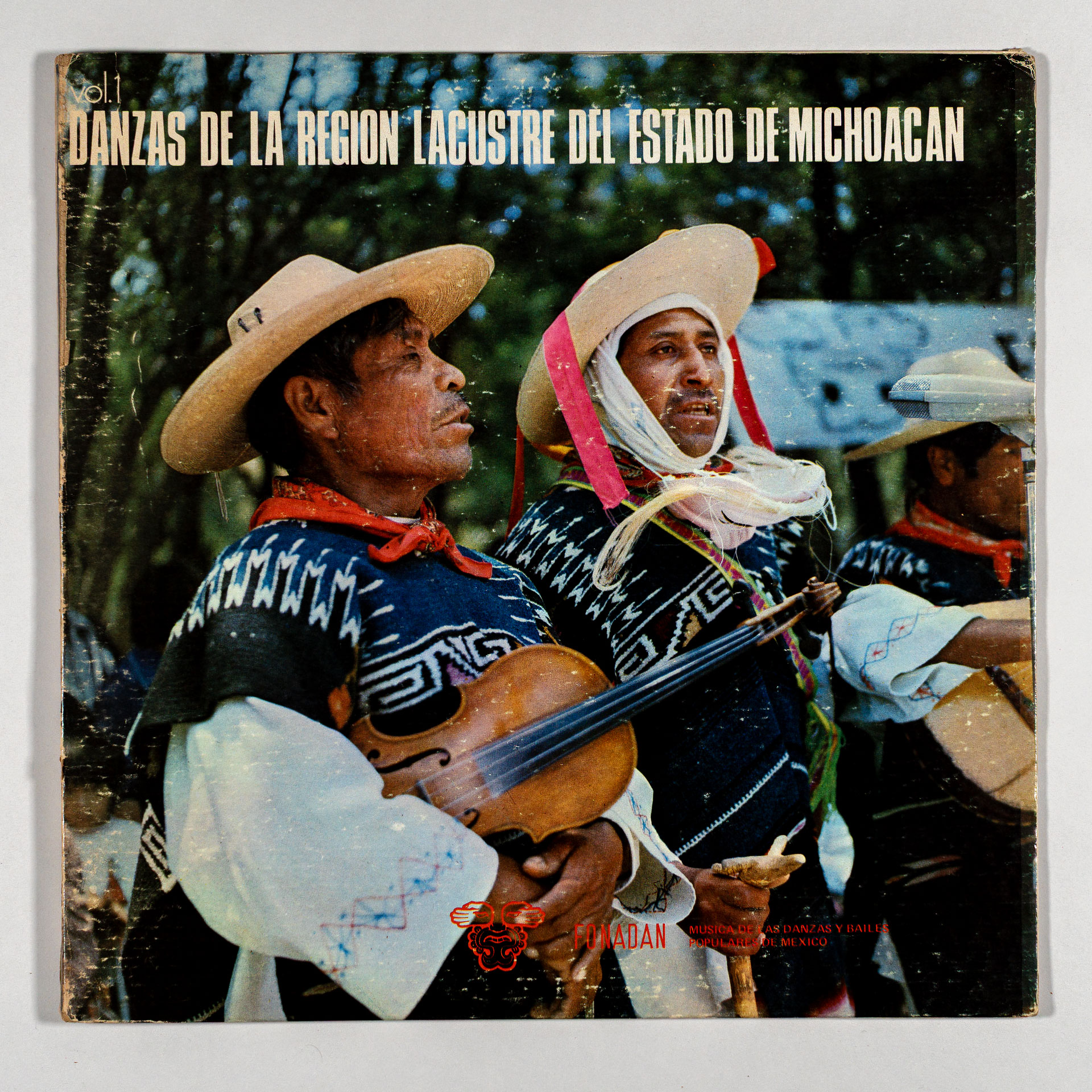
FONADAN
|
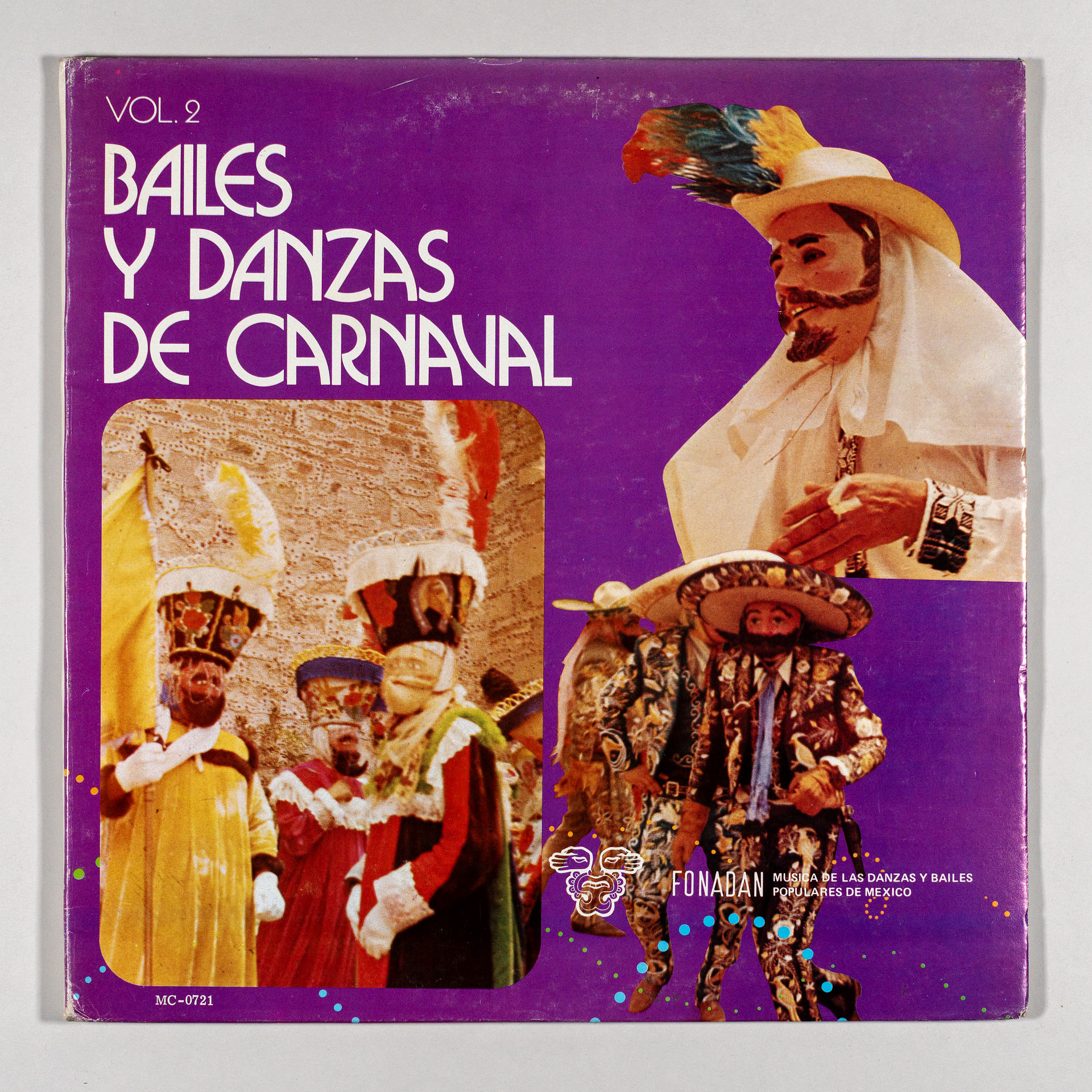
Label: FONADAN MC-0590 Format: Vinilo LP Album 12″ 33 1/3 rpm Gatefold Compilation Released: 1972 |
Country: México Genre: Folk World & Country Latin |
Info:
Carnival Dances — Volume II
Series: Music of the Traditional Dances of Mexico (Música de las danzas y bailes populares de México)
Institution: National Fund for the Development of Mexican Folk Dance (FONADAN)
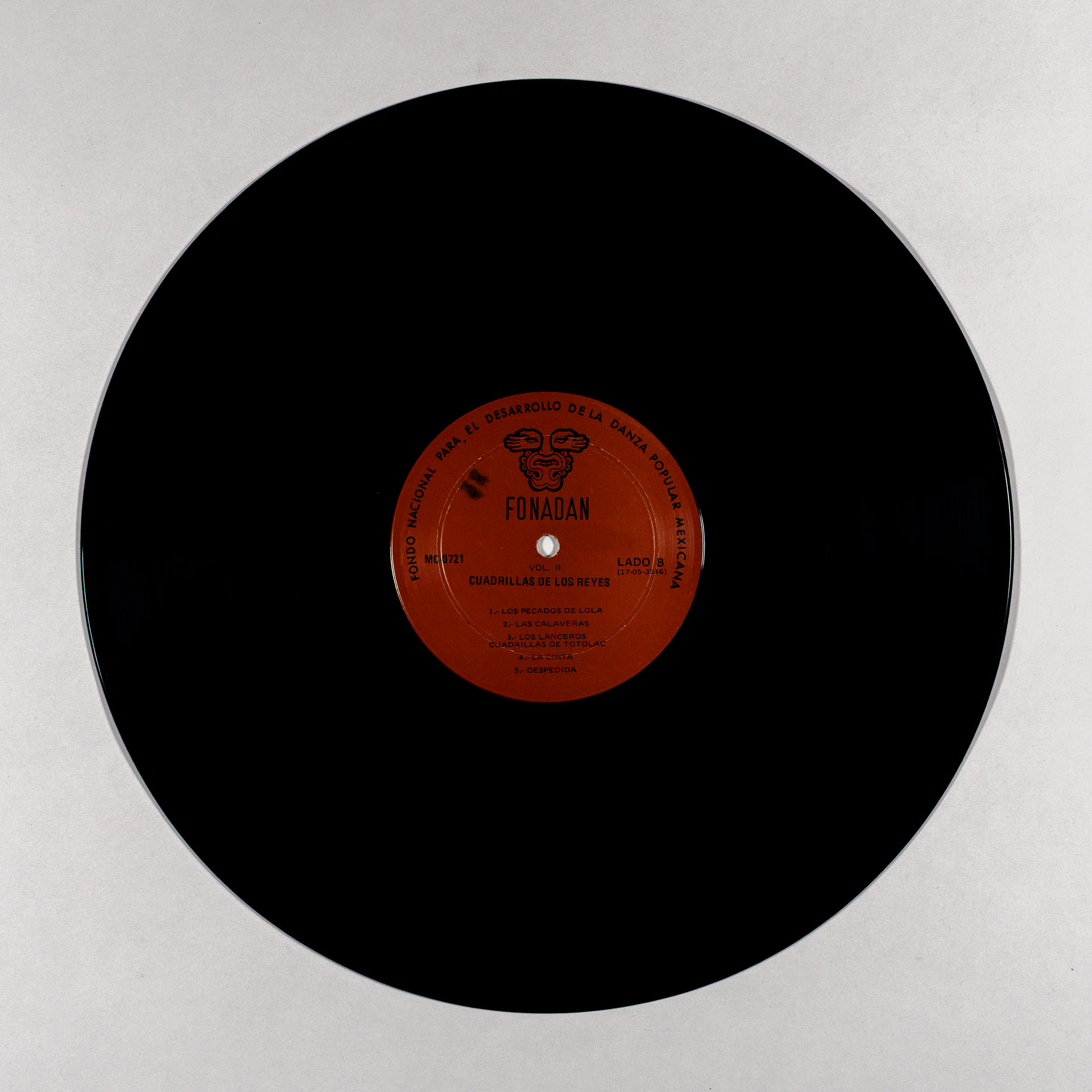
Catalog number: MC-0721
Format: Vinyl LP
Manufactured by: CBS/Columbia Internacional, S. A., Naucalpan, State of Mexico.
Bailes y danzas de carnaval, Volume II brings together musical field recordings and documentation of the Chinelos of Tepoztlán, Morelos, and the quadrille traditions of Los Reyes La Paz, State of Mexico, and San Juan Totolac, Tlaxcala. The original booklet examines the history, costumes, instruments, choreography, and historical transformations of these practices, and includes photographs and examples of musical notation.
The Chinelos of Tepoztlán
Background
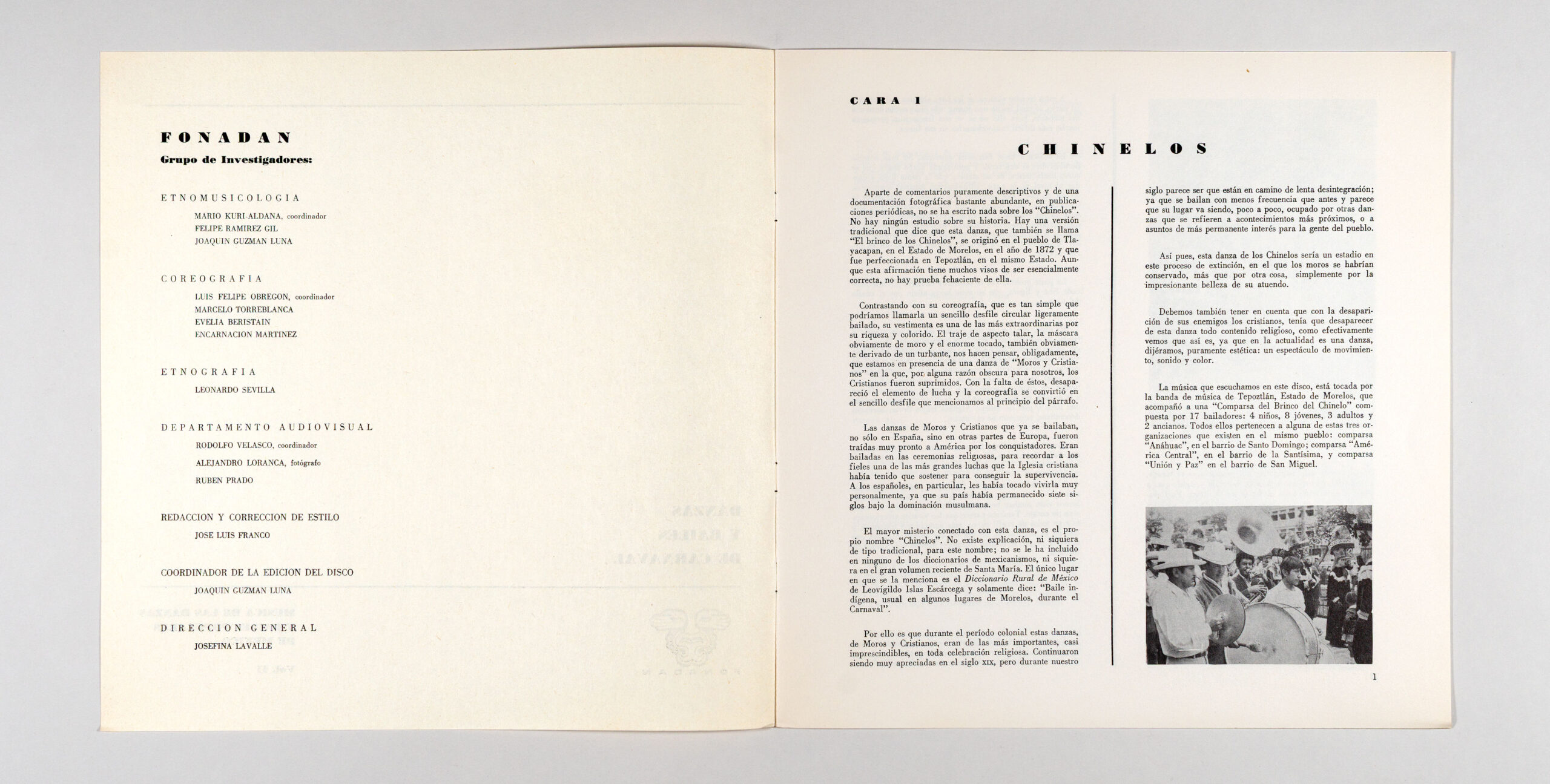
Aside from purely descriptive comments and a fairly abundant photographic record, virtually nothing has been written about the “Chinelos” in periodicals. There is no study of their history. One traditional account maintains that this dance, also known as the “Brinco de los Chinelos” (Chinelos’ Leap), originated in the town of Tlayacapan, in the state of Morelos, in 1872 and was subsequently refined in Tepoztlán, in the same state. Although this account appears substantially plausible, there is no conclusive evidence to support it.
In contrast to its choreography, so simple that it might be described as a lightly danced circular procession, its costume is among the most extraordinary in richness and color. The long, robe-like garment, the clearly Moorish mask, and the enormous headdress, evidently derived from a turban, inevitably suggest a “Moors and Christians” dance in which, for reasons unknown to us, the Christian characters have been eliminated. Without them, the element of combat disappeared, and the choreography became the simple procession described above.
The dances of Moors and Christians, already performed in Spain and elsewhere in Europe, were brought to the Americas very early by the conquistadors. They were performed during religious ceremonies to remind the faithful of one of the greatest struggles the Christian Church had endured to survive. The Spanish in particular had experienced this history directly, since their country had remained under Muslim rule for seven centuries.
The greatest mystery surrounding this dance is its very name, “Chinelos.” There is no explanation for it, not even a traditional one; it has not been included in dictionaries of Mexican expressions, not even the substantial recent volume by Santamaría. The only mention appears in Leovigildo Islas Escárcega’s Diccionario Rural de México, which merely defines it as an “indigenous dance, customary in some places in Morelos during Carnival.”
During the colonial period, dances of Moors and Christians were therefore among the most important, indeed almost indispensable, elements of religious celebrations. They continued to be highly valued during the nineteenth century, but in the twentieth century they seem to have been undergoing a gradual decline: they are performed less frequently, and their place appears to be taken little by little by other dances relating to more recent events or subjects of lasting interest to local communities.
The Chinelos dance may thus represent one stage in this process of disappearance, in which the Moorish characters survived largely because of the striking beauty of their attire.
We must also bear in mind that, once their Christian adversaries had disappeared, the religious content of the dance would necessarily have disappeared as well. Indeed, today it is, so to speak, a purely aesthetic dance: a spectacle of movement, sound, and color.
The music heard on this record is performed by the band of Tepoztlán, Morelos, accompanying a “Comparsa del Brinco del Chinelo” comprising 17 dancers: four children, eight young people, three adults, and two elderly participants. All belong to one of three organizations in the town: the “Anáhuac” comparsa in the Santo Domingo neighborhood, “América Central” in La Santísima, and “Unión y Paz” in San Miguel.
Chinelo Costumes
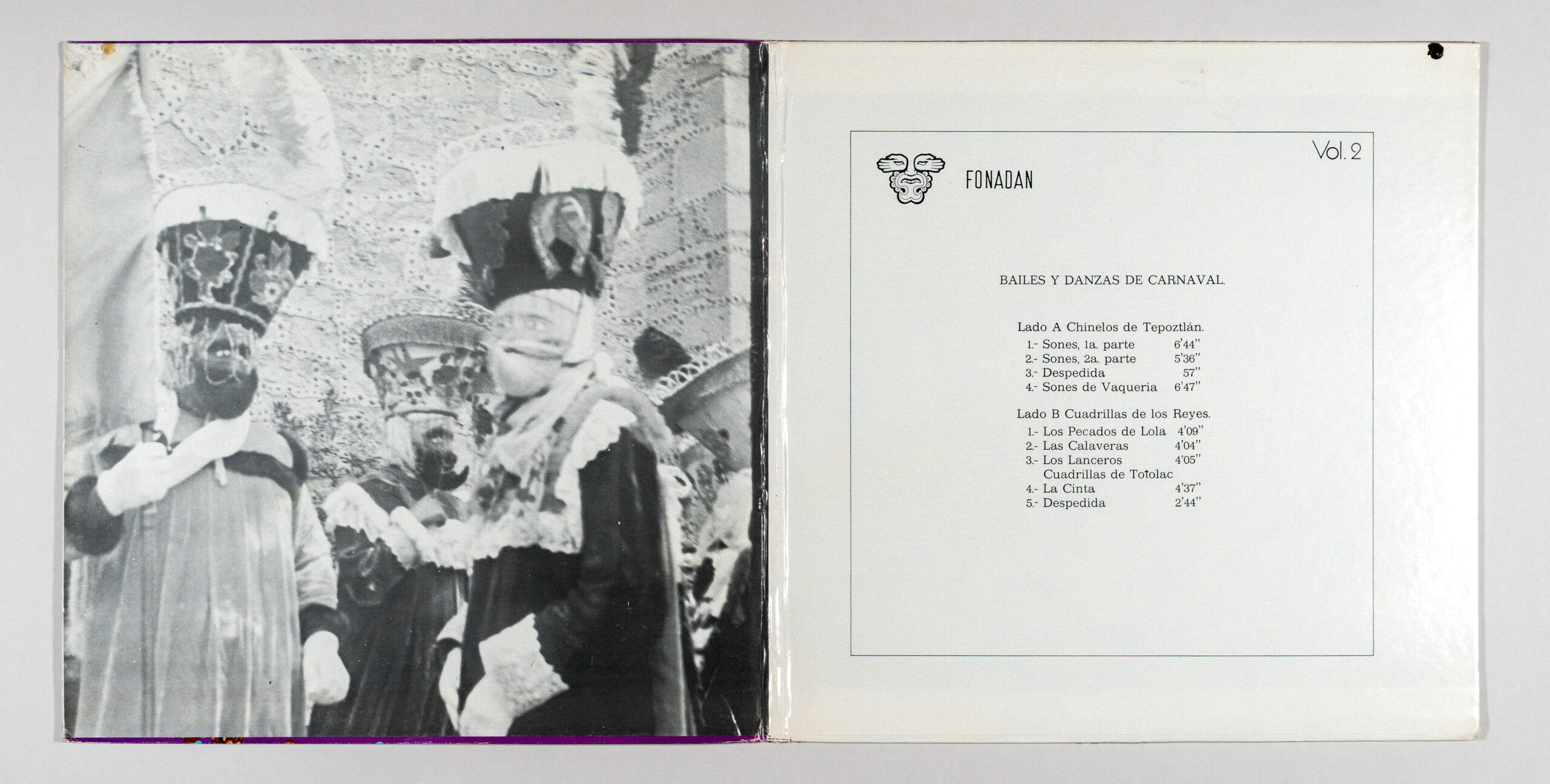
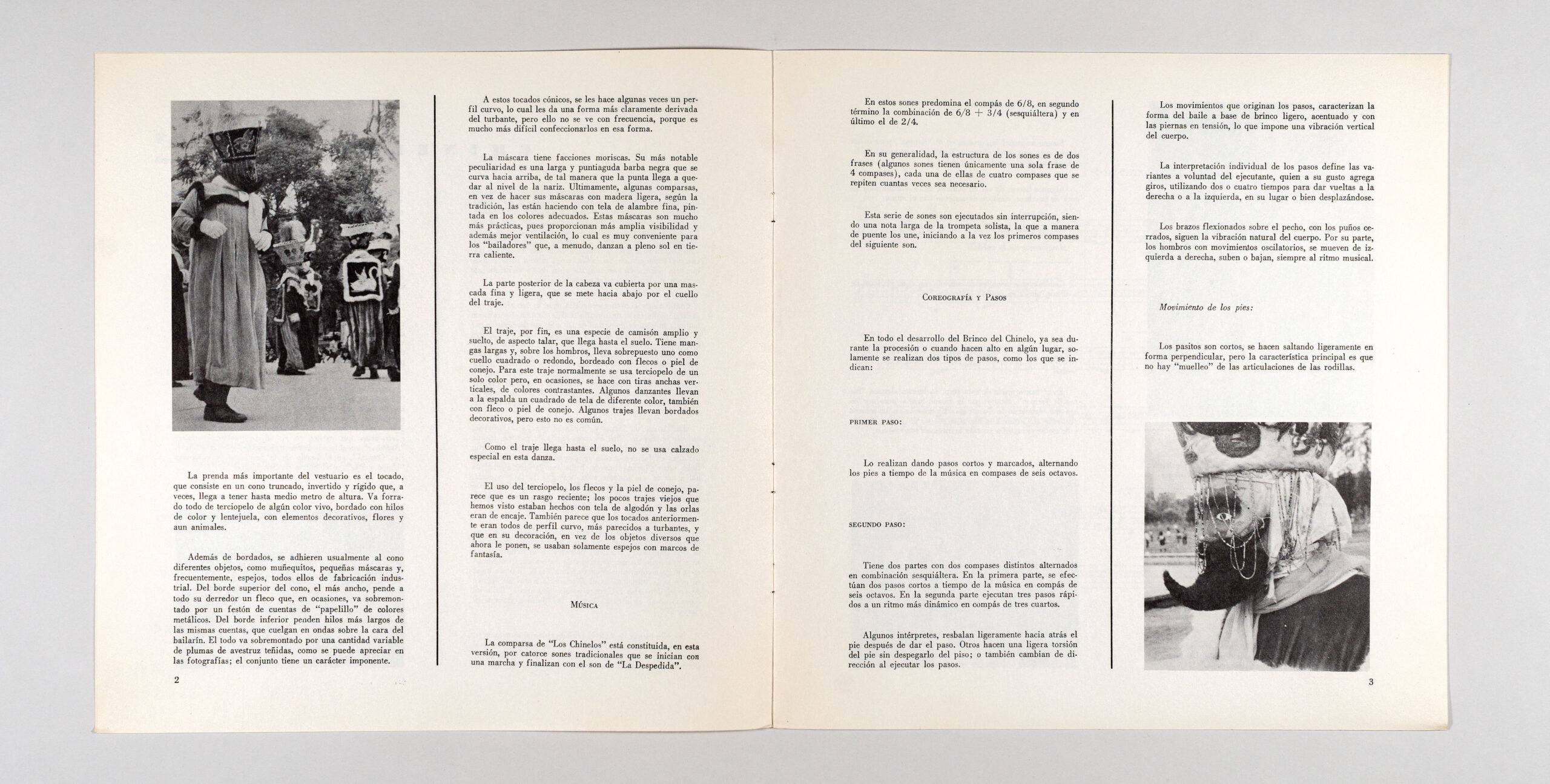
The most important element of the costume is the headdress: a rigid, inverted truncated cone that can sometimes reach half a meter in height. It is completely covered in brightly colored velvet, embroidered with colored threads and sequins, with decorative motifs, flowers, and even animals.
Various objects are generally attached to the cone in addition to the embroidery, such as small dolls, miniature masks, and, frequently, mirrors, all industrially manufactured. From the upper and wider edge hangs a fringe all around, sometimes topped with a garland of metallic-colored beads. Longer strings of the same beads hang from the lower edge, forming waves over the dancer’s face. The whole arrangement is crowned with a varying number of dyed ostrich feathers, as the photographs show; the overall effect is imposing.
These conical headdresses are sometimes given a curved profile, making their derivation from the turban more evident. This is uncommon, however, because such a shape is much more difficult to make.
The mask has Moorish features. Its most striking characteristic is a long, pointed black beard that curves upward until its tip is level with the nose. More recently, rather than making masks from light wood as tradition prescribes, some comparsas have begun to make them from fine wire mesh painted in the appropriate colors. These masks are far more practical, providing greater visibility and ventilation, particularly useful to dancers who often perform in full sunshine in a hot climate.
The back of the head is covered by a fine, lightweight scarf tucked down inside the neckline of the costume.
The costume itself is a loose, long, robe-like garment reaching the ground. It has long sleeves and, across the shoulders, a square or rounded collar decorated with embroidery, fringe, or rabbit fur. Usually the garment is made from velvet in a single color, but sometimes it is assembled from broad vertical strips in contrasting colors. Some dancers wear a square of differently colored fabric on the back, likewise edged with fringe or rabbit fur. Decorative embroidery occasionally appears on the robes, though this is not common.
Because the garment reaches the ground, no special footwear is used for this dance.
The use of velvet, fringe, and rabbit fur seems to be relatively recent; the few older costumes we have seen were made from cotton fabric and had lace edging. It also appears that earlier headdresses all had curved outlines, resembling turbans more closely, and that their decoration consisted only of mirrors in ornamental frames rather than the variety of objects now attached to them.
Music
In this version, the “Los Chinelos” comparsa performs fourteen traditional sones, beginning with a march and ending with the son known as “La Despedida.”
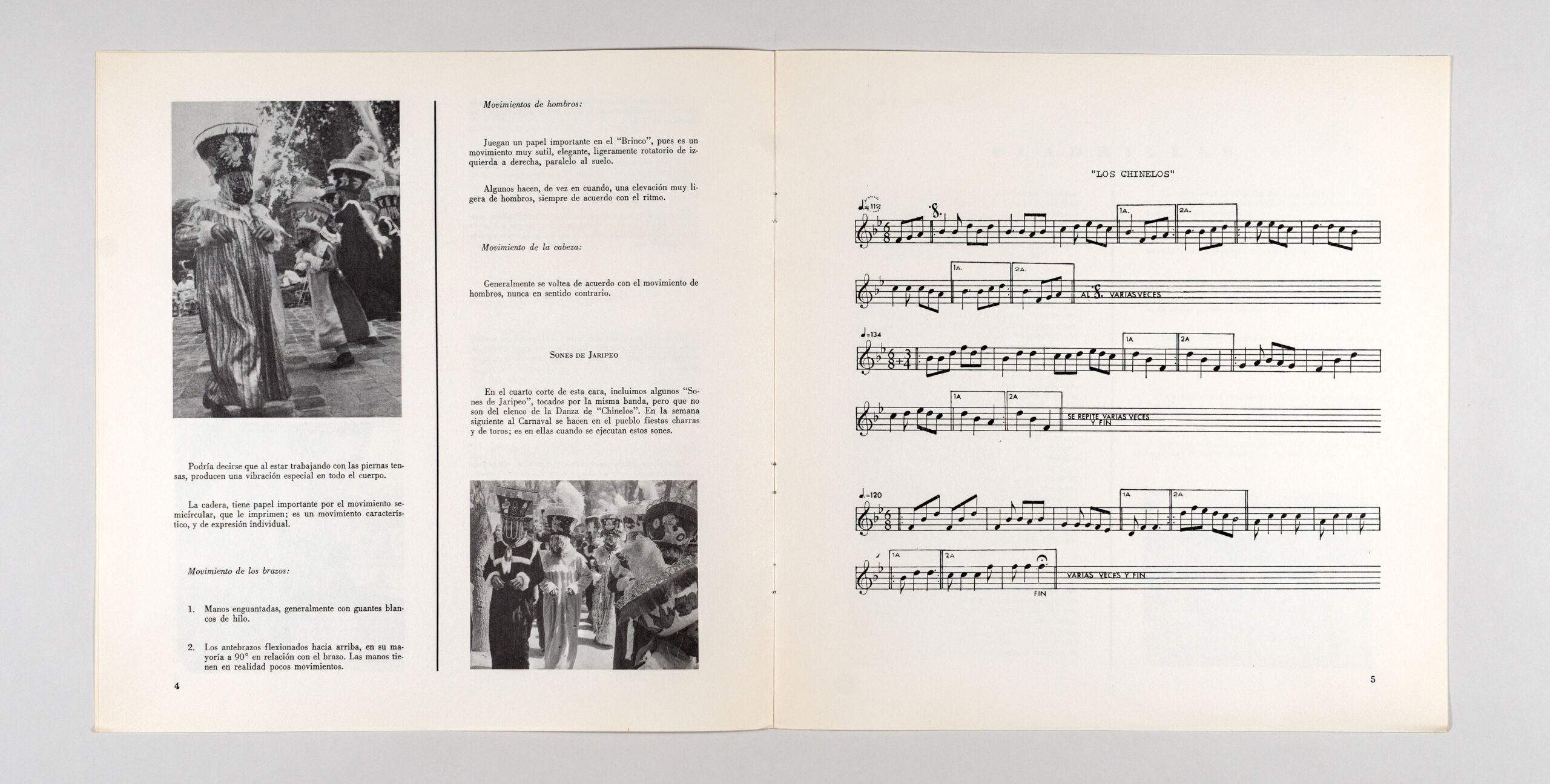
The prevailing meter of these sones is 6/8, followed by the combination of 6/8 and 3/4 known as sesquiáltera, and finally 2/4.
Generally, the sones are structured in two phrases, each four measures long, repeated as many times as necessary. A few sones consist of only one four-measure phrase.
The sequence is played without interruption. A sustained note from the solo trumpet serves as a bridge between sones while also introducing the opening measures of the next one.
Choreography and Steps
Throughout the Brinco del Chinelo, whether in procession or when the dancers stop at a particular location, only two basic kinds of steps are used:
First step: Short, emphatic steps are taken, alternating the feet in time with the music in 6/8.
Second step: This comprises two parts alternating between two meters in a sesquiáltera pattern. First, dancers take two short steps in time with the 6/8 music. In the second part, they execute three quick steps at a livelier pace in 3/4.
Some dancers slide one foot slightly backward after stepping. Others twist the foot slightly without lifting it from the ground, or change direction as they move.
These steps give the dance its characteristic light but pronounced jumping motion, performed with tense legs, which produces a vertical vibration throughout the body.
Individual interpretations introduce variations according to the dancer’s preference. They may add turns taking two or four beats, rotating left or right either on the spot or while moving forward.
The arms, bent across the chest with closed fists, follow the body’s natural vibration. Meanwhile, the shoulders oscillate from left to right, rising or falling, always in time with the music.
Foot movement: The steps are short, involving slight vertical hops. Their defining feature, however, is the absence of springing movement in the knee joints.
One might say that keeping the legs tense creates a distinctive vibration throughout the body.
The hips play an important role through a semicircular motion that is both characteristic and open to individual expression.
Arm movement: The hands are gloved, usually in white cotton gloves. The forearms are raised and bent, generally at a 90-degree angle to the upper arms. The hands themselves move very little.
Shoulder movement: The shoulders are important to the “Brinco”: their movement is subtle, elegant, and slightly rotational, moving horizontally from left to right. Some performers occasionally lift their shoulders very slightly, always following the rhythm.
Head movement: The head generally turns in the same direction as the shoulders, never in the opposite direction.
Sones de Jaripeo
On the fourth track of this side, we have included several “Sones de Jaripeo,” performed by the same band but not belonging to the repertoire of the Chinelos dance. During the week following Carnival, the town holds equestrian festivities and bull-related celebrations; these are the occasions on which these sones are performed.
The Cuadrillas (Quadrilles)
Historical Background
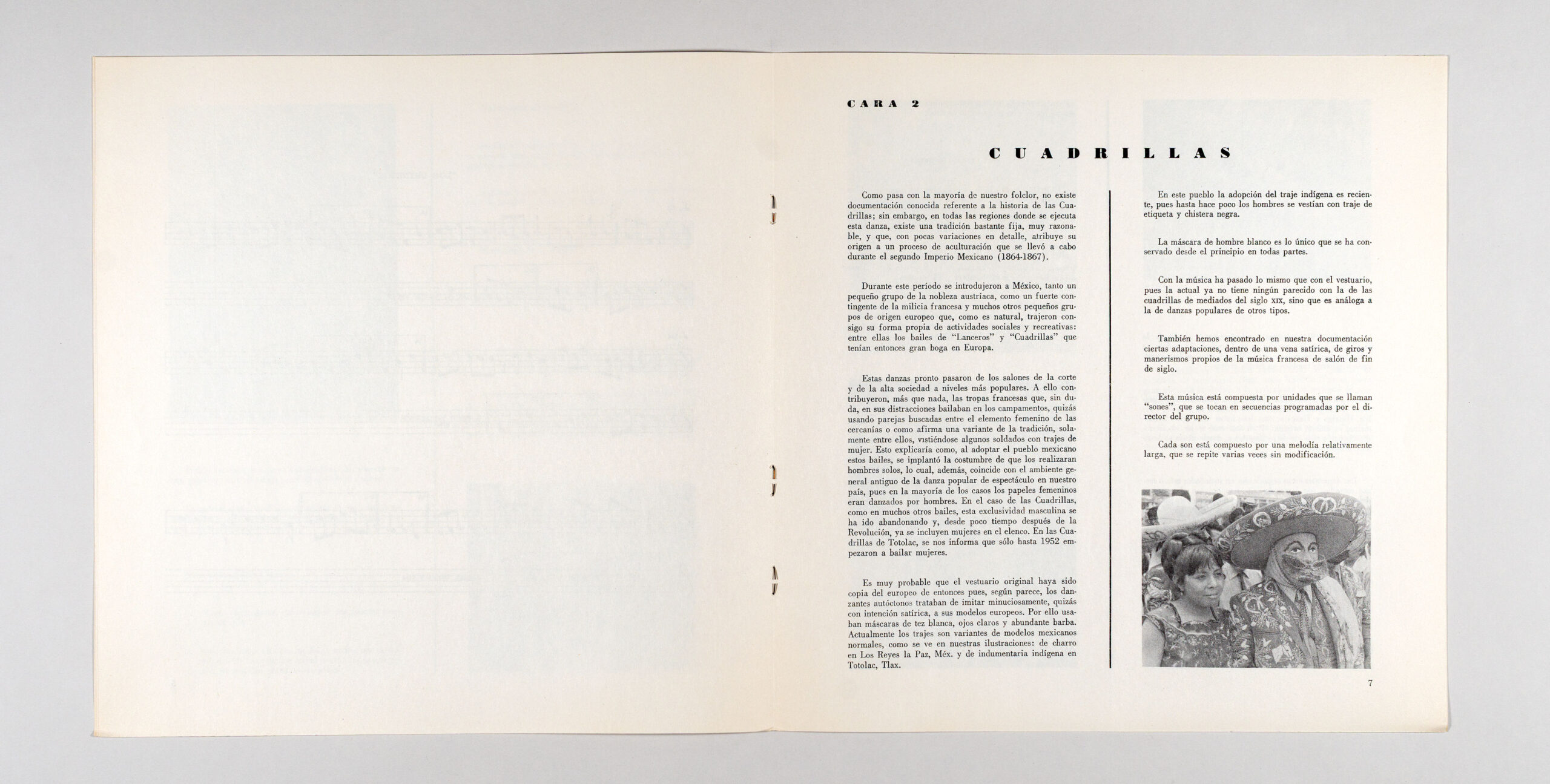
As with much of our folklore, no known documentary history of the Cuadrillas exists. Nevertheless, throughout the regions where this dance is performed, there is a fairly consistent and plausible tradition which, with minor variations, attributes its origin to a process of cultural adaptation during the Second Mexican Empire (1864–1867).
During that period, a small group of Austrian nobles, a substantial contingent of French troops, and several other groups of European origin arrived in Mexico. Naturally, they brought their own social and recreational customs, including the “Lancers” and “Quadrilles,” then extremely fashionable in Europe.
These dances soon moved beyond court and high-society ballrooms into more popular settings. French soldiers played a particularly important part in this transition, undoubtedly dancing for recreation in their camps, perhaps with women from nearby communities or, according to one version of the tradition, only among themselves, some soldiers dressing as women. This might explain how, when Mexican communities adopted these dances, it became customary for men to perform all the roles. That practice also coincided with the older general tradition of popular performance dances in Mexico, where female roles were often performed by men. In the Cuadrillas, as in many other dances, this exclusively male participation has gradually changed: women began to join the groups shortly after the Revolution. We are told that women did not begin participating in the Cuadrillas of Totolac until 1952.
The original costumes were probably copied from the European dress of the period, since local dancers apparently attempted to imitate their European models very closely, perhaps with satirical intent. For that reason they wore masks showing pale complexions, light-colored eyes, and abundant facial hair. Today, the costumes are variations on recognizable Mexican styles, as the illustrations show: charro attire in Los Reyes La Paz, State of Mexico, and indigenous-style clothing in Totolac, Tlaxcala.
In Totolac, this adoption of indigenous-style clothing is recent; until not long ago, men wore formal suits and black top hats.
The mask representing a white man is the only element that has been preserved everywhere since the beginning.
The music has changed in much the same way as the clothing: its current form no longer resembles that of the mid-nineteenth-century quadrilles, but is akin to the music of other popular dances.
Our documentation also reveals certain satirical adaptations of turns of phrase and mannerisms characteristic of late-nineteenth-century French salon music.
The music consists of units called sones, performed in sequences determined by the group’s director.
Each son consists of a relatively long melody repeated several times without alteration.
Celebrations and Organization of the Cuadrillas
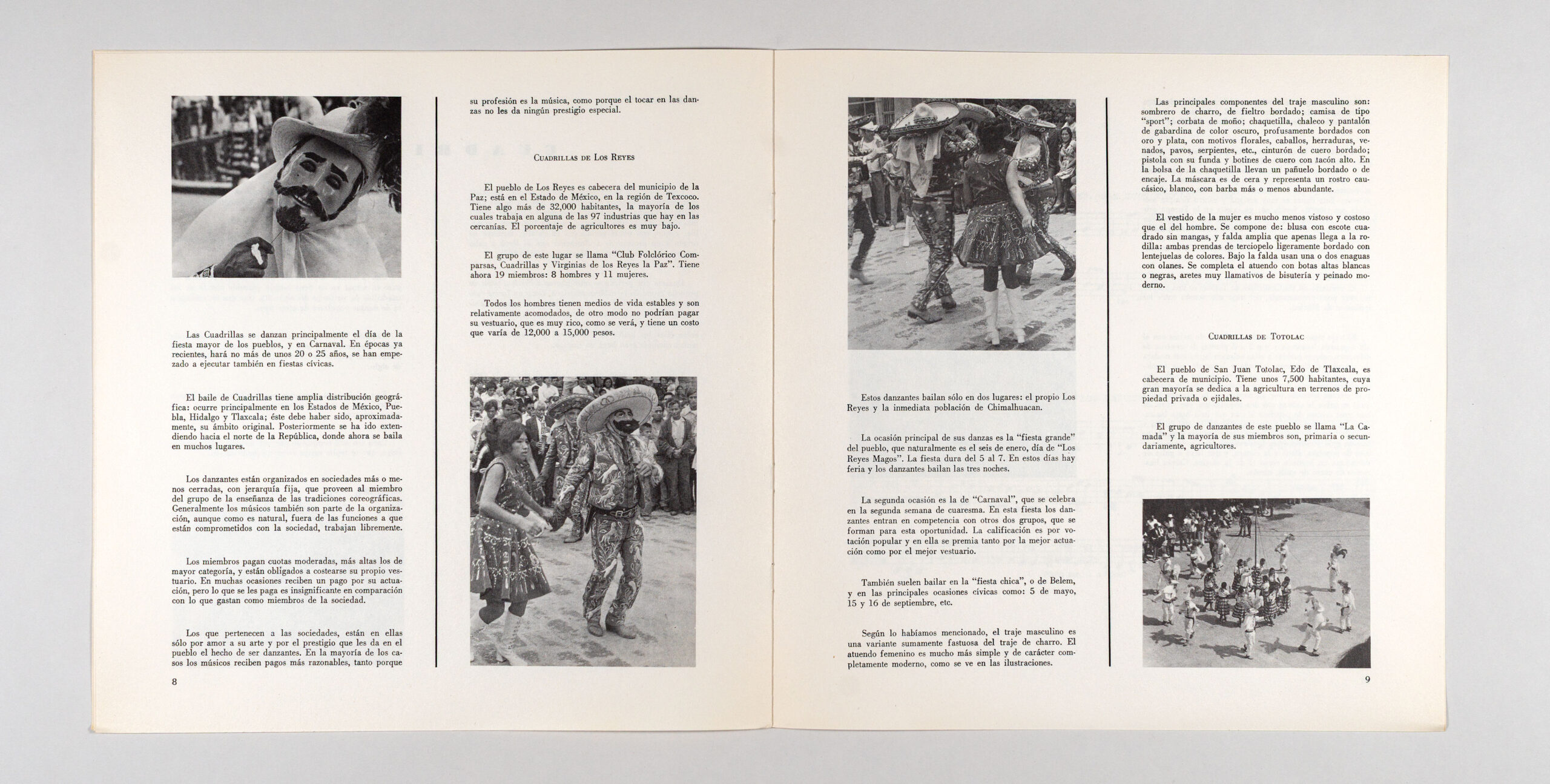
The Cuadrillas are performed mainly during the principal feast days of towns and during Carnival. More recently—no more than twenty or twenty-five years ago, according to the original account—they also began to be performed at civic celebrations.
The Cuadrillas have a wide geographical distribution, mainly in the states of Mexico, Puebla, Hidalgo, and Tlaxcala, which probably formed their original territory. Subsequently, the dance spread northward across the country and is now performed in many places.
The dancers are organized into relatively closed associations with fixed hierarchies, through which members learn the choreographic traditions. Musicians generally belong to these organizations as well, though they are free to work elsewhere when not fulfilling their obligations to the association.
Members pay moderate dues, with those of higher rank paying more, and are required to finance their own costumes. They are often paid for performances, but these fees are insignificant compared with the expenses they incur as members of the association.
The members belong to these societies out of love for their art and because being a dancer confers prestige within the community. Musicians generally receive more reasonable payment, both because music is their profession and because performing for the dances does not bring them any special social prestige.
Cuadrillas of Los Reyes
The town of Los Reyes is the seat of the municipality of La Paz, in the Texcoco region of the State of Mexico. According to the booklet’s period account, it had somewhat more than 32,000 inhabitants, most working in one of the 97 industrial businesses nearby. Only a small percentage worked in agriculture.
The local group is called the “Club Folklórico Comparsas, Cuadrillas y Virginias de los Reyes la Paz.” At the time documented, it had 19 members: eight men and eleven women.
All the men had stable livelihoods and were relatively well-off; otherwise, they could not have afforded their elaborate costumes, which the booklet reports cost between 12,000 and 15,000 pesos at the time.
These dancers perform in only two places: Los Reyes itself and the neighboring town of Chimalhuacán.
The principal occasion is the town’s main festival, held on January 6 in honor of the Three Kings. The celebrations run from January 5 to 7, with a fair and dancing on all three nights.
The second occasion is Carnival, celebrated during the second week of Lent. For this festival, the dancers compete with two other groups formed for the occasion. Winners are selected by popular vote, with awards for both performance and costume.
They also dance during the smaller festival known as the “Fiesta Chica,” or Belén, and on major civic holidays such as May 5 and September 15 and 16.
As noted above, the men’s costume is a particularly sumptuous variation on the charro outfit. The women’s attire is considerably simpler and entirely modern in style, as seen in the illustrations.
The principal elements of the men’s costume are an embroidered felt charro hat, a sport-style shirt, a bow tie, and a short jacket, waistcoat, and dark gabardine trousers richly embroidered in gold and silver with flowers, horses, horseshoes, deer, turkeys, snakes, and other motifs. They also wear an embroidered leather belt, a pistol and holster, and high-heeled leather ankle boots. An embroidered or lace handkerchief is carried in the jacket pocket. The wax mask represents a pale, European-looking face with a beard of varying fullness.
The women’s outfit is less elaborate and costly. It consists of a sleeveless blouse with a square neckline and a full skirt reaching just above the knee, both made of lightly embroidered velvet decorated with colored sequins. Beneath the skirt they wear one or two ruffled petticoats. Tall white or black boots, conspicuous costume-jewelry earrings, and a modern hairstyle complete the ensemble.
Cuadrillas of Totolac
The town of San Juan Totolac, Tlaxcala, is a municipal seat. According to the booklet, it had around 7,500 inhabitants, most engaged in agriculture on privately owned or communal ejido land.
The town’s dance group is called “La Camada,” and most of its members work in agriculture as either their main or secondary occupation.
Totolac’s major feast is held on the third Sunday in January. It combines observances associated with the Holy Name of Jesus, celebrated on January 2, and Saint John’s Day on June 24.
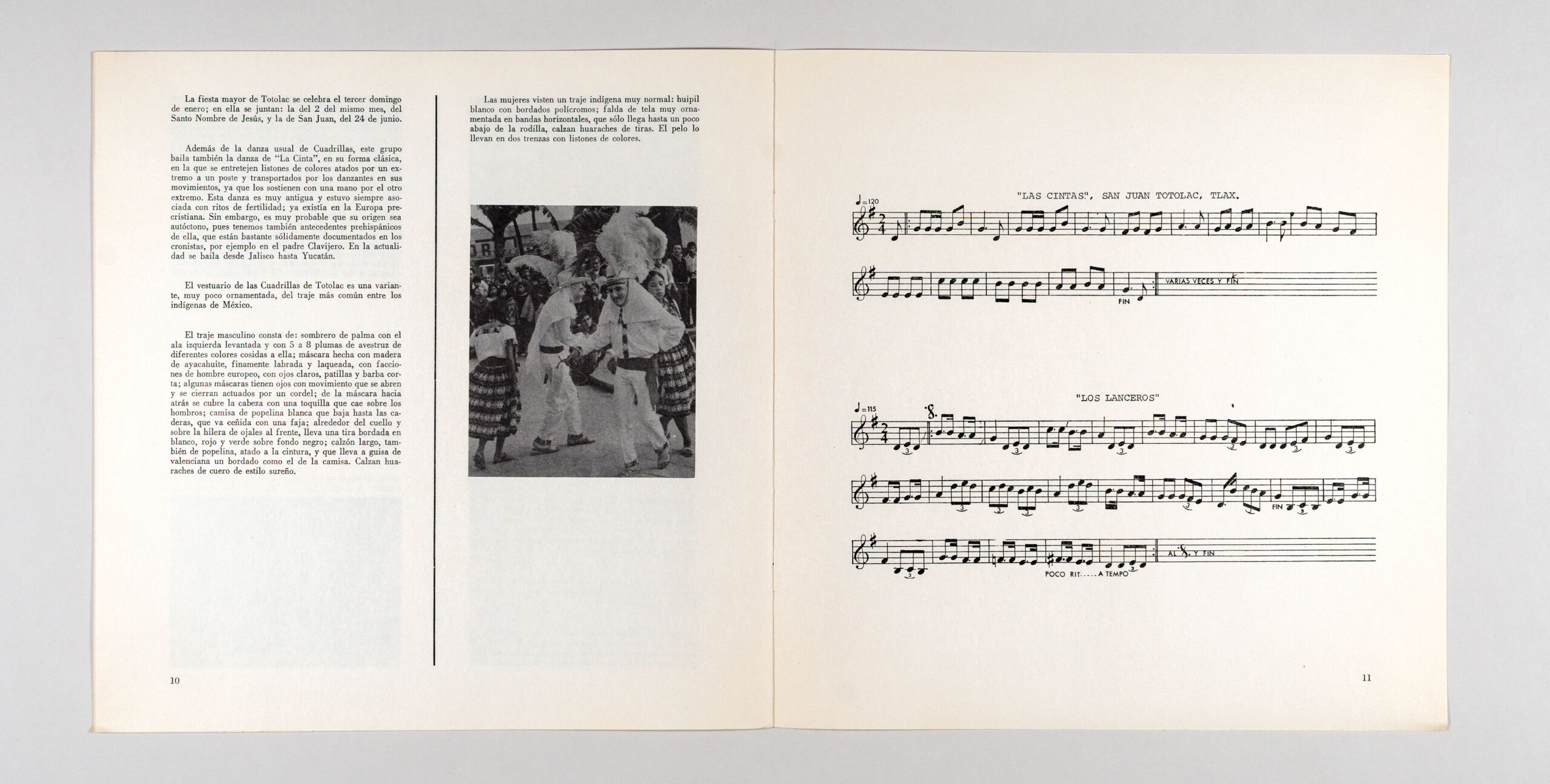
In addition to the customary Cuadrillas, the group also performs “La Cinta” (the ribbon dance) in its classical form. Colored ribbons attached at one end to a pole are woven together by dancers who hold the other ends as they move. This is a very old dance, historically associated with fertility rites and known in pre-Christian Europe. The booklet nevertheless suggests that its local origin may be indigenous, citing pre-Hispanic precedents reported by chroniclers including Father Clavijero. At the time of the account, it was performed from Jalisco to Yucatán.
The costume worn in the Cuadrillas of Totolac is a lightly ornamented variation of clothing commonly worn by indigenous people in Mexico.
The men wear a palm hat with the left side of the brim raised, decorated with five to eight ostrich feathers of different colors. The finely carved and lacquered mask is made from ayacahuite wood and portrays a European-looking man with light eyes, sideburns, and a short beard. Some masks have movable eyes that open and close by means of a cord. A scarf extends from the back of the mask and falls over the shoulders. A white poplin shirt reaches the hips and is held by a sash; around the neck and down the front opening, a decorative band is embroidered in white, red, and green against black. Long poplin trousers are tied at the waist and have decorative embroidery near the cuffs matching the shirt. Southern-style leather huaraches complete the attire.
The women wear a customary indigenous-style costume: a white huipil with multicolored embroidery and a skirt decorated with horizontal bands, falling just below the knees. They wear strappy huaraches and arrange their hair in two braids tied with colored ribbons.
Tracklist
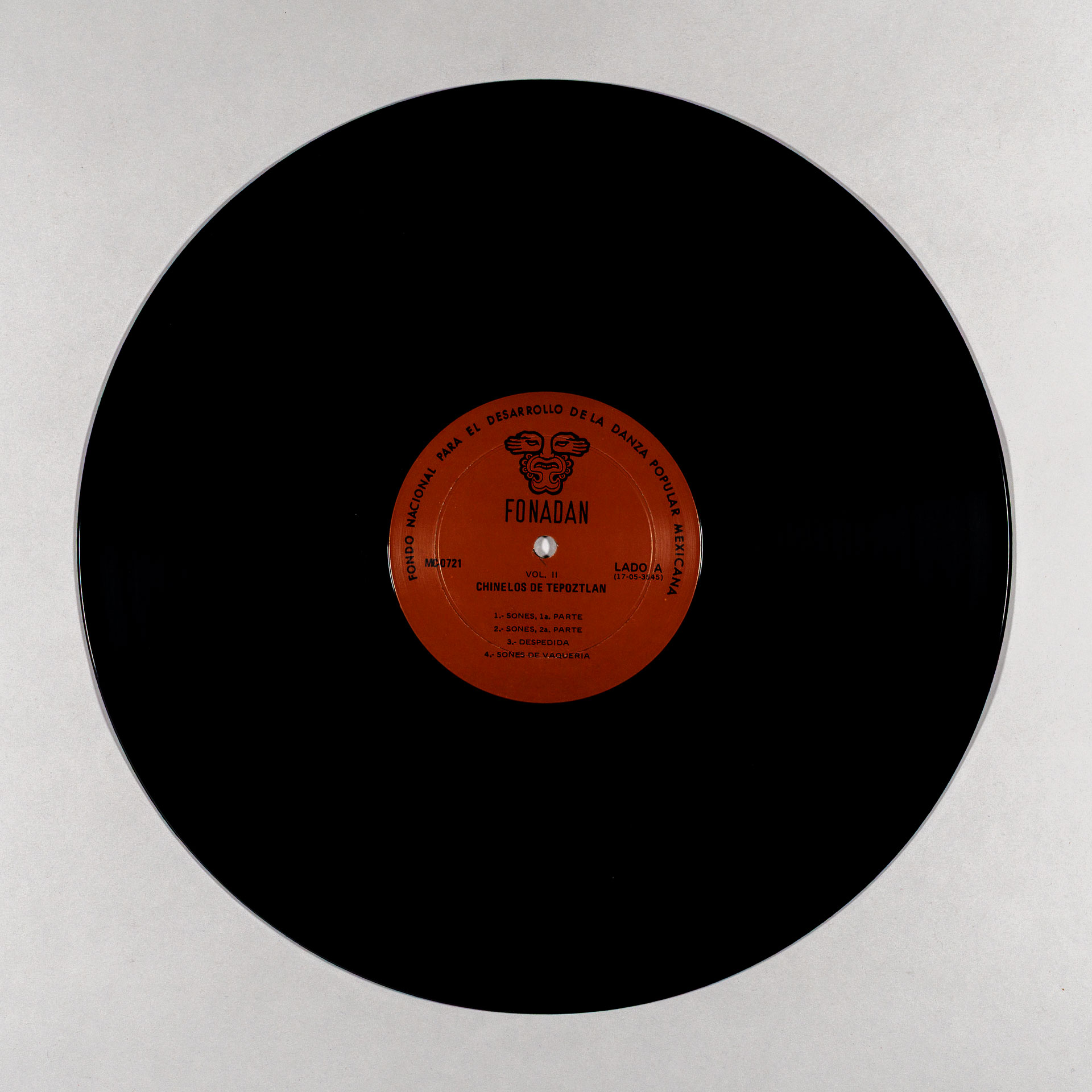
Side A — Chinelos de Tepoztlán
- Sones, 1a. parte — 6:44
- Sones, 2a. parte — 5:36
- Despedida — 0:57
- Sones de Vaquería — 6:47
Side B — Cuadrillas de Los Reyes y de Totolac
- Los Pecados de Lola — 4:09
- Las Calaveras — 4:04
- Los Lanceros (Cuadrillas de Totolac) — 4:05
- La Cinta — 4:37
- Despedida — 2:44
Musical Scores Reproduced in the Booklet
The booklet includes examples of musical notation titled “Los Chinelos,” “Las Cintas” (San Juan Totolac, Tlaxcala), and “Los Lanceros.” These are graphic musical scores and cannot be faithfully reproduced as ordinary text; they can be consulted in the original photographs.
Credits
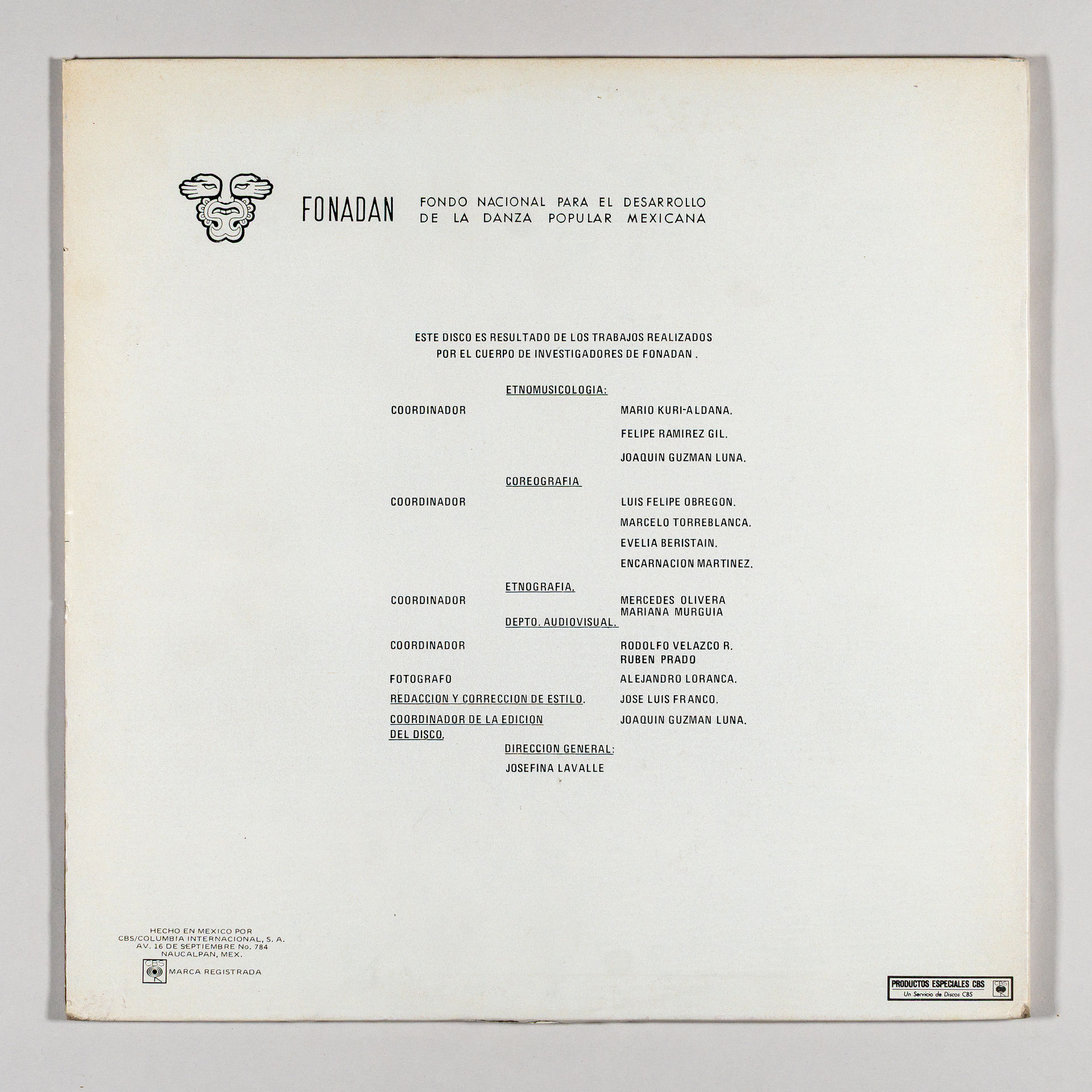
This record is the result of work carried out by FONADAN’s research team.
Ethnomusicology
Coordinator: Mario Kuri-Aldana.
Felipe Ramírez Gil.
Joaquín Guzmán Luna.
Choreography
Coordinator: Luis Felipe Obregón.
Marcelo Torreblanca.
Evelia Beristáin.
Encarnación Martínez.
Ethnography
Coordination: Mercedes Olivera and Mariana Murguía.
Researcher listed in the booklet: Leonardo Sevilla.
Audiovisual Department
Coordinator: Rodolfo Velazco R.
Rubén Prado.
Photography: Alejandro Loranca.
Writing and copyediting: José Luis Franco.
Record edition coordinator: Joaquín Guzmán Luna.
General director: Josefina Lavalle.
Manufacturing: Made in Mexico by CBS/Columbia Internacional, S. A., Av. 16 de Septiembre No. 784, Naucalpan, Mexico.
Archival note: The contextual text is based on the original booklet and retains its historical interpretations and references, which should be read in light of the period in which it was published. Punctuation has been regularized, and the material has been integrated into a continuous text rather than organized by photograph. Musical scores remain in graphic form.
Galería:
Tracklist:
Carnival Dances — Vol. II
FONADAN · MC-0721
Side A — Chinelos of Tepoztlán
-
Sones, Part 1 — 6:44
-
Sones, Part 2 — 5:36
-
Farewell — 0:57
-
Vaquería Sones — 6:47
Side B — Quadrilles of Los Reyes
-
Lola’s Sins — 4:09
-
The Skulls — 4:04
-
The Lancers (Totolac Quadrilles) — 4:05
-
The Ribbon — 4:37
-
Farewell — 2:44
Credits:
Credits
Production: National Fund for the Development of Mexican Folk Dance (FONADAN).
Ethnomusicology:
-
Mario Kuri-Aldana — Coordinator.
-
Felipe Ramírez Gil.
-
Joaquín Guzmán Luna.
Choreography:
-
Luis Felipe Obregón — Coordinator.
-
Marcelo Torreblanca.
-
Evelia Beristáin.
-
Encarnación Martínez.
Ethnography:
– Leonardo Sevilla.
Audiovisual Department:
-
Rodolfo Velazco R. — Coordinator.
-
Rubén Prado.
Photography: Alejandro Loranca.
Writing and Copyediting: José Luis Franco.
Record Edition Coordination: Joaquín Guzmán Luna.
General Direction: Josefina Lavalle.
Manufacturing: CBS/Columbia Internacional, S. A., Naucalpan, State of Mexico.
Series: Music of Mexico’s Traditional Dances and Folk Dances, Vol. II.
Catalog Number: MC-0721.
 Various – Bailes Y Danzas De Carnaval (Vol. 2)