





Category
Quick shop
Type at least 1 character to search
Back to top

Label: INAH-SEP  INAH-25, LME-167

Released: 1984

Country: Mexico

Info:

Stidxa riunda guendanabani ne guenda guti sti binni zaa

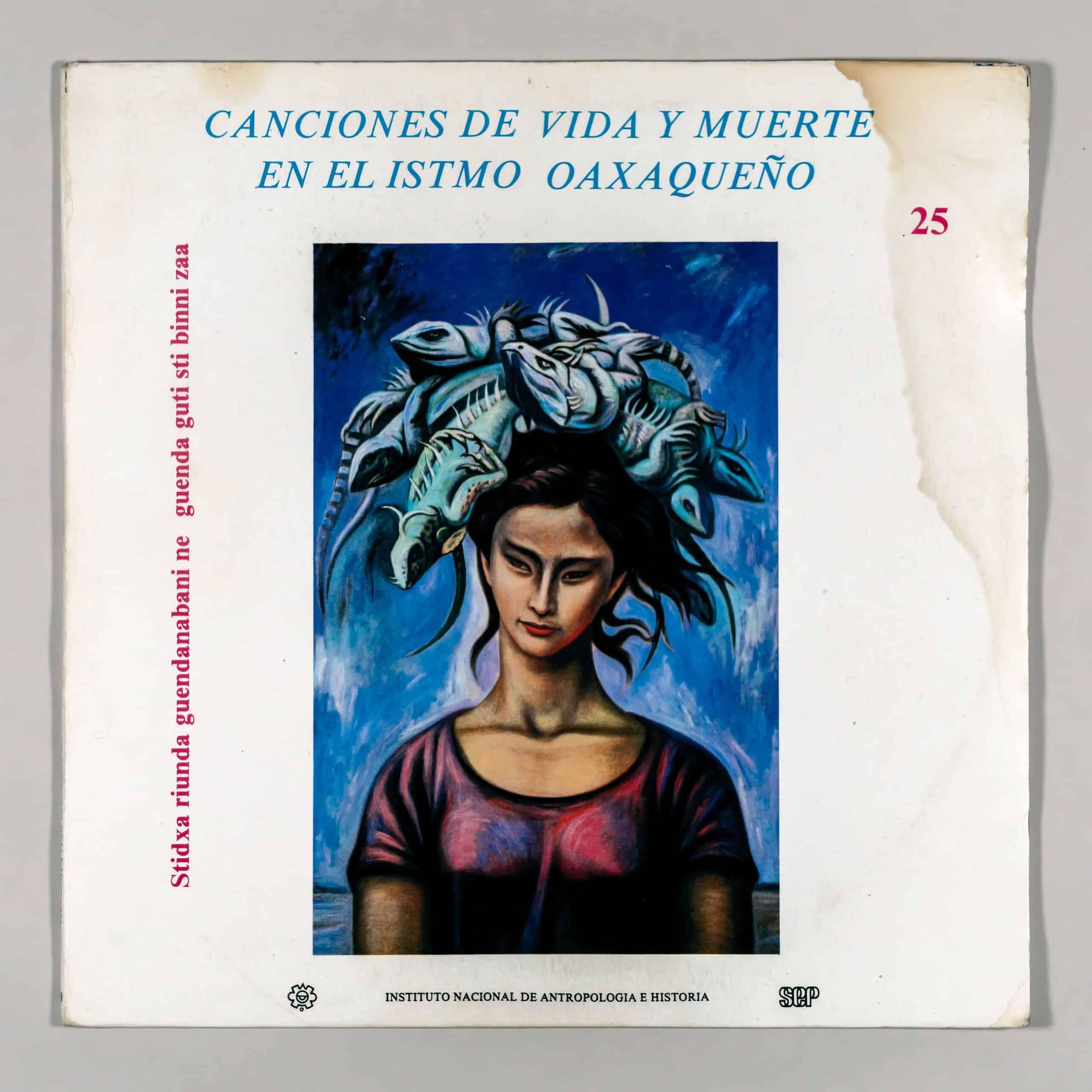
SONGS OF LIFE AND DEATH IN THE OAXACAN ISTHMUS


Disc 25
INAH


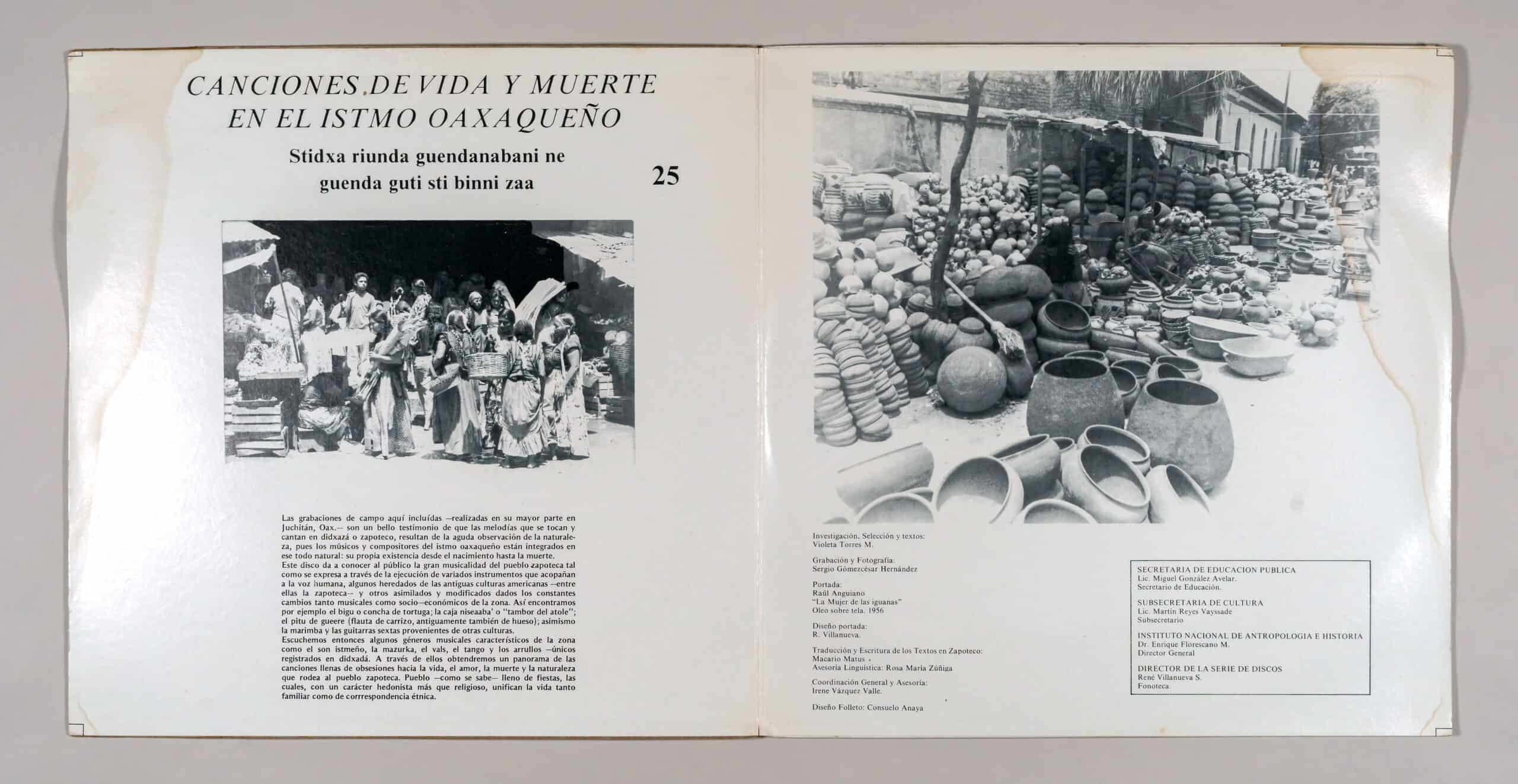
The Zapotecs of the Isthmus, a people who fight, work and sing Physical Geography of the Isthmus I called the Isthmus of Tehuantepec is the narrowest part of the Mexican Republic and is located within the states of Veracruz and Oaxaca. The region, which covers the entire area between the Gulf of Mexico and the Gulf of Tehuantepec, is divided into two clearly different subregions: the Veracruz isthmus and the Oaxacan isthmus.¹

Our interest is centered on the Oaxacan isthmus. We define this subregion as the coastal plain that is limited –according to the geographer Jorge Tamayo L.² – by the Sierra Madre del Sur, the Sierra Atravesada, the Sierra Madre de Chiapas and the Gulf of Tehuantepec coast; in its entirety it covers an area of ​​19,975 km.2, which represents 2.7% of the surface of the state of Oaxaca.³

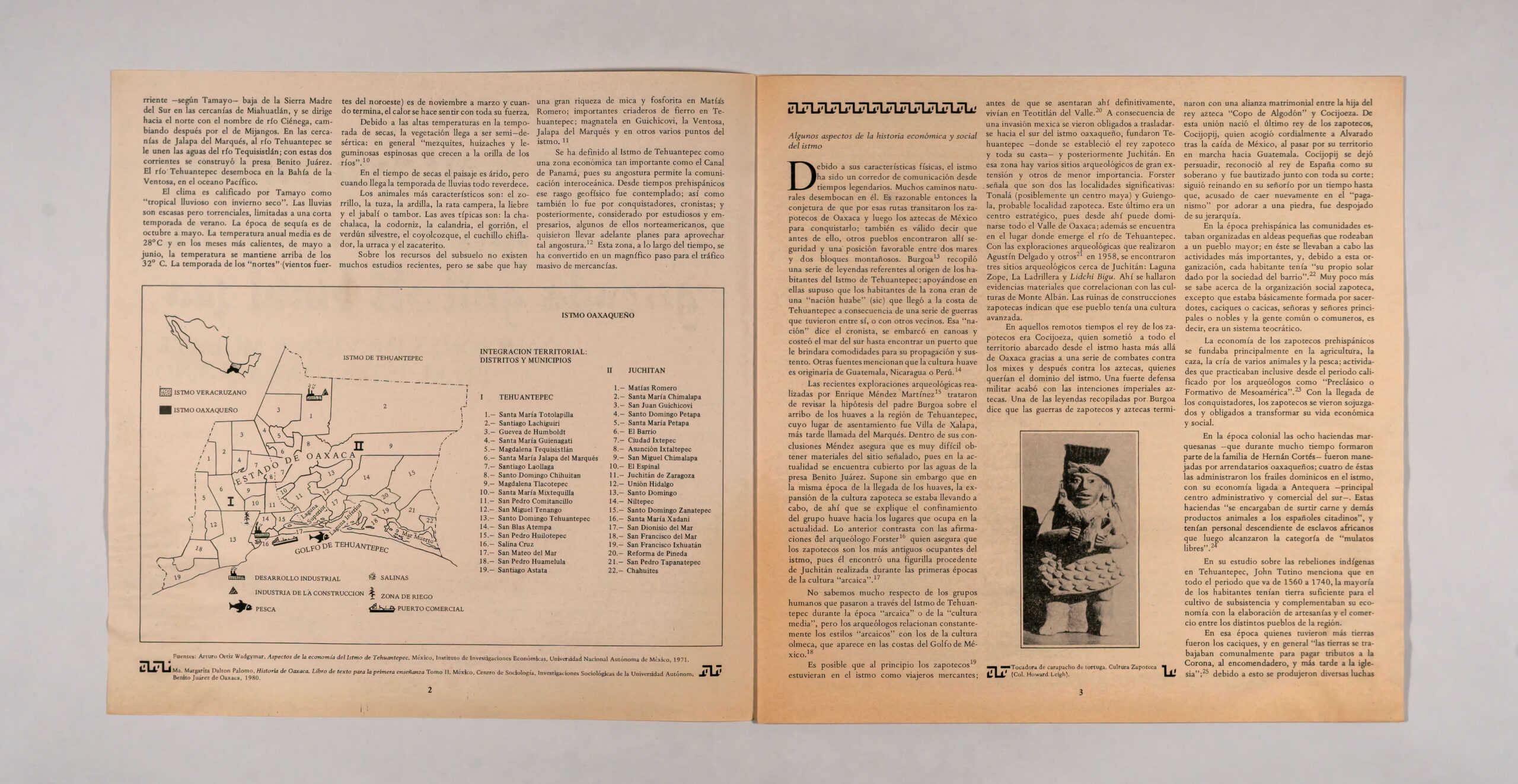
According to recent studies carried out under the direction of Margarita Dalton, the territory described above is made up of the districts of Juchitán and Tehuantepec, with 22 and 19 municipalities respectively, although Reyna Moguel assures that San Pedro Huamelula and Santiago Astata are improperly included, which correspond in reality to the “coast” of Oaxaca.⁵ The cities of the Oaxacan isthmus are Matías Romero, Juchitán and Salina Cruz (see map).⁶

The formations that connect the Sierra Madres of Oaxaca, and of the South with that of Chiapas, in the Isthmus of Tehuantepec are of low elevation and for this reason Tamayo supposes that in the Cenozoic there was communication between the waters of the Gulf and the Pacific;⁷ he also says The Upper and Lower Lagoons and the so-called Dead Sea remain as remains of the emersion (see map).

The topography of the Isthmus of Tehuantepec, according to Royce,⁸ can be divided into three different sections: The first is the Gulf coast; It begins in the Ostión Lagoon, where a concavity begins that ends in the Tonalá bar, in whose central part the Coatzacoalcos river flows. The second is that of the Neovolcanic Cordillera, which, in the Isthmus of Tehuantepec, joins the Sierra Madre Atravesada and the Sierra Madre de Oaxaca; it borders the lowlands carved by fluvial currents such as the valley of the Tehuantepec river. Finally, the third part –in the south of the isthmus– is the plain called by Tamayo “Planicie Costera Istmica Chiapaneca”; it is conventionally considered to be bounded by the Tehuantepec River in the Northwest and the Suchiate River in the Southeast.⁹

On the southern slopes –Royce tells us– there are seven rivers that flow into the Upper and Lower Lagoons; These are: Comotepec, Los Perros (or Juchitán), Estacada, Chicapa, Espanta Perros, Niltepec (or Xacuapa) and Ostuta. It should be noted that there is another more important river, the Tehuantepec, whose current –according to Tamayo– flows down from the Sierra Madre del Sur in the vicinity of Miahuatlán, and heads north under the name of Río Ciénega, later changing to Río Ciénega. Mijangos. In the vicinity of Jalapa del Marqués, the Tehuantepec River is joined by the waters of the Tequisistlán River; With these two currents the Benito Juárez dam was built. The Tehuantepec River flows into the Bahía de la Ventosa, in the Pacific Ocean.

The climate is described by Tamayo as “rainy tropical with dry winter”. The rains are scarce but torrential, limited to a short summer season. The dry season is from October to May. The average annual temperature is 28°C and in the hottest months, from May to June, the temperature stays above 32°C. The “nortes” season (strong northwesterly winds) is from November to March and when it ends, the heat is felt with all its force.

Due to the high temperatures in the dry season, the vegetation becomes semi-desert: in general “mesquites, huizaches and thorny legumes that grow on the banks of the rivers”.¹⁰

In the dry season, the landscape is arid, but when the rainy season arrives, everything turns green.

The most characteristic animals are: the skunk, the gopher, the squirrel, the free-range rat, the hare and the wild boar or drum. The typical birds are: the chachalaca, the quail, the lark, the sparrow, the wild verdun, the coyol cozque, the whistling knife, the magpie and the shoemaker.

On the subsoil resources there are not many recent studies, but it is known that there is a great wealth of mica and phosphorite in Matías Romero; important iron deposits in Tehuantepec; magnatela in Guichicovi, La Ventosa, Jalapa del Marqués and in various other points of the isthmus.¹¹

The Isthmus of Tehuantepec has been defined as an economic zone as important as the Panama Canal, since its narrowness allows interoceanic communication. Since pre-Hispanic times, this geophysical feature was contemplated; as well as it was by conquerors, chroniclers; and later, considered by scholars and businessmen, some of them North Americans, who wanted to carry out plans to take advantage of such narrowness.¹² This area, over time, has become a magnificent passage for massive merchandise traffic.


OAXACAN ISTHMUS


TERRITORIAL INTEGRATION: DISTRICTS AND MUNICIPALITIES


I TEHUANTEPEC

1.- Santa Maria Totolapilla

2.- Santiago Lachiguiri

3.- Guevea de Humboldt

4.- Santa María Guienagati

5.- Magdalena Tequisistlán

6.- Santa Maria Jalapa del Marques

7.- Santiago Laollaga

8.- Santo Domingo Chihuitan

9.- Magdalena Tlacotepec

10.- Santa Maria Mixtequilla

11.- San Pedro Comitancillo

12.- San Miguel Tenango

13.- Santo Domingo Tehuantepec

14.- San Blas Atempa

15.- San Pedro Huilotepec

16.- Salina Cruz

17.- San Mateo del Mar

18.- San Pedro Huamelula

19.- Santiago Astata


II JUCHITAN


1.- Matias Romero

2.- Santa Maria Chimalapa

3.- San Juan Guichicovi

4.- Santo Domingo Petapa

5.- Santa Maria Petapa

6.- El Barrio

7.- Ciudad Ixtepec

8.- Asuncion Ixtaltepec

9.- San Miguel Chimalapa

10.- El Espinal

11.- Juchitan de Zaragoza

12.- Union Hidalgo

13.- Santo Domingo

14.- Niltepec

15.- Santo Domingo Zanatepec

16.- Santa María Xadani

17.- San Dionisio del Mar

18.- San Francisco del Mar

19.- San Francisco Ixhuatan

20.- Reforma de Pineda

21.- San Pedro Tapanatepec

22.- Chahuites


Sources: Arturo Ortiz Wadgymar, Aspects of the economy of the Isthmus of Tehuantepec. Mexico, Institute of Economic Research, National Autonomous University of Mexico, 1971.

Ma. Margarita Dalton Palomo, History of Oaxaca. Textbook for the first education Volume II. Mexico, Center of Sociology, Sociological Research of the Benito Juárez Autonomous University of Oaxaca, 1980.


Some aspects of the economic and social history of the isthmus

Due to its physical characteristics, the isthmus has been a communication corridor since legendary times. Many nature trails lead to it. It is therefore reasonable to conjecture that the Zapotecs from Oaxaca traveled along these routes and then the Aztecs from Mexico to conquer it; It is also valid to say that before that, other peoples found there security and a favorable position between two seas and two mountainous blocks. Burgoa¹³ compiled a series of legends referring to the origin of the inhabitants of the Isthmus of Tehuantepec; Based on them, he assumed that the inhabitants of the area were from a “Huabe nation” (sic) that arrived on the Tehuantepec coast as a result of a series of wars that they had with each other, or with other neighbors. That “nation” says the chronicler, embarked in canoes and skirted the southern sea until it found a port that offered comfort for its propagation and sustenance. Other sources mention that the Huave culture originates from Guatemala, Nicaragua or Peru.¹⁴

The recent archaeological explorations carried out by Enrique Méndez Martínez¹⁵ tried to revise the hypothesis of Father Burgoa about the arrival of the Huaves in the Tehuantepec region, whose settlement was Villa de Xalapa, later called del Marqués. Among his conclusions, Méndez assures that it is very difficult to obtain materials from the indicated site, since it is currently covered by the waters of the Benito Juárez dam. It supposes, however, that at the same time as the arrival of the Huaves, the expansion of the Zapotec culture was taking place, hence the confinement of the Huave group to the places it currently occupies. This contrasts with the affirmations of the archaeologist Forster¹⁶ who assures that the Zapotecs are the oldest occupants of the isthmus, since he found a figurine from Juchitán made during the first times of the “archaic” culture.¹⁷

We don’t know much about the human groups that passed through the Isthmus of Tehuantepec during the “archaic” or “middle culture” era, but archaeologists constantly associate “archaic” styles with those of the Olmec culture, which appears in the shores of the Gulf of Mexico.¹⁸

It is possible that at first the Zapotecs¹⁹ were on the isthmus as merchant travelers; before they settled there definitively, they lived in Teotitlán del Valle.²⁰ As a result of a Mexica invasion, they were forced to move to the south of the Oaxacan isthmus, they founded Tehuantepec –where the Zapotec king and his entire caste settled– and later Juchitán . In this area there are several large archaeological sites and others of lesser importance. Forster points out that there are two significant localities: Tonalá (possibly a Mayan center) and Guiengola, a probable Zapotec locality. The latter was a strategic center, since from there the entire Valley of Oaxaca could be controlled; It is also located in the place where the Tehuantepec river emerges. With the archaeological explorations carried out by Agustín Delgado and others²¹ in 1958, three archaeological sites were found near Juchitán: Laguna Zope, La Ladrillera and Lidchi Bigu. There, material evidence was found that correlates with the cultures of Monte Albán. The ruins of buildings indicate that this town had an advanced culture.

In those remote times the king of the Zapotecs was Cocijoeza, who subdued the entire territory from the isthmus to beyond Oaxaca thanks to a series of battles against the mixes and later against the Aztecs, who wanted control of the isthmus. A strong military defense put an end to Aztec imperial intentions. One of the legends compiled by Burgoa says that the wars between the Zapotecs and the Aztecs ended with a marriage alliance between the daughter of the Aztec king “Copo de Algodón” and Cocijoeza. From this union was born the last king of the Zapotecs, Cocijopij, who cordially welcomed Alvarado after the fall of Mexico, when he passed through his territory on his way to Guatemala. Cocijopij allowed himself to be persuaded, recognized the King of Spain as his sovereign and was baptized along with all his court; He continued to reign in his lordship for a while until, accused of falling back into “paganism” for worshiping a stone, he was stripped of his hierarchy.

In pre-Hispanic times, the communities were organized in small villages that surrounded a larger town; in it the most important activities were carried out, and, due to this organization, each inhabitant had “his own lot given by the neighborhood society.”²² Very little else is known about Zapotec social organization, except that it was basically formed by priests, caciques or cacicas, main or noble ladies and gentlemen and the common people or comuneros, that is to say, it was a theocratic system.

The economy of the pre-Hispanic Zapotecs was based mainly on agriculture, hunting, the breeding of various animals, and fishing; activities that they practiced even from the period described by archaeologists as “Preclassic or Formative of Mesoamerica”.²³ With the arrival of the conquistadors, the Zapotecs found themselves subjugated and forced to transform their economic and social life.

In colonial times, the eight Marquesan haciendas – which for a long time were part of the Hernán Cortés family – were managed by Oaxacan tenants; four of these were administered by the Dominican friars on the isthmus, with their economy linked to Antequera –the main administrative and commercial center of the south–. These haciendas “were in charge of supplying meat and other animal products to the urban Spaniards”, and had staff descendants of African slaves who later reached the category of “free mulattoes”.²⁴

In his study on the indigenous rebellions in Tehuantepec, John Tutino mentions that in the entire period from 1560 to 1740, the majority of the inhabitants had enough land for subsistence cultivation and complemented their economy with the production of handicrafts and trade. between the different towns of the region.

At that time, the ones who had the most land were the caciques, and in general “the lands were worked communally to pay tributes to the Crown, which was later entrusted to the church”;²⁵ due to this, various struggles of the Zapotecs to live in units took place. independent policies. However, almost all the uprisings were brutally suppressed. The manner and circumstances in which the rebels of Tehuantepec, Nejapa, Ixtepeji and Villa Alta were punished were possibly the cruelest that occurred in colonial times.

At that stage the isthmus was of great importance, since in the South Lagoons the shipyards built since 1526 were used; large gold deposits were also exploited; the product was traded in powder form or transformed into handicrafts; in addition, enormous quantities of salt were exported.²⁶ In the mid-18th century, large-scale exploitation of cochineal and indigo for export was introduced, and with this came more Spanish population.²⁷

National independence led to a series of changes; the trade in dyes and the life of the isthmus entered a different stage. A new elite made up of French, German and Italian dominated the cochineal and indigo trade (1830-1840); they also acquired “control of the main cattle, sugar and indigo plantations of Tehuantepec”.²⁸

After Independence, economic incursions that threatened the control of resources by indigenous communities caused a climate of tension that lasted until the mid-19th century. When the state of Oaxaca was created (1825), the Zapotecs of Juchitán – who until then traded fabrics and salts with Guatemala – were dispossessed of their salt flats and farmland. They were later recovered, at a time when the country was repelling the American invader. After the war between Mexico and the United States with the treaty of Guadalupe Hidalgo (1848), the North Americans were offered the right of passage through the Isthmus of Tehuantepec, which Santa Anna ratified with the treaty of La Mesilla; in this permission was granted to build a land road and a trans-isthmian railway. Then they continued a series of projects in this regard (1857-859) that were never carried out.

In 1850 the then governor of the state of Oaxaca, Benito Juárez, sent an expedition to repress the rebels who were fighting for control of its resources, after which, says John Tutino, a new municipal council was installed, made up of men loyal to the government and to the interests of the merchants of the city of Oaxaca.

When the French arrived to invade the country (1866), the Juchitecs prevented the advance of the invading troops towards Guatemala. Once the conflict ended, the Juchitecos continued to claim their communal lands (1868). Benito Juárez, now as President of the Republic, ruled in favor of the people.

By the end of the 19th century and the beginning of the 20th, the economic changes of the Porfirian regime influenced the isthmus in such a way that the entry of American and English investments resulted in the creation of numerous non-agricultural activities. At this time the transisthmian communication projects could be carried out. In practice, the construction of the Tehuantepec railroad (1894-1899) served international trade, thanks to the combination of the ports of Salina Cruz and Coatzacoalcos. The railway led many foreign families to settle on the isthmus and, in addition, new activities that required a lot of manual labor began to be covered from the countryside to the city. The “golden age” –as it was called– declined with the opening of the Panama Canal (1915). Meanwhile, economic modifications were coupled with constant rebellions and political struggles.

In recent years (between 1946 and 1955) the trans-isthmian highway – a fast communication route between the two oceans – and the Pan-American highway, which connects Tehuantepec with Oaxaca and Guatemala, were built;²⁹ reconstruction works were also carried out in the ports of Coatzacoalcos and Salina Cruz, and warehouses and docks were built.

During those years the agrarian problems continued to worsen; By 1961, the year in which the Benito Juárez Dam was inaugurated in “Irrigation District # 19” (a work financed by the Inter-American Development Bank), the agrarian problem became a crisis “until it reached rebellious proportions, with threats to separate the isthmus of the State and of the country”.³⁰ After two years, the istmeños were convinced to accept the ejido regime, after the State recognized property of communal origin; finally the corresponding titles were extended and the small property and the common lands were created.

In 1964 President López Mateos recognized and titled the communal property of Juchitán and surrounding towns; The local bourgeoisie, monopolizing the land and the salt flats, then formed a committee of “small landowners” with advice and support from the federal government. The same policy was endorsed by Díaz Ordaz and in 1966 certificates of inalienability were issued to the hoarders of large portions of land.³¹ In the following years, the agrarian struggles were reduced to the battle for the seizure of municipal power. For example, in 1968 the Juchiteco Civic Committee “Heroes of September 5” faced the Institutional Revolutionary Party (PRI) for the first time in municipal elections.

The current outbreaks of discontent at the “political level” are related to unfair state development projects designed on the basis of private capital and foreign investment. As an example, we can cite the ALFA OMEGA project (1983-1988)³² –which now functions in a rudimentary fashion–, which aims to unite two development poles in a transoceanic highway: Coatzacoalcos and Salina Cruz, industrial and commercial ports with their respective parks or corridors. The construction of these industrial corridors, along the railway, has led to the dispossession of communal lands, among other unfair actions.

The Oaxacan isthmus suffers from problems that are related, on the one hand, to ancient interoceanic communication projects, and on the other, to disputes between the various types of land tenure, a situation that has worsened especially in recent decades.

It must be added that the sequence of contemporary history has focused almost fundamentally on the city of Juchitán, since for a long time this has been the most important political, cultural, and commercial center in the area; It is no coincidence, then, that many of the Juchitec rebellions had their headquarters in that city, without exception to those of today.


Current socioeconomic organization

In the Oaxacan isthmus, the population is concentrated mostly in the cities and a smaller number in the countryside.

Part of the inhabitants of this area work in the following sources: the cement factory in Lagunas; the repairer and builder of railway cars in Matías Romero; electric power plants; soft drink and beer bottlers; the Dry Dock; the big companies of Pemex; the freezing plant in Salina Cruz; the small industries on the Pan-American highway; the Ixtepec airport; the four pumping stations located between Loma Larga, Medias Aguas and Donají, and the commerce and services of the important cities. Despite their existence, they are insufficient, even to provide work for hundreds of people who finish their specialized training. This type of education is obtained at the Industrial and Commercial Technical School of Juchitán and at the recently created Regional Technological Institute of Oaxaca.

Faced with the few sources of work, people with or without specialization, not having a piece of land either, emigrate to the oil centers of Minatitlán and Coatzacoalcos, or to any other city.

Other forms of work that provide sustenance to the inhabitants of the isthmus are the occasional trades of masonry, making party dresses -with embroidery done by hand or with a sewing machine- mechanics and other backyard trades. However, the fundamental basis of subsistence in the Oaxacan isthmus is agricultural, fishing, livestock and artisanal production.

Most of the peasants work rainfed land and normally harvest the products that allow them family self-sufficiency. The products that are sown the most are: corn, beans and sesame.

The “nortes” represent a strong obstacle to agriculture, and to date no better seeds have been introduced; for example, low-yield and short-grown native corn prevails, since it is the only one that resists the strong “nortes”.³³

Often peasant families plant fruit trees such as mango, papaya, plum, tamarind, guava, soursop, and grow small amounts of coconut, coffee, tobacco, vegetables, and flowers. Sugar is a product implemented at the industry level in the López Portillo mill.

The sowing technique –until the middle of this century– was that of the “talapié”, which consisted of loosening the earth with the coa; the holes were sown and the seed was covered with the foot. With this procedure, it was necessary to do several weedings and put “ears” (piles of earth) to protect the plants from the strong winds that blow in the area.³⁴ Subsequently, the “talapié” system was largely replaced by the use of the oxen team, which consists of a wooden or metal plow, puya –a long stick with a point, used to carry the team– and the yoke with which the depth of the plow is calculated.³⁵

In reality, many of the peasants feel reluctant to pay credits for the use of tractors, fertilizer and insecticide, since the chances of recovery are almost nil and they fear -with justifiable reason- losing their lands.

As the sowings are generally done in April and the harvests in the months of October to February, the rest of the year the peasants seek their livelihood elsewhere, engaging in activities such as goldsmithing, making flower arrangements and various jobs.

Livestock is poor and is hardly technical. Cattle, horses, goats (with many diseases and pests) are raised and most families have pigs and chickens.

Another important percentage of the population works in the salt flats in the form of a cooperative. In the nearby lagoons, fish, shrimp, shrimp, turtles and the eggs of that animal are obtained. Like the farmer, the fisherman is hampered in his work by variations in the weather.

Hunting, gathering and forestry are activities that provide work for the isthmians, but are not very important in relation to handicrafts.

In the Oaxacan isthmus, as in other areas of the country, the family fulfills economic and social functions and its own elementary division of labor reigns within it; only that there the Zapotec woman is a seller and processor of what the man produces. The difference here, in comparison with other societies, is that the woman is not only a seller of homemade products, but the trade that she dominates represents a highly important income for the family. This has come to confuse many scholars, who have believed they found evident vestiges of matriarchy.

aWhatever the circumstances around the development of the Zapotec woman as a merchant –Royce tells us–, it is not a phenomenon of poor families, but this extends to the “upper class” or bourgeoisie.³⁶

Many of the proletarian families of the isthmus face day by day the general inflation that afflicts the entire country. Despite how difficult this situation is, the majority of the Istmeños have a great spirit of cooperation and solidarity, which is actually the basis that has always saved and solved many of their economic problems. This mutualist spirit, which follows the principle of help among relatives, is known in anthropological literature as tequio (from the Nahuatl word tequitl), which means tribute or work without any remuneration to carry out works for the benefit of the community, such as construction. houses and parties.³⁷

Among the Zapotecs of the Valley, this last type of custom is known as guelaguetza or guelalezaa and in the Oaxacan isthmus as guendalizaa,³⁸ a tradition of indisputable pre-Hispanic origin that is clearly manifested in the mayordomia festivities called candles. In the past there was also a type of cooperation for marriage festivities called guendaroyaa, that is, the contribution of gifts such as live animals (cattle, pigs, sheep, poultry), a sack of corn and condiments essential for cooking;³⁹ in part this it continues to get used to, but it is no longer so widespread.

The mutual spirit manifests itself in many ways. One more form, which takes the form of monetary aid, “alms”, gifts or reciprocal compensation in kind (bread, chocolate and other drinks) is called guna or xindxaa,⁴⁰ and is granted in all festive or mourning acts.


The stewardship parties

In the majority of collective work, simple social contact engenders, among other things, a special excitement that favors the individual capacity for performance; That is why for the Zapotec population of the isthmus, as for almost all peasant communities, the festival –as a collective work that it is– is a relevant event. In addition to the previous meanings, the party is a symbol of prestige: whoever has more money throws more parties, thereby gaining more prestige and the possibility of having greater political influence; although in reality it is very common for even the poorest to make a candle to demonstrate, among other things, and as they say, “that they are as equal as those who have money”.

Almost all the Isthmus festivities are ostentatious thanks to the fact that people collaborate with their guna or xindxaa or with the guendalizaa. Little by little, however, the capitalist spirit has infiltrated regional traditions. For example, in large parties it is customary to have a “bower”, which serves to protect yourself from the sun or rain; the traditional “enramada” consists of a roof made of green reeds, wood and palm and banana leaves, supported by large posts embedded in the ground, and many men participate with their unpaid work for its construction; However, currently the breweries, with the intention of selling, provide their plant of piecework workers, who place large sheets as a “borer”; also now people prefer to use a heavy cloth tarpaulin because it is more practical and less labor intensive.

The innumerable mutual societies of the different neighborhoods keep the Zapotec community strongly united, which, with their contributions and common effort, make the celebration of their festivities possible. No one is forced to belong to these groups, although the same social pressure induces everyone to participate.

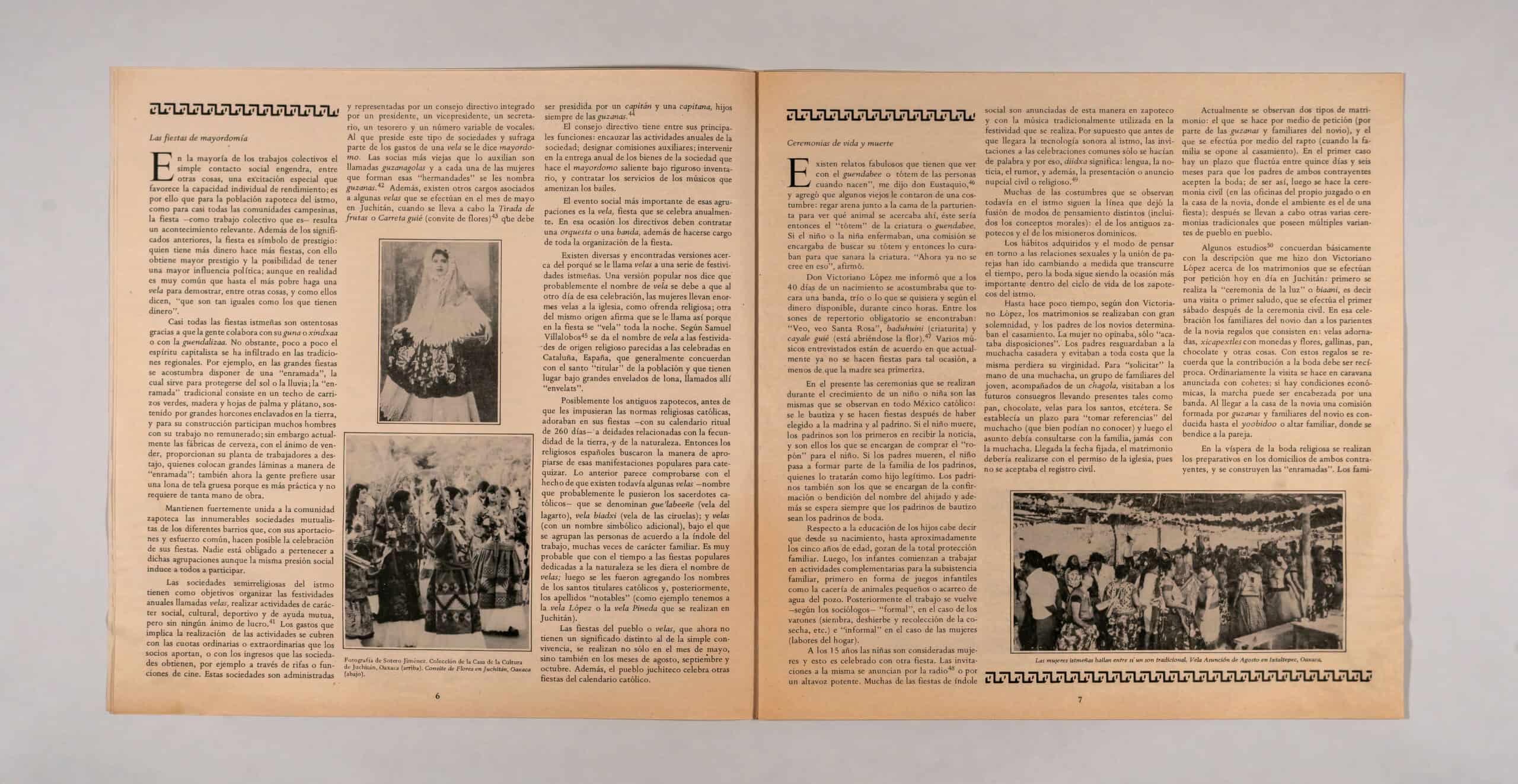
The objectives of the semi-religious societies of the isthmus are to organize the annual festivities called candles, carry out activities of a social, cultural, sports and mutual aid nature, but without any profit motive.⁴¹ The expenses involved in carrying out the activities are covered with the ordinary or extraordinary fees that the partners contribute, or with the income that the companies obtain, for example through raffles or cinema shows. These companies are managed and represented by a board of directors made up of a president, a vice-president, a secretary, a treasurer and a variable number of members. The person who presides over this type of society and bears part of the cost of a candle is called a butler. The oldest members who help him are called guzanagolas and each one of the women who make up these “sisterhoods” are named guzanas.⁴² In addition, there are other charges associated with some candles that are held in the month of May in Juchitán, when carries out the Fruit Throw or Carreta guié (flower treat)⁴³ which must be presided over by a captain and a female captain, always sons of the guzanas.⁴⁴

The board of directors has among its main functions: directing the annual activities of the company; designate auxiliary commissions; intervene in the annual delivery of the company’s assets made by the outgoing mayordomo under strict inventory, and hire the services of the musicians who entertain the dances.

The most important social event of these groups is the candle, a festival that is celebrated annually. On that occasion, the directors must hire an orchestra or a band, in addition to taking charge of the entire organization of the party.

There are various and conflicting versions about why a series of isthmus festivities are called candles. A popular version tells us that the name candle is probably due to the fact that the next day of that celebration, the women bring huge candles to the church, as a religious offering; another of the same origin affirms that it is called that because the party “watches” all night. According to Samuel Villalobos⁴⁵ the name vela is given to festivities of religious origin similar to those celebrated in Catalonia, Spain, which generally agree with the “holder” saint of the town and which take place under large canvas veils, called “envelats” there. “.

Possibly the ancient Zapotecs, before the Catholic religious norms were imposed on them, worshiped deities related to the fertility of the earth and nature in their festivals –with their ritual calendar of 260 days. Then the Spanish religious looked for a way to appropriate these popular manifestations to catechize. The foregoing seems to be confirmed by the fact that there are still some candles –the name probably given to them by Catholic priests– which are called gue’labeeñe (lizard candle), biadxi candle (plum candle); and candles (with an additional symbolic name), under which people are grouped according to the nature of the work, often of a family nature. It is very probable that over time the popular festivals dedicated to nature were given the name of candles; then the names of the Catholic titular saints were added and, later, the “remarkable” surnames (as an example we have the López candle or the Pineda candle that are made in Juchitan).

The village festivals or candles, which now have no meaning other than simple coexistence, take place not only in May, but also in August, September and October. In addition, the Juchiteco people celebrate other festivals on the Catholic calendar.


Life and death ceremonies

There are fabulous stories that have to do with the guendabee or totem of people when they are born,” Don Eustaquio told me,⁴⁶ and added that some old men told him of a custom: spreading sand next to the bed of the woman in labor to see what animal was approached there, this would then be the “totem” of the creature or guendabee. If the boy or girl got sick, a commission was in charge of looking for his totem and then they cured him so that the creature would heal. “Now they don’t believe in that anymore “, he claimed.

Don Victoriano López informed me that 40 days after a birth it was customary for a band, trio or whatever you wanted to play and depending on the money available, for five hours. Among the sounds in the mandatory repertoire were: “I see, I see Santa Rosa”, baduhuini (little creature) and cayale guié (the flower is opening).⁴⁷ Several interviewed musicians agree that parties are no longer held for such an occasion, unless the mother is new.

At present, the ceremonies that are performed during the growth of a boy or girl are the same that are observed throughout Catholic Mexico: they are baptized and parties are held after having chosen the godmother and godfather. If the child dies, the godparents are the first to receive the news, and they are the ones in charge of buying the “ropón” for the child. If the parents die, the child becomes part of the family of the godparents, who will treat it as a legitimate child. The godparents are also the ones in charge of confirming or blessing the name of the godchild and it is also always expected that the godparents at the baptism are the godparents at the wedding.

Regarding the education of children, it should be said that from their birth, until approximately five years of age, they enjoy full family protection. Then, the infants begin to work on complementary activities for family subsistence, first in the form of children’s games such as hunting small animals or fetching water from the well. Subsequently, work becomes –according to sociologists– “formal” in the case of men (sowing, weeding and harvesting, etc.) and “informal” in the case of women (housework).

At the age of 15, girls are considered women and this is celebrated with another party. Invitations to it are announced over the radio⁴⁸ or over a loud speaker. Many of the festivities of a social nature are announced in this way in Zapotec and with the music traditionally used in the festivity that takes place. Of course, before the arrival of sound technology to the isthmus, invitations to common celebrations were only made by word of mouth and for this reason, diidxa means: language, news, rumor, and also, civil or religious nuptial presentation or announcement. .⁴⁹

Many of the customs that are still observed on the isthmus follow the line left by the fusion of different modes of thought (including moral concepts): that of the ancient Zapotecs and that of the Dominican missionaries.

The habits acquired and the way of thinking about sexual relations and the union of couples have changed as time goes by, but the wedding continues to be the most important occasion in the life cycle of the Zapotecs of the isthmus.

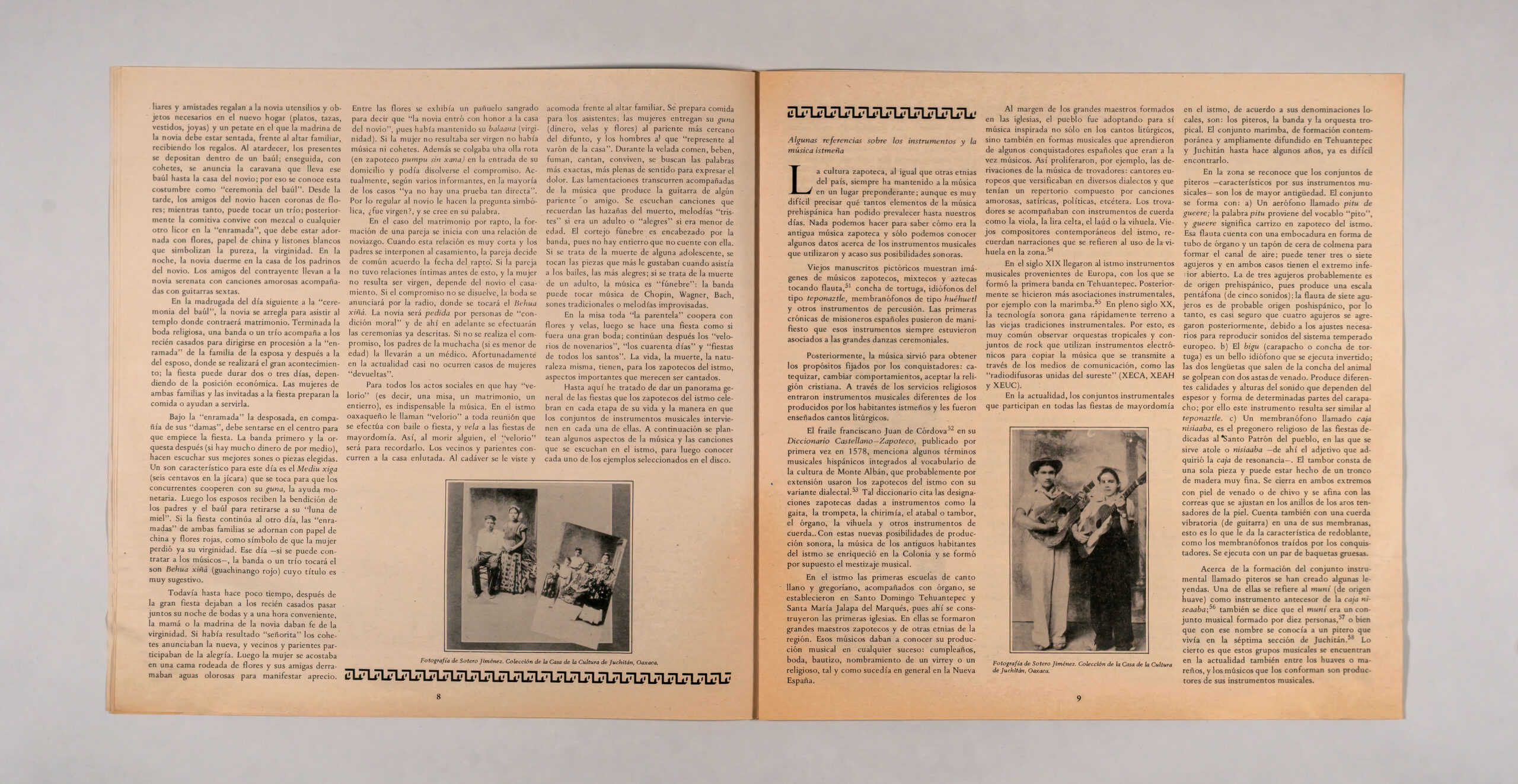
Until recently, according to Don Victoriano López, marriages were performed with great solemnity, and the parents of the bride and groom determined the marriage. The woman did not have an opinion, she only “accepted provisions.” The parents protected the marriageable girl and prevented her from losing her virginity at all costs. To “request” the hand of a girl, a group of the young man’s relatives, accompanied by a chagola, would visit the future in-laws bringing presents such as bread, chocolate, candles for the saints, etc. A deadline was established to “take references” from the boy (which they might well not know) and then the matter had to be consulted with the family, never with the girl. When the set date arrived, the marriage should take place with the permission of the church, since civil registration was not accepted.

Two types of marriage are currently observed: the one that is made by petition (by the groom’s worms and relatives), and the one that is carried out by means of kidnapping (when the family opposes the marriage). In the first case, there is a term that fluctuates between fifteen days and six months for the parents of both parties to accept the wedding; if so, then the civil ceremony is held (in the offices of the court itself or in the bride’s house, where the atmosphere is that of a party); Afterwards, several other traditional ceremonies are carried out that have multiple variants from town to town.

Some studies⁵⁰ basically agree with the description that Don Victoriano López gave me about the marriages that are carried out by request today in Juchitán: first the “ceremony of light” or biaani is performed, that is, a visit or first greeting, which It takes place on the first Saturday after the civil ceremony. In this celebration, the relatives of the groom give the relatives of the bride gifts consisting of: decorated candles, xicapextles with coins and flowers, chickens, bread, chocolate and other things. With these gifts it is remembered that the contribution to the wedding must be reciprocal. Ordinarily the visit is made in a caravan announced with rockets; if there are economic conditions, the march can be led by a band. Upon arriving at the bride’s house, a commission made up of guzanas and relatives of the groom is led to the yoobidoo or family altar, where the couple is blessed.

On the eve of the religious wedding, preparations are made in the homes of both parties, and the “arbors” are built. Relatives and friends give the bride utensils and objects necessary in the new home (plates, cups, dresses, jewelry) and a petate in which the bride’s godmother must sit, in front of the family altar, receiving the gifts. At sunset, the presents are deposited inside a trunk; Immediately, with rockets, the caravan that takes that trunk to the groom’s house is announced; that is why this custom is known as the “trunk ceremony”. Starting in the afternoon, the groom’s friends make flower crowns; meanwhile, you can play a trio; later the procession coexists with mezcal or any other liquor in the “enramada”, which must be adorned with flowers, tissue paper and white ribbons that symbolize purity, virginity. At night, the bride sleeps at the home of the groom’s godparents. The bride and groom’s friends serenade the bride with love songs accompanied by sixth guitars.

In the early morning of the day after the “trunk ceremony”, the bride prepares to attend the temple where she will be married. After the religious wedding, a band or a trio accompanies the newlyweds to go in procession to the “arbor” of the wife’s family and then to the husband’s, where the great event will take place; the party can last two or three days, depending on the economic position. The women of both families and those invited to the party prepare the food or help serve it.

Under the “enramada” the bride, in the company of her “ladies”, must sit in the center for the party to begin. The band first and the orchestra later (if there is a lot of money involved), play their best sones or chosen pieces. A characteristic son for this day is the Mediu xiga (six cents in the gourd) that is played so that the attendees cooperate with their guna, the monetary aid. Then the spouses receive the blessing of the parents and the trunk to retire to their “honeymoon”. If the party continues the next day, the “arbors” of both families are decorated with tissue paper and red flowers, as a symbol that the woman has already lost her virginity. That day –if the musicians can be hired–, the band or a trio will play the son Behua xiñá (red snapper) whose title is very suggestive.

Still, until recently, after the big party they let the newlyweds spend their wedding night together and at a convenient time. the bride’s mother or godmother attested to her virginity. If it had been “miss” the rockets announced the news, and neighbors and relatives participated in the joy. Then the woman would lie on a bed surrounded by flowers and her friends would pour scented water to show appreciation.

A bloody handkerchief was displayed among the flowers to say that “the bride entered the groom’s house with honor”, as she had kept her balaana (virginity). If the woman did not turn out to be a virgin there was no music or rockets. In addition, a broken pot (in Zapotec pumpu without xana) was hung at the entrance of his home and the commitment could be dissolved. Currently, according to several informants, in most cases “there is no longer such a direct test.” Usually the groom is asked the symbolic question, was he a virgin?, and he believes his word.

In the case of marriage by kidnapping, the formation of a couple begins with a dating relationship. When this relationship is very short and the parents get in the way of the marriage, the couple agrees on the date of the abduction. If the couple did not have intimate relations before this, and the woman does not turn out to be a virgin, the marriage depends on the groom. If the commitment is not dissolved, the wedding will be announced on the radio, where the Behua xiñá will be played. The bride will be requested by people of “moral condition” from then on the ceremonies already described will be carried out. If the commitment is not made, the girl’s parents (if she is a minor) will take her to a doctor. Fortunately, nowadays there are almost no cases of “returned” women.

For all social acts in which there is a “wake” (that is, a mass, a marriage, a burial), music is essential. In the Oaxacan isthmus they call “wakes” any gathering that takes place with a dance or party, and a wake at stewardship parties. Thus, when someone dies, the “wake” will be to remember him. Neighbors and relatives go to the house in mourning. The corpse is dressed and accommodated in front of the family altar. Food is prepared for attendees; the women give their guna (money, candles and flowers) to the closest relative of the deceased, and the men to the one who “represents the man of the house”. During the evening they eat, drink, smoke, sing, live together, looking for the most exact words, the most meaningful to express the pain. The lamentations take place accompanied by the music produced by the guitar of a relative or friend. Songs are heard that recall the feats of the dead, “sad” melodies if he was an adult or “happy” if he was a minor. The funeral procession is headed by the band, since there is no burial that does not have it. If it is about the death of an adolescent, the pieces that she liked the most when she attended the dances are played, the most joyful; if it is the death of an adult, the music is “funeral”: the band can play music by Chopin, Wagner, Bach, traditional sounds or improvised melodies.

In the mass all “the relatives” cooperate with flowers and candles, then a party is held as if it were a great wedding; the “novena wakes”, “the forty days” and “all saints’ festivities” continue afterwards. Life, death, nature itself, have, for the Zapotecs of the isthmus, important aspects that deserve to be sung.

So far I have tried to give an overview of the festivities that the Zapotecs of the isthmus celebrate at each stage of their lives and the way in which the ensembles of musical instruments intervene in each of them. Below are some aspects of the music and songs heard on the isthmus, to later learn about each of the selected examples on the disc.


Some references about the instruments and istmeña music

The Zapotec culture, like other ethnic groups in the country, has always kept music in a prominent place; although it is very difficult to specify how many elements of pre-Hispanic music have been able to prevail to this day. We can do nothing to know what ancient Zapotec music was like and we can only know some information about the musical instruments they used and perhaps their sound possibilities.

Old pictorial manuscripts show images of Zapotec, Mixtec, and Aztec musicians playing flute,⁵¹ tortoise shell, Teponaztle-type idiophones, Huehuetl-type membranophones, and other percussion instruments. The first chronicles of Spanish missionaries revealed that these instruments were always associated with great ceremonial dances.

Subsequently, music served to achieve the purposes set by the conquerors: catechize, change behavior, accept the Christian religion. Through religious services, musical instruments different from those produced by the isthmian inhabitants entered and they were taught liturgical songs.

The Franciscan friar Juan de Córdova⁵² in his Diccionario Castellano-Zapoteco, published for the first time in 1578, mentions some Hispanic musical terms integrated into the vocabulary of the Monte Albán culture, which probably by extension were used by the Zapotecs of the isthmus with their dialectal variant.⁵³ Such a dictionary cites the Zapotec designations given to instruments such as the bagpipe, the trumpet, the shawm, the tabal or drum, the organ, the vihuela, and other stringed instruments. With these new possibilities of sound production, the music of the ancient inhabitants of the isthmus was enriched in the Colony and, of course, musical miscegenation was formed.

On the isthmus, the first schools of plain and Gregorian chant, accompanied by the organ, were established in Santo Domingo Tehuantepec and Santa María Jalapa del Marqués, since the first churches were built there. In them, great Zapotec teachers and other ethnic groups of the region were trained. These musicians publicized their musical production at any event: birthdays, weddings, baptisms, the appointment of a viceroy or a religious, as was generally the case in New Spain.

Apart from the great teachers trained in the churches, the people gradually adopted music inspired not only by liturgical songs, but also by musical forms that they learned from some Spanish conquistadors who were also musicians. Thus, for example, the derivations of the music of troubadours proliferated: European singers who performed in various dialects and who had a repertoire made up of love, satirical, political songs, etc. The troubadours accompanied themselves with string instruments such as the viola, the Celtic lyre, the lute or the vihuela. Old contemporary composers from the isthmus recall stories that refer to the use of the vihuela in the area.⁵⁴

In the 19th century, musical instruments from Europe arrived on the isthmus, with which the first band was formed in Tehuantepec. Later, more instrumental associations were made, for example with the marimba.⁵⁵ In the middle of the 20th century, sound technology was rapidly gaining ground on the old instrumental traditions. For this reason, it is very common to observe tropical orchestras and rock groups that use electronic instruments to copy the music that is transmitted through the media, such as the “United Radio Stations of the Southeast” (XECA, XEAH and XEUC).

At present, the instrumental ensembles that participate in all the mayordomía festivities in the isthmus, according to their local denominations, are: the piteros, the band and the tropical orchestra. The marimba ensemble, of contemporary formation and widely spread in Tehuantepec and Juchitán until a few years ago, is already difficult to find.

In the area it is recognized that the sets of piteros –characteristic for their musical instruments– are the oldest. The group is formed with: a) An aerophone called pitu de gueere; The word pitu comes from the word “pito”, and gueere means reed in Zapotec from the isthmus. This flute has an organ pipe-shaped mouthpiece and a beehive wax stopper to form the air channel; it can have three or seven holes and in both cases they have the lower end open. The one with three holes is probably of pre-Hispanic origin, since it produces a pentaphone scale (with five sounds); The seven-hole flute is of probable post-Hispanic origin, therefore it is almost certain that four holes were added later, due to the necessary adjustments to reproduce sounds of the European tempered system. b) The bigu (carapace or turtle shell) is a beautiful idiophone that is executed inverted; the two tabs that come out of the animal’s shell are struck with two deer antlers. It produces different qualities and heights of sound that depend on the thickness and shape of certain parts of the carapace; for this reason this instrument turns out to be similar to the teponaztle. c) A membranophone called a nisiaaba box, is the religious preacher of the festivals dedicated to the Patron Saint of the town, in which atole or nisiaaba is served – hence the adjective that the resonance box acquired. The drum consists of a single piece and can be made from a very thin log of wood. It closes at both ends with deer or goat skin and is refined with the straps that are adjusted in the rings of the leather tightening rings. It also has a vibrating string (guitar) in one of its membranes, this is what gives it the snare characteristic, like the membranophones brought by the conquerors. It is played with a pair of thick drumsticks.

Some legends have been created about the formation of the instrumental group called piteros. One of them refers to the muní (of Huave origin) as the predecessor instrument of the niseaaba box;⁵⁶ it is also said that the muní was a musical ensemble made up of ten people,⁵⁷ or that a pitero who lived in the seventh section of Juchitán.⁵⁸ The truth is that these musical groups are currently also found among the Huaves or Mareños, and the musicians that make them up are producers of their musical instruments.

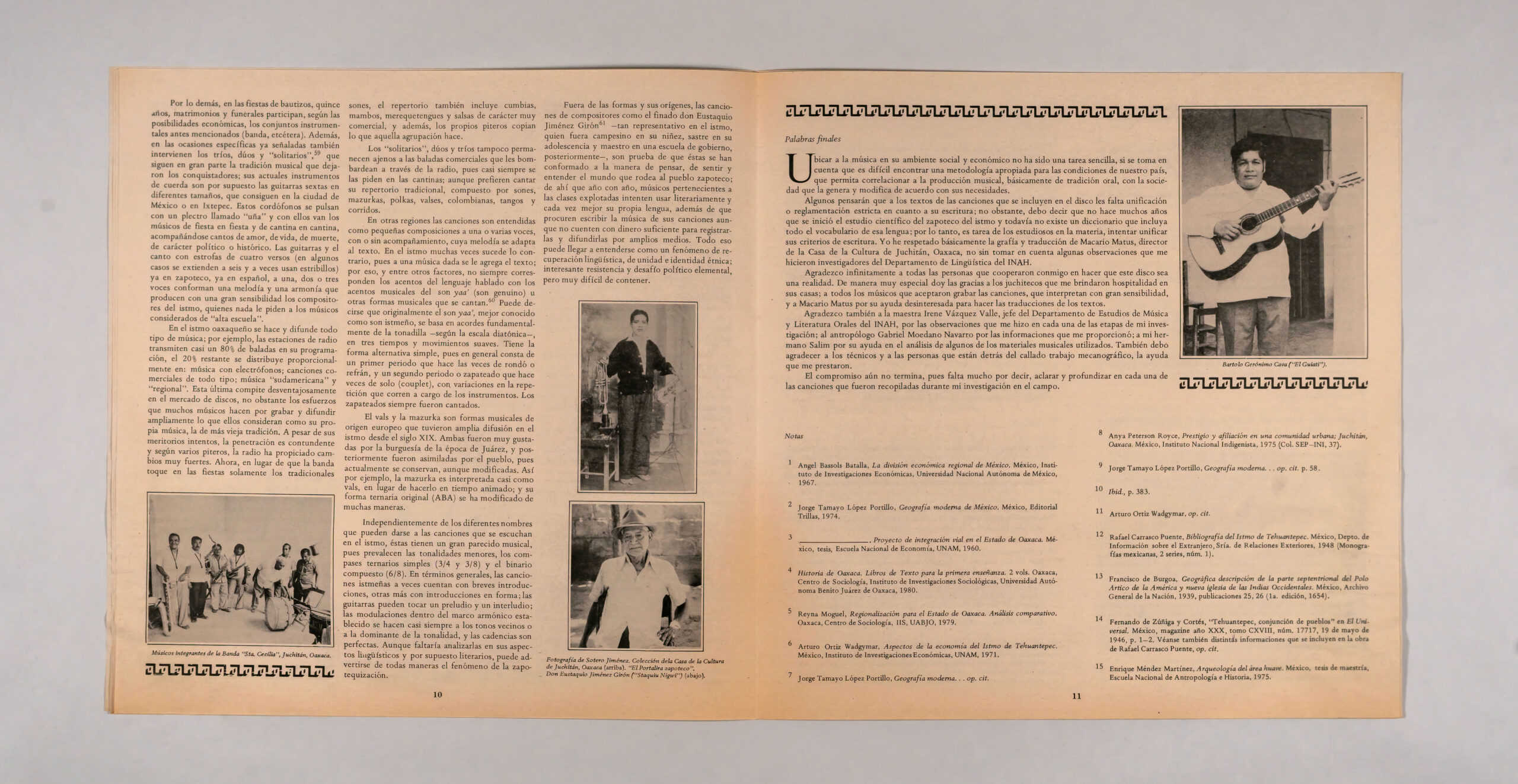
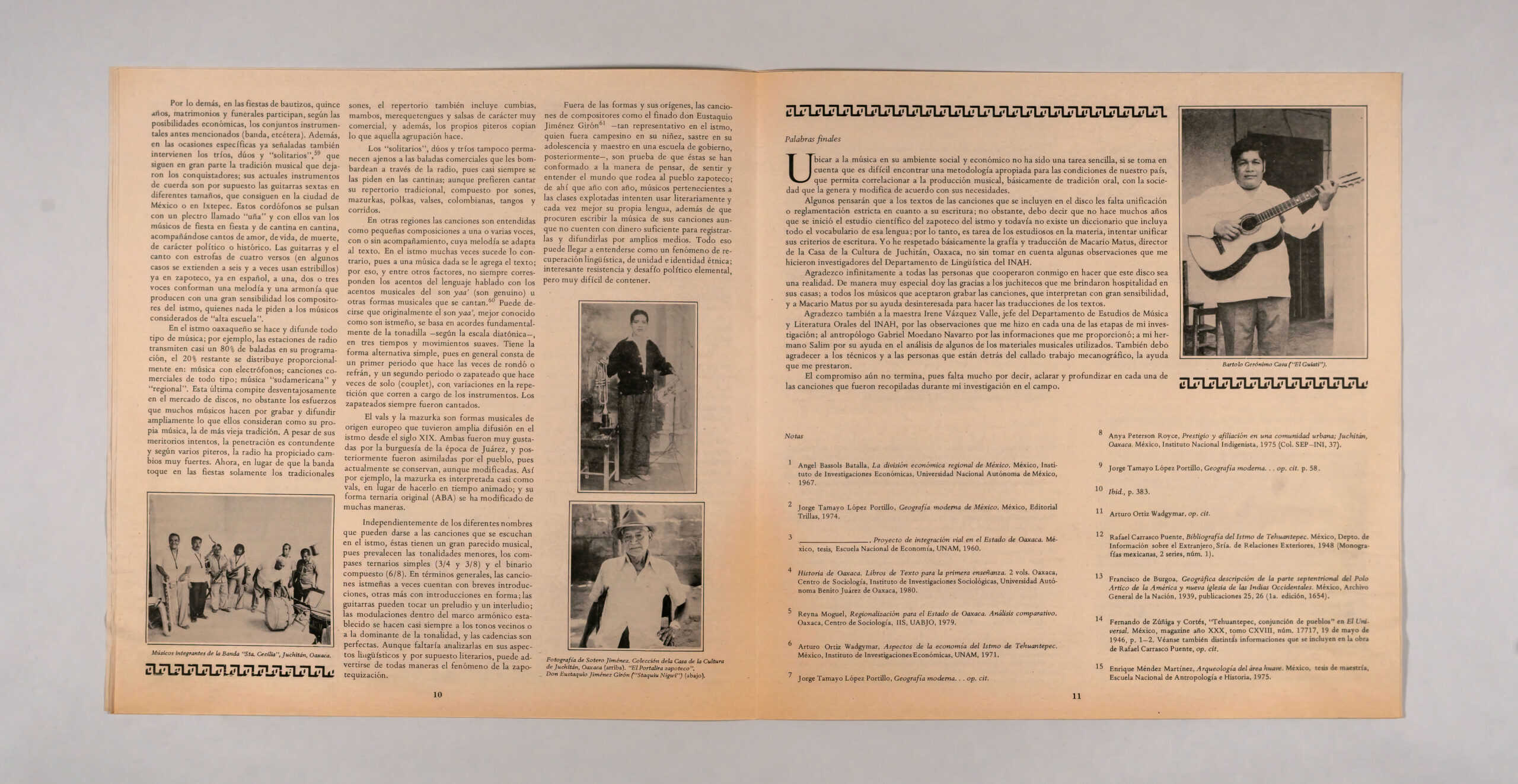
For the rest, in the festivities of baptisms, fifteen years, marriages and funerals, the aforementioned instrumental ensembles (band, etc.) participate, according to economic possibilities. In addition, on the specific occasions already indicated, trios, duets and “solitarios” also intervene,⁵⁹ and which largely follow the musical tradition left by the conquerors; their current string instruments are of course the sixth guitars in different sizes, which They are found in Mexico City or Ixtepec. These chordophones are struck with a plectrum called “uña” and the musicians go with them from party to party and from bar to bar, accompanying each other songs of love, life, death, character political or historical.The guitars and the singing with stanzas of four verses (in some cases they extend to six and sometimes use refrains) already in Zapotec, already in Spanish, to one, two or three voices make up a melody and a harmony that produce with a great sensitivity the composers of the isthmus, who ask nothing of the musicians considered “high school”.

In the Oaxacan isthmus, all kinds of music are made and disseminated; For example, radio stations broadcast almost 80% of ballads in their programming, the remaining 20% ​​is proportionally distributed in: music with electrophones; commercial songs of all kinds; “South American” music and “regional” sica. The latter competes disadvantageously in the record market, despite the efforts that many musicians make to record and widely disseminate what they consider to be their own music, that of the oldest tradition. Despite of their meritorious attempts, the penetration is forceful and according to several piteros, the radio has brought about very strong changes Now, instead of the band playing only the traditional sones at parties, the repertoire also includes cumbias, mambos, merequetengues and salsas of a very commercial nature, and also, the piteros themselves copy what that group does.

The “loners”, duets and trios are not immune to the commercial ballads that bombard them on the radio, since they are almost always asked for in canteens; although they prefer to sing their traditional repertoire, made up of sones, mazurkas, polkas, waltzes, Colombianas, tangos and corridos.

In other regions, songs are understood as small compositions for one or more voices, with or without accompaniment, whose melody is adapted to the text. On the isthmus the opposite often happens, since the text is added to a given piece of music; for this reason, and among other factors, the accents of the spoken language do not always correspond to the musical accents of the son yaa’ (they are genuine) or other musical forms that are sung.⁶⁰ It can be said that originally the son yaa’, better known as son istmeño, is based on chords fundamentally from the tonadilla -according to the diatonic scale-, in three times and soft movements. It has the simple alternative form, since in general it consists of a first period that acts as a rondo or refrain, and a second period or zapateado that acts as a solo (couplet), with variations in repetition that are carried out by the instruments. . The zapateados were always sung.

The waltz and the mazurka are musical forms of European origin that were widely distributed in the isthmus since the 19th century. Both were very liked by the bourgeoisie of the time of Juárez, and later they were assimilated by the people, since they are currently preserved, although modified. Thus, for example, the mazurka is interpreted almost like a waltz, instead of doing it in animated time; and its original ternary form (ABA) has been modified in many ways.

Regardless of the different names that can be given to the songs that are heard on the isthmus, they have a great musical resemblance, since minor tonalities prevail, simple ternary measures (3/4 and 3/8) and compound binary (6 /8). In general terms, the isthmian songs sometimes have brief introductions, others more with formal introductions; the guitars can play a prelude and an interlude; the modulations within the established harmonic framework are almost always done to the neighboring tones or to the dominant of the tonality, and the cadences are perfect. Although it would be necessary to analyze them in their linguistic and, of course, literary aspects, the phenomenon of Zapotecization can still be noted.

Apart from the forms and their origins, the songs of composers such as the late Don Eustaquio and Jiménez Girón⁶¹ –so representative in the isthmus, who was a peasant in his childhood, a tailor in his adolescence and a teacher in a government school, later–, are proof that they have conformed to the way of thinking, of feeling and understanding the world that surrounds the Zapotec people; Hence, year after year, musicians belonging to the exploited classes try to use their own language literaryly and increasingly better, in addition to trying to write the music for their songs even though they do not have enough money to register and disseminate them through wide media. All this can be understood as a phenomenon of linguistic recovery, unity and ethnic identity; interesting resistance and elemental political challenge, but very difficult to contain.


Final words

Locating music in its social and economic environment has not been an easy task, if one takes into account that it is difficult to find an appropriate methodology for the conditions of our country, which allows to correlate musical production, basically from oral tradition, with the society that generates and modifies it according to its needs.

Some will think that the texts of the songs that are included in the disc lack unification or strict regulations regarding their writing; However, I must say that not many years ago the scientific study of Isthmus Zapotec began and there is still no dictionary that includes all the vocabulary of that language; therefore, it is the task of scholars in the field to try to unify their writing criteria. I have basically respected the spelling and translation of Macario Matus, director of the House of Culture of Juchitán, Oaxaca, not without taking into account some observations made to me by researchers from the Department of Linguistics of the INAH.

I am infinitely grateful to all the people who cooperated with me in making this record a reality. In a very special way I thank the Juchitecos who offered me hospitality in their homes; to all the musicians who agreed to record the songs, which they interpret with great sensitivity, and to Macario Matus for his disinterested help in translating the texts.

I also thank Professor Irene Vázquez Valle, head of the INAH Department of Oral Music and Literature Studies, for the observations she made to me in each of the stages of my research; to the anthropologist Gabriel Moedano Navarro for the information he provided me; to my brother Salim for his help in analyzing some of the musical material used. I must also thank the technicians and the people behind the quiet typing work for the help they gave me.

The commitment is not over yet, since there is still a lot to say, clarify and delve into each of the songs that were compiled during my research in the field.


Notes 

¹ Ángel Bassols Batalla, La división económica regional de México. México, Instituto de Investigaciones Económicas, Universidad Nacional Autónoma de México, 1967.

² Jorge Tamayo López Portillo, Geografía moderna de México, México, Editorial Trillas, 1974.

³ _________________. Proyecto de integración vial en el Estado de Oaxaca. México, tesis, Escuela Nacional de Economía, UNAM, 1960.

⁴ Historia de Oaxaca. Libros de Texto para la primera enseñanza. 2 vols. Oaxaca, Centro de Sociología, Instituto de Investigaciones Sociológicas, Universidad Autónoma Benito Juárez de Oaxaca, 1980.

⁵ Reyna Moguel, Regionalización para el Estado de Oaxaca. Análisis comparativo. Oaxaca, Centro de Sociología, IIS, UABJO, 1979.

⁶ Arturo Ortiz Wadgymar, Aspectos de la economía del Istmo de Tehuantepec. México, Instituto de Investigaciones Económicas, UNAM, 1971.

⁷ Jorge Tamayo López Portillo, Geografía moderna… op. cit.

⁸ Anya Peterson Royce, Prestigio y afiliación en una comunidad urbana; Juchitán, Oaxaca. México, Instituto Nacional Indigenista, 1975 (Col. SEP-INI, 37). 

⁹ Jorge Tamayo López Portillo, Geografía moderna… op. cit. p. 58. 

¹⁰ Ibid., p. 383.

¹¹ Arturo Ortiz Wadgymar, op. cit.

¹² Rafael Carrasco Puente, Bibliografía del Istmo de Tehuantepec. México, Depto. de Información sobre el Extranjero, Sría. de Relaciones Exteriores, 1948 (Monografías mexicanas, 2 series, núm. 1).

¹³ Francisco de Burgoa, Geográfica descripción de la parte septentrional del Polo Ártico de la América y nueva iglesia de las Indias Occidentales. México, Archivo General de la Nación, 1939, publicaciones 25, 26 (1a. edición, 1654).

¹⁴ Fernando de Zúñiga y Cortés, “Tehuantepec, conjunción de pueblos” en El Universal. México, magazine año XXX, tomo CXVIII, núm. 17717, 19 de mayo de 1946, p. 1-2. Véanse también distintas informaciones que se incluyen en la obra de Rafael Carrasco Puente, op. cit.

¹⁵ Enrique Méndez Martínez, Arqueología del área huave. México, tesis de maestría, Escuela Nacional de Antropología e Historia, 1975.

¹⁶ James R. Forster, “Notas sobre la arqueología de Tehuantepec”, en Anales del INAH, vol. VII, México, Instituto Nacional de Antropología e Historia, 1955, pp. 77-100.

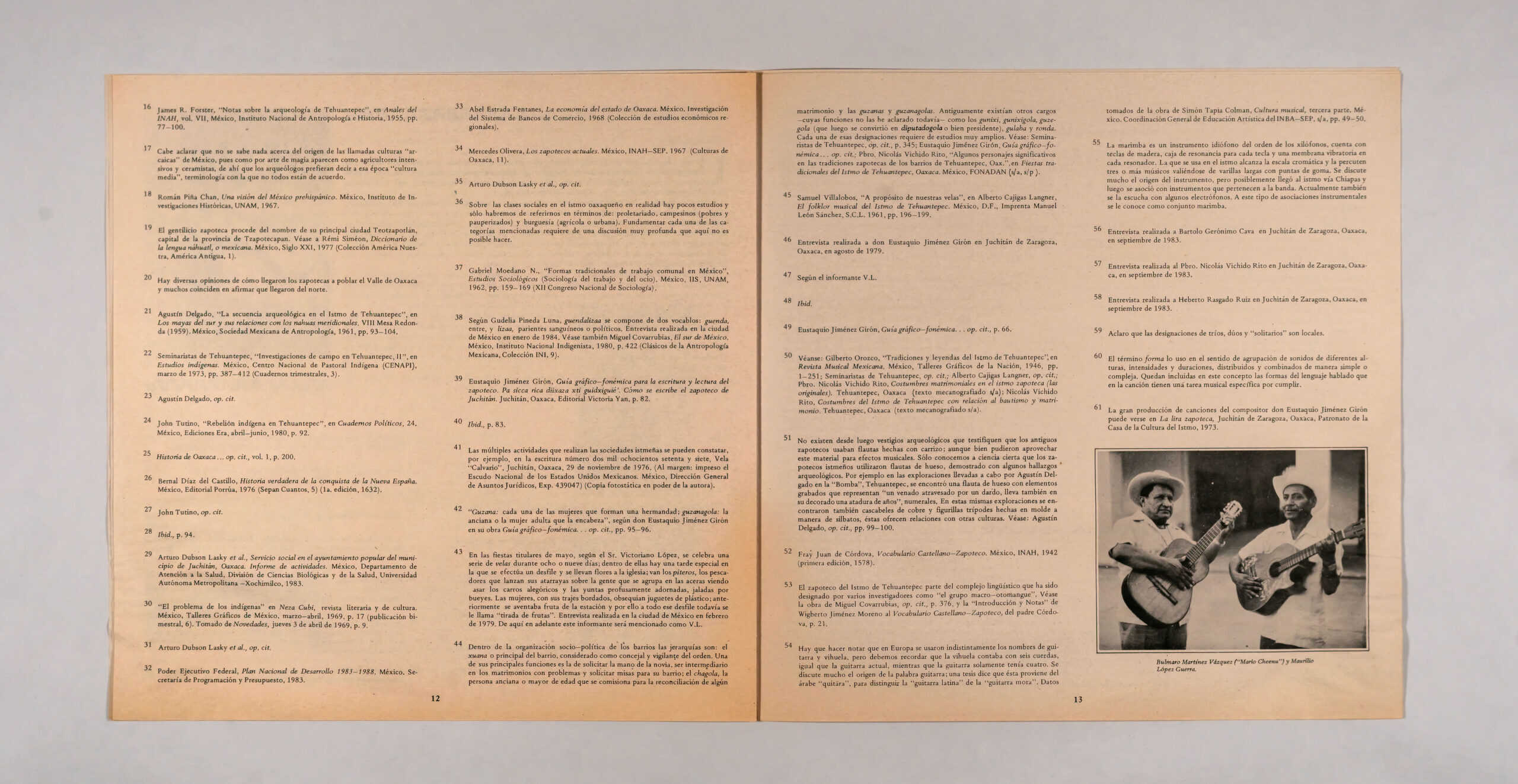
¹⁷ It should be clarified that nothing is known about the origin of the so-called “archaic” cultures of Mexico, since as if by magic they appear as intensive farmers and potters, hence why archaeologists prefer to call that period “middle culture”, terminology with which not everyone agrees.

¹⁸ Román Piña Chan, Una visión del México prehispánico. México, Instituto de Investigaciones Históricas, UNAM, 1967.

¹⁹ The name Zapotec comes from the name of its main city Teotzapotlan, capital of the province of Tzapotecapan. Véase a Rémi Siméon, Diccionario de la lengua náhuatl, o mexicana. México, Siglo XXI, 1977 (Colección América Nuestra, América Antigua, 1). 

²⁰ There are different opinions about how the Zapotecs came to populate the Valley of Oaxaca and many agree that they came from the north.

²¹ Agustín Delgado, “La secuencia arqueológica en el Istmo de Tehuantepec”, en Los Mayas del sur y sus relaciones con los nahuas meridionales. VIII Mesa Redonda (1959), México, Sociedad Mexicana de Antropología, 1961, pp. 93–104.

²² Seminaristas de Tehuantepec, “Investigaciones de campo en Tehuantepec, II”, en Estudios indígenas. México, Centro Nacional de Pastoral Indígena (CENAPI), marzo de 1973, pp. 387–412 (Cuadernos trimestrales, 3).

²³ Agustín Delgado, op. cit.

²⁴ John Tutino, “Rebelión indígena en Tehuantepec”, en Cuadernos Políticos, 24. México, Ediciones Era, abril–junio, 1980, p. 92.

²⁵ Historia de Oaxaca… op. cit., vol. 1, p. 200.

²⁶ Bernal Díaz del Castillo, Historia verdadera de la conquista de la Nueva España. México, Editorial Porrúa, 1976 (Sepan Cuantos, 5) (1a, edición, 1632).

²⁷ John Tutino, op. cit.

²⁸ Ibid., p. 94

²⁹ Arturo Dubson Lasky et al., Servicio social en el ayuntamiento popular del municipio de Juchitán, Oaxaca. Informe de actividades. México, Departamento de Atención a la Salud, División de Ciencias Biológicas y de la Salud, Universidad Autónoma Metropolitana –Xochimilco, 1983.

³⁰ “El problema de los indígenas” en Neza Cubi, revista literaria y de cultura. México, Talleres Gráficos de México, marzo–abril, 1969, p. 17 (publicación bimestral, 6). Tomado de Novedades, jueves 3 de abril de 1969, p. 9. 

³¹ Arturo Dubson Lasky et al., op. cit.

³² Poder Ejecutivo Federal, Plan Nacional de Desarrollo 1983–1988. México, Secretaría de Programación y Presupuesto, 1983.

³³ Abel Estrada Fentanes, La economía del estado de Oaxaca, México. Investigación del Sistema de Bancos de Comercio, 1968 (Colección de estudios económicos regionales). 

³⁴ Mercedes Olivera, Los zapotecos actuales. México, INAH–SEP. 1967 (Culturas de Oaxaca, 11). 

³⁵ Arturo Dubson Lasky et al., op. cit.

³⁶ There are really few studies on the social classes in the Oaxacan isthmus and we will only have to refer to them in terms of: proletariat, peasants (poor and impoverished) and bourgeoisie (agricultural or urban). Justifying each one of the mentioned categories requires a very deep discussion that is not possible here.

³⁷ Gabriel Moedano N., “Formas tradicionales de trabajo comunal en México”, Estudios Sociológicos (Sociología del trabajo y del ocio). México, IIS, UNAM, 1962, pp. 159–169 (XII Congreso Nacional de Sociología). 

³⁸ According to Gudelia Pineda Luna, guendalizaa is made up of two words: guenda, between, and lizaa, blood or political relatives. Interview conducted in Mexico City in January 1984. Véase también Miguel Covarrubias, El sur de México. México, Instituto Nacional Indigenista, 1980, p. 422 (Clásicos de la Antropología Mexicana, Colección INI, 9). 

³⁹ Eustaquio Jiménez Girón, Guía gráfico–fonémica para la escritura y lectura del zapoteco. Pa sicca rica diixaza xti guidxiguié’. Cómo se escribe el zapoteco de Juchitán. Juchitán, Oaxaca, Editorial Victoria Yan, p. 82. 

⁴⁰ Ibid., p. 83. 

⁴¹ The multiple activities carried out by the Isthmus companies can be verified, for example, in deed number two thousand eight hundred and seventy-seven, Vela “Calvario”, Juchitán, Oaxaca, 29 de noviembre de 1976. (Al margen: impreso el Escudo Nacional de los Estados Unidos Mexicanos. México, Dirección General de Asuntos Jurídicos, Exp. 439047) (Copia fotostática en poder de la autora). 

⁴² “Guzana: each of the women who form a brotherhood; guzanagola: the old woman or the adult woman who heads it”, according to don Eustaquio Jiménez Girón en su obra Guía gráfico–fonémica… op. cit., pp. 95-96. 

⁴³ In the main festivities of May, according to Mr. Victoriano López, a series of candles is celebrated for eight or nine days; within them there is a special afternoon in which a parade is held and flowers are brought to the church; go the piteros, the fishermen who cast their cast nets on the people who gather on the sidewalks watching the allegorical floats go by and the profusely decorated teams, pulled by oxen. The women, in their embroidered costumes, give away plastic toys; Previously, fruit from the season was thrown and for this reason the entire parade is still called “fruit throw”. Interview conducted in Mexico City in February 1979. From now on this informant will be referred to as V.L.

⁴⁴ Within the socio-political organization of the neighborhoods, the hierarchies are: the xuana or principal of the neighborhood, considered as councilor and watchman of order. One of his main functions is to request the hand of the bride, to be an intermediary in marriages with problems and to request masses for his neighborhood; the chagola, the elderly or adult person who is commissioned for the reconciliation of a marriage and the guzanas and guzanagolas. In the past, there were other positions – whose functions I have not yet clarified – such as gunixi, gunixigola, guzegola (who later became a deputygola or president), gulaba and ronda. Each of these designations requires extensive study. See: Seminaristas de Tehuantepec, op. cit., p. 345; Eustaquio Jiménez Girón, Guía gráfico–fonémica… op. cit.; Pbro, Nicolás Vichido Rito, “Algunos personajes significativos en las tradiciones zapotecas de los barrios de Tehuantepec, Oax.”, en Fiestas tradicionales del Istmo de Tehuantepec, Oaxaca. México, FONADAN (s/a, s/p).

⁴⁵ Samuel Villalobos, “A propósito de nuestras velas”, en Alberto Cajigas Langner, El folklor musical del Istmo de Tehuantepec. México, D.F., Imprenta Manuel León Sánchez, S.C.L. 1961, pp. 196–199. 

⁴⁶ Entrevista realizada a don Eustaquio Jiménez Girón en Juchitán de Zaragoza, Oaxaca, en agosto de 1979.

⁴⁷ Según el informante V.L. 

⁴⁸ Ibid. 

⁴⁹ Eustaquio Jiménez Girón, Guía gráfico–fonémica… op. cit., p. 66. 

⁵⁰ See: Gilberto Orozco, “Tradiciones y leyendas del Istmo de Tehuantepec”, en Revista Musical Mexicana, México, Talleres Gráficos de la Nación, 1946, pp. 1–251; Seminaristas de Tehuantepec, op. cit., Alberto Cajigas Langner, op. cit.; Pbro. Nicolás Vichido Rito, Costumbres matrimoniales en el istmo zapoteca (las originales). Tehuantepec, Oaxaca (texto mecanografiado s/a); Nicolás Vichido Rito, Costumbres del Istmo de Tehuantepec con relación al bautismo y matrimonio. Tehuantepec, Oaxaca (texto mecanografiado s/a). 

⁵¹ Of course, there are no archaeological remains that testify that the ancient Zapotecs used flutes made of reeds; although they could well take advantage of this material for musical effects. We only know for sure that the Istmeño Zapotecs used bone flutes, proven by some archaeological findings. For example, in the explorations carried out by Agustín Delgado in the “Bomba”, Tehuantepec, a bone flute was found with engraved elements that represent “a deer pierced by a dart, it also has in its decoration a tether of years”, numerals . In these same explorations, copper rattles and tripod figurines made in mold as whistles were also found, these offer relationships with other cultures. See: Agustín Delgado, op. cit., pp. 99–100. 

⁵² Fray Juan de Córdova, Vocabulario Castellano–Zapoteco, México, INAH, 1942 (primera edición, 1578). 

⁵³ The Zapotec of the Isthmus of Tehuantepec is part of the linguistic complex that has been designated by various researchers as “the macro-Otomanguean group”. See: la obra de Miguel Covarrubias, op. cit., p. 376, y la “Introducción y Notas” de Wigberto Jiménez Moreno al Vocabulario Castellano–Zapoteco, del padre Córdova, p. 21. 

⁵⁴ It should be noted that in Europe the names of guitar and vihuela were used interchangeably, but we must remember that the vihuela had six strings, just like the current guitar, while the guitar only had four. The origin of the word guitar is much discussed; One thesis says that it comes from the Arabic “quitära”, to distinguish the “Latin guitar” from the “Moorish guitar”. Data taken from the work of Simón Tapia Colman, Cultura musical, third part. Mexico. General Coordination of Artistic Education of the INBA–SEP, s/a. pp. 49–50.

⁵⁵ The marimba is an idiophone instrument of the xylophone order, it has wooden keys, a sound box for each key and a vibrating membrane in each resonator. The one used on the isthmus reaches the chromatic scale and is struck by three or more musicians using long sticks with rubber tips. The origin of the instrument is widely debated, but it possibly reached the isthmus via Chiapas and was later associated with instruments belonging to the band. Currently it is also heard with some electrophones. This type of instrumental associations is known as a marimba ensemble.

⁵⁶ Interview with Bartolo Gerónimo Cava in Juchitán de Zaragoza, Oaxaca, in September 1983.

⁵⁷ Interview with Fr. Nicolás Vichido Rito in Juchitán de Zaragoza, Oaxaca, in September 1983.

⁵⁸ Interview with Heberto Rasgado Ruiz in Juchitán de Zaragoza, Oaxaca, in September 1983.

⁵⁹ I clarify that the designations of trios, duos and “solitarios” are local.

⁶⁰ I use the term form in the sense of a grouping of sounds of different heights, intensities and durations, distributed and combined in a simple or complex way. Included in this concept are the forms of spoken language that in the song have a specific musical task to fulfill.

⁶¹ The great production of songs by the composer Eustaquio Jiménez Girón can be seen in La lira zapoteca, Juchitán de Zaragoza, Oaxaca, Board of Trustees of the Casa de la Cultura del Istmo, 1973.


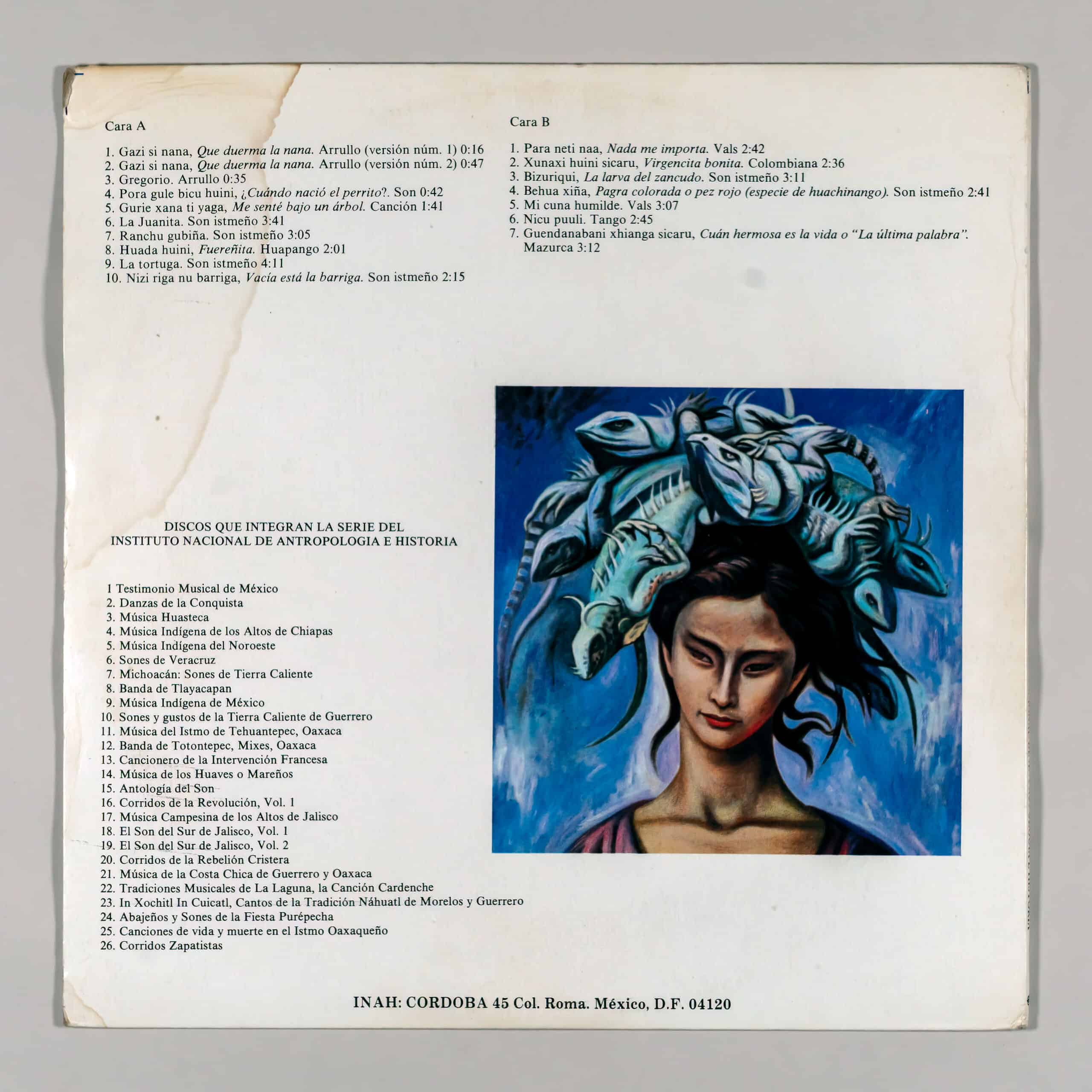
FACE A 


Nos. 1 2 and 3

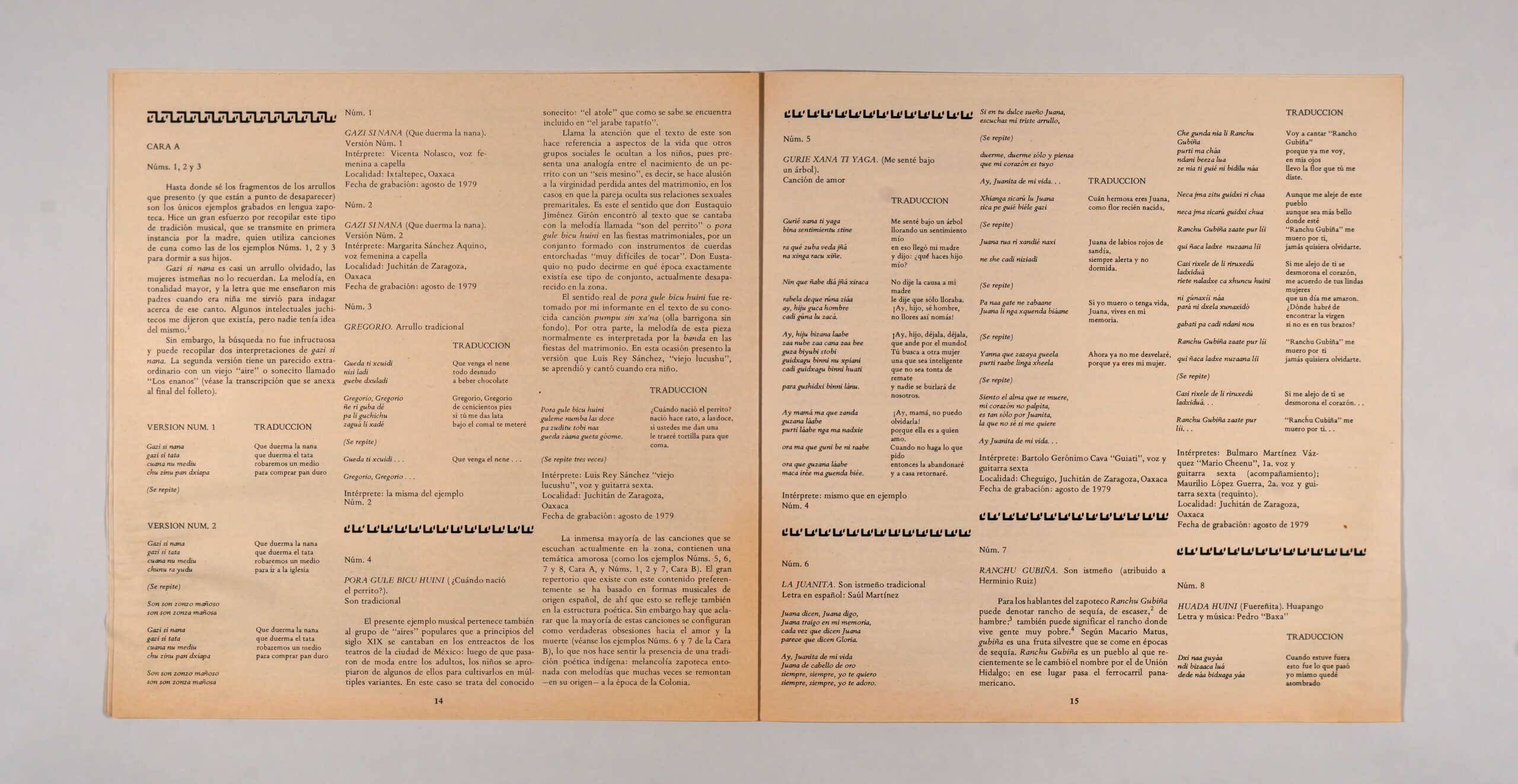
As far as I know, the fragments of the lullabies that I present (and that are about to disappear) are the only examples recorded in the Zapotec language. I made a great effort to collect this type of musical tradition, which is transmitted in the first instance by the mother, who uses lullabies like those in the examples Nos. 1, 2 and 3 to put your children to sleep.

Gazi si nana is almost a forgotten lullaby, the women of the Isthmus do not remember it. The melody, in a major key, and the lyrics that my parents taught me when I was a child helped me to inquire about that song. Some Juchitec intellectuals told me it existed, but no one had any idea about it.¹

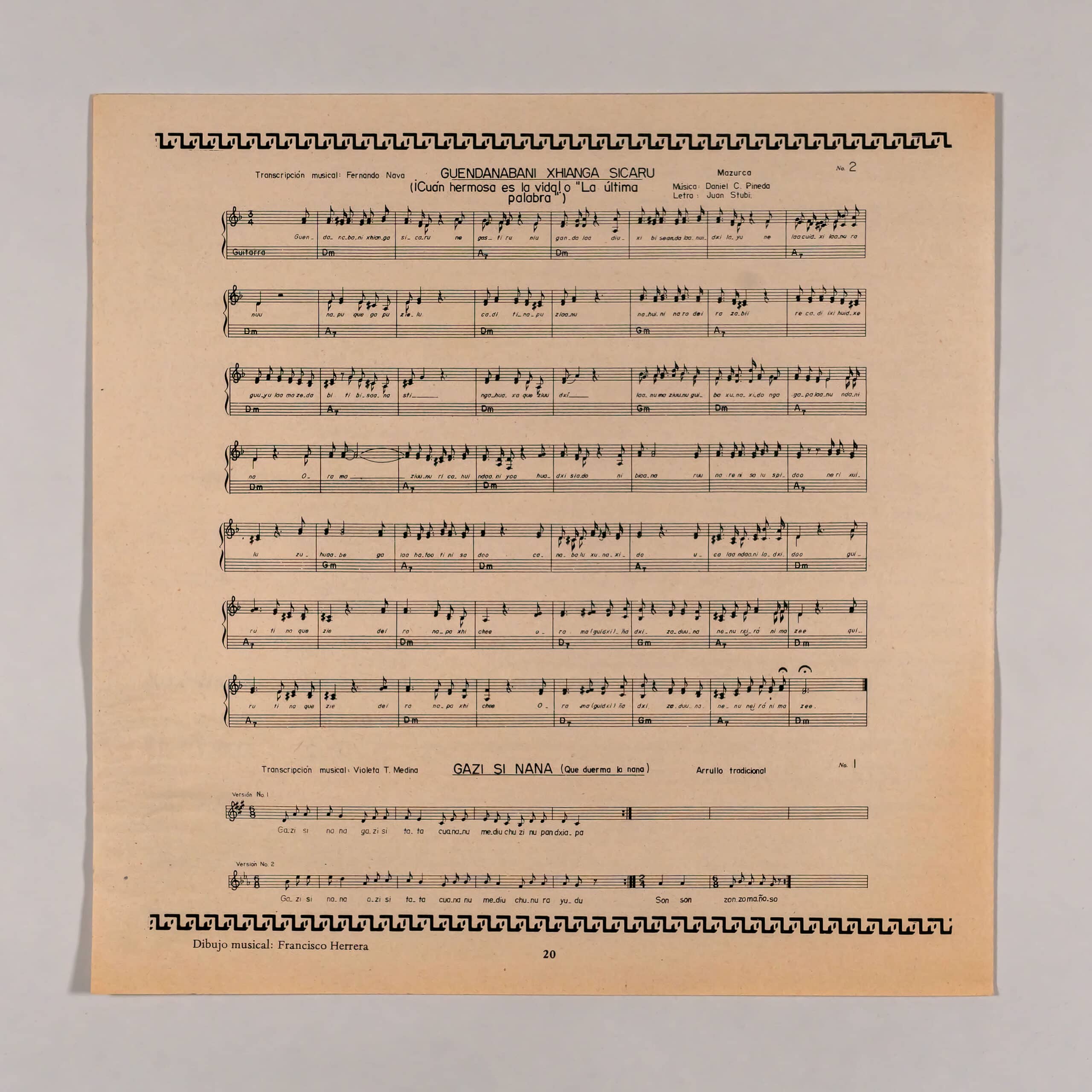
However, the search was not fruitless and can collect two interpretations of gazi si nana. The second version bears an uncanny resemblance to an old “air” or little sonnet called “The Dwarves” (see the transcript attached at the end of the pamphlet).


VERSION No. 1

GAZI SINANA (Let the nanny sleep).


Gazi si nana
gazi si tata
cuana nu mediu
chu zinu pan dxiapa

(Is repeated)


TRANSLATION

Let the nanny sleep
sleep the dad
we will steal a medium
to buy stale bread.


Performer: Vicenta Nolasco, a cappella female voice
Location: Ixtaltepec, Oaxaca
Recording date: August 1979


VERSION No. 2

GAZI SI NANA (Let the nanny sleep).


Gazi si nana
gazi si tata
cuana nu mediu
chunu ra yudu

(Is repeated)

Son son zonzo mañoso
son son zonza mañosa

Gazi si nana
gazi si tata
cuana nu mediu
chu zinu pan dxiapa

Son son zonzo mañoso
son son zonza mañosa


TRANSLATION

Let the nanny sleep
let the dad sleep
we will steal a medium
go to the church

Let the nanny sleep
let the dad sleep
we will steal a medium
to buy stale bread


Performer: Margarita Sanchez Aquino, a cappella female voice
Location: Juchitan de Zaragoza,
Recording date: August 1979


No. 3

GREGORIO. Traditional lullaby


Gueda ti xcuidi
nisi ladi
guebe dxuladi

Gregorio, Gregorio
ñe ri guba dé
pa li guchichu
zaguá li xadé

(Is repeated)

Gueda ti xcuidi…

Gregorio, Gregorio…


TRANSLATION

let the baby come
all naked
to drink chocolate

Gregory, Gregory
of ashen feet
if you give me can
I will put you under the griddle

Let the baby come…


Performer: the same as example No. 2


No. 4 

PORA GULE BICU HUINI (When was the puppy born?). 

Traditional son

This musical example also belongs to the group of popular “airs” that at the beginning of the 19th century were sung during intermissions in the theaters of Mexico City: after they went out of fashion among adults, children appropriated some of them. them to cultivate them in multiple variants. In this case it is the well-known little sonecito: “el atole” which, as is known, is included in “el jarabe tapatío”.

It is striking that the text of this son refers to aspects of life that other social groups hide from children, since it presents an analogy between the birth of a puppy with a “six month old”, that is, it alludes to Virginity lost before marriage, in cases where the couple hides their premarital sexual relations. This is the meaning that Mr. Eustaquio Jiménez Girón found in the text that was sung with the melody called “son del perrito” or pora gule bicu huini at wedding parties, by an ensemble made up of wound string instruments “very difficult to play”. Don Eustaquio could not tell me at what time exactly this type of group existed, currently disappeared in the area.

The real meaning of pora gule bicu huini was taken up by my informant in the text of his well-known song pumpu sin xa’na (pot-bellied bottomless pot). On the other hand, the melody of this piece is normally played by the band at the wedding parties. On this occasion I present the version that Luis Rey Sánchez, “old lucushu”, learned and sang when he was a child.


Pora gule bicu huini
guleme numba las doce
pa zuditu tobi naa
gueda záana gueta góome. 

(Repeats three times) 


TRANSLATION

When was the puppy born?
He was born a while ago, at twelve,
if you give me one
I will bring you an omelette so that
eat.


Performer: Luis Rey Sánchez “old lucushu”, voice and sixth guitar. Location: Juchitán de Zaragoza, Oaxaca Recording date: August 1979 The vast majority of the songs currently heard in the area contain a love theme (such as examples Nos. 5, 6, 7 and 8, Side A, and Nos. 1, 2 and 7, Side B). The great repertoire that exists with this content has preferably been based on musical forms of Spanish origin, hence this is also reflected in the poetic structure. However, it must be clarified that most of these songs are configured as true obsessions towards love and death (see examples Nos. 6 and 7 of Side B), which makes us feel the presence of an indigenous poetic tradition: Zapotec melancholy intoned with melodies that often go back –in their origin– to colonial times.


No. 5

GURIE XANA TI YAGA. (I sat under a tree).

Love song


Gurié xana ti yaga
bina sentimientu stine

ra qué zuba veda jñá
na xinga racu xine.

Nin ñabe diá jñá xiraca

rabela de que rúna ziáa
ay, hiju guca hombre
cadi gúna lu zacá.

Ay, hiju bizana laabe
zaa nube zaa cana zaa bee
guza biyubi stobi
guidxagu binni nu xpiani
cadi guidxagu binni huati

para gushidxi binni lánu.

Ay mama ma que zanda
guzana laabe
purti láabe nga ma nadxie

ora ma que guni be ni raabe

ora que guzana láabe
maca irée ma guenda biée.


TRANSLATION

I sat under a tree
crying a feeling
Own
that’s when my mother arrived
and said: what are you doing son
Own?

I did not tell the cause to me
mother
I told him I was just crying.
Oh son, be a man
don’t cry like that!

Oh, son, leave her, leave her,
go around the world!
You look for another woman
one that is smart
don’t be silly
auction
and no one will make fun of
us.

oh mom i can’t
forget her!
because she is who
love.
When I don’t do what
I ask
then i will abandon her
and I will return home.


Performer: same as in example No. 4


No. 6

The JUANITA. 

Traditional istmeño son

Lyrics in Spanish: Saúl Martínez


Juana they say, Juana I say,
Juana I bring in my memory,
every time they say Juana
It seems that they say Gloria.

Oh, Juanita of my life
Joan of golden hair
always, always, I love you
always, always, I adore you.

If in your sweet dream Juana,
you hear my sad lullaby,

(Is repeated)

sleep, sleep alone and think
that my heart is yours

Oh, Juanita of my life…

Xhianga sicaru lu Juana
sica pe guié biele gazi

(Is repeated)

Juana rua ri xandié naxi

ne she cadi niziadi

(Is repeated)

Pa naa gate ne zabaane
Juana li nga xquenda biáane

(Is repeated)

Yanna what zazaya gueela
purti raabe linga xheela

(Is repeated)

I feel the soul that dies,
my heart does not beat
it’s only for Juanita,
the one I don’t know if she loves me

Oh Juanita of my life…


TRANSLATION

How beautiful you are, Juana
like a newborn flower,

Joan of Red Lips
watermelon,
always alert and not
asleep.

If I die or have life,
Juana, you live in me
memory.

Now I won’t reveal myself anymore
because you are my wife


Performer: Bartolo Gerónimo Cava “Guiati”, voice and sixth guitar
Location: Cheguigo, Juchitán de Zaragoza, Oaxaca
Recording date: August 1979


No. 7 

RANCHU GUBIÑA.

Istmeno son (attributed to Herminio Ruiz)

For Zapotec speakers, Ranchu Gubiña can denote a ranch of drought, scarcity,² hunger;³ it can also mean the ranch where very poor people live.⁴ According to Macario Matus, gubiña is a wild fruit that is eaten in times of drought. Ranchu Gubiña is a town that was recently renamed Unión Hidalgo; In that place the Pan-American railway passes.


Che gunda nia li Ranchu
Gubiña
purti ma cháa
ndani beeza lua
ze nia ti guié ni bidilu náa

Neca jma zitu guidxi ri chaa

neca jma sicarú guidxi chua

Ranchu Gubiña zaate pur líi

qui ñaca ladxe nuzaana lii

Casi rixele de li riruxedú
ladxiduá
riete naladxe ca xhuncu huini

ni gúnaxíi náa
pará ni dxela xunaxidó

gabati pa cadi ndani nou

Ranchu Gubiña zaate pur líi

qui ñaca ladxe nuzaana lii

(Is repeated)

Casi rixele de li riruxedú
ladxiduá…

Ranchu Gubiña zaate pur
lii…


TRANSLATION

I’m going to sing “Ranch
gubiña”
because I’m leaving
in my eyes
I carry the flower that
you gave.

Even if I walk away from this
town
even if it is more beautiful
where i am
“Ranchu Gubiña” I
I die for you,
I would never want to forget you.

If I walk away from you
breaks the heart,
I remember your pretty
women
that one day they loved me
Where will I be
find the virgin
if not in your arms?

“Ranchu Gubiña” I
I die for you
I would never want to forget you.
you me

If I walk away from you
breaks the heart…

“Ranchu Cubiña” I
I die for you…


Performers: Bulmaro Martínez Vázquez “Mario Cheenu”, 1st. voice and sixth guitar (accompaniment); Maurilio López Guerra, 2a. voice and sixth guitar (requinto).
Location: Juchitán de Zaragoza, Oaxaca
Recording date: August 1979


No. 8

HUADA HUINI (Little outsider).

Huapango

Lyrics and music: Pedro “Baxa”


Dxi naa guyáa
ndi bizaaca luá
dede náa bidxaga yáa

guyua niá ti huada huini

quenda ganna didxastiá

(Is repeated)

Ora guiní qui riene láa

ora guinié qui riene náa

ni rune tiá ruxidxe
ne ridxiña riguidxe láa

(Is repeated)

Dxi náa guyaa
ndi bizaaca lua
dede naá bidxaga yáa

guyua niá ti huada huini
quenda ganna didxastiá

Ora guiní qui riene láa

ora guinié qui riene náa

ni rune tía ruxidxe
ne ridxiña riguidxe láa

Na didxastiá
que ganna diá
didxazá nga gule niá
didxazá bizidi jñá naa
dxi nahuine guyuá ndani naa

(Is repeated)


TRANSLATION

when i was away
this was what happened
I myself stayed
amazed

I loved one very much
fuerinita
I didn’t even speak Castilian.

If she spoke, not her
understood
if I spoke, she did not
understood
I just laughed
and hugged her.

when i was away
this was what happened
I myself stayed
amazed
I loved a little girl
I didn’t even speak
Castile.

If she spoke, not her
understood
if I spoke, she did not
understood
I just laughed
and hugged her.

I from castile
I understand nothing
I was born with the Zapotec
my mother taught me
since I was in your
arms.


Performer: same as in example No. 6


No. 9 

THE TURTLE. 

Traditional istmeno son

The origin of the son bigu (turtle) has vanished and in the same case as the Sandunga, various towns both in the state of Chiapas and the Oaxacan isthmus dispute its paternity. The Pbro. Nicolás Vichido Rito mentions in a typewritten article that this son is from Tehuano Andrés Gutiérrez “Ndre Saa”, a composer from the middle of the last century, according to information provided by maestro Margarito M. Guzmán.

The son “La tortoise”, as Vichido mentions, has had many lyrics in both Spanish and Zapotec and almost all of them describe part of the activities of the “mareño” or Huave man, such as collecting hundreds of turtle eggs, that he finally puts up for sale in the isthmus market. In the case of the verses compiled in Tehuantepec, the turtle is mentioned as an ingredient in a typical Istmeño stew called “guiñadóo”.

This son has also been titled in different ways; two of them are: “mareña” and “la tortoise del arenal”; the collection of the eggs of this animal is often staged with a dance in the important festivals of the people of the isthmus, such as a wedding. It is executed in pairs of a man and a woman, their movements simulate –according to Macario Matus– “an act of love, fertility of the land or the sea”, in this case symbolized by the presence of the woman.


Naze huadxi guyá neza yoo
dxi na yendaya ma peca zeu

ma bedandalu xi beda neu

ti bigu huini de San Mateu

(Is repeated)

Ay, ay, bigu xipe (si) carú

jma pa ñaca me guiñadoo
jma pa núme ndani suquí
nanixe nahua láme nadxi

(Is repeated)

Ti bigu huini ti bigu róo

para nga biya lu lame lu róo
ye guya lame guriá niza dóo

ora bireme lumba siadóo

(Is repeated)

Ay, ay, bigu xipe (si) carú…

(Is repeated)

Ti huavi huini ti huavi róo

zendé ca bigu guriá niza dóo

zeda ca mamma ne dxumi zúu

sica ca dxita para gutoo

(Is repeated)

Ay, ay, bigu xipe (si)carú…

(Is repeated)


TRANSLATION

Yesterday I passed through the town
when I arrived you had
gone,
now that you come back, what
you’ve brought?
I brought a turtle
Saint Matthew.

Oh, oh, turtle that
Linda is,
even better in spicy mole,
even better roasted in the oven,
How delicious if I ate it today!

That little turtle and that
great,
where did you see them sir?
I saw them on the shore
sea
when they went out between
Sunrise.

Oh, oh, turtle how cute
is…

A huave child and another
great
They went turtle hunting
sea
and the huave goes with her
basket

to bring the eggs to
sell.

Oh, oh, turtle how cute
is…


Performers: Ma. Luisa Leyto de Alvarez, female voice; Gustavo Alvarez Villalobos, first marimba tiple; Mario Leyto Vasco, second marimba tiple; Aurelio Leyto Vasco, center of the marimba or harmony.
Location: Tehuantepec, Oaxaca
Recording date: August 1979


No. 10 

NIZI RIGA NU BARRIGA (Empty is the belly).

Istmeno  son (attributed to Don Cenobio López)

This son, whose melody is attributed to the most notable flutist from Juchitán, who was blind since he was one year old, is performed by young musicians (also from Juchitán). Here they demonstrate complete mastery of the musical instruments called pitu, caja niseaaba’ and bigu.

According to the interpreters, this son was sung at the titular parties, in the “labradas de cera” when the musicians had not been given their breakfast and at the moment when the pitero was hungry. Currently –for the same occasion– it is no longer sung, only the melody is played.

The “labrada de cera”, according to Julio Bustillos, is the commitment that is assumed from the taking of the stewardship of a candle (semi-religious society that is in charge of carrying out the regional festivals).

At present, generally three months before having a party, the treasurer, secretary and members of the candle ask for fees from the associates. The first cooperation takes place in the butler’s house, where partners, family and friends attend. The xuana’ (person who directs the ceremonies) and the partners of the candle seal the commitment through the symbolism of the wax. The intervention of the piteros is essential that day, since they play all morning; Depending on the mayordomo, there may also be a band, marimba or orchestra. At night the dance begins at the great fiesta de la vela that lasts until dawn the next day.


Nizi riga
nizi riga
nizi riga
nu barriga

(Is repeated)

xcuenta mayordomo

quixe cadxi dañu
bere ngola
bere ngola
bere ngola
calluni dañu
xcuenta mayordomo

quixe cadxi dañu.


TRANSLATION

As empty
like empty
like empty
there is the belly

It is the account of
Butler
to pay the damages
of the big hen
of the big hen
of the big hen
the one that hurts
is the account of
Butler
pay the damages.


Performers: Heberto Rasgado Ruiz, voice and pitu de gueere (reed flute with seven holes); Julio Santiago Montero, caja niseaaba’ (atole drum); Armando Gutiérrez Blas, bigu (tortoise shell).
Location: Juchitán de Zaragoza, Oaxaca
Recording date: August 1979


FACE B 


No. 1 

PARA NETI NAA (Nothing matters). 

Waltz

This piece is a version supervised by the Juchiteco composer Demetrio López López “Deeme”, who wrote the lyrics and music in 1936. During one of Miguel Covarrubias’s visits to Juchitán, he heard the lovers serenading their fiancées; among the songs compiled is this song that he titled: “Tell me if you interest me” and that was later called “El feo” by the “Trío Monte Albán”.


Zaa guiní caabe naa xpadua
huíne
zaa guini caabe quepe che
ini lu,
xindi donda ni napa ti feu
naa
zaa guiní caabe naa xpadua
huíne
xíndi donda ni napa ti feu
naa

Li ma nannu ca feu nga rana
xhii
rudi guidubi ladxidóo
ne zachaganá ne lii

(Is repeated)

Li nga nanu pabiá nga nadxié líi
ladxidua nga nadxié ne lii
pa guiní cabe naa neza lúlu

gudxi laa cabe naa nga xpidóolu

Li ma nannu ca feu nga rana
xhii
rudi guidubi ladxidóo
ne zachaganá ne  lii

(Is repeated)

Li nga nannu pabiá nga
nadxié lii…

Li ma nannu ca feu nga
rana xhii…


TRANSLATION

Let them gossip about me
my life,
let them do it
do not say anything,
what fault do I have if I am
a ugly,
let them gossip about me
my life,
what fault do I have if I am
a ugly.

You know that an ugly
knows how to love,
give all your heart
and will lead you to the altar.

You know how much I love you,
my heart loves you so much;
if they murmur about me in your
presence,
tell them i’m your idol
holy.

You know that an ugly knows
to love,
give all your heart
and will lead you to the altar.

You know how much I love you..

You know that an ugly knows
to love…


Performers: same as on Side A, No. 7


No. 2

XUNAXI HUINI SICARU (Pretty virgin).

Colombian.

Lyrics: Cayetano González Santos

Music: Luis Panfilo Antonio Toledo


Xunaxi huini de bidani róo

xunaxi huini de busha ulan
xiñá
solamente gate que gune li
stine
solamente gate que chu
mediu xiga
solamente gate que chu
mediu xiga

(Is repeated)

Bailaremos la Zandunga
bailaremos el son ya
virgencita primorosa
virgencita de mi tierra.

Tierra linda tierra indiana
donde todas las mujeres
lucen su típico traje.

Ixtaltepec, Espinal, Juchitán
Tehuantepec
son los pueblos donde vibra
toda el alma zapoteca.

Virgencita de mi tierra
tierra linda, tierra istmeña
donde todas las mujeres
lucen su típico traje.

Ixtaltepec, Espinal, Juchitán,
Tehuantepec…


TRANSLATION

Virgin of huipil with
radiance
little virgin in red petticoat
and olan
not only dead
You will be mine
not only dead
there will be half xiga
not only dead
there will be half xiga.


Performer: same as on Side A, No. 6.


No. 3 

BIZURIQUI (The mosquito larva). 

Traditional istmeno son

In most towns, at least in Mexico, the importance of animals is enormous.

The Zapotec culture has many sones that on the one hand imitate the trills of birds or on the other are simply songs to the animals from which they have acquired great teachings, one of them is the movement of their bodies. Thus, bizuriqui, which has also been translated as a “standing water bug”, is actually “the larva of the mosquito” whose jumps are often compared to that of a restless child who is told: “you look like bizuriqui”. The text alludes to various aspects of the daily and religious life of the isthmian peoples.


Bizuriqui rutipi, rutiiqui ca

ndani xigabá ni ridáa nisa re
cabe
bicu yoxho riduxhu ca binni

riziñe ca xiiñi ora ma zézacabe

(Is repeated)

Bupu ree ra xhiña bidóo

rahua gueta ne ree guiñadóo

(Is repeated)

Xiga gueta riguiba ique
xheela
ora ma ze ti ra guenda
xheela
lu xpayú huini xheela

ma líbe ti gueza
para cúba ora ma beeda

(Is repeated)

Bupu ree ra xhiña bidóo.

Ti birungu birugu ti telayu,

birá xcú bidxaxa nati guisu

bira gueela ma naca ti bangu

ra zúba ti rangu cayó gueta
gúu

(Is repeated)

Bupu ree ra xhiña bidóo.


TRANSLATION

Bizuriqui whistles and goes
tiptoes
inside the water hole

the old dog barks at the
people
what bothers puppies
when walking.

I drink foam at parties
of the Saint
like tortillas with mole
spicy.

Xicalpestle goes on the head
from my wife
when she goes to one
big wedding;
in the handkerchief
wife
the cigarettes are wrapped
that the husband will smoke
to get.

I drink foam at parties
of the saint…

A trunk was cut
Sunrise
its roots were thrown into
crock pot
and at daylight it became a
bank
where an ugly sits
who eats tamale

I drink foam at parties
of the saint…


Performers: same as on Side A, No. 7


No. 4 

BEHUA XIÑA (Red snapper or red fish, snapper species). 

Traditional isthmeno son.

Lyrics: Eustaquio Jiménez Girón (“Staquiu Nigui”)


This son became popular in 1875 –according to information from Father Vichido– and at first it was used as a partisan son of the “geruleños” in Tehuantepec, that is, the Red Party, which in the 1980s was formed by the Porfirian “scientists”.

At present, with this son the event and result of a wedding is celebrated. The next day, after the balaana (virginity) test, the marimba, the band, the orchestra or a trio –depending on the economic situation–, perform the music of the behua xiña, which is generally instrumental; it is hardly sung, because if the woman does not turn out to be a virgin, the text can be considered as an offense.


Behua xiñá, canesu rini,
pur ti gudo xhaatu biduá
chita
ma gudxe lii “ora cuindini”

nin la biduá ne nin la dxita

Yanna bitopa zudi huínu
guihuini xi birá xóu gueela

pa núu balaana núu guenda
xheela
ne pa la co… guzáa chubinu

Ndi zanna guié ne zanna
guidxi
ma ca cului ni guca gazi
naa que zutide ndi nabidxi
zaxudxe taata cadi láa sí

Laguya chahui de pe guiratu
napipidó, nahuini guichu

nguén na xa xquipi zaqueca
xpíchu
dxela xa liáa pa nga pe náa tu

Yanna ma zanda guidé nu
riini
xhidxi ti son, guicáa ti diana

xhidxi son badu dxaapa huini

tu que guyáa zucaa nu yáaga

Lagué, laxhudxi, diti diti
la gáata zaa ti pipi huini

ni nuu xaguete jmá pe nanixe

sica ora xhupi bicu hu íni


TRANSLATION

Red fish, you’re bleeding
from eating so much banana
male
when you stop, I have
saying,
no banana or
eggs.

Now pull up your petticoats
to see how you woke up,
there will be marriage if you are
virgin
and if not, let’s go
house.
The flowers will know, the
people will know
The recently opened looks good,
This will be celebrated, not dry,
I will drink and everyone
will accompany

Take a good look at the presents
exquisite and small
downs,
upright under the belly,
same sex;
husband and wife, nor who
doubt.

Now let’s drink the wine,

to play a son, a
Diana,
that the sound of the
virgin girl
and who does not dance will have
his punishment.

Drink deep
rejoice with all
Body,
the one left below, what
joy,
as if the dog licked.


Performer: Eustaquio Jiménez Girón, voice; Jesús Jiménez Santiago, sixth guitar (1st requinto); Marcos Castillejos López, sixth guitar (20. requinto); Antonio Vázquez Santiago, sixth guitar (accompaniment).


No. 5

MY HUMBLE CRADLE.

Waltz

Music and lyrics: Eustaquio Jiménez Girón (“Staquiu Nigui”)

This is a beautiful example of a contemporary composition by a Juchiteco author, in which Spanish and Zapotec are combined. The text refers to the musicality of the Zapotec language and the traditional way in which a wedding is performed. In addition, in general terms it alludes to the current economic situation of Juchitán.


With altruism there is no destitute people,
a tribute to the man of such quality,
simple citizen or investiture
It should be an example of integrity.

Cradle of my life
Juchitán, dear land,
where the zapotec
it is a love melody;
That’s why your inspired son sings to you,
in musical dialect,
select sounds of the heart.

Son yá ni biyáa bixhoze ne jñiaa
xáana ti bacánda sti zina yaa
dxi bichaga naa caa
birá ru ni gundáa caa
guxidxi ti mediu xiga, son yáa.

The son that dad danced with mom,
under a bower, palm green;
when they got married
the junk broke,
to the sound of cooperation.

With altruism there is no destitute people…

Cradle of my life…

Son yá ni biyáa bixhoze ne jniáa…

The son that dad danced with mom…

Groaning earth,
Juchitán fertile,
your subsidiary wealth
it doesn’t make you happy.

It flogs you so much
the ungrateful poverty,
until your children
take pity on you..


Performers: same as on Side A, No. 7


No. 6

NICU PUULI.

Tango

Lyric: Luis Rey Sanchez

Nicu puuli called a person to whom “Old Lucushu” wrote the lyrics of this song. The music is based on the well-known tango “Volver” popularized by Carlos Gardel, but people liked this version for being sung in Zapotec and for having a sentimental character. Now much is requested at wakes for the dead and novenas where normally the musicians (friends or relatives of the deceased person) sing songs like this, accompanied by a sixth guitar.


Guzaya nia ti yagale
guta doo luxu lú
ne nguesi nga bixhidxe
dxi biinda sicarú

Neza tiica guiree
ne neza tiica zíaa
zinia dxa yagalé
nun (gu)zaya’ bindaniá

Nicu Puuli tutiisi rabi náa
zeeda ca xcuidi de guirá runibiá
Nicu Puuli tutiisi rabi naa
binni sti guidxi zeeda ne
runibiá

Ndi nga diidxa ni riaba
náa naná
ne rindete ni nisa bizaluá

ladxiduá ri raca tapa ndáa
ca xhamiguá nin qué ñanna
pa nuaa

Xinaca ora núu binni nazáaca
stale xhamigu nga napa
cadi casi ora ma huará
náa biiya dxi guca huarayá
tubiza

Nin tobi ca ni ridxaaga

qué pe needa guisaca naa
ngue runi naa rabe ni laatu
guiratu
(pur)ti guiratu binibia tu

Nicu Puuli dxi guzá
yanna diidxa ringá gunibe
ganna ca amigu stibe
xiinga (gue)nda naná.


TRANSLATION

I walked with a guitar
of threaded strings
and I pressed it where always,
When I had a better voice

Any path i walked
and everywhere I walked
played the guitar
who helped me sing.

Nicu Puuli they called me,
the children recognized me;
Nicu Puuli they called me
and people from outside the same
knew.

Is the word that
hurts
and tears flow from my
eyes;
my soul breaks into four
when friends me
they forgot.

Only when one is healthy
he has friends everywhere
and not when he gets sick:
I was sick one day.

none of the friends
I arrive
to mitigate my sorrow;
That’s why I’m talking to everyone

Because you met

Nicu Puuli when he was alive;
now this word left,
so that your friends all
know the pain that had a
day.


Performer: same as on Side A, No. 4


No. 7 

GUENDANABANI XHIANGA SICARU (How beautiful is life or “The last word”). 

Mazurka 

Music by Daniel C. Pineda. Lyrics: Juan Stubi

In 1909 –according to Gilberto Orozco in “Tradiciones y Leyendas del Istmo de Tehuantepec”– Daniel C. Pineda played his mandolin and interpreted “La última palabra”, his most recent composition, whose lyrics in Spanish express the poetic style of the end of the century past. Later, Juan Stubi wrote the lyrics in Zapotec, which is not a translation of the lyrics in Spanish. With guendanabani xhianga sicarú family and friends say goodbye to their deceased; This is how they show their affection and face death as something inevitable (see the corresponding transcript).


Guendanabani xhianga sicarú
ne gasti ru niuganda laa
Diuxi biseenda laanu idxi layú
ne laa cuidxi laanu ra nuu

Napu qué gapu zielu,
cadi ti napu ziaanu
nahuini naro de (gu)irá zabii
ne cadi ixí huidxe guuyu laa ma zedabi
ti bisaana sti
nga huaxa que ziuu dxi

Laanu ma ziuunu guibá
xunaxidó nga gapa laanu ndaani ná

Ora ma ziuunu ricahui ndaani yoo,
huadxi siado ni biaana ruuna re nisa lu spidóo
ne rixuilú zuhuaabe galaa batóo ti nisadóo

canaba lu xunaxidó
uca laa ndaani ladxidóo

Guiruti na qué zie,
de irá napa xhi chee
ora ma guidxiña dxi
zaduunanenu ne (gu)irá ni ma zee

(Is repeated)


TRANSLATION

How beautiful is life
and there is nothing that compares to it,
God put us on this earth
and he himself will call us.

With or without wealth you will go,
you will not remain for your gold;
boys and adults will leave
and you will never see them return
for his land assets,
That will never happen!

We go to the sky
the goddess will shelter us in her arms.

The day of our departure,
the house darkens
afternoon and morning;
the one that remains seems
that he would remain standing;
in the middle of the deep sea
implores the savior goddess,
take it in your hands.

No one will be left standing
we all have to go
when the day comes,
we will join with the others.


Performers: same as on Side A, No. 7.


NOTES


¹ There are also verses –provided by Macario Matus–, which contain onomatopoeia of the sexual act; those who knew them did not want to record them because they considered that they were very “rude”.

²  Eustaquio Jiménez Girón, Guía gráfico–fonémica… op. cit., p. 90.

³ Fidel Morgan, “Skidche” en Nesha (Órgano mensual de la sociedad Nueva de Estudiantes Juchitecos). México, D. F., Imprenta Anáhuac, septiembre de 1935, Núm. 4, s/p; Vocabulario Castellano–Zapoteco. Juchitán, Oaxaca, Publicación del H. Ayuntamiento Popular, 1982, p. 85 (primera edición 1893, publicada por la Junta Colombina).  

⁴ Ursulino Rueda Saynes y Ma. Magdalena Rueda Jiménez, Juchitán, Oaxaca. Un pueblo típico zapoteca. México, Editorial del Magisterio “Benito Juárez”, 1981, p. 102.


The field recordings included here –made for the most part in Juchitán, Oax.– are a beautiful testimony that the melodies that are played and sung in Didxazá or Zapotec, result from the acute observation of nature, since the musicians and composers of the Oaxacan isthmus are integrated into that natural whole: their own existence from birth to death. This record makes the public aware of the great musicality of the Zapotec people as it is expressed through the execution of various instruments that accompany the human voice, some inherited from ancient American cultures –among them the Zapotec– and others assimilated and modified. given the constant changes both musical and socio-economic in the area. Thus we find, for example, the bigu or turtle shell; the box niseaaba’ or “atole drum”; the pitu de gueere (reed flute, formerly also made of bone); likewise the marimba and the sixth guitars from other cultures. Let us then listen to some characteristic musical genres of the area such as the istmeño son, the mazurka, the waltz, the tango and the unique lullabies recorded in didxadá. Through them we will obtain an overview of the songs full of obsessions towards life, love, death and nature that surrounds the Zapotec people. Town –as is known– full of parties, which, with a hedonistic character more than religious, unify both family life and ethnic correspondence.


Research, Selection and texts:
Violet Torres M.

Recording and Photography:
Sergio Gomezcesar Hernandez

Front page:
Raul Anguiano
“The Woman of the Iguanas”
Oil on canvas. 1956

Cover design:
R. Villanueva.

Translation and Writing of the Texts in Zapotec:
Macario Matus.

Linguistic Consulting:
Rosa Maria Zuniga

General Coordination and Consulting:
Irene Vazquez Valle.

Brochure Design:
consolation anaya


SECRETARY OF PUBLIC EDUCATION
Mr. Miguel González Avelar.
Secretary of Education.

UNDERSECRETARIAT OF CULTURE
Lic. Martin Reyes Vayssade
Undersecretary

NATIONAL INSTITUTE OF ANTHROPOLOGY AND HISTORY
Dr. Enrique Florescano M.
Managing Director

DIRECTOR OF THE DISC SERIES
Rene Villanueva S.
Sound library.

Listen to the album in the INAH MEDIATECA, click on the following image:
D.R. National Institute of Anthropology and History, Mexico


Tracklist:

SONGS OF LIFE AND DEATH IN THE OAXACAN ISTHMUS
SIDE 1
  • A1Gazi Si Nana (Let the Nana Sleep). Lullaby (Version No. 1) 0:16
    Performer: Vicenta Nolasco, a cappella female voice
  • A2 Gazi Si Nana (Let the Nana Sleep). Lullaby (Version No. 2) 0:47
    Performer: Margarita Sánchez Aquino, female a cappella voice
  • A3 Gregory. Lullaby 0:35
    Performer: The same as example No. 2
  • A4 Pora Gule Bicu Huini (when was the puppy born?). It is 0:42
    Performer: Luis Rey Sánchez “old lucushu”, voice and sixth guitar.
  • A5 Gurie Xana Ti Yaga (I Sat Under A Tree). Song 1:41
    Performer: Same as in example No. 4
  • A6 La Juanita. They are Istmeño 3:41
    Performer: Bartolo Gerónimo Cava “Guiati”, voice and sixth guitar.
  • A7 Ranchu Gubiña. They are Istmeño 3:05
    Performer: Bulmaro Martínez Vázquez “Mario Cheenu”, 1st. voice and sixth guitar (accompaniment); Maurilio López Guerra, 2a. voice and sixth guitar (requinto).
  • A8 Huada Huini (Fuerenita). Huapango 2:01
    Performer: Same as in example No. 6
  • A9 The Turtle. They are Istmeño 4:11
    Performer: Ma. Luisa Leyto de Alvarez, female voice; Gustavo Alvarez Villalobos, first marimba tiple; Mario Leyto Vasco, second marimba tiple; Aurelio Leyto Vasco, center of the marimba or harmony.
  • A10 Nizi Riga Nu Barriga (Empty Is The Belly). They are Istmeño 2:15
    Performer: Heberto Rasgado Ruiz, voice and pitu de gueere (reed flute with seven holes); Julio Santiago Montero, caja niseaaba’ (atole drum); Armando Gutiérrez Blas, bigu (tortoise shell).
SIDE 2
  • B1 For Neti Naa (Nothing I Care About). Waltz 2:42
    Performer: Same as on Side A, No. 7
  • B2 Xunaxi Huini Sicaru (Pretty Virgin). Colombian 2:36
    Performer: Same as on Side A, No. 6.
  • B3 Bizuriqui (The Larva Of The Zancudo). They are Istmeño 3:11
    Performer: Same as on Side A, No. 7
  • B4 Behua Xiña (Pagra Colorada Or Red Fish, Snapper Species). They are Istmeño 2:41
    Performer: Eustaquio Jiménez Girón, voice; Jesús Jiménez Santiago, sixth guitar (1st requinto); Marcos Castillejos López, sixth guitar (20. requinto); Antonio Vázquez Santiago, sixth guitar (accompaniment).
  • B5 My Humble Cradle. Waltz 3:07
    Performer: Same as on Side A, No. 7
  • B6 Nicu Puul. tango 2:45
    Performer: Same as on Side A, No. 4
  • B7 Guendanabani Xhianga Sicaru. (How Beautiful Is Life Or “The Last Word”). Mazurka 3:12
    Performer: Same as on Side A, No. 7.

Credits:

Research, Selection and texts:
Violet Torres M.

Recording and Photography:
Sergio Gomezcesar Hernandez

Front page:
Raul Anguiano
“The Woman of the Iguanas”
Oil on canvas. 1956

Cover design:
R. Villanueva.

Translation and Writing of the Texts in Zapotec:
Macario Matus.

Linguistic Consulting:
Rosa Maria Zuniga

General Coordination and Consulting:
Irene Vazquez Valle.

Brochure Design:
consolation anaya

SECRETARY OF PUBLIC EDUCATION
Mr. Miguel González Avelar.
Secretary of Education.

UNDERSECRETARIAT OF CULTURE
Lic. Martin Reyes Vayssade
Undersecretary

NATIONAL INSTITUTE OF ANTHROPOLOGY AND HISTORY
Dr. Enrique Florescano M.
Managing Director

DIRECTOR OF THE DISC SERIES
Rene Villanueva S.
Sound library.


Links:

Various – Canciones De Vida Y Muerte En El Istmo Oaaxaqueno
otro

Sold For:

Highest Price:
$830 MX
Medium Price:
$830 MX

Condition:

Media Condition:
Mint (M)
Sleeve Condition:
Very Good Plus (VG+)
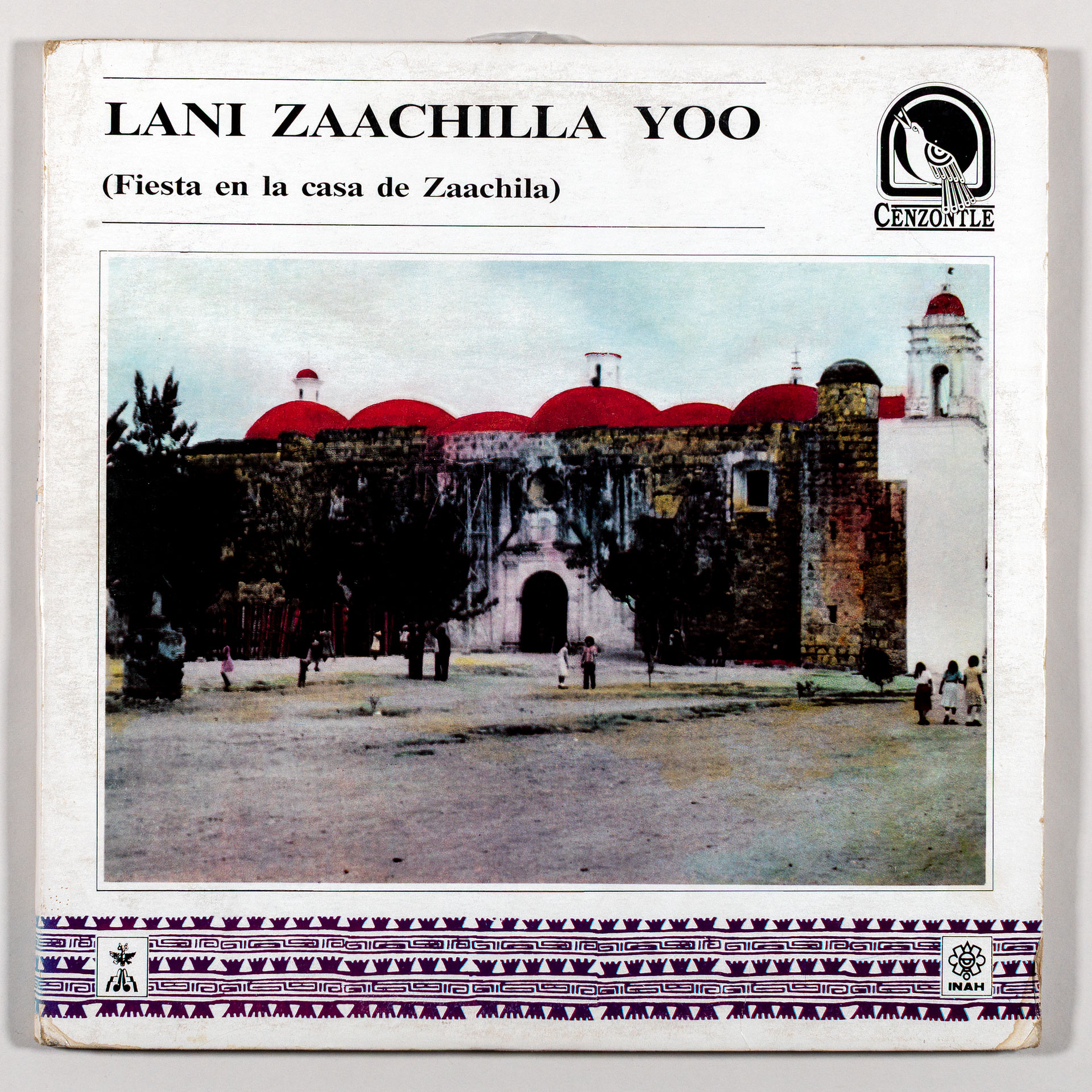
Label of the 'museo nacional de antropologia' that publishes field recordings from all mexican indigeneous people.

Post a Comment

Comment

Label: INAH-SEP  INAH-25, LME-167

Released: 1984

Country: México

Info:

Stidxa riunda guendanabani ne guenda guti sti binni zaa

CANCIONES DE VIDA Y MUERTE EN EL ISTMO OAXAQUEÑO


Disco 25
INAH


Los zapotecos del Istmo, un pueblo que lucha, trabaja y canta Geografía física del istmo I llamado Istmo de Tehuantepec es la parte más angosta de la República mexicana y se ubica dentro de los estados de Veracruz y Oaxaca. La región, que abarca toda el área comprendida entre el Golfo de México y el Golfo de Tehuantepec, se divide a su vez en dos subregiones claramente diferentes: el istmo veracruzano y el istmo oaxaqueño.¹

Nuestro interés se centra en el istmo oaxaqueño. Definimos a esa subregión como la planicie costera que queda limitada –según el geógrafo Jorge Tamayo L.² – por la Sierra Madre del Sur, la Sierra Atravesada, la Sierra Madre de Chiapas y el Litoral del Golfo de Tehuantepec; en su totalidad abarca una extensión de 19 975 km.2, lo que representa el 2.7% de la superficie del estado de Oaxaca.³

Según recientes estudios realizados bajo la dirección de Margarita Dalton, el territorio arriba descrito está integrado por los distritos de Juchitán y Tehuantepec, con 22 y 19 municipios respectivamente, aunque Reyna Moguel asegura que son incluidos indebidamente San Pedro Huamelula y Santiago Astata, que corresponden en realidad a la “costa” de Oaxaca.⁵ Las ciudades del istmo oaxaqueño son Matías Romero, Juchitán y Salina Cruz (véase mapa).⁶

Las formaciones que conectan las Sierras Madres de Oaxaca, y del Sur con la de Chiapas, en el Istmo de Tehuantepec son de poca elevación y por eso Tamayo supone que en el Cenozoico había comunicación entre las aguas del Golfo y del Pacífico;⁷ dice además que quedan como resto de la emersión las Lagunas Superior e Inferior y el llamado Mar Muerto (véase mapa).

La topografía del Istmo de Tehuantepec, según Royce,⁸ puede dividirse en tres secciones diferentes entre sí: La primera es la costa del Golfo; comienza en la Laguna de Ostión, donde se inicia una concavidad que termina en la barra de Tonalá, en cuya parte central desemboca el río Coatzacoalcos. La segunda es la de la Cordillera Neovolcánica, que, en el Istmo de Tehuantepec, se une con la Sierra Madre Atravesada y la Sierra Madre de Oaxaca; ésta bordea las tierras bajas labradas por corrientes fluviales como el valle del río Tehuantepec. Por último, la tercera parte –en el sur del istmo– es la planicie llamada por Tamayo “Planicie Costera Istmica Chiapaneca”; convencionalmente se la considera limitada por el río Tehuantepec en el Noroeste y el río Suchiate en el Sureste.⁹

En las laderas del Sur –nos dice Royce– se encuentran siete ríos que desembocan en las Lagunas Superior e Inferior; éstos son: el Comotepec, el de los Perros (o Juchitán), el Estacada, el Chicapa, el Espanta Perros, el Niltepec (o Xacuapa) y el Ostuta. Cabe destacar que hay otro río más importante que es el Tehuantepec, cuya corriente –según Tamayo– baja de la Sierra Madre del Sur en las cercanías de Miahuatlán, y se dirige hacia el norte con el nombre de río Ciénega, cambiando después por el de Mijangos. En las cercanías de Jalapa del Marqués, al río Tehuantepec se le unen las aguas del río Tequisistlán; con estas dos corrientes se construyó la presa Benito Juárez. El río Tehuantepec desemboca en la Bahía de la Ventosa, en el océano Pacífico.

El clima es calificado por Tamayo como “tropical lluvioso con invierno seco”. Las lluvias son escasas pero torrenciales, limitadas a una corta temporada de verano. La época de sequía es de octubre a mayo. La temperatura anual media es de 28° C y en los meses más calientes, de mayo a junio, la temperatura se mantiene arriba de los 32° C. La temporada de los “nortes” (vientos fuertes del noroeste) es de noviembre a marzo y cuando termina, el calor se hace sentir con toda su fuerza.

Debido a las altas temperaturas en la temporada de secas, la vegetación llega a ser semi-desértica: en general “mezquites, huizaches y leguminosas espinosas que crecen a la orilla de los ríos”.¹⁰

En el tiempo de secas el paisaje es árido, pero cuando llega la temporada de lluvias todo reverdece.

Los animales más característicos son: el zorrillo, la tuza, la ardilla, la rata campera, la liebre y el jabalí o tambor. Las aves típicas son: la chachalaca, la codorniz, la calandria, el gorrión, el verdún silvestre, el coyol cozque, el cuchillo chiflador, la urraca y el zapaterito.

Sobre los recursos del subsuelo no existen muchos estudios recientes, pero se sabe que hay una gran riqueza de mica y fosforita en Matías Romero; importantes criaderos de fierro en Tehuantepec; magnatela en Guichicovi, la Ventosa, Jalapa del Marqués y en otros varios puntos del istmo.¹¹

Se ha definido al Istmo de Tehuantepec como una zona económica tan importante como el Canal de Panamá, pues su angostura permite la comunicación interoceánica. Desde tiempos prehispánicos ese rasgo geofísico fue contemplado; así como también lo fue por conquistadores, cronistas; y posteriormente, considerado por estudiosos y empresarios, algunos de ellos norteamericanos, que quisieron llevar adelante planes para aprovechar tal angostura.¹² Esta zona, a lo largo del tiempo, se ha convertido en un magnífico paso para el tráfico masivo de mercancías.


ISTMO OAXAQUEÑO


INTEGRACIÓN TERRITORIAL: DISTRITOS Y MUNICIPIOS


I TEHUANTEPEC

1.- Santa María Totolapilla

2.- Santiago Lachiguiri

3.- Guevea de Humboldt

4.- Santa María Guienagati

5.- Magdalena Tequisistlán

6.- Santa María Jalapa del Marqués

7.- Santiago Laollaga

8.- Santo Domingo Chihuitan

9.- Magdalena Tlacotepec

10.- Santa María Mixtequilla

11.- San Pedro Comitancillo

12.- San Miguel Tenango

13.- Santo Domingo Tehuantepec

14.- San Blas Atempa

15.- San Pedro Huilotepec

16.- Salina Cruz

17.- San Mateo del Mar

18.- San Pedro Huamelula

19.- Santiago Astata


II JUCHITAN


1.- Matías Romero

2.- Santa María Chimalapa

3.- San Juan Guichicovi

4.- Santo Domingo Petapa

5.- Santa María Petapa

6.- El Barrio

7.- Ciudad Ixtepec

8.- Asunción Ixtaltepec

9.- San Miguel Chimalapa

10.- El Espinal

11.- Juchitán de Zaragoza

12.- Unión Hidalgo

13.- Santo Domingo

14.- Niltepec

15.- Santo Domingo Zanatepec

16.- Santa María Xadani

17.- San Dionisio del Mar

18.- San Francisco del Mar

19.- San Francisco Ixhuatán

20.- Reforma de Pineda

21.- San Pedro Tapanatepec

22.- Chahuites


Fuentes: Arturo Ortiz Wadgymar, Aspectos de la economía del Istmo de Tehuantepec. México, Instituto de Investigaciones Económicas, Universidad Nacional Autónoma de México, 1971.

Ma. Margarita Dalton Palomo, Historia de Oaxaca. Libro de texto para la primera enseñanza Tomo II. México, Centro de Sociología, Investigaciones Sociológicas de la Universidad Autónoma Benito Juárez de Oaxaca, 1980.


Algunos aspectos de la historia económica y social del istmo 

Debido a sus características físicas, el istmo ha sido un corredor de comunicación desde tiempos legendarios. Muchos caminos naturales desembocan en él. Es razonable entonces la conjetura de que por esas rutas transitaron los zapotecos de Oaxaca y luego los aztecas de México para conquistarlo; también es válido decir que antes de ello, otros pueblos encontraron allí seguridad y una posición favorable entre dos mares y dos bloques montañosos. Burgoa¹³ recopiló una serie de leyendas referentes al origen de los habitantes del Istmo de Tehuantepec; apoyándose en ellas supuso que los habitantes de la zona eran de una “nación huabe” (sic) que llegó a la costa de Tehuantepec a consecuencia de una serie de guerras que tuvieron entre sí, o con otros vecinos. Esa “nación” dice el cronista, se embarcó en canoas y costeó el mar del sur hasta encontrar un puerto que le brindara comodidades para su propagación y sustento. Otras fuentes mencionan que la cultura huave es originaria de Guatemala, Nicaragua o Perú.¹⁴

Las recientes exploraciones arqueológicas realizadas por Enrique Méndez Martínez¹⁵ trataron de revisar la hipótesis del padre Burgoa sobre el arribo de los huaves a la región de Tehuantepec, cuyo lugar de asentamiento fue Villa de Xalapa, más tarde llamada del Marqués. Dentro de sus conclusiones Méndez asegura que es muy difícil obtener materiales del sitio señalado, pues en la actualidad se encuentra cubierto por las aguas de la presa Benito Juárez. Supone sin embargo que en la misma época de la llegada de los huaves, la expansión de la cultura zapoteca se estaba llevando a cabo, de ahí que se explique el confinamiento del grupo huave hacia los lugares que ocupa en la actualidad. Lo anterior contrasta con las afirmaciones del arqueólogo Forster¹⁶ quien asegura que los zapotecos son los más antiguos ocupantes del istmo, pues él encontró una figurilla procedente de Juchitán realizada durante las primeras épocas de la cultura “arcaica”.¹⁷

No sabemos mucho respecto de los grupos humanos que pasaron a través del Istmo de Tehuantepec durante la época “arcaica” o de la “cultura media”, pero los arqueólogos relacionan constantemente los estilos “arcaicos” con los de la cultura olmeca, que aparece en las costas del Golfo de México.¹⁸

Es posible que al principio los zapotecos¹⁹ estuvieran en el istmo como viajeros mercantes; antes de que se asentaran ahí definitivamente, vivían en Teotitlán del Valle.²⁰ A consecuencia de una invasión mexica se vieron obligados a trasladarse hacia el sur del istmo oaxaqueño, fundaron Tehuantepec –donde se estableció el rey zapoteco y toda su casta– y posteriormente Juchitán. En esa zona hay varios sitios arqueológicos de gran extensión y otros de menor importancia. Forster señala que son dos las localidades significativas: Tonalá (posiblemente un centro maya) y Guiengola, probable localidad zapoteca. Este último era un centro estratégico, pues desde ahí puede dominarse todo el Valle de Oaxaca; además se encuentra en el lugar donde emerge el río de Tehuantepec. Con las exploraciones arqueológicas que realizaron Agustín Delgado y otros²¹ en 1958, se encontraron tres sitios arqueológicos cerca de Juchitán: Laguna Zope, La Ladrillera y Lidchi Bigu. Ahí se hallaron evidencias materiales que correlacionan con las culturas de Monte Albán. Las ruinas de construcciones indican que ese pueblo tenía una cultura avanzada.

En aquellos remotos tiempos el rey de los zapotecos era Cocijoeza, quien sometió a todo el territorio abarcado desde el istmo hasta más allá de Oaxaca gracias a una serie de combates contra los mixes y después contra los aztecas, quienes querían el dominio del istmo. Una fuerte defensa militar acabó con las intenciones imperiales aztecas. Una de las leyendas recopiladas por Burgoa dice que las guerras de zapotecos y aztecas terminaron con una alianza matrimonial entre la hija del rey azteca “Copo de Algodón” y Cocijoeza. De esta unión nació el último rey de los zapotecos, Cocijopij, quien acogió cordialmente a Alvarado tras la caída de México, al pasar por su territorio en marcha hacia Guatemala. Cocijopij se dejó persuadir, reconoció al rey de España como su soberano y fue bautizado junto con toda su corte; siguió reinando en su señorío por un tiempo hasta que, acusado de caer nuevamente en el “paganismo” por adorar a una piedra, fue despojado de su jerarquía. 

En la época prehispánica las comunidades estaban organizadas en aldeas pequeñas que rodeaban a un pueblo mayor; en éste se llevaban a cabo las actividades más importantes, y, debido a esta organización, cada habitante tenía “su propio solar dado por la sociedad del barrio”.²² Muy poco más se sabe acerca de la organización social zapoteca, excepto que estaba básicamente formada por sacerdotes, caciques o cacicas, señoras y señores principales o nobles y la gente común o comuneros, es decir, era un sistema teocrático. 

La economía de los zapotecos prehispánicos se fundaba principalmente en la agricultura, la caza, la cría de varios animales y la pesca; actividades que practicaban inclusive desde el periodo calificado por los arqueólogos como “Preclásico o Formativo de Mesoamérica”.²³ Con la llegada de los conquistadores, los zapotecos se vieron sojuzgados y obligados a transformar su vida económica y social. 

En la época colonial las ocho haciendas marquesanas –que durante mucho tiempo formaron parte de la familia de Hernán Cortés– fueron manejadas por arrendatarios oaxaqueños; cuatro de éstas las administraron los frailes dominicos en el istmo, con su economía ligada a Antequera –principal centro administrativo y comercial del sur–. Estas haciendas “se encargaban de surtir carne y demás productos animales a los españoles citadinos”, y tenían personal descendiente de esclavos africanos que luego alcanzaron la categoría de “mulatos libres”.²⁴

En su estudio sobre las rebeliones indígenas en Tehuantepec, John Tutino menciona que en todo el periodo que va de 1560 a 1740, la mayoría de los habitantes tenían tierra suficiente para el cultivo de subsistencia y complementaban su economía con la elaboración de artesanías y el comercio entre los distintos pueblos de la región. 

En esa época quienes tuvieron más tierras fueron los caciques, y en general “las tierras se trabajaban comunalmente para pagar tributos a la Corona, al encomendada tarde a la iglesia”;²⁵ debido a esto se produjeron diversas luchas de los zapotecos por vivir en unidades políticas independientes. No obstante, casi todas las sublevaciones fueron reprimidas brutalmente. La forma y las circunstancias en que se castigó a los rebeldes de Tehuantepec, Nejapa, Ixtepeji y Villa Alta fueron posiblemente las más crueles que se dieron en la época colonial. 

En esa etapa el istmo tuvo gran importancia, pues en las Lagunas del Sur se utilizaron los astilleros construidos desde 1526; también se explotaron grandes yacimientos de oro; el producto se comerciaba en polvo o transformado en artesanías; además se exportaban enormes cantidades de sal.²⁶ A mediados del siglo XVIII se introdujo la explotación en gran escala de la cochinilla y del añil destinados a la exportación, y con esto llegó más población española.²⁷

La independencia nacional condujo a una serie de cambios; el comercio de tintes y la vida del istmo entraron en una etapa diferente. Una nueva élite formada por franceses, alemanes e italianos dominó el comercio de cochinilla y añil (1830-1840); ellos adquirieron además el “control de las principales haciendas ganaderas, azucareras y añileras de Tehuantepec”.²⁸

A partir de la Independencia, las incursiones económicas que amenazaban el control de los recursos por parte de las comunidades indígenas provocaron un clima de tensión que perduró hasta mediados del siglo XIX. Al crearse el estado de Oaxaca (1825), los zapotecos de Juchitán –que hasta ese momento comerciaban telas y sales con Guatemala– fueron despojados de sus salinas y tierras de cultivo. Más tarde las recuperaron, en el momento en que el país se encontraba repeliendo al invasor norteamericano. Finalizada la guerra entre México y los Estados Unidos con el tratado de Guadalupe Hidalgo (1848), se ofreció a los norteamericanos el derecho de paso por el Istmo de Tehuantepec, que Santa Anna ratificó con el tratado de La Mesilla; en este se concedía el permiso para construir un camino terrestre y un ferrocarril transístmico. Luego continuaron una serie de proyectos al respecto (1857-859) que nunca se llevaron a cabo. 

En 1850 el entonces gobernador del estado de Oaxaca, Benito Juárez, envió una expedición para reprimir a los rebeldes que peleaban el control de sus recursos, tras esto –afirma John Tutino– se instaló un nuevo concejo municipal, compuesto de hombres leales al gobierno y a los intereses de los comerciantes de la ciudad de Oaxaca. 

Cuando llegaron los franceses a invadir el país (1866), los juchitecos impidieron el avance de las tropas invasoras hacia Guatemala. Una vez terminado el conflicto, los juchitecos continuaron reclamando sus tierras comunales (1868). Benito Juárez, ya como presidente de la República, resolvió a favor del pueblo. 

Para finales del siglo XIX y principios del XX, los cambios económicos del régimen porfiriano influyeron en el istmo de tal manera que la entrada de inversiones estadounidenses e inglesas se tradujo en la creación de numerosas actividades no agrícolas. En esta época pudieron efectuarse los proyectos de comunicación transístmica. En la práctica, la construcción del ferrocarril de Tehuantepec (1894-1899) sirvió al comercio internacional, gracias a la combinación de los puertos de Salina Cruz y Coatzacoalcos. El ferrocarril llevó a radicar al istmo a muchas familias extranjeras y, además, del campo a la ciudad fueron cubriéndose las nuevas actividades que requerían de mucho trabajo manual. La “época de oro” –como así se le llamó– decayó con la apertura del Canal de Panamá (1915). Mientras tanto, las modificaciones económicas estuvieron aparejadas con las constantes rebeliones y luchas políticas. 

En años recientes (entre 1946 y 1955) se construyeron la carretera transístmica –vía rápida de comunicación entre los dos océanos– y la carretera Panamericana, que conecta a Tehuantepec con Oaxaca y Guatemala;²⁹ se realizaron además obras de reconstrucción en los puertos de Coatzacoalcos y Salina Cruz, y se construyeron bodegas y muelles. 

Durante esos años los problemas agrarios continuaron agudizándose; para 1961, año en que fue inaugurada la Presa Benito Juárez en el “Distrito de Riego # 19” (obra financiada por el Banco Interamericano de Desarrollo), el problema agrario hizo crisis “hasta adquirir proporciones de rebelión, con amenazas de separar al istmo del Estado y del país”.³⁰ Después de dos años, los istmeños fueron convencidos de aceptar el régimen ejidal, luego de que el Estado reconociera a la propiedad de origen comunal; finalmente se extendieron los títulos correspondientes y se crearon la pequeña propiedad y los ejidos. 

En 1964 el presidente López Mateos reconoció y tituló los bienes comunales de Juchitán y poblados aledaños; la burguesía local, acaparadora de las tierras y de las salinas, formó entonces un comité de “pequeños propietarios” con asesoramiento y apoyo del gobierno federal. La misma política fue amparada por Díaz Ordaz y en 1966 se expidieron certificados de inafectabilidad a los acaparadores de grandes porciones de tierra.³¹ En los años subsiguientes, las luchas agrarias se vieron reducidas a la batalla por la toma del poder municipal. Por ejemplo, en 1968 el Comité Cívico Juchiteco “Héroes del 5 de septiembre” se enfrentó por primera vez al Partido Revolucionario Institucional (PRI) en las elecciones municipales. 

Los actuales brotes de inconformidad a “nivel político” están relacionados con los injustos proyectos estatales de desarrollo diseñados en función del capital privado y de la inversión extranjera. Como ejemplo podemos citar el proyecto ALFA OMEGA (1983-1988)³² –que ahora funciona rudimentariamente–, que pretende unir en una vía transoceánica dos polos de desarrollo: Coatzacoalcos y Salina Cruz, puertos industriales y comerciales con sus respectivos parques o corredores. La construcción de esos corredores industriales, a lo largo del ferrocarril, ha provocado el despojo de tierras comunales, entre otras acciones injustas. 

El istmo oaxaqueño padece problemas que están relacionados, por un lado, con proyectos antiquísimos de comunicación interoceánica, y por el otro, con las disputas entre los diversos tipos de tenencia de la tierra, situación que se ha agravado sobre todo en las últimas décadas. 

Hay que agregar que la secuencia de la historia contemporánea se ha centrado casi fundamentalmente en la ciudad de Juchitán, pues desde hace mucho tiempo ésta ha sido el centro político, cultural y comercial más importante de la zona; no es casualidad pues, que muchas de las rebeliones juchitecas tuviesen su sede en esa ciudad, sin exceptuar a las de la actualidad.


Actual organización socioeconómica

En el istmo oaxaqueño la población se concentra mayormente en las ciudades y un número menor en el campo. 

Parte de los habitantes de esta zona trabajan en las siguientes fuentes: la fábrica de cemento en Lagunas; la reparadora y constructora de carros de ferrocarril en Matías Romero; las plantas de energía eléctrica; las embotelladoras de refrescos y cervezas; el Dique Seco; las grandes compañías de Pemex; la planta congeladora en Salina Cruz; las pequeñas industrias sobre la carretera Panamericana; el aeropuerto de Ixtepec; las cuatro estaciones de bombeo situadas entre Loma Larga, Medias Aguas y Donají, y el comercio y servicios de las ciudades importantes. Más a pesar de su existencia, éstas son insuficientes, aún para proporcionar trabajo a cientos de personas que terminan su capacitación especializada. Este tipo de educación la obtienen en la Escuela Técnica Industrial y Comercial de Juchitán y en el recién creado Instituto Tecnológico Regional de Oaxaca. 

Frente a las escasas fuentes de trabajo, personas con especialización o sin ella, al no contar tampoco con un pedazo de tierra, emigran a los centros petroleros de Minatitlán y Coatzacoalcos, o a cualquier otra ciudad. 

Otras formas de trabajo que proporcionan sustento a los habitantes del istmo son los oficios eventuales de albañilería, confección de vestidos de fiestas –con bordados hechos a mano o con máquina de coser– la mecánica y otros oficios de traspatio. Con todo, la base fundamental de la subsistencia en el istmo oaxaqueño es la producción agraria, pesquera, ganadera y artesanal. 

La mayoría de los campesinos trabajan tierras de temporal y normalmente cosechan los productos que les permiten la autosuficiencia familiar. Los productos que se siembran más son: el maíz, el frijol y el ajonjolí. 

Los “nortes” representan un fuerte obstáculo para la agricultura, y hasta la fecha no se han podido introducir mejores semillas; por ejemplo, prevalece el maíz del tipo criollo, de bajo rendimiento y de pequeña altura, pues es el único que resiste los fuertes “nortes”.³³

A menudo las familias campesinas siembran árboles frutales tales como mango, papaya, ciruela, tamarindo, guayaba, guanábana, y cultivan pequeñas cantidades de coco, café, tabaco, vegetales y flores. El azúcar es un producto implementado a nivel de industria en el ingenio López Portillo.

La técnica para sembrar –hasta mediados de este siglo– fue la del “talapié”, que consistía en aflojar la tierra con la coa; en los hoyos se sembraba y se cubría la semilla con el pie. Con este procedimiento era necesario hacer varios deshierbes y poner “orejeras” (amontonamientos de tierra) para proteger a las plantas de los fuertes vientos que soplan en la zona.³⁴ Posteriormente, el sistema de “talapié” fue sustituido en buena medida por el uso de la yunta de bueyes, que consta de arado de madera o de metal, puya –palo largo con punta, que sirve para acarrear a la yunta– y el yugo con el que se calcula la profundidad del arado.³⁵

En realidad muchos de los campesinos se sienten renuentes a pagar créditos para el uso de tractores, abono e insecticida, pues las posibilidades de recuperación son casi nulas y temen –con justificada razón– perder sus tierras. 

Como las siembras generalmente se hacen en abril y las cosechas en los meses de octubre a febrero, el resto del año los campesinos buscan el sustento en otra parte, ocupándose en actividades como la orfebrería, confección de arreglos florales y trabajos varios. 

La ganadería es pobre y casi no está tecnificada. Se cría ganado, caballos, cabras (con muchas enfermedades y plagas) y la mayoría de las familias cuentan con cochinos y gallinas. 

Otro importante porcentaje de la población trabaja en las salinas en forma de cooperativa. En las lagunas cercanas se obtiene pescado, langostino, camarones, tortugas y los huevos de ese animal. Al igual que el campesino, el pescador se ve obstaculizado en su trabajo por las variaciones del tiempo. 

La cacería, la recolección y la silvicultura son actividades que proporcionan trabajo a los istmeños, pero resultan poco importantes en relación a las artesanías.

En el istmo oaxaqueño, como en otras zonas del país, la familia cumple con funciones económicas y sociales y en su seno reina una división propia y elemental del trabajo; sólo que ahí la mujer zapoteca es vendedora y procesadora de lo que el hombre produce. La diferencia aquí, en comparación con otras sociedades, es que la mujer no sólo es vendedora de productos caseros, sino que el comercio que ella domina, representa un ingreso altamente importante para la familia. Esto ha llegado a confundir a muchos estudiosos, que han creído encontrar evidentes vestigios de matriarcado. 

Cualesquiera que sean las circunstancias en torno al desarrollo de la mujer zapoteca como comerciante –nos dice Royce–, no se trata de un fenómeno de familias pobres, sino que esto se extiende a la “clase alta” o burguesía.³⁶

Muchas de las familias proletarias del istmo afrontan día con día la inflación general que aqueja a todo el país. No obstante lo difícil que resulta esa situación, la mayoría de los pobladores istmeños cuentan con un gran espíritu de cooperación y solidaridad, que en realidad es la base que siempre ha salvado y resuelto muchos de sus problemas económicos. Tal espíritu mutualista, que sigue el principio de la ayuda entre los parientes, es conocido en la literatura antropológica como tequio (del vocablo náhuatl tequitl), que significa tributo o trabajo sin remuneración alguna para realizar obras en beneficio de la comunidad, como la construcción de casas y la realización de fiestas.³⁷

Entre los zapotecos del Valle, a este último tipo de costumbre se le conoce como guelaguetza o guelalezaa y en el istmo oaxaqueño como guendalizaa,³⁸ tradición de indiscutible origen prehispánico que se manifiesta muy claramente en las fiestas de mayordomía llamadas velas. Antiguamente también existía un tipo de cooperación para las festividades matrimoniales llamado guendaroyaa, es decir el aporte de obsequios tales como animales vivos (vacunos, porcinos, lanares, aves de corral), un costal de maíz y condimentos indispensables para guisar;³⁹ en parte esto se sigue acostumbrando, pero ya no está tan extendido.

 El espíritu mutualista se manifiesta de muchas maneras. Una forma más, que se concreta en la ayuda monetaria, “limosna”, dádiva o recíproca compensación en especie (panes, chocolate y otras bebidas) es llamada guna o xindxaa,⁴⁰ y se otorga en todos los actos festivos o luctuosos.


Las fiestas de mayordomía 

En la mayoría de los trabajos colectivos el simple contacto social engendra, entre otras cosas, una excitación especial que favorece la capacidad individual de rendimiento; es por ello que para la población zapoteca del istmo, como para casi todas las comunidades campesinas, la fiesta –como trabajo colectivo que es– resulta un acontecimiento relevante. Además de los significados anteriores, la fiesta es símbolo de prestigio: quien tiene más dinero hace más fiestas, con ello obtiene mayor prestigio y la posibilidad de tener una mayor influencia política; aunque en realidad es muy común que hasta el más pobre haga una vela para demostrar, entre otras cosas, y como ellos dicen, “que son tan iguales como los que tienen dinero”.

Casi todas las fiestas istmeñas son ostentosas gracias a que la gente colabora con su guna o xindxaa o con la guendalizaa. No obstante, poco a poco el espíritu capitalista se ha infiltrado en las tradiciones regionales. Por ejemplo, en las grandes fiestas se acostumbra disponer de una “enramada”, la cual sirve para protegerse del sol o la lluvia; la “enramada” tradicional consiste en un techo de carrizos verdes, madera y hojas de palma y plátano, sostenido por grandes horcones enclavados en la tierra, y para su construcción participan muchos hombres con su trabajo no remunerado; sin embargo actualmente las fábricas de cerveza, con el ánimo de vender, proporcionan su planta de trabajadores a destajo, quienes colocan grandes láminas a manera de “enramada”; también ahora la gente prefiere usar una lona de tela gruesa porque es más práctica y no requiere de tanta mano de obra.

Mantienen fuertemente unida a la comunidad zapoteca las innumerables sociedades mutualistas de los diferentes barrios que, con sus aportaciones y esfuerzo común, hacen posible la celebración de sus fiestas. Nadie está obligado a pertenecer a dichas agrupaciones aunque la misma presión social induce a todos a participar.

Las sociedades semi religiosas del istmo tienen como objetivos organizar las festividades anuales llamadas velas, realizar actividades de carácter social, cultural, deportivo y de ayuda mutua, pero sin ningún ánimo de lucro.⁴¹ Los gastos que implica la realización de las actividades se cubren con las cuotas ordinarias o extraordinarias que los socios aportan, o con los ingresos que las sociedades obtienen, por ejemplo a través de rifas o funciones de cine. Estas sociedades son administradas y representadas por un consejo directivo integrado por un presidente, un vicepresidente, un secretario, un tesorero y un número variable de vocales. Al que preside este tipo de sociedades y sufraga parte de los gastos de una vela se le dice mayordomo. Las socias más viejas que lo auxilian son llamadas guzanagolas y a cada una de las mujeres que forman esas “hermandades” se les nombra guzanas.⁴² Además, existen otros cargos asociados a algunas velas que se efectúan en el mes de mayo en Juchitán, cuando se lleva a cabo la Tirada de frutas o Carreta guié (convite de flores)⁴³ que debe ser presidida por un capitán y una capitana, hijos siempre de las guzanas.⁴⁴

El consejo directivo tiene entre sus principales funciones: encauzar las actividades anuales de la sociedad; designar comisiones auxiliares; intervenir en la entrega anual de los bienes de la sociedad que hace el mayordomo saliente bajo riguroso inventario, y contratar los servicios de los músicos que amenizan los bailes. 

El evento social más importante de esas agrupaciones es la vela, fiesta que se celebra anualmente. En esa ocasión los directivos deben contratar una orquesta o una banda, además de hacerse cargo de toda la organización de la fiesta.

Existen diversas y encontradas versiones acerca del porqué se le llama velas a una serie de festividades istmeñas. Una versión popular nos dice que probablemente el nombre de vela se debe a que al otro día de esa celebración, las mujeres llevan enormes velas a la iglesia, como ofrenda religiosa; otra del mismo origen afirma que se le llama así porque en la fiesta se “vela” toda la noche. Según Samuel Villalobos⁴⁵ se da el nombre de vela a las festividades de origen religioso parecidas a las celebradas en Cataluña, España, que generalmente concuerdan con el santo “titular” de la población y que tienen lugar bajo grandes envelados de lona, llamados allí “envelats”.

Posiblemente los antiguos zapotecos, antes de que les impusieran las normas religiosas católicas, adoraban en sus fiestas –con su calendario ritual de 260 días– a deidades relacionadas con la fecundidad de la tierra, y de la naturaleza. Entonces los religiosos españoles buscaron la manera de apropiarse de esas manifestaciones populares para catequizar. Lo anterior parece comprobarse con el hecho de que existen todavía algunas velas –nombre que probablemente le pusieron los sacerdotes católicos– que se denominan gue’labeeñe (vela del lagarto), vela biadxi (vela de las ciruelas); y velas (con un nombre simbólico adicional), bajo el que se agrupan las personas de acuerdo a la índole del trabajo, muchas veces de carácter familiar. Es muy probable que con el tiempo a las fiestas populares dedicadas a la naturaleza se les diera el nombre de velas; luego se les fueron agregando los nombres de los santos titulares católicos y, posteriormente, los apellidos “notables” (como ejemplo tenemos a la vela López o la vela Pineda que se realizan en Juchitán).

Las fiestas del pueblo o velas, que ahora no tienen un significado distinto al de la simple convivencia, se realizan no sólo en el mes de mayo, sino también en los meses de agosto, septiembre y octubre. Además, el pueblo juchiteco celebra otras fiestas del calendario católico.


Ceremonias de vida y muerte 

Existen relatos fabulosos que tienen que ver con el guendabee o tótem de las personas cuando nacen”, me dijo don Eustaquio,⁴⁶ y agregó que algunos viejos le contaron de una costumbre: regar arena junto a la cama de la parturienta para ver qué animal se acercaba ahí, éste sería entonces el “tótem” de la criatura o guendabee. Si el niño o la niña enfermaban, una comisión se encargaba de buscar su tótem y entonces lo curaban para que sanara la criatura. “Ahora ya no se cree en eso”, afirmó. 

Don Victoriano López me informó que a los 40 días de un nacimiento se acostumbraba que tocara una banda, trío o lo que se quisiera y según el dinero disponible, durante cinco horas. Entre los sones de repertorio obligatorio se encontraban: “Veo, veo Santa Rosa”, baduhuini (criaturita) y cayale guié (está abriéndose la flor).⁴⁷ Varios músicos entrevistados están de acuerdo en que actualmente ya no se hacen fiestas para tal ocasión, a menos de que la madre sea primeriza. 

En el presente las ceremonias que se realizan durante el crecimiento de un niño o niña son las mismas que se observan en todo México católico: se le bautiza y se hacen fiestas después de haber elegido a la madrina y al padrino. Si el niño muere, los padrinos son los primeros en recibir la noticia, y son ellos los que se encargan de comprar el “ropón” para el niño. Si los padres mueren, el niño pasa a formar parte de la familia de los padrinos, quienes lo tratarán como hijo legítimo. Los padrinos también son los que se encargan de la confirmación o bendición del nombre del ahijado y además se espera siempre que los padrinos de bautizo sean los padrinos de boda. 

Respecto a la educación de los hijos cabe decir que desde su nacimiento, hasta aproximadamente los cinco años de edad, gozan de la total protección familiar. Luego, los infantes comienzan a trabajar en actividades complementarias para la subsistencia familiar, primero en forma de juegos infantiles como la cacería de animales pequeños o acarreo de agua del pozo. Posteriormente el trabajo se vuelve –según los sociólogos– “formal”, en el caso de los varones (siembra, deshierbe y recolección de la cosecha, etc.) e “informal” en el caso de las mujeres (labores del hogar). 

A los 15 años las niñas son consideradas mujeres y esto es celebrado con otra fiesta. Las invitaciones a la misma se anuncian por la radio⁴⁸ o por un altavoz potente. Muchas de las fiestas de índole social son anunciadas de esta manera en zapoteco y con la música tradicionalmente utilizada en la festividad que se realiza. Por supuesto que antes de que llegara la tecnología sonora al istmo, las invitaciones a las celebraciones comunes sólo se hacían de palabra y por eso, diidxa significa: lengua, la noticia, el rumor, y además, la presentación o anuncio nupcial civil o religioso.⁴⁹

Muchas de las costumbres que se observan todavía en el istmo siguen la línea que dejó la fusión de modos de pensamiento distintos (incluidos los conceptos morales): el de los antiguos zapotecos y el de los misioneros dominicos.

Los hábitos adquiridos y el modo de pensar en torno a las relaciones sexuales y la unión de parejas han ido cambiando a medida que transcurre el tiempo, pero la boda sigue siendo la ocasión más importante dentro del ciclo de vida de los zapotecos del istmo.

Hasta hace poco tiempo, según don Victoriano López, los matrimonios se realizaban con gran solemnidad, y los padres de los novios determinaban el casamiento. La mujer no opinaba, sólo “acataba disposiciones”. Los padres resguardaban a la muchacha casadera y evitaban a toda costa que la misma perdiera su virginidad. Para “solicitar” la mano de una muchacha, un grupo de familiares del joven, acompañados de un chagola, visitaban a los futuros consuegros llevando presentes tales como pan, chocolate, velas para los santos, etcétera. Se establecía un plazo para “tomar referencias” del muchacho (que bien podían no conocer) y luego el asunto debía consultarse con la familia, jamás con la muchacha. Llegada la fecha fijada, el matrimonio debería realizarse con el permiso de la iglesia, pues no se aceptaba el registro civil. 

Actualmente se observan dos tipos de matrimonio: el que se hace por medio de petición (por parte de las guzanas y familiares del novio), y el que se efectúa por medio del rapto (cuando la familia se opone al casamiento). En el primer caso hay un plazo que fluctúa entre quince días y seis meses para que los padres de ambos contrayentes acepten la boda; de ser así, luego se hace la ceremonia civil (en las oficinas del propio juzgado o en la casa de la novia, donde el ambiente es el de una fiesta); después se llevan a cabo otras varias ceremonias tradicionales que poseen múltiples variantes de pueblo en pueblo. 

Algunos estudios⁵⁰ concuerdan básicamente con la descripción que me hizo don Victoriano López acerca de los matrimonios que se efectúan por petición hoy en día en Juchitán: primero se realiza la “ceremonia de la luz” o biaani, es decir una visita o primer saludo, que se efectúa el primer sábado después de la ceremonia civil. En esa celebración los familiares del novio dan a los parientes de la novia regalos que consisten en: velas adornadas, xicapextles con monedas y flores, gallinas, pan, chocolate y otras cosas. Con estos regalos se recuerda que la contribución a la boda debe ser recíproca. Ordinariamente la visita se hace en caravana anunciada con cohetes; si hay condiciones económicas, la marcha puede ser encabezada por una banda. Al llegar a la casa de la novia una comisión formada por guzanas y familiares del novio es conducida hasta el yoobidoo o altar familiar, donde se bendice a la pareja. 

En la víspera de la boda religiosa se realizan los preparativos en los domicilios de ambos contrayentes, y se construyen las “enramadas”. Los familiares y amistades regalan a la novia utensilios y objetos necesarios en el nuevo hogar (platos, tazas, vestidos, joyas) y un petate en el que la madrina de la novia debe estar sentada, frente al altar familiar, recibiendo los regalos. Al atardecer, los presentes se depositan dentro de un baúl; enseguida, con cohetes, se anuncia la caravana que lleva ese baúl hasta la casa del novio; por eso se conoce esta costumbre como “ceremonia del baúl”. Desde la tarde, los amigos del novio hacen coronas de flores; mientras tanto, puede tocar un trío; posteriormente la comitiva convive con mezcal o cualquier otro licor en la “enramada”, que debe estar adornada con flores, papel de china y listones blancos que simbolizan la pureza, la virginidad. En la noche, la novia duerme en la casa de los padrinos del novio. Los amigos del contrayente llevan a la novia serenata con canciones amorosas acompañadas con guitarras sextas. 

En la madrugada del día siguiente a la “ceremonia del baúl”, la novia se arregla para asistir al templo donde contraerá matrimonio. Terminada la boda religiosa, una banda o un trío acompaña a los recién casados para dirigirse en procesión a la “enramada” de la familia de la esposa y después a la del esposo, donde se realizará el gran acontecimiento; la fiesta puede durar dos o tres días, dependiendo de la posición económica. Las mujeres de ambas familias y las invitadas a la fiesta preparan la comida o ayudan a servirla. 

Bajo la “enramada” la desposada, en compañía de sus “damas”, debe sentarse en el centro para que empiece la fiesta. La banda primero y la orquesta después (si hay mucho dinero de por medio), hacen escuchar sus mejores sones o piezas elegidas. Un son característico para este día es el Mediu xiga (seis centavos en la jícara) que se toca para que los concurrentes cooperen con su guna, la ayuda monetaria. Luego los esposos reciben la bendición de los padres y el baúl para retirarse a su “luna de miel”. Si la fiesta continúa al otro día, las “enramadas” de ambas familias se adornan con papel de china y flores rojas, como símbolo de que la mujer perdió ya su virginidad. Ese día –si se puede contratar a los músicos–, la banda o un trío tocará el son Behua xiñá (huachinango rojo) cuyo título es muy sugestivo. 

Todavía, hasta hace poco tiempo, después de la gran fiesta dejaban a los recién casados pasar juntos su noche de bodas y a una hora conveniente. la mamá o la madrina de la novia daban fe de la virginidad. Si había resultado “señorita” los cohetes anunciaban la nueva, y vecinos y parientes participaban de la alegría. Luego la mujer se acostaba en una cama rodeada de flores y sus amigas derramaban aguas olorosas para manifestar aprecio.

Entre las flores se exhibía un pañuelo sangrado para decir que “la novia entró con honor a la casa del novio”, pues había mantenido su balaana (virginidad). Si la mujer no resultaba ser virgen no había música ni cohetes. Además se colgaba una olla rota (en zapoteco pumpu sin xana) en la entrada de su domicilio y podía disolverse el compromiso. Actualmente, según varios informantes, en la mayoría de los casos “ya no hay una prueba tan directa”. Por lo regular al novio le hacen la pregunta simbólica, ¿fue virgen?, y se cree en su palabra. 

En el caso del matrimonio por rapto, la formación de una pareja se inicia con una relación de noviazgo. Cuando esta relación es muy corta y los padres se interponen al casamiento, la pareja decide de común acuerdo la fecha del rapto. Si la pareja no tuvo relaciones íntimas antes de esto, y la mujer no resulta ser virgen, depende del novio el casamiento. Si el compromiso no se disuelve, la boda se anunciará por la radio, donde se tocará el Behua xiñá. La novia será pedida por personas de “condición moral” de ahí en adelante se efectuarán las ceremonias ya descritas. Si no se realiza el compromiso, los padres de la muchacha (si es menor de edad) la llevarán a un médico. Afortunadamente en la actualidad casi no ocurren casos de mujeres “devueltas”. 

Para todos los actos sociales en que hay “velorio” (es decir, una misa, un matrimonio, un entierro), es indispensable la música. En el istmo oaxaqueño le llaman “velorio” a toda reunión que se efectúa con baile o fiesta, y vela a las fiestas de mayordomía. Así, al morir alguien, el “velorio” será para recordarlo. Los vecinos y parientes concurren a la casa enlutada. Al cadáver se le viste y acomoda frente al altar familiar. Se prepara comida para los asistentes; las mujeres entregan su guna (dinero, velas y flores) al pariente más cercano del difunto, y los hombres al que “represente al varón de la casa”. Durante la velada comen, beben, fuman, cantan, conviven, se buscan las palabras más exactas, más plenas de sentido para expresar el dolor. Las lamentaciones transcurren acompañadas de la música que produce la guitarra de algún pariente o amigo. Se escuchan canciones que recuerdan las hazañas del muerto, melodías “tristes” si era un adulto o “alegres” si era menor de edad. El cortejo fúnebre es encabezado por la banda, pues no hay entierro que no cuente con ella. Si se trata de la muerte de alguna adolescente, se tocan las piezas que más le gustaban cuando asistía a los bailes, las más alegres; si se trata de la muerte de un adulto, la música es “fúnebre”: la banda puede tocar música de Chopin, Wagner, Bach, sones tradicionales o melodías improvisadas. 

En la misa toda “la parentela” coopera con flores y velas, luego se hace una fiesta como si fuera una gran boda; continúan después los “velorios de novenarios”, “los cuarenta días” y “fiestas de todos los santos”. La vida, la muerte, la naturaleza misma, tienen, para los zapotecos del istmo, aspectos importantes que merecen ser cantados. 

Hasta aquí he tratado de dar un panorama general de las fiestas que los zapotecos del istmo celebran en cada etapa de su vida y la manera en que los conjuntos de instrumentos musicales intervienen en cada una de ellas. A continuación se plantean algunos aspectos de la música y las canciones que se escuchan en el istmo, para luego conocer cada uno de los ejemplos seleccionados en el disco.


Algunas referencias sobre los instrumentos y la música istmeña 

La cultura zapoteca, al igual que otras etnias del país, siempre ha mantenido a la música en un lugar preponderante; aunque es muy difícil precisar qué tantos elementos de la música prehispánica han podido prevalecer hasta nuestros días. Nada podemos hacer para saber cómo era la antigua música zapoteca y sólo podemos conocer algunos datos acerca de los instrumentos musicales que utilizaron y acaso sus posibilidades sonoras. 

Viejos manuscritos pictóricos muestran imágenes de músicos zapotecos, mixtecos y aztecas tocando flauta,⁵¹ concha de tortuga, idiófonos del tipo teponaztle, membranófonos de tipo huehuetl y otros instrumentos de percusión. Las primeras crónicas de misioneros españoles pusieron de manifiesto que esos instrumentos siempre estuvieron asociados a las grandes danzas ceremoniales. 

Posteriormente, la música sirvió para obtener los propósitos fijados por los conquistadores: catequizar, cambiar comportamientos, aceptar la religión cristiana. A través de los servicios religiosos entraron instrumentos musicales diferentes de los producidos por los habitantes istmeños y les fueron enseñados cantos litúrgicos. 

El fraile franciscano Juan de Córdova⁵² en su Diccionario Castellano–Zapoteco, publicado por primera vez en 1578, menciona algunos términos musicales hispánicos integrados al vocabulario de la cultura de Monte Albán, que probablemente por extensión usaron los zapotecos del istmo con su variante dialectal.⁵³ Tal diccionario cita las designaciones zapotecas dadas a instrumentos como la gaita, la trompeta, la chirimía, el atabal o tambor, el órgano, la vihuela y otros instrumentos de cuerda. Con estas nuevas posibilidades de producción sonora, la música de los antiguos habitantes del istmo se enriqueció en la Colonia y se formó por supuesto el mestizaje musical. 

En el istmo las primeras escuelas de canto llano y gregoriano, acompañados con órgano, se establecieron en Santo Domingo Tehuantepec y Santa María Jalapa del Marqués, pues ahí se construyeron las primeras iglesias. En ellas se formaron grandes maestros zapotecos y de otras etnias de la región. Esos músicos daban a conocer su producción musical en cualquier suceso: cumpleaños, boda, bautizo, nombramiento de un virrey o un religioso, tal y como sucedía en general en la Nueva España.

Al margen de los grandes maestros formados en las iglesias, el pueblo fue adoptando para sí música inspirada no sólo en los cantos litúrgicos, sino también en formas musicales que aprendieron de algunos conquistadores españoles que eran a la vez músicos. Así proliferaron, por ejemplo, las derivaciones de la música de trovadores: cantores europeos que verificaban en diversos dialectos y que tenían un repertorio compuesto por canciones amorosas, satíricas, políticas, etcétera. Los trovadores se acompañaban con instrumentos de cuerda como la viola, la lira celta, el laúd o la vihuela. Viejos compositores contemporáneos del istmo, recuerdan narraciones que se refieren al uso de la vihuela en la zona.⁵⁴

En el siglo XIX llegaron al istmo instrumentos musicales provenientes de Europa, con los que se formó la primera banda en Tehuantepec. Posteriormente se hicieron más asociaciones instrumentales, por ejemplo con la marimba.⁵⁵ En pleno siglo XX, la tecnología sonora gana rápidamente terreno a las viejas tradiciones instrumentales. Por esto, es muy común observar orquestas tropicales y conjuntos de rock que utilizan instrumentos electrónicos para copiar la música que se transmite a través de los medios de comunicación, como las “radiodifusoras unidas del sureste” (XECA, XEAH y XEUC). 

En la actualidad, los conjuntos instrumentales que participan en todas las fiestas de mayordomía en el istmo, de acuerdo a sus denominaciones locales, son: los piteros, la banda y la orquesta tropical. El conjunto marimba, de formación contemporánea y ampliamente difundido en Tehuantepec y Juchitán hasta hace algunos años, ya es difícil encontrarlo. 

En la zona se reconoce que los conjuntos de piteros –característicos por sus instrumentos musicales– son los de mayor antigüedad. El conjunto se forma con: a) Un aerófono llamado pitu de gueere; la palabra pitu proviene del vocablo “pito”, y gueere significa carrizo en zapoteco del istmo. Esa flauta cuenta con una embocadura en forma de tubo de órgano y un tapón de cera de colmena para formar el canal de aire; puede tener tres o siete agujeros y en ambos casos tienen el extremo inferior abierto. La de tres agujeros probablemente es de origen prehispánico, pues produce una escala pentáfona (de cinco sonidos); la flauta de siete agujeros es de probable origen post hispánico, por lo tanto, es casi seguro que cuatro agujeros se agregaron posteriormente, debido a los ajustes necesarios para reproducir sonidos del sistema temperado europeo. b) El bigu (carapacho o concha de tortuga) es un bello idiófono que se ejecuta invertido; las dos lengüetas que salen de la concha del animal se golpean con dos astas de venado. Produce diferentes calidades y alturas del sonido que dependen del espesor y forma de determinadas partes del carapacho; por ello este instrumento resulta ser similar al teponaztle. c) Un membranófono llamado caja nisiaaba, es el pregonero religioso de las fiestas dedicadas al Santo Patrón del pueblo, en las que se sirve atole o nisiaaba –de ahí el adjetivo que adquirió la caja de resonancia–. El tambor consta de una sola pieza y puede estar hecho de un tronco de madera muy fina. Se cierra en ambos extremos con piel de venado o de chivo y se afina con las correas que se ajustan en los anillos de los aros tensadores de la piel. Cuenta también con una cuerda vibratoria (de guitarra) en una de sus membranas, esto es lo que le da la característica redoblante, como los membranófonos traídos por los conquistadores. Se ejecuta con un par de baquetas gruesas. 

Acerca de la formación del conjunto instrumental llamado piteros se han creado algunas leyendas. Una de ellas se refiere al muní (de origen huave) como instrumento antecesor de la caja niseaaba;⁵⁶ también se dice que el muní era un conjunto musical formado por diez personas,⁵⁷ o bien que con ese nombre se conocía a un pitero que vivía en la séptima sección de Juchitán.⁵⁸ Lo cierto es que estos grupos musicales se encuentran en la actualidad también entre los huaves o mareños, y los músicos que los conforman son productores de sus instrumentos musicales.

Por lo demás, en las fiestas de bautizos, quince años, matrimonios y funerales participan, según las posibilidades económicas, los conjuntos instrumentales antes mencionados (banda, etcétera). Además, en las ocasiones específicas ya señaladas también intervienen los tríos, dúos y “solitarios”,⁵⁹ y que siguen en gran parte la tradición musical que dejaron los conquistadores; sus actuales instrumentos de cuerda son por supuesto las guitarras sextas en diferentes tamaños, que consiguen en la ciudad de México o en Ixtepec. Estos cordófonos se pulsan con un plectro llamado “uña” y con ellos van los músicos de fiesta en fiesta y de cantina en cantina, acompañándose cantos de amor, de vida, de muerte, de carácter político o histórico. Las guitarras y el canto con estrofas de cuatro versos (en algunos casos se extienden a seis y a veces usan estribillos) ya en zapoteco, ya en español, a una, dos o tres voces conforman una melodía y una armonía que producen con una gran sensibilidad los compositores del istmo, quienes nada le piden a los músicos considerados de “alta escuela”. 

En el istmo oaxaqueño se hace y difunde todo tipo de música; por ejemplo, las estaciones de radio transmiten casi un 80% de baladas en su programación, el 20% restante se distribuye proporcionalmente en: música con electrófonos; canciones comerciales de todo tipo; música “sudamericana” y sica “regional”. Esta última compite desventajosamente en el mercado de discos, no obstante los esfuerzos que muchos músicos hacen por grabar y difundir ampliamente lo que ellos consideran como su propia música, la de más vieja tradición. A pesar de sus meritorios intentos, la penetración es contundente y según varios piteros, la radio ha propiciado cambios muy fuertes. Ahora, en lugar de que la banda toque en las fiestas solamente los tradicionales sones, el repertorio también incluye cumbias, mambos, merequetengues y salsas de carácter muy comercial, y además, los propios piteros copian lo que aquella agrupación hace. 

Los “solitarios”, dúos y tríos tampoco permanecen ajenos a las baladas comerciales que les bombardean a través de la radio, pues casi siempre se las piden en las cantinas; aunque prefieren cantar su repertorio tradicional, compuesto por sones, mazurkas, polkas, valses, colombianas, tangos y corridos.

En otras regiones las canciones son entendidas como pequeñas composiciones a una o varias voces, con o sin acompañamiento, cuya melodía se adapta al texto. En el istmo muchas veces sucede lo contrario, pues a una música dada se le agrega el texto; por eso, y entre otros factores, no siempre corresponden los acentos del lenguaje hablado con los acentos musicales del son yaa’ (son genuino) u otras formas musicales que se cantan.⁶⁰ Puede decirse que originalmente el son yaa’, mejor conocido como son istmeño, se basa en acordes fundamentalmente de la tonadilla –según la escala diatónica–, en tres tiempos y movimientos suaves. Tiene la forma alternativa simple, pues en general consta de un primer periodo que hace las veces de rondó o refrán, y un segundo periodo o zapateado que hace veces de solo (couplet), con variaciones en la repetición que corren a cargo de los instrumentos. Los zapateados siempre fueron cantados. 

El vals y la mazurka son formas musicales de origen europeo que tuvieron amplia difusión en el istmo desde el siglo XIX. Ambas fueron muy gustadas por la burguesía de la época de Juárez, y posteriormente fueron asimiladas por el pueblo, pues actualmente se conservan, aunque modificadas. Así por ejemplo, la mazurca es interpretada casi como vals, en lugar de hacerlo en tiempo animado; y su forma ternaria original (ABA) se ha modificado de muchas maneras. 

Independientemente de los diferentes nombres que pueden darse a las canciones que se escuchan en el istmo, éstas tienen un gran parecido musical, pues prevalecen las tonalidades menores, los compases ternarios simples (3/4 y 3/8) y el binario compuesto (6/8). En términos generales, las canciones istmeñas a veces cuentan con breves introducciones, otras más con introducciones en forma; las guitarras pueden tocar un preludio y un interludio; las modulaciones dentro del marco armónico establecido se hacen casi siempre a los tonos vecinos o a la dominante de la tonalidad, y las cadencias son perfectas. Aunque faltaría analizarlas en sus aspectos lingüísticos y por supuesto literarios, puede advertirse de todas maneras el fenómeno de la zapotequización.

Fuera de las formas y sus orígenes, las canciones de compositores como finado don Eustaquio y Jiménez Girón⁶¹ –tan representativo en el istmo, quien fuera campesino en su niñez, sastre en su adolescencia y maestro en una escuela de gobierno, posteriormente–, son prueba de que éstas se han conformado a la manera de pensar, de sentir entender el mundo que rodea al pueblo zapoteco; de ahí que año con año, músicos pertenecientes a las clases explotadas intenten usar literariamente у cada vez mejor su propia lengua, además de que procuren escribir la música de sus canciones aunque no cuenten con dinero suficiente para registrarlas y difundirlas por amplios medios. Todo eso puede llegar a entenderse como un fenómeno de recuperación lingüística, de unidad e identidad étnica; interesante resistencia y desafío político elemental, pero muy difícil de contener.


Palabras finales 

Ubicar a la música en su ambiente social y económico no ha sido una tarea sencilla, si se toma en cuenta que es difícil encontrar una metodología apropiada para las condiciones de nuestro país, que permita correlacionar a la producción musical, básicamente de tradición oral, con la sociedad que la genera y modifica de acuerdo con sus necesidades. 

Algunos pensarán que a los textos de las canciones que se incluyen en el disco les falta unificación o reglamentación estricta en cuanto a su escritura; no obstante, debo decir que no hace muchos años que se inició el estudio científico del zapoteco del istmo y todavía no existe un diccionario que incluya todo el vocabulario de esa lengua; por lo tanto, es tarea de los estudiosos en la materia, intentar unificar sus criterios de escritura. Yo he respetado básicamente la grafía y traducción de Macario Matus, director de la Casa de la Cultura de Juchitán, Oaxaca, no sin tomar en cuenta algunas observaciones que me hicieron investigadores del Departamento de Lingüística del INAH. 

Agradezco infinitamente a todas las personas que cooperaron conmigo en hacer que este disco sea una realidad. De manera muy especial doy las gracias a los juchitecos que me brindaron hospitalidad en sus casas; a todos los músicos que aceptaron grabar las canciones, que interpretan con gran sensibilidad, y a Macario Matus por su ayuda desinteresada para hacer las traducciones de los textos. 

Agradezco también a la maestra Irene Vázquez Valle, jefe del Departamento de Estudios de Música y Literatura Orales del INAH, por las observaciones que me hizo en cada una de las etapas de mi investigación; al antropólogo Gabriel Moedano Navarro por las informaciones que me proporcionó; a mi hermano Salim por su ayuda en el análisis de algunos de los materiales musicales utilizados. También debo agradecer a los técnicos y a las personas que están detrás del callado trabajo mecanográfico, la ayuda que me prestaron. 

El compromiso aún no termina, pues falta mucho por decir, aclarar y profundizar en cada una de las canciones que fueron recopiladas durante mi investigación en el campo.


Notas 

¹ Ángel Bassols Batalla, La división económica regional de México. México, Instituto de Investigaciones Económicas, Universidad Nacional Autónoma de México, 1967.

² Jorge Tamayo López Portillo, Geografía moderna de México, México, Editorial Trillas, 1974.

³ _________________. Proyecto de integración vial en el Estado de Oaxaca. México, tesis, Escuela Nacional de Economía, UNAM, 1960.

⁴ Historia de Oaxaca. Libros de Texto para la primera enseñanza. 2 vols. Oaxaca, Centro de Sociología, Instituto de Investigaciones Sociológicas, Universidad Autónoma Benito Juárez de Oaxaca, 1980.

⁵ Reyna Moguel, Regionalización para el Estado de Oaxaca. Análisis comparativo. Oaxaca, Centro de Sociología, IIS, UABJO, 1979.

⁶ Arturo Ortiz Wadgymar, Aspectos de la economía del Istmo de Tehuantepec. México, Instituto de Investigaciones Económicas, UNAM, 1971.

⁷ Jorge Tamayo López Portillo, Geografía moderna… op. cit.

⁸ Anya Peterson Royce, Prestigio y afiliación en una comunidad urbana; Juchitán, Oaxaca. México, Instituto Nacional Indigenista, 1975 (Col. SEP-INI, 37). 

⁹ Jorge Tamayo López Portillo, Geografía moderna… op. cit. p. 58. 

¹⁰ Ibid., p. 383.

¹¹ Arturo Ortiz Wadgymar, op. cit.

¹² Rafael Carrasco Puente, Bibliografía del Istmo de Tehuantepec. México, Depto. de Información sobre el Extranjero, Sría. de Relaciones Exteriores, 1948 (Monografías mexicanas, 2 series, núm. 1).

¹³ Francisco de Burgoa, Geográfica descripción de la parte septentrional del Polo Ártico de la América y nueva iglesia de las Indias Occidentales. México, Archivo General de la Nación, 1939, publicaciones 25, 26 (1a. edición, 1654).

¹⁴ Fernando de Zúñiga y Cortés, “Tehuantepec, conjunción de pueblos” en El Universal. México, magazine año XXX, tomo CXVIII, núm. 17717, 19 de mayo de 1946, p. 1-2. Véanse también distintas informaciones que se incluyen en la obra de Rafael Carrasco Puente, op. cit.

¹⁵ Enrique Méndez Martínez, Arqueología del área huave. México, tesis de maestría, Escuela Nacional de Antropología e Historia, 1975.

¹⁶ James R. Forster, “Notas sobre la arqueología de Tehuantepec”, en Anales del INAH, vol. VII, México, Instituto Nacional de Antropología e Historia, 1955, pp. 77-100.

¹⁷ Cabe aclarar que no se sabe nada acerca del origen de las llamadas culturas “arcaicas” de México, pues como por arte de magia aparecen como agricultores intensivos y ceramistas, de ahí que los arqueólogos prefieran decir a esa época “cultura media”, terminología con la que no todos están de acuerdo.

¹⁸ Román Piña Chan, Una visión del México prehispánico. México, Instituto de Investigaciones Históricas, UNAM, 1967.

¹⁹ El gentilicio zapoteca procede del nombre de su principal ciudad Teotzapotlan, capital de la provincia de Tzapotecapan. Véase a Rémi Siméon, Diccionario de la lengua náhuatl, o mexicana. México, Siglo XXI, 1977 (Colección América Nuestra, América Antigua, 1). 

²⁰ Hay diversas opiniones de cómo llegaron los zapotecas a poblar el Valle de Oaxaca y muchos coinciden en afirmar que llegaron del norte. 

²¹ Agustín Delgado, “La secuencia arqueológica en el Istmo de Tehuantepec”, en Los Mayas del sur y sus relaciones con los nahuas meridionales. VIII Mesa Redonda (1959), México, Sociedad Mexicana de Antropología, 1961, pp. 93–104.

²² Seminaristas de Tehuantepec, “Investigaciones de campo en Tehuantepec, II”, en Estudios indígenas. México, Centro Nacional de Pastoral Indígena (CENAPI), marzo de 1973, pp. 387–412 (Cuadernos trimestrales, 3).

²³ Agustín Delgado, op. cit.

²⁴ John Tutino, “Rebelión indígena en Tehuantepec”, en Cuadernos Políticos, 24. México, Ediciones Era, abril–junio, 1980, p. 92.

²⁵ Historia de Oaxaca… op. cit., vol. 1, p. 200.

²⁶ Bernal Díaz del Castillo, Historia verdadera de la conquista de la Nueva España. México, Editorial Porrúa, 1976 (Sepan Cuantos, 5) (1a, edición, 1632).

²⁷ John Tutino, op. cit.

²⁸ Ibid., p. 94

²⁹ Arturo Dubson Lasky et al., Servicio social en el ayuntamiento popular del municipio de Juchitán, Oaxaca. Informe de actividades. México, Departamento de Atención a la Salud, División de Ciencias Biológicas y de la Salud, Universidad Autónoma Metropolitana –Xochimilco, 1983.

³⁰ “El problema de los indígenas” en Neza Cubi, revista literaria y de cultura. México, Talleres Gráficos de México, marzo–abril, 1969, p. 17 (publicación bimestral, 6). Tomado de Novedades, jueves 3 de abril de 1969, p. 9. 

³¹ Arturo Dubson Lasky et al., op. cit.

³² Poder Ejecutivo Federal, Plan Nacional de Desarrollo 1983–1988. México, Secretaría de Programación y Presupuesto, 1983.

³³ Abel Estrada Fentanes, La economía del estado de Oaxaca, México. Investigación del Sistema de Bancos de Comercio, 1968 (Colección de estudios económicos regionales). 

³⁴ Mercedes Olivera, Los zapotecos actuales. México, INAH–SEP. 1967 (Culturas de Oaxaca, 11). 

³⁵ Arturo Dubson Lasky et al., op. cit.

³⁶ Sobre las clases sociales en el istmo oaxaqueño en realidad hay pocos estudios y sólo habremos de referirnos en términos de: proletariado, campesinos (pobres y pauperizados) y burguesía (agrícola o urbana). Fundamentar cada una de las categorías mencionadas requiere de una discusión muy profunda que aquí no es posible hacer. 

³⁷ Gabriel Moedano N., “Formas tradicionales de trabajo comunal en México”, Estudios Sociológicos (Sociología del trabajo y del ocio). México, IIS, UNAM, 1962, pp. 159–169 (XII Congreso Nacional de Sociología). 

³⁸ Según Gudelia Pineda Luna, guendalizaa se compone de dos vocablos: guenda, entre, y lizaa, parientes sanguíneos o políticos. Entrevista realizada en la ciudad de México en enero de 1984. Véase también Miguel Covarrubias, El sur de México. México, Instituto Nacional Indigenista, 1980, p. 422 (Clásicos de la Antropología Mexicana, Colección INI, 9). 

³⁹ Eustaquio Jiménez Girón, Guía gráfico–fonémica para la escritura y lectura del zapoteco. Pa sicca rica diixaza xti guidxiguié’. Cómo se escribe el zapoteco de Juchitán. Juchitán, Oaxaca, Editorial Victoria Yan, p. 82. 

⁴⁰ Ibid., p. 83. 

⁴¹ Las múltiples actividades que realizan las sociedades istmeñas se pueden constatar, por ejemplo, en la escritura número dos mil ochocientos setenta y siete, Vela “Calvario”, Juchitán, Oaxaca, 29 de noviembre de 1976. (Al margen: impreso el Escudo Nacional de los Estados Unidos Mexicanos. México, Dirección General de Asuntos Jurídicos, Exp. 439047) (Copia fotostática en poder de la autora). 

⁴² “Guzana: cada una de las mujeres que forman una hermandad; guzanagola: la anciana o la mujer adulta que la encabeza”, según don Eustaquio Jiménez Girón en su obra Guía gráfico–fonémica… op. cit., pp. 95-96. 

⁴³ En las fiestas titulares de mayo, según el Sr. Victoriano López, se celebra una serie de velas durante ocho o nueve días; dentro de ellas hay una tarde especial en la que se efectúa un desfile y se llevan flores a la iglesia; van los piteros, los pescadores que lanzan sus atarrayas sobre la gente que se agrupa en las aceras viendo pasar los carros alegóricos y las yuntas profusamente adornadas, jaladas por bueyes. Las mujeres, con sus trajes bordados, obsequian juguetes de plástico; anteriormente se aventaba fruta de la estación y por ello a todo ese desfile todavía se le llama “tirada de frutas”. Entrevista realizada en la ciudad de México en febrero de 1979. De aquí en adelante este informante será mencionado como V.L. 

⁴⁴ Dentro de la organización socio–política de los barrios las jerarquías son: el xuana o principal del barrio, considerado como concejal y vigilante del orden. Una de sus principales funciones es la de solicitar la mano de la novia, ser intermediario en los matrimonios con problemas y solicitar misas para su barrio; el chagola, la persona anciana o mayor de edad que se comisiona para la reconciliación de algún matrimonio y las guzanas y guzanagolas. Antiguamente existían otros cargos –cuyas funciones no las he aclarado todavía– como los gunixi, gunixigola, guzegola (que luego se convirtió en diputadogola o bien presidente), gulaba y ronda. Cada una de esas designaciones requiere de estudios muy amplios. Véase: Seminaristas de Tehuantepec, op. cit., p. 345; Eustaquio Jiménez Girón, Guía gráfico–fonémica… op. cit.; Pbro, Nicolás Vichido Rito, “Algunos personajes significativos en las tradiciones zapotecas de los barrios de Tehuantepec, Oax.”, en Fiestas tradicionales del Istmo de Tehuantepec, Oaxaca. México, FONADAN (s/a, s/p).

⁴⁵ Samuel Villalobos, “A propósito de nuestras velas”, en Alberto Cajigas Langner, El folklor musical del Istmo de Tehuantepec. México, D.F., Imprenta Manuel León Sánchez, S.C.L. 1961, pp. 196–199. 

⁴⁶ Entrevista realizada a don Eustaquio Jiménez Girón en Juchitán de Zaragoza, Oaxaca, en agosto de 1979.

⁴⁷ Según el informante V.L. 

⁴⁸ Ibid. 

⁴⁹ Eustaquio Jiménez Girón, Guía gráfico–fonémica… op. cit., p. 66. 

⁵⁰ Véanse: Gilberto Orozco, “Tradiciones y leyendas del Istmo de Tehuantepec”, en Revista Musical Mexicana, México, Talleres Gráficos de la Nación, 1946, pp. 1–251; Seminaristas de Tehuantepec, op. cit., Alberto Cajigas Langner, op. cit.; Pbro. Nicolás Vichido Rito, Costumbres matrimoniales en el istmo zapoteca (las originales). Tehuantepec, Oaxaca (texto mecanografiado s/a); Nicolás Vichido Rito, Costumbres del Istmo de Tehuantepec con relación al bautismo y matrimonio. Tehuantepec, Oaxaca (texto mecanografiado s/a). 

⁵¹ No existen desde luego vestigios arqueológicos que testifiquen que los antiguos zapotecos usaban flautas hechas con carrizo; aunque bien pudieron aprovechar este material para efectos musicales. Sólo conocemos a ciencia cierta que los zapotecos istmeños utilizaron flautas de hueso, demostrado con algunos hallazgos arqueológicos. Por ejemplo en las exploraciones llevadas a cabo por Agustín Delgado en la “Bomba”, Tehuantepec, se encontró una flauta de hueso con elementos grabados que representan “un venado atravesado por un dardo, lleva también en su decorado una atadura de años”, numerales. En estas mismas exploraciones se encontraron también cascabeles de cobre y figurillas trípodes hechas en molde a manera de silbatos, éstas ofrecen relaciones con otras culturas. Véase: Agustín Delgado, op. cit., pp. 99–100. 

⁵² Fray Juan de Córdova, Vocabulario Castellano–Zapoteco, México, INAH, 1942 (primera edición, 1578). 

⁵³ El zapoteco del Istmo de Tehuantepec parte del complejo lingüístico que ha sido designado por varios investigadores como “el grupo macro–otomangue”. Véase la obra de Miguel Covarrubias, op. cit., p. 376, y la “Introducción y Notas” de Wigberto Jiménez Moreno al Vocabulario Castellano–Zapoteco, del padre Córdova, p. 21. 

⁵⁴ Hay que hacer notar que en Europa se usaron indistintamente los nombres de guitarra y vihuela, pero debemos recordar que la vihuela contaba con seis cuerdas, igual que la guitarra actual, mientras que la guitarra solamente tenía cuatro. Se discute mucho el origen de la palabra guitarra; una tesis dice que ésta proviene del árabe “quitära”, para distinguir la “guitarra latina” de la “guitarra mora”. Datos tomados de la obra de Simón Tapia Colman, Cultura musical, tercera parte. México. Coordinación General de Educación Artística del INBA–SEP, s/a. pp. 49–50.

⁵⁵ La marimba es un instrumento idiófono del orden de los xilófonos, cuenta con teclas de madera, caja de resonancia para cada tecla y una membrana vibratoria en cada resonador. La que se usa en el istmo alcanza la escala cromática y la percuten tres o más músicos valiéndose de varillas largas con puntas de goma. Se discute mucho el origen del instrumento, pero posiblemente llegó al istmo vía Chiapas y luego se asoció con instrumentos que pertenecen a la banda. Actualmente también se la escucha con algunos electrófonos. A este tipo de asociaciones instrumentales se le conoce como conjunto marimba.

⁵⁶ Entrevista realizada a Bartolo Gerónimo Cava en Juchitán de Zaragoza, Oaxaca, en septiembre de 1983. 

⁵⁷ Entrevista realizada al Pbro. Nicolás Vichido Rito en Juchitán de Zaragoza, Oaxaca, en septiembre de 1983. 

⁵⁸ Entrevista realizada a Heberto Rasgado Ruiz en Juchitán de Zaragoza, Oaxaca, en septiembre de 1983. 

⁵⁹ Aclaro que las designaciones de tríos, dúos y “solitarios” son locales. 

⁶⁰ El término forma lo uso en el sentido de agrupación de sonidos de diferentes alturas, intensidades y duraciones, distribuidos y combinados de manera simple o compleja. Quedan incluidas en este concepto las formas del lenguaje hablado que en la canción tienen una tarea musical específica por cumplir.

⁶¹ La gran producción de canciones del compositor don Eustaquio Jiménez Girón puede verse en La lira zapoteca, Juchitán de Zaragoza, Oaxaca, Patronato de la Casa de la Cultura del Istmo, 1973.


CARA A 


Núms. 1, 2 y 3 

Hasta donde sé los fragmentos de los arrullos que presento (y que están a punto de desaparecer) son los únicos ejemplos grabados en lengua zapoteca. Hice un gran esfuerzo por recopilar este tipo de tradición musical, que se transmite en primera instancia por la madre, quien utiliza canciones de cuna como las de los ejemplos Núms. 1, 2 y 3 para dormir a sus hijos. 

Gazi si nana es casi un arrullo olvidado, las mujeres istmeñas no lo recuerdan. La melodía, en tonalidad mayor, y la letra que me enseñaron mis padres cuando era niña me sirvió para indagar acerca de ese canto. Algunos intelectuales juchitecos me dijeron que existía, pero nadie tenía idea del mismo.¹

Sin embargo, la búsqueda no fue infructuosa y puede recopilar dos interpretaciones de gazi si nana. La segunda versión tiene un parecido extraordinario con un viejo “aire” o sonecito llamado “Los enanos” (véase la transcripción que se anexa al final del folleto).


VERSIÓN Núm. 1

GAZI SINANA (Que duerma la nana).


Gazi si nana
gazi si tata
cuana nu mediu
chu zinu pan dxiapa

(Se repite)


TRADUCCIÓN

Que duerma la nana
duerma el tata
robaremos un medio
para comprar pan duro


Intérprete: Vicenta Nolasco, voz femenina a capella
Localidad: Ixtaltepec, Oaxaca
Fecha de grabación: agosto de 1979


VERSIÓN Núm. 2

GAZI SI NANA (Que duerma la nana).


Gazi si nana
gazi si tata
cuana nu mediu
chunu ra yudu

(Se repite)

Son son zonzo mañoso
son son zonza mañosa

Gazi si nana
gazi si tata
cuana nu mediu
chu zinu pan dxiapa

Son son zonzo mañoso
son son zonza mañosa


TRADUCCIÓN

Que duerma la nana
que duerma el tata
robaremos un medio
ir a la iglesia

Que duerma la nana
que duerma el tata
robaremos un medio
para comprar pan duro


Intérprete: Margarita Sánchez Aquino, voz femenina a capella
Localidad: Juchitán de Zaragoza,
Fecha de grabación: agosto de 1979


Núm. 3

GREGORIO. Arrullo tradicional


Gueda ti xcuidi
nisi ladi
guebe dxuladi

Gregorio, Gregorio
ñe ri guba dé
pa li guchichu
zaguá li xadé

(Se repite)

Gueda ti xcuidi…

Gregorio, Gregorio…


TRADUCCIÓN

Que venga el nene
todo desnudo
a beber chocolate

Gregorio, Gregorio
de cenicientos pies
si tú me das lata
bajo el comal te meteré

Que venga el nene…


Intérprete: la misma del ejemplo Núm. 2


Núm. 4 

PORA GULE BICU HUINI (¿Cuándo nació el perrito?). 

Son tradicional 

El presente ejemplo musical pertenece también al grupo de “aires” populares que a principios del siglo XIX se cantaban en los entreactos de los teatros de la ciudad de México: luego de que pasaron de moda entre los adultos, los niños se apropiaron de algunos de ellos para cultivarlos en múltiples variantes. En este caso se trata del conocido sonecito: “el atole” que como se sabe se encuentra incluido en “el jarabe tapatío”. 

Llama la atención que el texto de este son hace referencia a aspectos de la vida que otros grupos sociales le ocultan a los niños, pues presenta una analogía entre el nacimiento de un perrito con un “seis mesino”, es decir, se hace alusión a la virginidad perdida antes del matrimonio, en los casos en que la pareja oculta sus relaciones sexuales premaritales. Es este el sentido que don Eustaquio Jiménez Girón encontró al texto que se cantaba con la melodía llamada “son del perrito” o pora gule bicu huini en las fiestas matrimoniales, por un conjunto formado con instrumentos de cuerdas entorchadas “muy difíciles de tocar”. Don Eustaquio no pudo decirme en qué época exactamente existía ese tipo de conjunto, actualmente desaparecido en la zona. 

El sentido real de pora gule bicu huini fue retomado por mi informante en el texto de su conocida canción pumpu sin xa’na (olla barrigona sin fondo). Por otra parte, la melodía de esta pieza normalmente es interpretada por la banda en las fiestas del matrimonio. En esta ocasión presento la versión que Luis Rey Sánchez, “viejo lucushu”, se aprendió y cantó cuando era niño. 


Pora gule bicu huini
guleme numba las doce
pa zuditu tobi naa
gueda záana gueta góome. 

(Se repite tres veces) 


TRADUCCIÓN 

¿Cuándo nació el perrito?
nació hace rato, a las doce,
si ustedes me dan una
le traeré tortilla para que
coma.


Intérprete: Luis Rey Sánchez “viejo lucushu”, voz y guitarra sexta. Localidad: Juchitán de Zaragoza, Oaxaca Fecha de grabación: agosto de 1979 La inmensa mayoría de las canciones que se escuchan actualmente en la zona, contienen una temática amorosa (como los ejemplos Núms. 5, 6, 7 y 8, Cara A, y Núms, 1, 2 y 7, Cara B). El gran repertorio que existe con este contenido preferentemente se ha basado en formas musicales de origen español, de ahí que esto se refleje también en la estructura poética. Sin embargo hay que aclarar que la mayoría de estas canciones se configuran como verdaderas obsesiones hacia el amor y la muerte (véanse los ejemplos Núms. 6 y 7 de la Cara B), lo que nos hace sentir la presencia de una tradición poética indígena: melancolía zapoteca entonada con melodías que muchas veces se remontan –en su origen– a la época de la Colonia.


Núm. 5

GURIE XANA TI YAGA. (Me senté bajo un árbol).

Canción de amor


Gurié xana ti yaga
bina sentimientu stine

ra qué zuba veda jñá
na xinga racu xine.

Nin ñabe diá jñá xiraca

rabela de que rúna ziáa
ay, hiju guca hombre
cadi gúna lu zacá.

Ay, hiju bizana laabe
zaa nube zaa cana zaa bee
guza biyubi stobi
guidxagu binni nu xpiani
cadi guidxagu binni huati

para gushidxi binni lánu.

Ay mamá ma que zanda
guzana laabe
purti láabe nga ma nadxie

ora ma que guni be ni raabe

ora que guzana láabe
maca irée ma guenda biée.


TRADUCCIÓN

Me senté bajo un árbol
llorando un sentimiento
mío
en eso llegó mi madre
y dijo: ¿qué haces hijo
mío?

No dije la causa a mi
madre
le dije que sólo lloraba.
¡Ay, hijo, sé hombre,
no llores así nomás!

¡Ay, hijo, déjala, déjala,
que
ande por el mundo!
Tú busca a otra mujer
una que sea inteligente
que no sea tonta de
remate
y nadie se burlará de
nosotros.

¡Ay, mamá, no puedo
olvidarla!
porque ella es a quien
amo.
Cuando no haga lo que
pido
entonces la abandonaré
y a casa retornaré.


Intérprete: mismo que en ejemplo Núm. 4


Núm. 6

LA JUANITA. 

Son istmeño tradicional
Letra en español: Saúl Martínez


Juana dicen, Juana digo,
Juana traigo en mi memoria,
cada vez que dicen Juana
parece que dicen Gloria.

Ay, Juanita de mi vida
Juana de cabello de oro
siempre, siempre, yo te quiero
siempre, siempre, yo te adoro.

Si en tu dulce sueño Juana,
escuchas mi triste arrullo,

(Se repite)

duerme, duerme sólo y piensa
que mi corazón es tuyo

Ay, Juanita de mi vida…

Xhianga sicarú lu Juana
sica pe guié biele gazi

(Se repite)

Juana rua ri xandié naxi

ne she cadi niziadi

(Se repite)

Pa naa gate ne zabaane
Juana li nga xquenda biáane

(Se repite)

Yanna que zazaya gueela
purti raabe linga xheela

(Se repite)

Siento el alma que se muere,
mi corazón no palpita,
es tan sólo por Juanita,
la que no sé si me quiere

Ay Juanita de mi vida…


TRADUCCIÓN

Cuán hermosa eres Juana,
como flor recién nacida,

Juana de labios rojos de
sandía,
siempre alerta y no
dormida.

Si yo muero o tenga vida,
Juana, vives en mi
memoria.

Ahora ya no me desvelaré,
porque ya eres mi mujer.


Intérprete: Bartolo Gerónimo Cava “Guiati”, voz y guitarra sexta
Localidad: Cheguigo, Juchitán de Zaragoza, Oaxaca
Fecha de grabación: agosto de 1979


Núm. 7 

RANCHU GUBIÑA.

Son istmeño (atribuido a Herminio Ruiz)  

Para los hablantes del zapoteco Ranchu Gubiña puede denotar rancho de sequía, de escasez,² de hambre;³ también puede significar el rancho donde vive gente muy pobre.⁴ Según Macario Matus, gubiña es una fruta silvestre que se come en épocas de sequía. Ranchu Gubiña es un pueblo al que recientemente se le cambió el nombre por el de Unión Hidalgo; en ese lugar pasa el ferrocarril panamericano.


Che gunda nia li Ranchu
Gubiña
purti ma cháa
ndani beeza lua
ze nia ti guié ni bidilu náa

Neca jma zitu guidxi ri chaa

neca jma sicarú guidxi chua

Ranchu Gubiña zaate pur líi

qui ñaca ladxe nuzaana lii

Casi rixele de li riruxedú
ladxiduá
riete naladxe ca xhuncu huini

ni gúnaxíi náa
pará ni dxela xunaxidó

gabati pa cadi ndani nou

Ranchu Gubiña zaate pur líi

qui ñaca ladxe nuzaana lii

(Se repite)

Casi rixele de li riruxedú
ladxiduá…

Ranchu Gubiña zaate pur
lii…


TRADUCCIÓN

Voy a cantar “Rancho
Gubiña”
porque ya me voy,
en mis ojos
llevo la flor que
diste.

Aunque me aleje de este
pueblo
aunque sea más bello
donde esté
“Ranchu Gubiña” me
muero por ti,
jamás quisiera olvidarte.

Si me alejo de ti se
desmorona el corazón,
me acuerdo de tus lindas
mujeres
que un día me amaron.
¿Dónde habré de
encontrar la virgen
si no es en tus brazos?

“Ranchu Gubiña” me
muero por ti
jamás quisiera olvidarte.
tú me

Si me alejo de ti se
desmorona el corazón…

“Ranchu Cubiña” me
muero por ti… 


Intérpretes: Bulmaro Martínez Vázquez “Mario Cheenu”, 1a. voz y guitarra sexta (acompañamiento); Maurilio López Guerra, 2a. voz y guitarra sexta (requinto).
Localidad: Juchitán de Zaragoza, Oaxaca
Fecha de grabación: agosto de 1979


Núm. 8

HUADA HUINI (Fuereñita).

Huapango

Letra y música: Pedro “Baxa”


Dxi naa guyáa
ndi bizaaca luá
dede náa bidxaga yáa

guyua niá ti huada huini

quenda ganna didxastiá

(Se repite)

Ora guiní qui riene láa

ora guinié qui riene náa

ni rune tiá ruxidxe
ne ridxiña riguidxe láa

(Se repite)

Dxi náa guyaa
ndi bizaaca lua
dede naá bidxaga yáa

guyua niá ti huada huini
quenda ganna didxastiá

Ora guiní qui riene láa

ora guinié qui riene náa

ni rune tía ruxidxe
ne ridxiña riguidxe láa

Na didxastiá
que ganna diá
didxazá nga gule niá
didxazá bizidi jñá naa
dxi nahuine guyuá ndani naa

(Se repite)


TRADUCCIÓN

Cuando estuve fuera
esto fue lo que pasó
yo mismo quedé
asombrado

amé mucho a una
fuereñita
yo que ni hablaba castilla.

Si hablaba ella, no la
entendía
si hablaba yo, ella no me
entendía
yo sólo me reía
y la abrazaba.

Cuando estuve fuera
esto fue lo que pasó
yo mismo quedé
asombrado
amé a una fuereñita
yo que ni hablaba
castilla.

Si hablaba ella, no la
entendía
si hablaba yo, ella no me
entendía
yo sólo me reía
y la abrazaba.

Yo de castilla
nada entiendo
nací con el zapoteco
me lo enseñó mi madre
desde que estuve en sus
brazos.


Intérprete: mismo que en el ejemplo Núm. 6


Núm. 9 

LA TORTUGA. 

Son istmeño tradicional 

El origen del son bigu (tortuga) se ha desvanecido y en el mismo caso que la Sandunga, diversos pueblos tanto del estado de Chiapas como del istmo oaxaqueño se disputan la paternidad del mismo. El Pbro. Nicolás Vichido Rito menciona en un artículo mecanografiado, que este son es del tehuano Andrés Gutiérrez “Ndre Saa”, compositor de mediados del siglo pasado, según información que le fue proporcionada por el maestro Margarito M. Guzmán. 

El son “La tortuga”, como menciona Vichido, ha tenido muchas letras tanto en español como en zapoteco y en casi todas ellas se describe parte de las actividades del hombre “mareño” o huave, como la recolecta de cientos de huevos de tortuga, que finalmente pone en venta en el mercado del istmo. En el caso de los versos recopilados en Tehuantepec se menciona a la tortuga como ingrediente de un guisado típico istmeño llamado “guiñadóo”. 

A este son también se le ha titulado de distintas maneras; dos de ellas son: “mareña y “la tortuga del arenal”; a menudo es escenificada la recolección de los huevos de ese animal con una danza en las fiestas importantes de la gente del istmo, como lo puede ser una boda. El baile se ejecuta en pareja de hombre y mujer, sus movimientos simulan –al decir de Macario Matus– “un acto de amor, de fertilidad de la tierra o del mar”, en este caso simbolizado con la presencia de la mujer.


Naze huadxi guyá neza yoo
dxi na yendaya ma peca zeu

ma bedandalu xi beda neu

ti bigu huini de San Mateu

(Se repite)

Ay, ay, bigu xipe (si) carú

jma pa ñaca me guiñadoo
jma pa núme ndani suquí
nanixe nahua láme nadxi

(Se repite)

Ti bigu huini ti bigu róo

para nga biya lu lame lu róo
ye guya lame guriá niza dóo

ora bireme lumba siadóo

(Se repite)

Ay, ay, bigu xipe (si) carú…

(Se repite)

Ti huavi huini ti huavi róo

zendé ca bigu guriá niza dóo

zeda ca mamma ne dxumi zúu

sica ca dxita para gutoo

(Se repite)

Ay, ay, bigu xipe (si)carú…

(Se repite)


TRADUCCIÓN

Ayer pasé por el pueblo
cuando llegué te habías
ido,
ahora que vuelves, ¿qué
has traído?
–Traje una tortuga de
San Mateo.

¡Ay, ay, tortuga que
linda es,
mejor aún en mole picoso,
mejor aún asada en horno,
qué rico si la comiera hoy!

Esa tortuga chica y esa
grande,
¿a dónde las viste señor?
Yo las vi a la orilla del
mar
cuando salían entre el
alba.

Ay, ay, tortuga que linda
es…

Un huave niño y otro
grande
fueron a cazar tortugas al
mar
y va la huave con su
canasta

a traer los huevos para
vender.

Ay, ay, tortuga que linda
es…

Intérpretes: Ma. Luisa Leyto de Alvarez, voz femenina; Gustavo Alvarez Villalobos, primer tiple de marimba; Mario Leyto Vasco, segundo tiple de marimba; Aurelio Leyto Vasco, centro de la marimba o armonía.
Localidad: Tehuantepec, Oaxaca
Fecha de grabación: agosto de 1979


Núm. 10 

NIZI RIGA NU BARRIGA (Vacía está la barriga).

Son istmeño (atribuido a Don Cenobio López) 

Este son, cuya melodía es atribuida al flautista más notable de Juchitán, quien fuera invidente desde la edad de un año, es interpretada por jóvenes músicos (originarios también de Juchitán). Aquí demuestran el dominio total de los instrumentos musicales llamados pitu, caja niseaaba’ y bigu. 

Al decir de los intérpretes, este son se cantaba en las fiestas titulares, en las “labradas de cera” cuando a los músicos no se les había dado su desayuno y en el momento en que el pitero tenía hambre. Actualmente –para la misma ocasión– ya no se canta, sólo se toca la melodía. 

La “labrada de cera”, según Julio Bustillos, es el compromiso que se asume desde la toma de la mayordomía de una vela (sociedad semi religiosa que se encarga de realizar las fiestas regionales). 

En la actualidad, generalmente tres meses antes de hacer una fiesta, el tesorero, secretario y vocales de la vela piden cuotas a los asociados. La primera cooperación se lleva a cabo en la casa del mayordomo, donde asisten los socios, familiares y amigos. El xuana’ (persona que dirige las ceremonias) y los socios de la vela sellan el compromiso por medio del simbolismo de la cera. La intervención de los piteros es primordial ese día, pues tocan toda la mañana; dependiendo del mayordomo puede haber además banda, marimba u orquesta.. En la noche comienza el baile en la gran fiesta de la vela que dura hasta la madrugada del día siguiente.


Nizi riga
nizi riga
nizi riga
nu barriga

(Se repite)

xcuenta mayordomo

quixe cadxi dañu
bere ngola
bere ngola
bere ngola
calluni dañu
xcuenta mayordomo

quixe cadxi dañu.


TRADUCCIÓN

Como vacía
como vacía
como vacía
está la barriga

Es la cuenta del
mayordomo
que pague los daños
de la gallina grande
esa que hace daño
es la cuenta del
mayordomo
que pague los daños.


Intérpretes: Heberto Rasgado Ruiz, voz y pitu de gueere (flauta de carrizo de siete agujeros); Julio Santiago Montero, caja niseaaba’ (tambor del atole); Armando Gutiérrez Blas, bigu (concha de tortuga).
Localidad: Juchitán de Zaragoza, Oaxaca
Fecha de grabación: agosto de 1979


CARA B 


Núm. 1 

PARA NETI NAA (Nada me importa). 

Vals 

Esta pieza es una versión supervisada por el compositor juchiteco Demetrio López López “Deeme”, quien hizo la letra y música en 1936. Durante alguna de las visitas de Miguel Covarrubias a Juchitán, escuchó a los enamorados llevar serenatas a sus prometidas; entre las canciones recopiladas se encuentra esta canción que él tituló: “Dime si me interesas” y que fue llamada posteriormente “El feo” por el “Trío Monte Albán”.


Zaa guiní caabe naa xpadua
huíne
zaa guini caabe quepe che
ini lu,
xindi donda ni napa ti feu
naa
zaa guiní caabe naa xpadua
huíne
xíndi donda ni napa ti feu
naa

Li ma nannu ca feu nga rana
xhii
rudi guidubi ladxidóo
ne zachaganá ne lii

(Se repite)

Li nga nanu pabiá nga nadxié líi
ladxidua nga nadxié ne lii
pa guiní cabe naa neza lúlu

gudxi laa cabe naa nga xpidóolu

Li ma nannu ca feu nga rana
xhii
rudi guidubi ladxidóo
ne zachaganá ne  lii

(Se repite)

Li nga nannu pabiá nga
nadxié lii…

Li ma nannu ca feu nga
rana xhii…


TRADUCCIÓN

Que murmuren de mí,
vida mía,
deja que lo hagan,
no digas nada,
qué culpa tengo si soy
un feo,
que murmuren de mí,
vida mía,
qué culpa tengo si soy
un feo.

Tú sabes que un feo
sabe amar,
entrega todo su corazón
y te llevará al altar.

Tú sabes cuánto te amo,
mi corazón te ama tanto;
si murmuran de mí en tu
presencia,
diles que soy tu ídolo
santo.

Tu sabes que un feo sabe
amar,
entrega todo su corazón
y te llevará al altar.

Tú sabes cuánto te amo..

Tú sabes que un feo sabe
amar…


Intérpretes: mismos que en Cara A, Núm. 7


Núm. 2

XUNAXI HUINI SICARU (Virgencita bonita).

Colombiana.

Letra: Cayetano González Santos

Música: Luis Pánfilo Antonio Toledo


Xunaxi huini de bidani róo

xunaxi huini de busha ulan
xiñá
solamente gate que gune li
stine
solamente gate que chu
mediu xiga
solamente gate que chu
mediu xiga

(Se repite)

Bailaremos la Zandunga
bailaremos el son ya
virgencita primorosa
virgencita de mi tierra.

Tierra linda tierra indiana
donde todas las mujeres
lucen su típico traje.

Ixtaltepec, Espinal, Juchitán
Tehuantepec
son los pueblos donde vibra
toda el alma zapoteca.

Virgencita de mi tierra
tierra linda, tierra istmeña
donde todas las mujeres
lucen su típico traje.

Ixtaltepec, Espinal, Juchitán,
Tehuantepec…


TRADUCCIÓN

Virgencita de huipil con
resplandor
virgencita de roja enagua
y olán
solamente muerto no
serás mía
solamente muerto no
habrá medio xiga
solamente muerto no
habrá medio xiga.


Intérprete: mismo que en Cara A, Núm. 6.


Núm. 3 

BIZURIQUI (La larva del zancudo). 

Son istmeño tradicional 

En la mayoría de los pueblos, por lo menos en los de México, la importancia que tienen los animales es enorme. 

La cultura zapoteca cuenta con muchísimos sones que por un lado imitan los trinos de las aves o por el otro son simplemente cantos a los animales de los que han adquirido grandes enseñanzas, una de ellas es el movimiento de sus cuerpos. Así, bizuriqui, que se ha traducido también como un “bicho de agua estancada”, es en realidad “la larva del zancudo” cuyos saltos son a menudo comparados con el de un niño inquieto al que se le dice: “pareces bizuriqui”. El texto alude a varios aspectos de la vida cotidiana y religiosa de los pueblos istmeños.


Bizuriqui rutipi, rutiiqui ca

ndani xigabá ni ridáa nisa re
cabe
bicu yoxho riduxhu ca binni

riziñe ca xiiñi ora ma zézacabe

(Se repite)

Bupu ree ra xhiña bidóo

rahua gueta ne ree guiñadóo

(Se repite)

Xiga gueta riguiba ique
xheela
ora ma ze ti ra guenda
xheela
lu xpayú huini xheela

ma líbe ti gueza
para cúba ora ma beeda

(Se repite)

Bupu ree ra xhiña bidóo.

Ti birungu birugu ti telayu,

birá xcú bidxaxa nati guisu

bira gueela ma naca ti bangu

ra zúba ti rangu cayó gueta
gúu

(Se repite)

Bupu ree ra xhiña bidóo.


TRADUCCIÓN

Bizuriqui chifla y va de
puntitas
dentro del aguaje de agua

el perro viejo ladra a la
gente
que molesta a los perritos
al andar.

Espuma bebo en fiestas
del Santo
como tortillas con mole
picoso.

Xicalpestle va en la testa
de mi esposa
cuando ella va a una
gran boda;
en el pañuelito de la
esposa
van envueltos los cigarros
que fumará el esposo al
llegar.

Espuma bebo en fiestas
del santo…

Un tronco se cortó al
a
lba
sus raíces se echaron en
olla de barro
y al clarear se volvió un
banco
donde se sienta un feo
que come tamal.

Espuma bebo en fiestas
del santo…


Intérpretes: mismos que en Cara A, Núm. 7


Núm. 4 

BEHUA XIÑA (Parga colorada o pez rojo, especie de guachinango). 

Son istmeño tradicional

Letra: Eustaquio Jiménez Girón (“Staquiu Nigui”) 


Este son se popularizó en 1875 –según información del padre Vichido– y en un principio fue usado como un son partidista de los “geruleños” en Tehuantepec, es decir, el Partido Rojo, que en la década de los 80’s del siglo XIX estuvo formado por los “científicos” porfiristas. 

En la actualidad, con este son se celebra el acontecimiento y resultado de una boda. Al otro día, después de la prueba de balaana (virginidad), la marimba, la banda, la orquesta o un trío –depende de la situación económica–, interpretan la música del behua xiña que generalmente es instrumental; casi no se canta, porque si la mujer no resulta ser virgen, el texto puede considerarse como una ofensa.


Behua xiñá, canesu rini,
pur ti gudo xhaatu biduá
chita
ma gudxe lii “ora cuindini”

nin la biduá ne nin la dxita

Yanna bitopa zudi huínu
guihuini xi birá xóu gueela

pa núu balaana núu guenda
xheela
ne pa la co… guzáa chubinu

Ndi zanna guié ne zanna
guidxi
ma ca cului ni guca gazi
naa que zutide ndi nabidxi
zaxudxe taata cadi láa sí

Laguya chahui de pe guiratu
napipidó, nahuini guichu

nguén na xa xquipi zaqueca
xpíchu
dxela xa liáa pa nga pe náa tu

Yanna ma zanda guidé nu
riini
xhidxi ti son, guicáa ti diana

xhidxi son badu dxaapa huini

tu que guyáa zucaa nu yáaga

Lagué, laxhudxi, diti diti
la gáata zaa ti pipi huini

ni nuu xaguete jmá pe nanixe

sica ora xhupi bicu hu íni


TRADUCCIÓN

Pez rojo, estás sangrando
de tanto comer plátano
macho
cuando se te pare, te he
dicho,
nada de plátano ni de
huevos.

Ahora levanta tus enaguas
para ver cómo amaneciste,
habrá casorio si eres
virgen
y si no, anda vamos a
casa.
Lo sabrán las flores, el
pueblo lo sabrá,
bien se ve lo recién abierto,
esto se festejará, no en seco,
beberé y todos me
acompañarán.

Miren bien los presentes,
primorosos y menudos
vellos,
enhiestos bajo el vientre,
igual su sexo;
marido y mujer, ni quien
lo dude.

Ahora bebamos el vino,

que se toque un son, una
diana,
que se entone el son de la
niña virgen
y quien no dance tendrá
su castigo.

Beban hasta lo hondo,
alégrense con todo el
cuerpo,
el que quede abajo, qué
gozo,
como si lamiera el perro.


Intérprete: Eustaquio Jiménez Girón, voz; Jesús Jiménez Santiago, guitarra sexta (1er. requinto); Marcos Castillejos López, guitarra sexta (20. requinto); Antonio Vázquez Santiago, guitarra sexta (acompañamiento).


Núm. 5

MI CUNA HUMILDE.

Vals

Música y letra: Eustaquio Jiménez Girón (“Staquiu Nigui”)

Este es un bello ejemplo de una composición contemporánea de autor juchiteco, en la que se combinan el español y el zapoteco. El texto hace referencia a la musicalidad de la lengua zapoteca y a la tradicional forma en que se realiza una boda. Además, en términos generales alude a la actual situación económica de Juchitán.


Con el altruismo no hay pueblo indigente,
un tributo al hombre de tal cualidad,
simple ciudadano o de investidura
debe ser ejemplo de integridad.

Cuna de mi vida,
Juchitán, tierra querida,
donde el zapoteco
es melodía de amor;
por eso tu hijo inspirado te canta,
en musical dialecto,
sones selectos del corazón.

Son yá ni biyáa bixhoze ne jñiaa
xáana ti bacánda sti zina yaa
dxi bichaga náa caa
birá ru ni gundáa caa
guxidxi ti mediu xiga, son yáa.

El son que bailó papá con mamá,
bajo una enramada, verde palmar;
cuando se casaron,
los trastos quebraron,
al toque del son de cooperación.

Con el altruismo no hay pueblo indigente…

Cuna de mi vida…

Son yá ni biyáa bixhoze ne jniáa…

El son que bailó papá con mamá…

Tierra gemebunda,
Juchitán fecunda,
tu filial riqueza
no te hace feliz.

Te flagela tanto
la ingrata pobreza,
hasta que tus hijos
se apiaden de tí..


Intérpretes: mismos que en Cara A, Núm. 7


Núm. 6

NICU PUULI.

Tango

Letra: Luis Rey Sánchez

Nicu puuli le decían a una persona a quien “Viejo lucushu” le escribió la letra de esta canción. La música está basada en el conocido tango “Vol- ver” que popularizó Carlos Gardel, pero a la gente le gustó esta versión por ser cantada en zapoteco y por tener un carácter sentimental. Ahora se pide mucho en los velorios de muertos y novenarios donde normalmente los músicos (amigos o familiares de la persona finada) entonan canciones como ésta, acompañados de una guitarra sexta.


Guzaya nia ti yagale
guta doo luxu lú
ne nguesi nga bixhidxe
dxi biinda sicarú

Neza tiica guiree
ne neza tiica zíaa
zinia dxa yagalé
nun (gu)zaya’ bindaniá

Nicu Puuli tutiisi rabi náa
zeeda ca xcuidi de guirá runibiá
Nicu Puuli tutiisi rabi naa
binni sti guidxi zeeda ne
runibiá

Ndi nga diidxa ni riaba
náa naná
ne rindete ni nisa bizaluá

ladxiduá ri raca tapa ndáa
ca xhamiguá nin qué ñanna
pa nuaa

Xinaca ora núu binni nazáaca
stale xhamigu nga napa
cadi casi ora ma huará
náa biiya dxi guca huarayá
tubiza

Nin tobi ca ni ridxaaga

qué pe needa guisaca naa
ngue runi naa rabe ni laatu
guiratu
(pur)ti guiratu binibia tu

Nicu Puuli dxi guzá
yanna diidxa ringá gunibe
ganna ca amigu stibe
xiinga (gue)nda naná.


TRADUCCIÓN

Anduve con una guitarra
de cuerdas enhebradas
y la pulsé donde siempre,
cuando tuve voz mejor.

Cualquier camino anduve
y por doquier caminé,
pulsaba la guitarra
que me ayudó a cantar.

Nicu Puuli me llamaban,
los niños me reconocían;
Nicu Puuli me llamaban
y gente de fuera igual me
conocía.

Es la palabra que me
duele
y brotan lágrimas de mis
ojos;
mi alma en cuatro se parte
cuando los amigos me
olvidaron.

Sólo cuando uno está sano
tiene amigos por doquier
y no cuando se enferma:
yo estuve enfermo un día.

Ninguno de los amigos
llegó
a mitigar la pena mía;
por eso les hablo a todos,

porque ustedes conocieron,

Nicu Puuli cuando vivía;
ahora esta palabra dejó,
para que sus amigos todos
sepan la pena que tuvo un
día.


Intérprete: mismo que en Cara A, Núm. 4


Núm. 7 

GUENDANABANI XHIANGA SICARU (Cuán hermosa es la vida o “La última palabra”). 

Mazurka 

Música de Daniel C. Pineda. Letra: Juan Stubi

En 1909 –según Gilberto Orozco en “Tradiciones y Leyendas del Istmo de Tehuantepec”–, Daniel C. Pineda tocó su mandolina e interpretó “La última palabra”, su más reciente composición, cuya letra en español expresa el estilo poético de finales del siglo pasado. Posteriormente, Juan Stubi escribió la letra en zapoteco, que no es traducción de la letra en español. Con guendanabani xhianga sicarú los familiares y amigos se despiden de sus difuntos; así les demuestran su afecto y se enfrentan a la muerte como algo inevitable (véase la transcripción correspondiente).


Guendanabani xhianga sicarú
ne gasti ru niuganda laa
Diuxi biseenda laanu idxi layú
ne laa cuidxi laanu ra nuu

Napu qué gapu zielu,
cadi ti napu ziaanu
nahuini naro de (gu)irá zabii
ne cadi ixí huidxe guuyu laa ma zedabi
ti bisaana sti
nga huaxa que ziuu dxi

Laanu ma ziuunu guibá
xunaxidó nga gapa laanu ndaani ná

Ora ma ziuunu ricahui ndaani yoo,
huadxi siado ni biaana ruuna re nisa lu spidóo
ne rixuilú zuhuaabe galaa batóo ti nisadóo

canaba lu xunaxidó
uca laa ndaani ladxidóo

Guiruti na qué zie,
de irá napa xhi chee
ora ma guidxiña dxi
zaduunanenu ne (gu)irá ni ma zee

(Se repite)


TRADUCCIÓN

Cuán hermosa es la vida
y nada hay que se le compare,
Dios nos puso en esta tierra
y él mismo nos llamará.

Con o sin riqueza tú irás,
no por tu oro quedarás;
chicos y grandes se irán
y nunca los verás regresar
por sus bienes terrenos,
¡Eso jamás sucederá!

Vamos hacia el cielo,
la diosa nos cobijará en sus brazos.

El día de nuestra partida,
la casa ensombrece
de tarde y de mañana;
el que queda pareciera
que de pie quedara;
en medio del mar hondo
implora a la diosa salvadora,
lo cobije en sus manos.

Nadie quedará en pie,
todos tendremos que ir
cuando llegue el día,
nos uniremos con los demás.


Intérpretes: mismos que en Cara A, Núm. 7.


NOTAS


¹ Existen también versos –proporcionados por Macario Matus–, que contienen onomatopeyas del acto sexual; quienes los conocían no quisieron grabarlos por considerar que eran muy “groseros”. 

²  Eustaquio Jiménez Girón, Guía gráfico–fonémica… op. cit., p. 90.

³ Fidel Morgan, “Skidche” en Nesha (Órgano mensual de la sociedad Nueva de Estudiantes Juchitecos). México, D. F., Imprenta Anáhuac, septiembre de 1935, Núm. 4, s/p; Vocabulario Castellano–Zapoteco. Juchitán, Oaxaca, Publicación del H. Ayuntamiento Popular, 1982, p. 85 (primera edición 1893, publicada por la Junta Colombina).  

⁴ Ursulino Rueda Saynes y Ma. Magdalena Rueda Jiménez, Juchitán, Oaxaca. Un pueblo típico zapoteca. México, Editorial del Magisterio “Benito Juárez”, 1981, p. 102.


Las grabaciones de campo aquí incluídas –realizadas en su mayor parte en Juchitán, Oax.– son un bello testimonio de que las melodías que se tocan y cantan en didxazá o zapoteco, resultan de la aguda observación de la naturaleza, pues los músicos y compositores del istmo oaxaqueño están integrados en ese todo natural: su propia existencia desde el nacimiento hasta la muerte. Este disco da a conocer al público la gran musicalidad del pueblo zapoteca tal como se expresa a través de la ejecución de variados instrumentos que acopañan a la voz humana, algunos heredados de las antiguas culturas americanas –entre ellas la zapoteca– y otros asimilados y modificados dados los constantes cambios tanto musicales como socio-económicos de la zona. Así encontramos por ejemplo el bigu o concha de tortuga; la caja niseaaba’ o “tambor del atole”; el pitu de gueere (flauta de carrizo, antiguamente también de hueso); asimismo la marimba y las guitarras sextas provenientes de otras culturas. Escuchemos entonces algunos géneros musicales característicos de la zona como el son istmeño, la mazurka, el vals, el tango y los arrullos únicos registrados en didxadá. A través de ellos obtendremos un panorama de las canciones llenas de obsesiones hacia la vida, el amor, la muerte y la naturaleza que rodea al pueblo zapoteca. Pueblo –como se sabe– lleno de fiestas, las cuales, con un carácter hedonista más que religioso, unifican la vida tanto familiar como de corrrespondencia étnica.


Investigación, Selección y textos:
Violeta Torres M.

Grabación y Fotografía:
Sergio Gómezcésar Hernández

Portada:
Raúl Anguiano
“La Mujer de las iguanas”
Óleo sobre tela. 1956

Diseño portada:
R. Villanueva.

Traducción y Escritura de los Textos en Zapoteco:
Macario Matus.

Asesoría Linguística:
Rosa María Zúñiga

Coordinación General y Asesoría:
Irene Vázquez Valle.

Diseño Folleto:
Consuelo Anaya


SECRETARÍA DE EDUCACIÓN PÚBLICA
Lic. Miguel González Avelar.
Secretario de Educación.

SUBSECRETARÍA DE CULTURA
Lic. Martín Reyes Vayssade
Subsecretario

INSTITUTO NACIONAL DE ANTROPOLOGÍA E HISTORIA
Dr. Enrique Florescano M.
Director General

DIRECTOR DE LA SERIE DE DISCOS
René Villanueva S.
Fonoteca.

Escuche el álbum en la MEDIATECA del INAH, haga clic en la siguiente imagen:

DR. Instituto Nacional de Antropología e Historia, México


Tracklist:

CANCIONES DE VIDA Y MUERTE EN EL ISTMO OAXAQUEÑO
LADO 1
  • A1Gazi Si Nana (Que Duerma La Nana). Arrullo (Versión No. 1) 0:16
    Intérprete: Vicenta Nolasco, voz femenina a capella
  • A2 Gazi Si Nana (Que Duerma La Nana). Arrullo (Versión No. 2) 0:47
    Intérprete: Margarita Sánchez Aquino, voz femenina a capella
  • A3 Gregorio. Arrullo 0:35
    Intérprete: La misma del ejemplo Núm. 2
  • A4 Pora Gule Bicu Huini (¿cuándo Nació El Perrito?). Son 0:42
    Intérprete:Luis Rey Sánchez “viejo lucushu”, voz y guitarra sexta.
  • A5 Gurie Xana Ti Yaga (Me Senté Bajo Un Árbol). Canción 1:41
    Intérprete: Mismo que en ejemplo Núm. 4
  • A6 La Juanita. Son Istmeño 3:41
    Intérprete: Bartolo Gerónimo Cava “Guiati”, voz y guitarra sexta.
  • A7 Ranchu Gubiña. Son Istmeño 3:05
    Intérprete: Bulmaro Martínez Vázquez “Mario Cheenu”, 1a. voz y guitarra sexta (acompañamiento); Maurilio López Guerra, 2a. voz y guitarra sexta (requinto).
  • A8 Huada Huini (Fuereñita). Huapango 2:01
    Intérprete: Mismo que en el ejemplo Núm. 6
  • A9 La Tortuga. Son Istmeño 4:11
    Intérprete: Ma. Luisa Leyto de Alvarez, voz femenina; Gustavo Alvarez Villalobos, primer tiple de marimba; Mario Leyto Vasco, segundo tiple de marimba; Aurelio Leyto Vasco, centro de la marimba o armonía.
  • A10 Nizi Riga Nu Barriga (Vacía Está La Barriga). Son Istmeño 2:15
    Intérprete: Heberto Rasgado Ruiz, voz y pitu de gueere (flauta de carrizo de siete agujeros); Julio Santiago Montero, caja niseaaba’ (tambor del atole); Armando Gutiérrez Blas, bigu (concha de tortuga).
LADO 2
  • B1 Para Neti Naa (Nada Me Importa). Vals 2:42
    Intérprete: Mismos que en Cara A, Núm. 7
  • B2 Xunaxi Huini Sicaru (Virgencita Bonita). Colombiana 2:36
    Intérprete: Mismo que en Cara A, Núm. 6.
  • B3 Bizuriqui (La Larva Del Zancudo). Son Istmeño 3:11
    Intérprete: Mismos que en Cara A, Núm. 7
  • B4 Behua Xiña (Pagra Colorada O Pez Rojo, Especie De Guachinango). Son Istmeño 2:41
    Intérprete: Eustaquio Jiménez Girón, voz; Jesús Jiménez Santiago, guitarra sexta (1er. requinto); Marcos Castillejos López, guitarra sexta (20. requinto); Antonio Vázquez Santiago, guitarra sexta (acompañamiento).
  • B5 Mi Cuna Humilde. Vals 3:07
    Intérprete: Mismos que en Cara A, Núm. 7
  • B6 Nicu Puul. Tango 2:45
    Intérprete: Mismo que en Cara A, Núm. 4
  • B7 Guendanabani Xhianga Sicaru. (Cuán Hermosa Es La Vida O “La Última Palabra”). Mazurka 3:12
    Intérprete: Mismos que en Cara A, Núm. 7.

Credits:

Investigación, Selección y textos:
Violeta Torres M.

Grabación y Fotografía:
Sergio Gómezcésar Hernández

Portada:
Raúl Anguiano
“La Mujer de las iguanas”
Óleo sobre tela. 1956

Diseño portada:
R.
Villanueva.

Traducción y Escritura de los Textos en Zapoteco:
Macario Matus.

Asesoría Linguística:
Rosa María Zúñiga

Coordinación General y Asesoría:
Irene Vázquez Valle.

Diseño Folleto:
Consuelo Anaya

SECRETARÍA DE EDUCACIÓN PÚBLICA
Lic. Miguel González Avelar.
Secretario de Educación.

SUBSECRETARÍA DE CULTURA
Lic. Martín Reyes Vayssade
Subsecretario

INSTITUTO NACIONAL DE ANTROPOLOGÍA E HISTORIA
Dr. Enrique Florescano M.
Director General

DIRECTOR DE LA SERIE DE DISCOS
René Villanueva S.
Fonoteca.


César Gómez: Grabador
César Hernández: Grabador
Violeta Torres Medina: Escritor de material adjunto; Notas
Macario Matus: Escritor de material adjunto, Traductor; Escritura de versos zapotecos; Traducción de los versos zapotecos
Victor Acevedo Martínez: Editor
Martín Audelo Chícharo: Editor
Guadalupe Loyola Zárate: Editor
H. Alejandro Castellanos Garrido: Editor, Investigador
Irene Vázquez Valle: Editor
Gabriela González Sánchez: Editor; Servicio social
Mónica Zamora Garduño: Editor; Servicio social
Guillermo Pous Navarro
Alfredo Huertero Casarrubias: Illustrator; Illustración de mapa
Guillermo Santana Ramírez: Diseñador
Benjamín Muratalla: Director
Rosa María Zúñiga: Asesor científico; Asesoría lingüística
Bulmaro “Mario Cheenu” Martínez Vázquez: Músico, Cantante; Primera voz, guitarra sexta y acompañamiento
Maurilio López Guerra: Músico; Segunda voz y guitarra sexta
Jesús Jiménez Santiago: Músico; Primer requinto
Marcos Castillejos López: Músico; Segundo requinto
Antonio Vázquez Santiago: Músico; Guitarra sexta
Gustavo Alvarez Villalobos: Músico; Primer tiple de marimba
Mario Leyto Vasco: Músico; Segundo tiple de marimba
Aurelio Leyto Vasco: Músico; Centro de la marimba o armonía
Luis Rey Sánchez: Músico; Guitarra sexta
Heberto Rasgado Ruíz: Músico; Pitu de gueere, especie de flauta de carrizo de siete orificios
Bartolo Gerónimo Cava Guiati: Músico, Cantante; Guitarra sexta
Julio Santiago Montero: Músico; Caja niseaaba’ o tambor del atole
Armando Gutiérrez Blas: Músico; Bigu o concha de tortuga
Vicenta Nolasco: Cantante
Margarita Sánchez Aquino: Cantante
Luis “viejo lucushu” Rey Sánchez: Cantante
María Luisa Leyto de Alvarez: Cantante
Eustaquio Jiménez Girón: Cantante
Heberto Rasgado Ruíz: Cantante


Links:

Various – Canciones De Vida Y Muerte En El Istmo Oaaxaqueno
otro

Sold For:

Highest Price:
$830 MX
Medium Price:
$830 MX

Condition:

Media Condition:
Mint (M)
Sleeve Condition:
Very Good Plus (VG+)
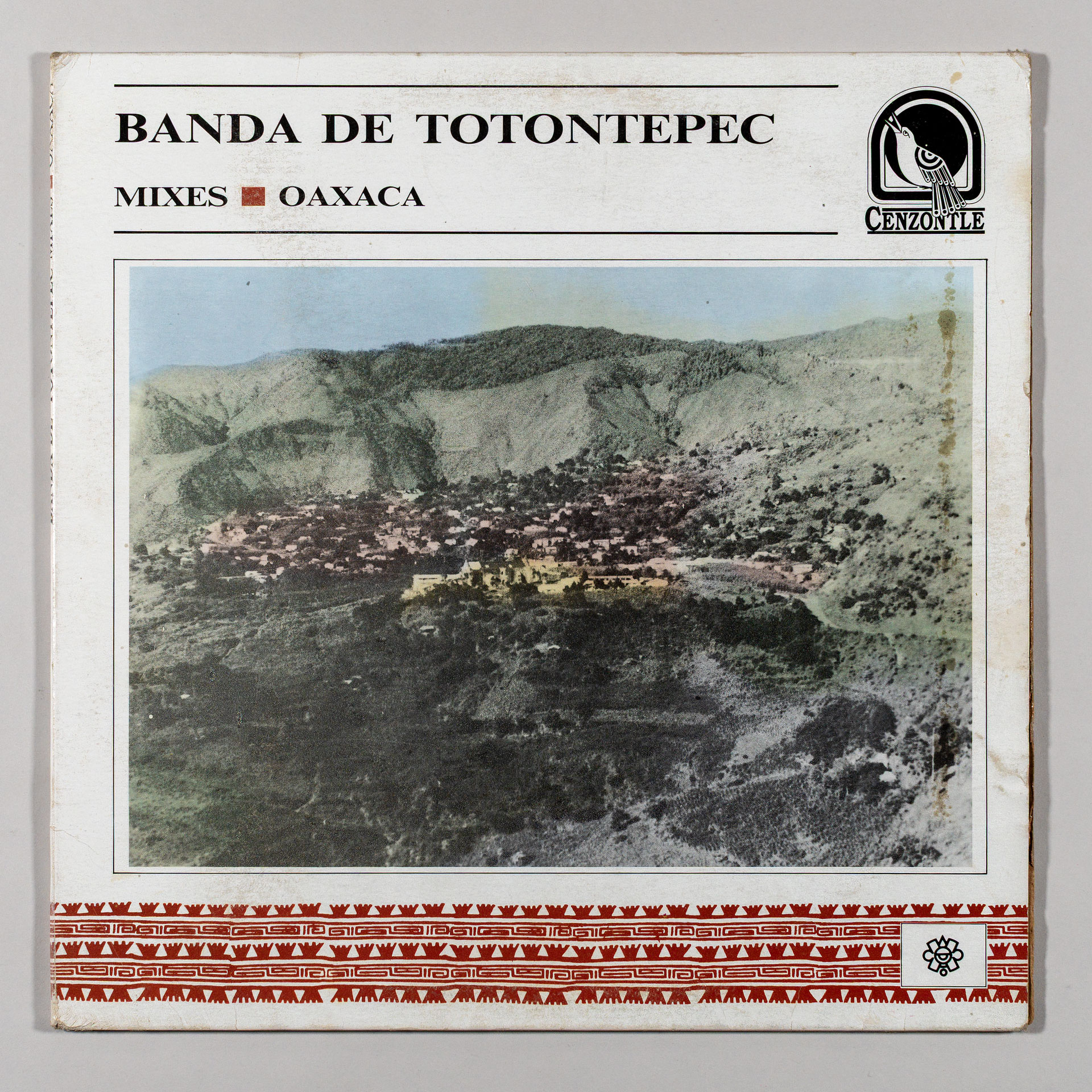
Label of the 'museo nacional de antropologia' that publishes field recordings from all mexican indigeneous people.

Post a Comment

Comment

mexican-rarities-instagram

Mexican Rarities is an archive, a label & a music distribution platform found in different layers of the mexican subsoil.

Contact us
Follow us
Shopping bag
You don't have permission to register
Select your currency
EUREuro