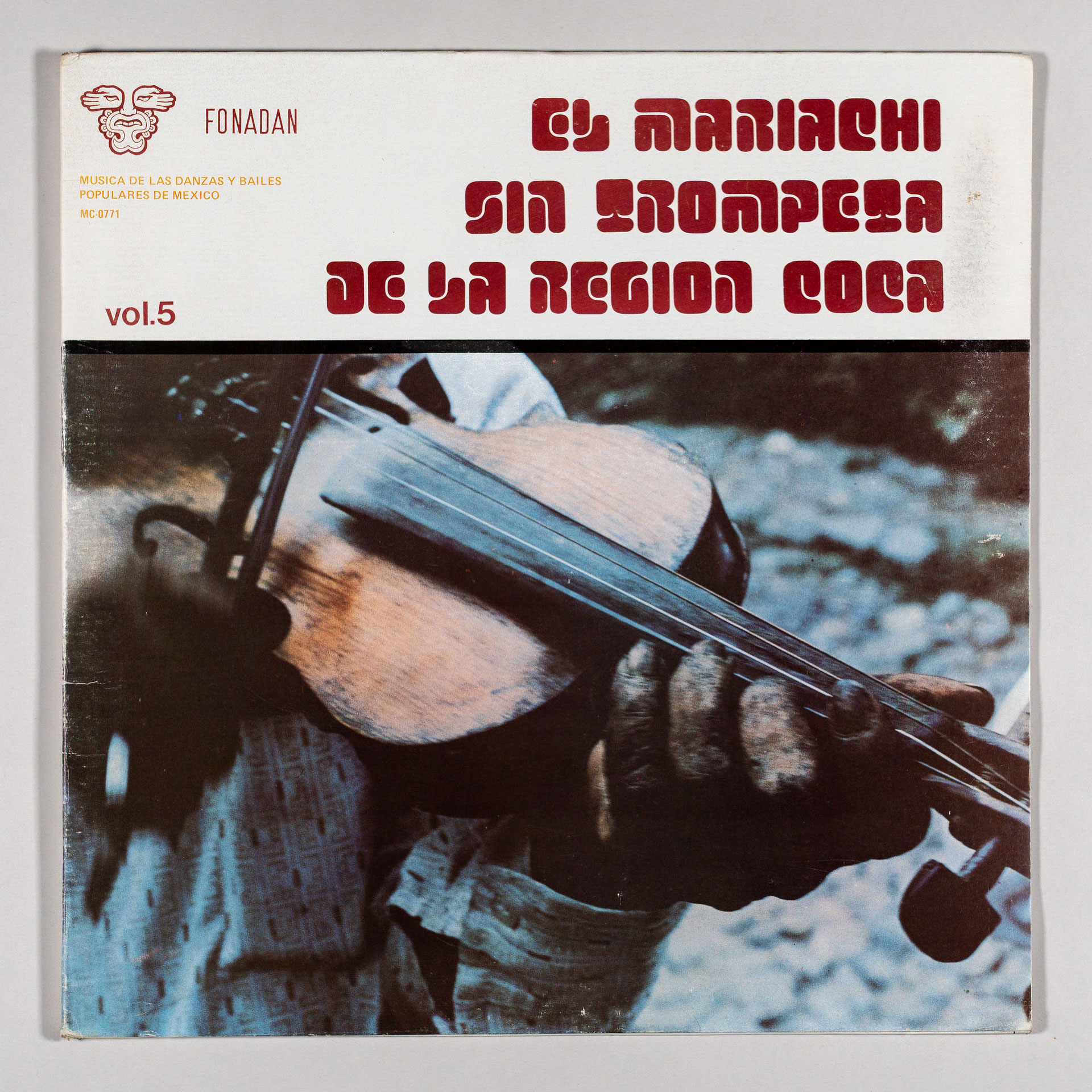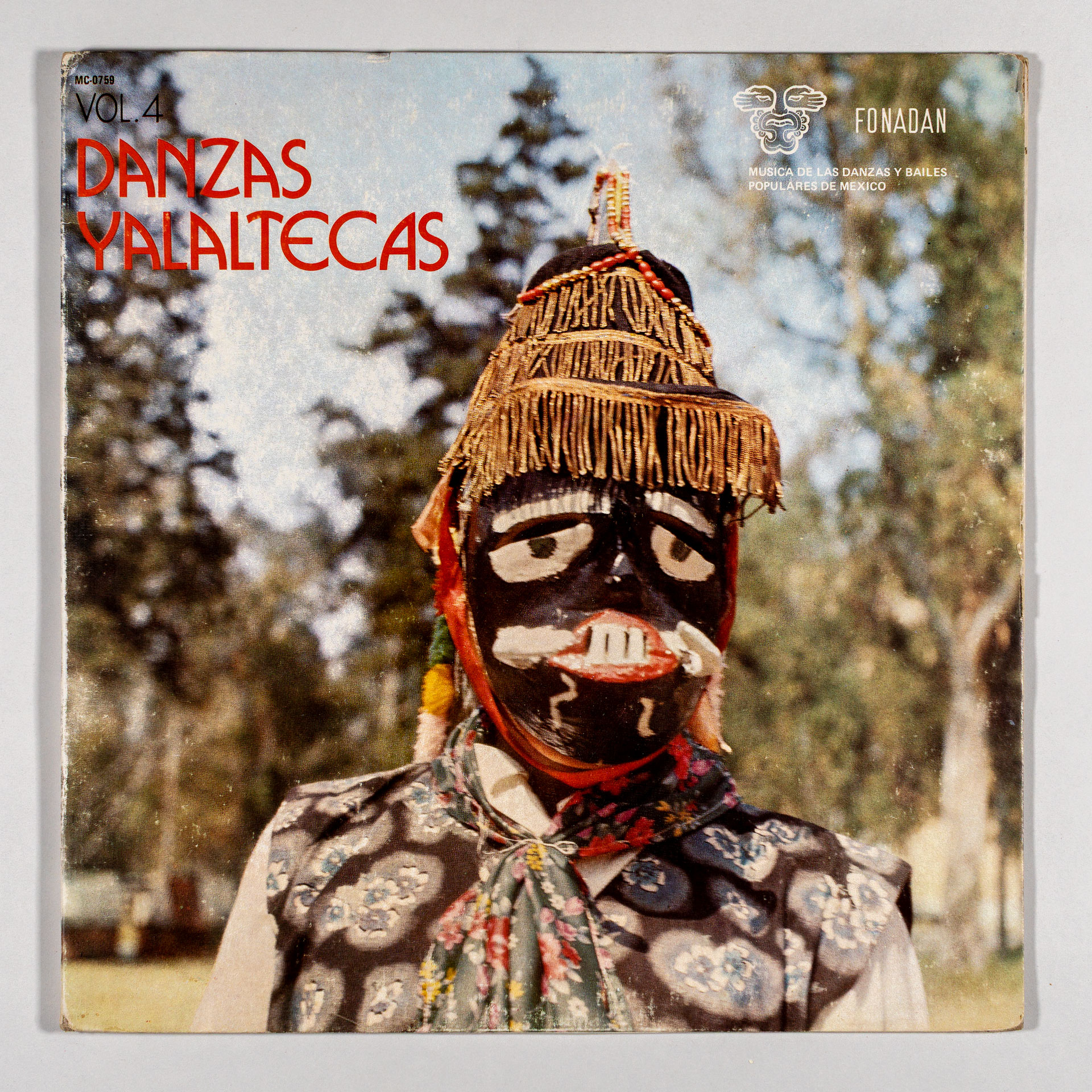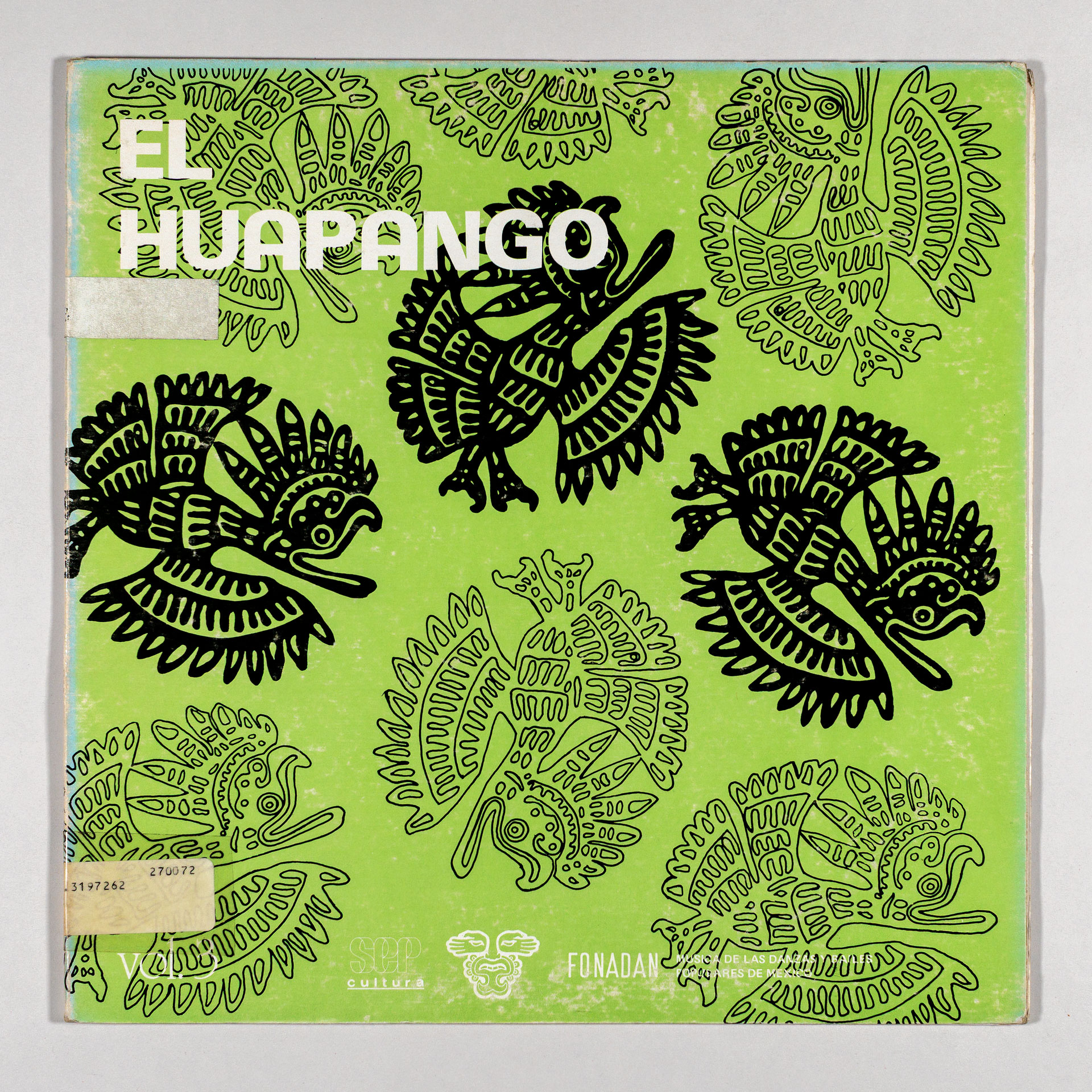








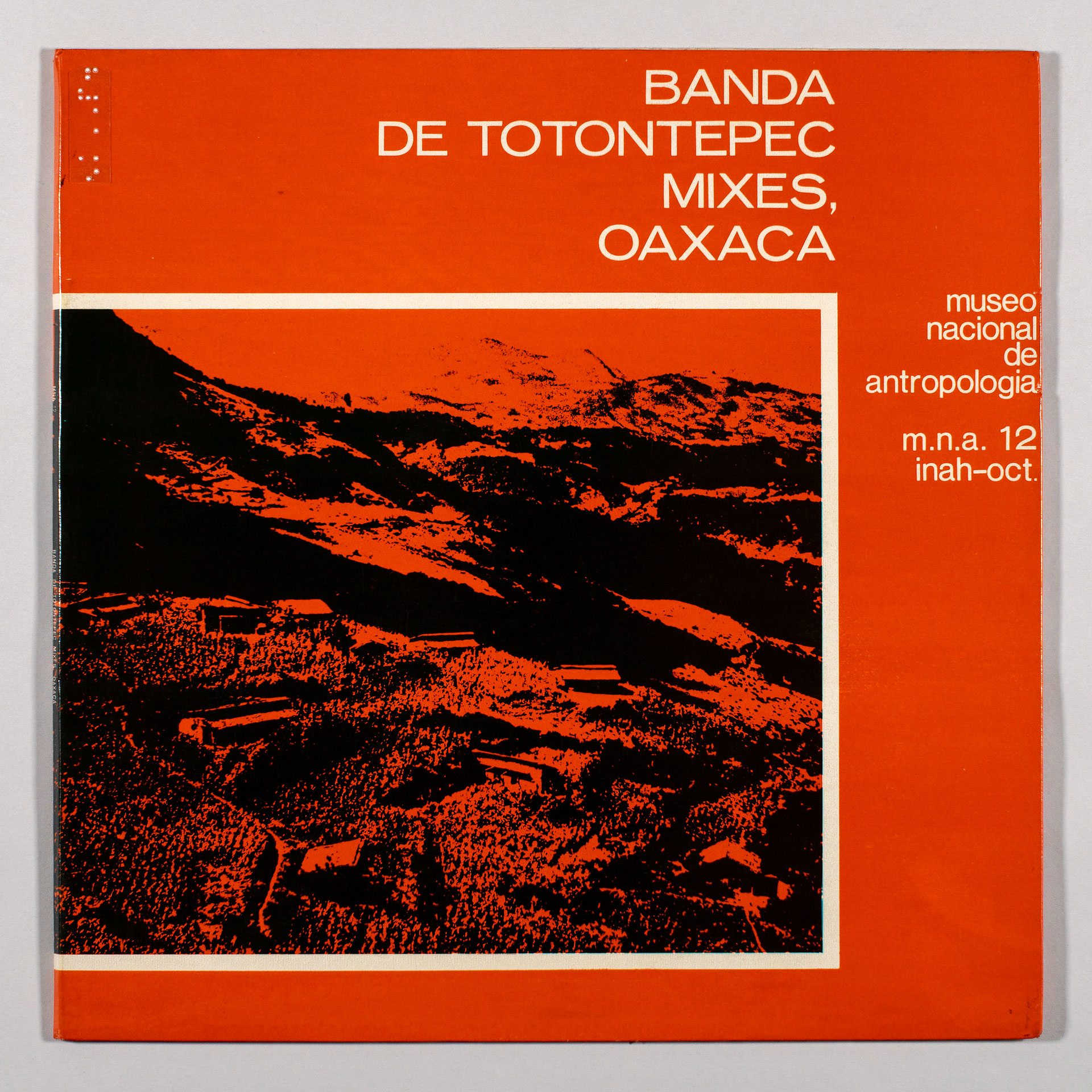
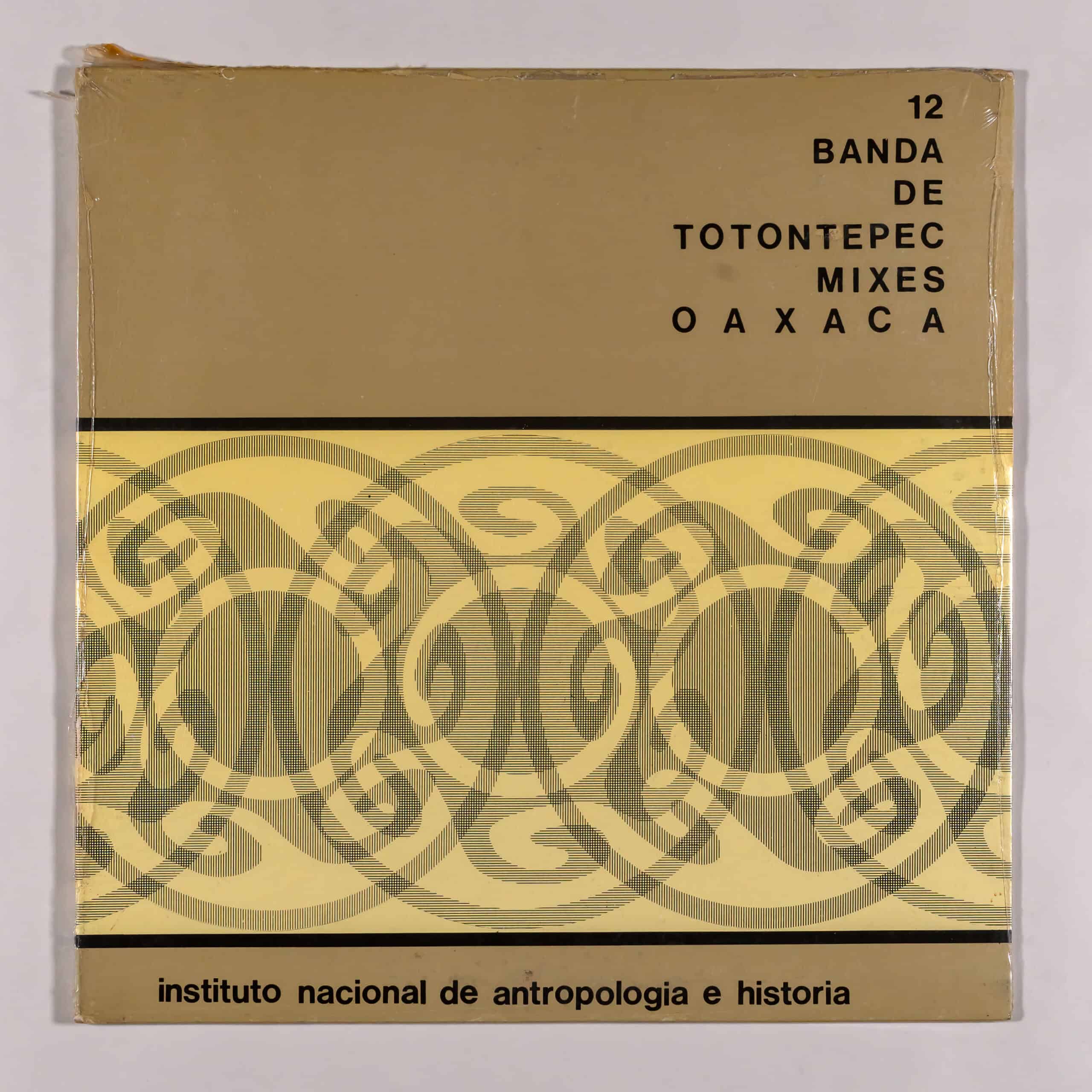
BAND OF TOTONTEPEC MIXES OAXACA
INAH SEP
|
Label: INAH-SEP MNA-12, MC-0251 Released: 1973 |
Country: Mexico State: Oaxaca |
Info:
TOTONTEPEC BAND
MIXES, OAXACA
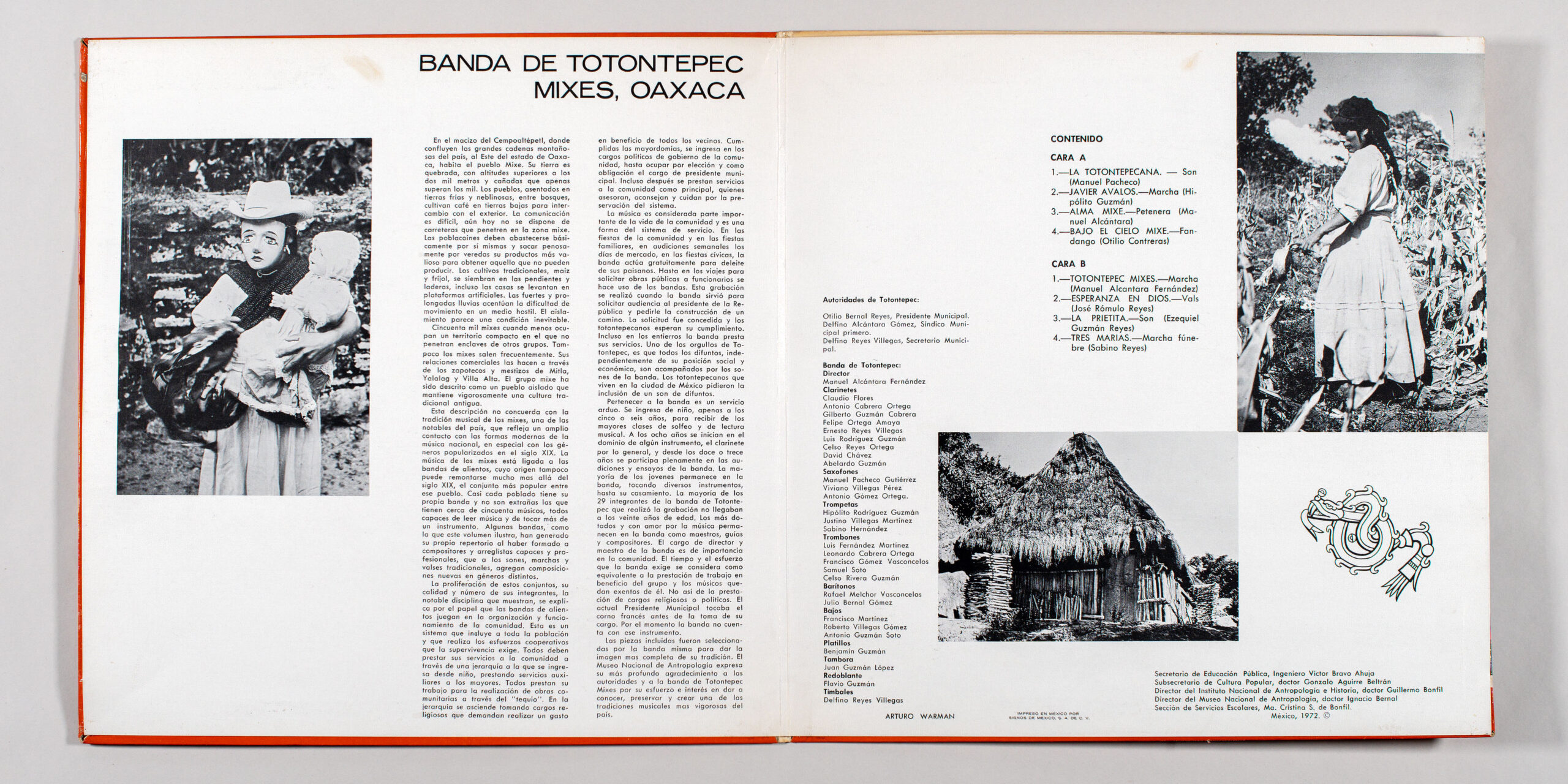
In the Cempoaltépetl massif, where the country’s great mountain ranges converge in the eastern part of the state of Oaxaca, lives the Mixe people. Their land is rugged, with elevations exceeding two thousand meters and ravines that barely rise above one thousand. The villages, situated in cold and misty highlands amid forests, cultivate coffee in the lower areas for trade with the outside world. Communication is difficult; even today, there are no roads that penetrate the Mixe region. The communities must essentially provide for themselves and laboriously carry their most valuable products along trails in order to obtain what they cannot produce. Traditional crops, corn and beans, are planted on slopes and hillsides, and even houses are built on artificial terraces. The heavy and prolonged rains further complicate movement through an already hostile environment. Isolation seems to be an unavoidable condition.
At least fifty thousand Mixes occupy a compact territory into which settlements of other groups do not penetrate. Nor do the Mixes frequently leave the region. Their commercial relations are conducted through the Zapotecs and mestizos of Mitla, Yalalag, and Villa Alta. The Mixe have been described as an isolated people who vigorously maintain an ancient traditional culture.
This description does not correspond with the musical tradition of the Mixes, one of the most remarkable in the country, which reflects extensive contact with modern forms of Mexican music, especially with genres popularized during the nineteenth century. Mixe music is closely associated with wind bands, whose origins likewise cannot be traced much further back than the nineteenth century, and which are the most popular type of ensemble among these people. Almost every village has its own band, and bands with nearly fifty musicians are not uncommon, all capable of reading music and playing more than one instrument. Some bands, such as the one featured on this record, have developed their own repertoire by training capable and professional composers and arrangers who, in addition to traditional sones, marches, and waltzes, contribute new compositions in different genres.
The proliferation of these ensembles, the quality and number of their members, and the remarkable discipline they display can be explained by the role wind bands play in the organization and functioning of the community. The community is a system that encompasses the entire population and carries out the cooperative efforts required for survival. Everyone must provide services to the community through a hierarchy they enter as children, initially performing auxiliary services for their elders. Everyone contributes labor to community projects through the “tequio.” Within the hierarchy, individuals advance by assuming religious offices that require them to incur expenses for the benefit of all their neighbors. After completing their service as mayordomos, they enter political positions within the community government, eventually reaching, through election and as an obligation, the office of municipal president. Even afterward, they continue to serve the community as principales, who advise, counsel, and oversee the preservation of the system.
Music is considered an important part of community life and constitutes one form of this system of service. At community celebrations and family festivities, during weekly performances on market days, and at civic celebrations, the band performs free of charge for the enjoyment of its fellow townspeople. Bands are even used on journeys to request public works from government officials. This recording was made when the band traveled to request an audience with the President of the Republic and petition him for the construction of a road. The request was granted, and the people of Totontepec await its fulfillment. The band also provides its services at funerals. One source of pride in Totontepec is that all the deceased, regardless of their social or economic position, are accompanied by the band’s sones. Residents of Totontepec living in Mexico City requested the inclusion of a funeral son.
Belonging to the band is an arduous form of service. Children enter at only five or six years of age, receiving lessons in solfège and music reading from older members. At the age of eight they begin learning an instrument, generally the clarinet, and from the age of twelve or thirteen they participate fully in the band’s performances and rehearsals. Most young people remain in the band, playing various instruments, until they marry. Most of the 29 members of the Totontepec band who made this recording were under twenty years old. Those with the greatest talent and dedication to music remain in the band as teachers, guides, and composers. The position of band director and teacher is an important one within the community. The time and effort required by the band are considered equivalent to the performance of community labor, and musicians are therefore exempt from it. They are not, however, exempt from holding religious or political offices. The current Municipal President played clarinet before assuming office. For the time being, the band is without that instrument.
The pieces included here were selected by the band itself in order to provide the most complete possible picture of its tradition. The National Museum of Anthropology expresses its deepest gratitude to the authorities and to the Totontepec Mixe band for their efforts and their interest in making known, preserving, and creating one of the country’s most vigorous musical traditions.
ARTURO WARMAN
Authorities of Totontepec:
Otilio Bernal Reyes, Municipal President
Delfino Alcántara Gómez, First Municipal Trustee
Delfino Reyes Villegas, Municipal Secretary
Totontepec Band:
Director
Manuel Alcántara Fernández
Clarinets
Claudio Flores
Antonio Cabrera Ortega
Gilberto Guzmán Cabrera
Felipe Ortega Amaya
Ernesto Reyes Villegas
Luis Rodríguez Guzmán
Celso Reyes Ortega
David Chávez
Abelardo Guzmán
Saxophones
Manuel Pacheco Gutiérrez
Viviano Villegas Pérez
Antonio Gómez Ortega
Trumpets
Hipólito Rodríguez Guzmán
Justino Villegas Martínez
Sabino Hernández
Trombones
Luis Fernández Martínez
Leonardo Cabrera Ortega
Francisco Gómez Vasconcelos
Samuel Soto
Celso Rivera Guzmán
Baritones
Rafael Melchor Vasconcelos
Julio Bernal Gómez
Basses
Francisco Martínez
Roberto Villegas Gómez
Antonio Guzmán Soto
Cymbals
Benjamín Guzmán
Bass Drum
Juan Guzmán López
Snare Drum
Flavio Guzmán
Timpani
Delfino Reyes Villegas
CONTENTS
SIDE A
1.— LA TOTONTEPECANA. — Son
(Manuel Pacheco)
2.— JAVIER AVALOS.— March
(Hipólito Guzmán)
3.— ALMA MIXE.— Petenera
(Manuel Alcántara)
4.— BAJO EL CIELO MIXE.— Fandango
(Otilio Contreras)
SIDE B
1.— TOTONTEPEC MIXES.— March
(Manuel Alcántara Fernández)
2.— ESPERANZA EN DIOS.— Waltz
(José Rómulo Reyes)
3.— LA PRIETITA.— Son
(Ezequiel Guzmán Reyes)
4.— TRES MARIAS.— Funeral March
(Sabino Reyes)
Institutional Credits
Secretary of Public Education, Engineer Víctor Bravo Ahuja
Undersecretary of Popular Culture, Dr. Gonzalo Aguirre Beltrán
Director of the National Institute of Anthropology and History, Dr. Guillermo Bonfil
Director of the National Museum of Anthropology, Dr. Ignacio Bernal
Educational Services Section, Ma. Cristina S. de Bonfil
Mexico, 1972
Also printed at the bottom:
PRINTED IN MEXICO BY
IMPRENTA DE MEXICO, S.A. DE C.V.
Gallery:


Listen to the album in the INAH MEDIATECA, click on the following image:
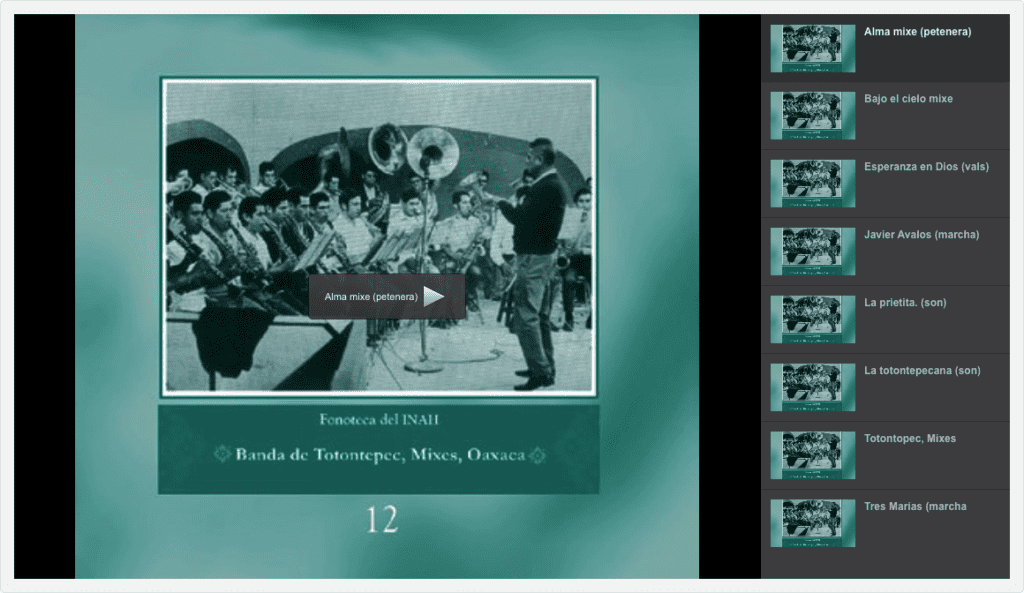
D.R. National Institute of Anthropology and History, Mexico
Tracklist:
BAND OF TOTONTEPEC MIXES OAXACA
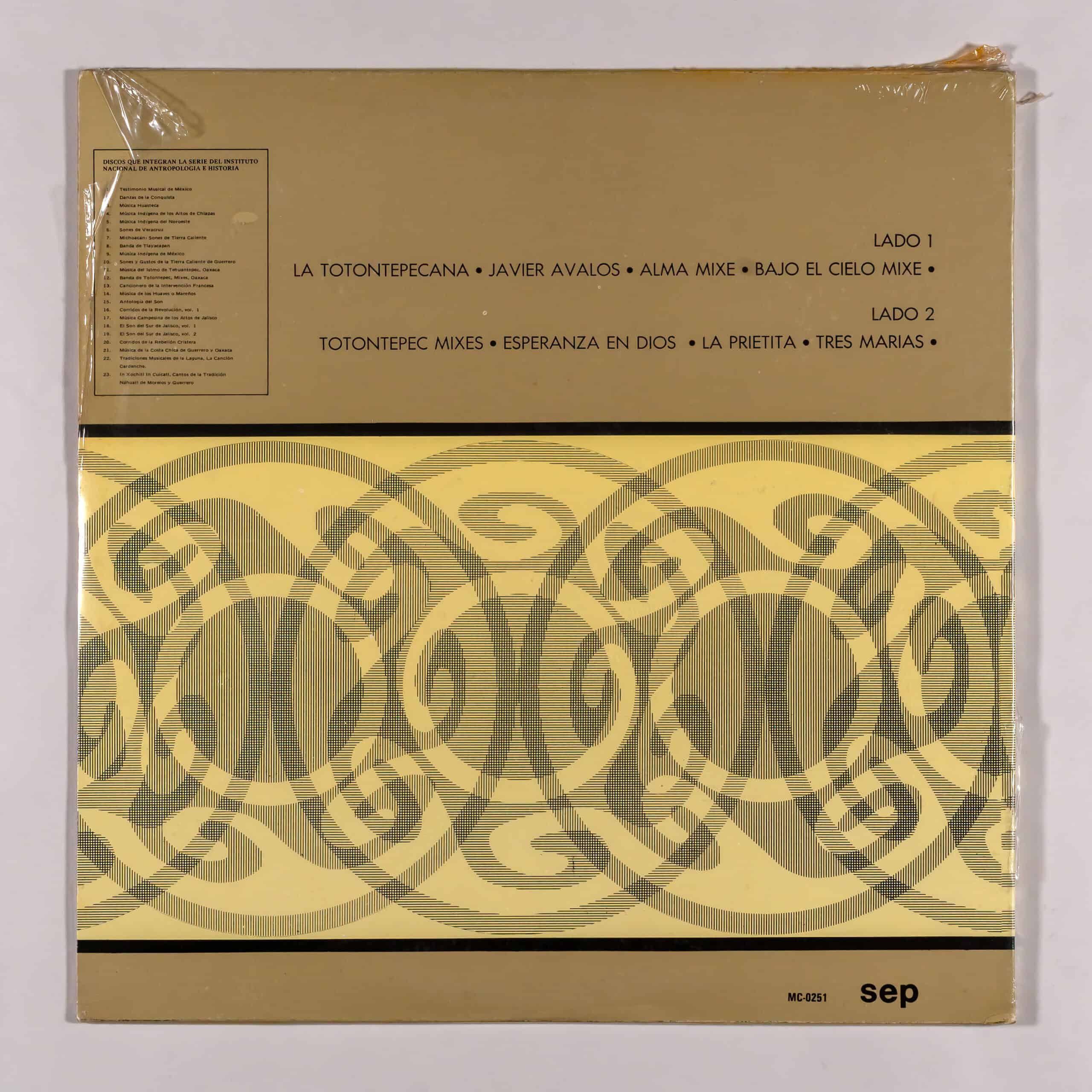
SIDE 1
- A1 The Totontepecana
Performer:
- A2Javier Avalos
Performer:
- A3 Mixe Soul
Performer:
- A4 Under the Mixe Sky
Performer:
SIDE 2
- B1 Totontepec Mixes
Performer:
- B2 Hope in God
Performer:
- B3 The Prietita
Performer:
- B4 Three Marias
Performer:
Credits:
Arturo Warman: Engraver, Adjunct Material Writer
Victor Acevedo Martínez: Editor
Martín Audelo Chícharo: Editor
Guadalupe Loyola Zárate: Editor
Benjamín Muratalla: Editor, Director
Irene Vázquez Valle: Editor
H. Alejandro Castellanos Garrido: Editor, Researcher
Gabriela González Sánchez: Editor
Mónica Zamora Garduño: Editor
Guillermo Pous Navarro
Hugo De la Rosa Barajas
Alfredo Huertero Casarrubias: Illustrator
Guillermo Santana Ramírez: Designer
Mario Ardila: Musician, Singer
Raúl “El Mago” Díaz: Musician
Mili Bermejo: Musician, Singer
Arturo Alegro: Musician, Singer
Amparo Ochoa: Singer
Ricardo Pérez Montfort: Singer
Links:
otro Tontontepec Band – Mixes - Oaxaca
Sold For:
Highest Price:
$585 MXMedium Price:
$270 MXCondition:
Media Condition:
Mint (M)Sleeve Condition:
Mint (M)