






THE DANCE OF THE TECUAN
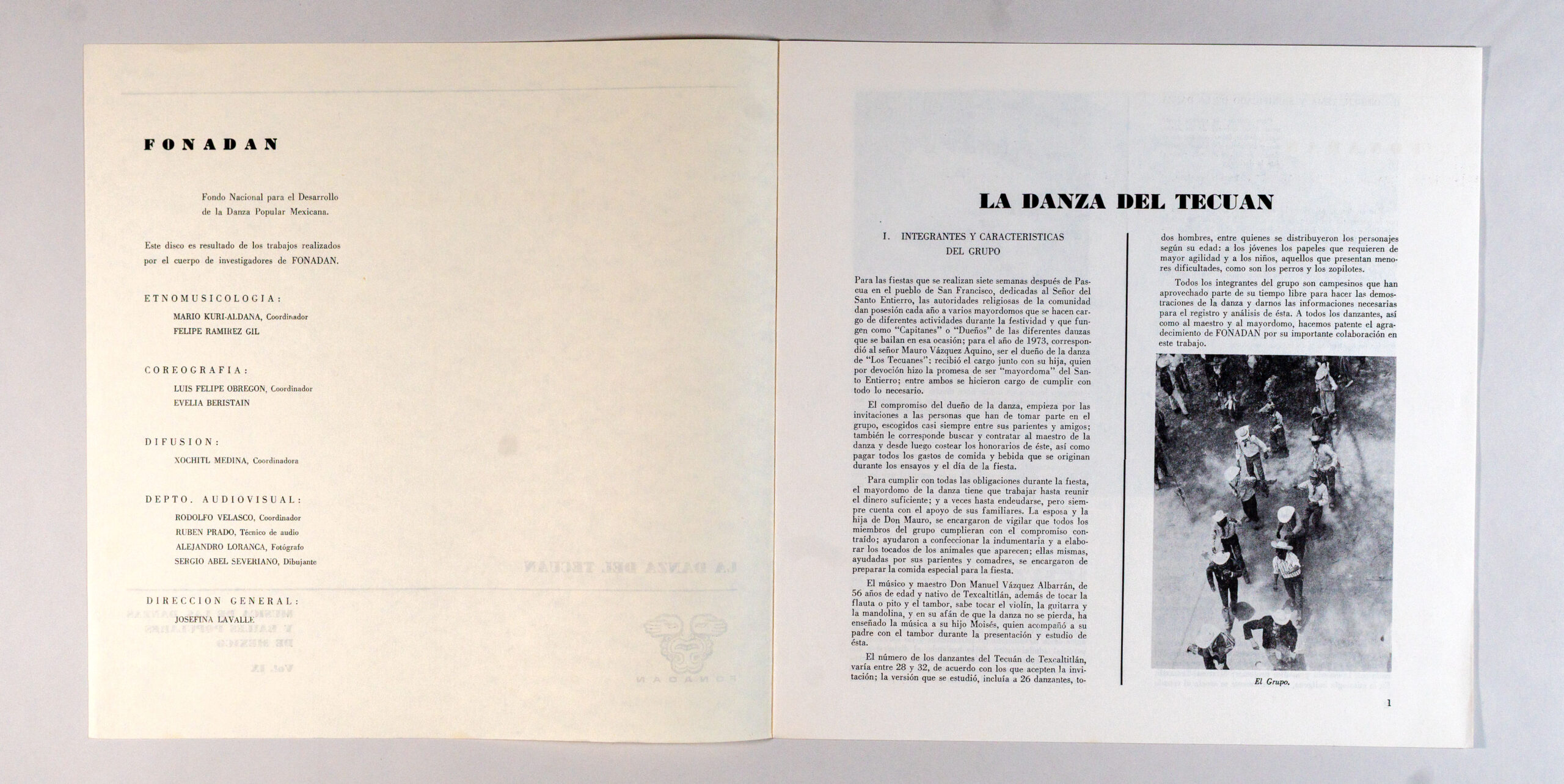
FONADAN
|
Label: FONADAN MC-1309 Format: Vinyl LP Album 12" 33 1/3 rpm Gatefold Compilation |
Country: Mexico Genre: Folk World & Country |
Info:
VOL. 9
THE DANCE OF THE TECUAN
FONADAN
Fondo Nacional para el Desarrollo de la Danza Popular Mexicana.
National Fund for the Development of Mexican Popular Dance.
MUSIC OF THE DANCES AND POPULAR DANCES OF MEXICO
This record is the result of the work carried out by the FONADAN research body.
ETHNOMUSICOLOGY:
MARIO KURI-ALDANA, Coordinator
FELIPE RAMÍREZ GIL
CHOREOGRAPHY:
LUIS FELIPE OBREGÓN, Coordinator
EVELIA BERISTAIN
DIFFUSION:
XOCHITL MEDINA, Coordinator
AUDIOVISUAL DEPARTMENT:
RODOLFO VELASCO, Coordinator
ALEJANDRO LORANCA, Photographer
RUBEN PRADO, Audio technician
SERGIO ABEL SEVERIANO, Cartoonist
GENERAL DIRECTORATE:
JOSEFINA LAVALLE
THE DANCE OF THE TECUAN
I. MEMBERS AND CHARACTERISTICS OF THE GROUP
For the festivities that take place seven weeks after Easter in the town of San Francisco, dedicated to the Lord of the Holy Burial, the religious authorities of the community give possession each year to several mayordomos who take charge of different activities during the festivity and who they act as “Captains” or “Owners” of the different dances that are danced on that occasion; for the year of 1973, it corresponded to Mr. Mauro Vázquez Aquino, to be the owner of the dance of “Los Tecuanes”; he received the position along with his daughter, who out of devotion made the promise to be “steward” of the Holy Burial; between them they took charge of complying with everything necessary.
The commitment of the owner of the dance begins with the invitations to the people who have to take part in the group, almost always chosen among their relatives and friends; It is also up to him to find and hire the dance teacher and, of course, pay for his fees, as well as pay all the food and drink expenses that arise during rehearsals and on the day of the party.
In order to fulfill all the obligations during the festival, the mayordomo of the dance has to work until he has enough money; and sometimes even getting into debt, but he always has the support of his family. Don Mauro’s wife and daughter were in charge of ensuring that all the members of the group complied with the contracted commitment; They helped make the clothing and make the headdresses of the animals that appear; They themselves, helped by their relatives and comadres, were in charge of preparing the special food for the party.
The musician and teacher Don Manuel Vázquez Albarrán, 56 years old and a native of Texcaltitlán, in addition to playing the flute or whistle and the drum, knows how to play the violin, the guitar and the mandolin, and in his eagerness that dance not get lost, has taught music to his son Moisés, who accompanied his father with the drum during the presentation and study of it.
The number of the dancers of the Tecuán de Texcaltitlán, varies between 28 and 32, according to those who accept the invitation; The version that was studied included 26 dancers, all men, among whom the characters were distributed according to their age: the youngsters, the roles that require greater agility, and the children, those that present less difficulty, such as the dogs and the vultures.
All the members of the group are peasants who have taken advantage of part of their free time to demonstrate the dance and provide us with the necessary information for recording and analyzing it. To all the dancers, as well as to the maestro and the butler, we make clear FONADAN’s gratitude for his important collaboration in this work.
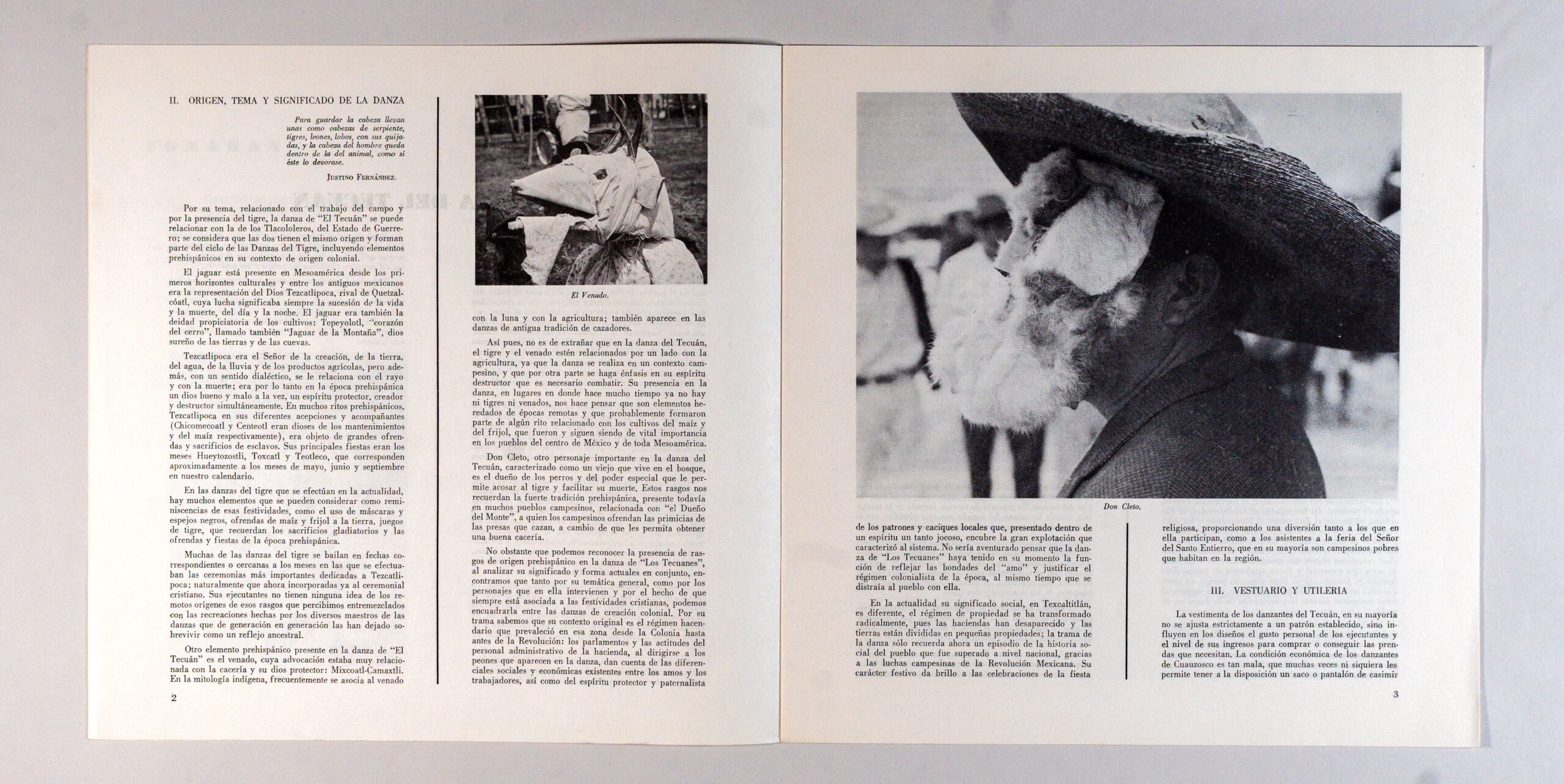
II. ORIGIN, THEME AND MEANING OF THE DANCE
To keep the head they carry
some like serpent heads,
tigers, lions, wolves, with their jaws
you give, and the head of the man remains
inside the animal, as if
it devoured it
JUSTINO FERNÁNDEZ.
Due to its theme, related to field work and the presence of the tiger, the dance of “El Tecuán” can be related to that of the Tlacololeros, from the State of Guerrero; Both are considered to have the same origin and are part of the Tiger Dance cycle, including pre-Hispanic elements in their context of colonial origin.
The jaguar has been present in Mesoamerica since the first cultural horizons and among the ancient Mexicans it was the representation of the god Tezcatlipoca, rival of Quetzalcóatl, whose fight always meant the succession of life and death, day and night. The jaguar was also the propitiatory deity of the crops: Tepeyolotl, “heart of the hill”, also called “Jaguar of the Mountain”, southern god of the lands and caves.
Tezcatlipoca was the Lord of creation, of the earth, of water, of rain and of agricultural products, but also, with a dialectical sense, he is related to lightning and death; he was therefore in pre-Hispanic times a good and bad god at the same time, a protective, creative and destructive spirit simultaneously. In many pre-Hispanic rites, Tezcatlipoca in the different meanings and companions of him (Chicomecoatl and Centeotl were gods of maintenance and corn respectively), was the object of great offerings and slave sacrifices. His main festivals were the months of Hueytozoztli, Toxcatl, and Teotleco, which roughly correspond to the months of May, June, and September in our calendar.
In the tiger dances that are carried out today, there are many elements that can be considered as reminiscences of those festivities, such as the use of black masks and mirrors, offerings of corn and beans to the earth, tiger games, which recall the gladiatorial sacrifices and the offerings and festivals of the pre-Hispanic era.
Many of the tiger dances are danced on dates corresponding to or close to the months in which the most important ceremonies dedicated to Tezcatlipoca were held; Naturally, they are now already incorporated into the Christian ceremonial. Its performers have no idea of the remote origins of those traits that we perceive intermingled with the recreations made by the various dance masters who from generation to generation have allowed them to survive as an ancestral reflection.
Another pre-Hispanic element present in the dance of “El Tecuán” is the deer, whose dedication was closely related to hunting and its protective god: Mixcóatl-Camaxtli. In indigenous mythology, the deer is frequently associated with the moon and with agriculture; it also appears in the dances of ancient tradition of hunters.
Thus, it is not surprising that in the Tecuán dance, the tiger and the deer are related on the one hand to agriculture, since the dance is performed in a peasant context, and that on the other hand emphasis is placed on its spirit. destroyer that must be fought. Their presence in the dance, in places where there have been no tigers or deer for a long time, makes us think that they are elements inherited from remote times and that they probably formed part of some rite related to corn and bean crops, which They were and continue to be of vital importance in the towns of central Mexico and throughout Mesoamerica.
Don Cleto, another important character in the Tecuán dance, characterized as an old man who lives in the forest, is the owner of the dogs and the special power that allows him to harass the tiger and facilitate its death. These features remind us of the strong pre-Hispanic tradition, still present in many peasant towns, related to “the Owner of the Mountain”, to whom the peasants offer the first fruits of the prey they hunt, in exchange for allowing them to obtain a good hunt.
Despite the fact that we can recognize the presence of features of pre-Hispanic origin in the dance of “Los Tecuanes”, when analyzing its current meaning and form as a whole, we find that both for its general theme, as for the characters involved in it and for the Since it is always associated with Christian festivities, we can classify it among the dances of colonial creation. From its plot we know that its original context is the tax regime that prevailed in that area from the Colony until before the Revolution: the parliaments, the attitudes of the administrative staff of the hacienda, when addressing the laborers that appear in the dance, show of the existing social and economic differentials between the masters and the workers, as well as the protective and paternalistic spirit of the bosses and local caciques that, presented in a somewhat humorous spirit, conceals the great exploitation that characterized the system. It would not be unreasonable to think that the dance of “Los Tecuanes” had at the time the function of reflecting the kindness of the “master” and justifying the colonialist regime of the time, while distracting the people with it.
At present its social meaning, in Texcaltitlán, is different, the property regime has been radically transformed, since the haciendas have disappeared and the lands are divided into small properties; the plot of the dance now only recalls an episode in the social history of the town that was surpassed at the national level, thanks to the peasant struggles of the Mexican Revolution. Its festive character gives shine to the celebrations of the religious festival, providing entertainment both to those who participate in it, and to those who attend the fair of the Lord of the Holy Burial, who are mostly poor peasants who live in the region.
III. CLOTHING AND PROPS
The clothing of the Tecuán dancers, for the most part, does not strictly conform to an established pattern, but the personal taste of the performers and the level of their income influence the designs to buy or obtain the garments they need. The economic condition of the dancers of Coaxusco is so bad that many times they are not even allowed to have a poor quality cashmere jacket or pants available, but rather they borrow it or pay the corresponding rent, depending on the days they use it. in the dance.
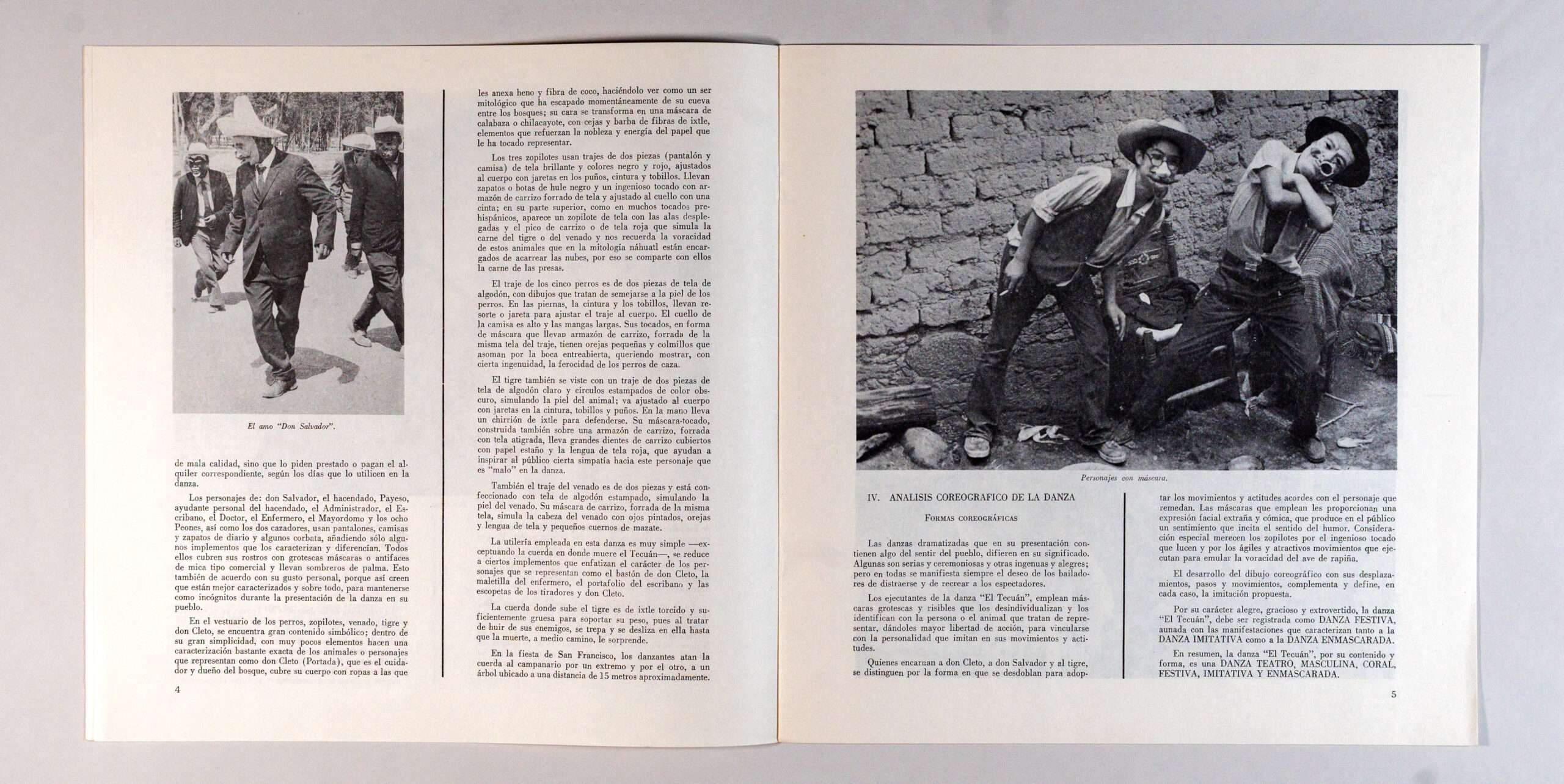
The characters of: Don Salvador, the landowner, Payeso, the landowner’s personal assistant, the Administrator, the Notary Public, the Doctor, the Nurse, the Mayordomo, and the eight Pawns, as well as the two hunters, wear everyday pants, shirts, and shoes. and some tie, adding only some implements that characterize and differentiate them. All of them cover their faces with grotesque commercial-type mica masks or masks and wear palm hats. This also according to their personal taste, because they believe that they are better characterized and above all, to remain unknown during the presentation of the dance in their town.
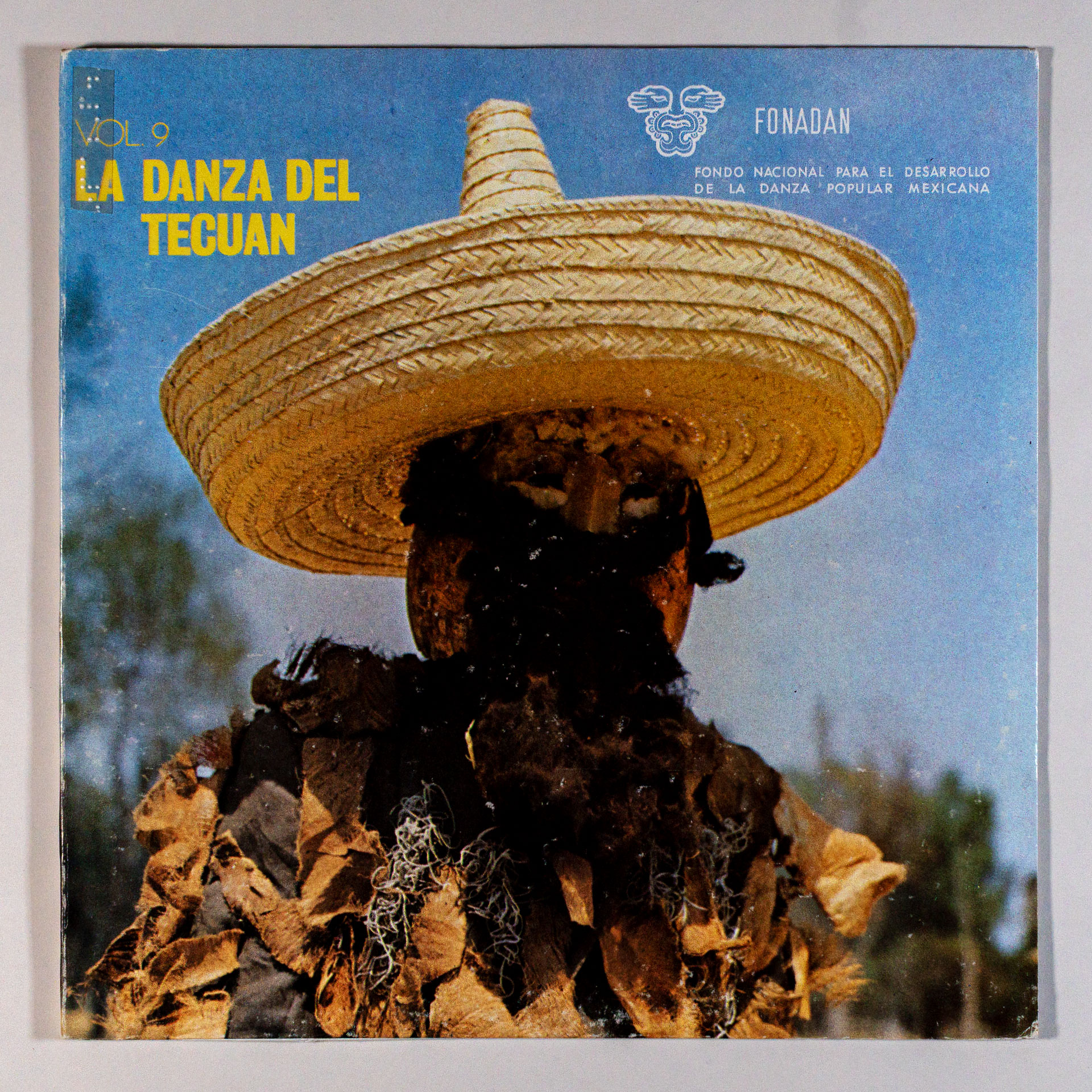
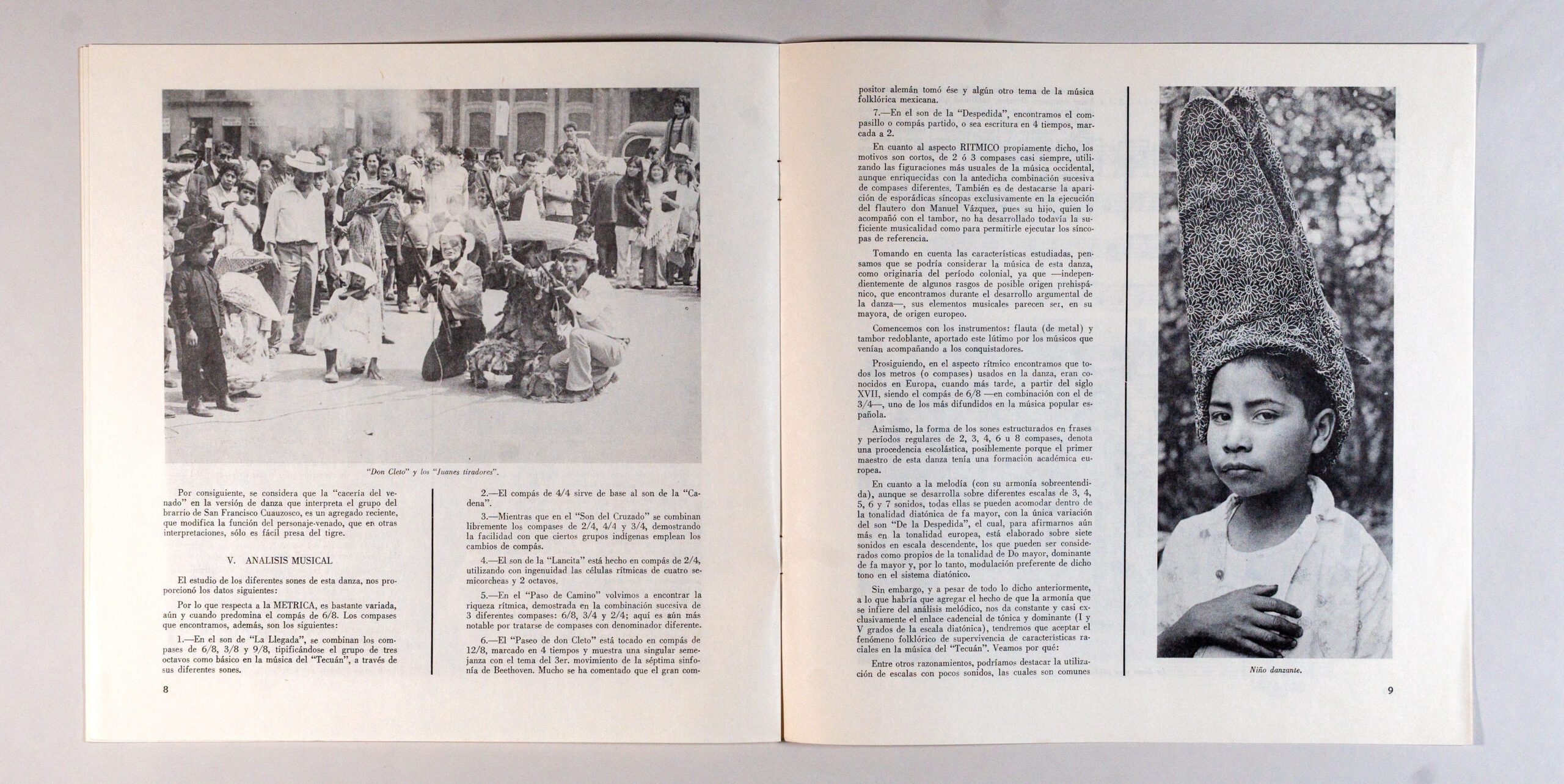
In the costumes of the dogs, vultures, deer, tiger and Don Cleto, there is great symbolic content; within its great simplicity, with very few elements they make a fairly exact characterization of the animals or characters they represent, such as Don Cleto (Cover), who is the caretaker and owner of the forest, covers his body with clothes to which he attaches hay and coconut fiber, making it look like a mythological being that has momentarily escaped from its cave in the woods; His face is transformed into a pumpkin or chilacayote mask, with eyebrows and beard made of ixtle fibers, which reinforce the nobility and energy of the role that elements he has had to represent.
The three vultures wear two-piece suits (pants and shirt) made of shiny black and red fabric, tight to the body with tucks at the cuffs, waist, and ankles. They wear black rubber shoes or boots and an ingenious headdress with a reed frame lined with cloth and tied around the neck with a ribbon; In its upper part, as in many pre-Hispanic headdresses, there is a cloth vulture with unfolded wings. gadas and the beak of reed or red cloth that simulates the meat of the tiger or deer and reminds us of the voracity of these animals that in Nahuatl mythology are in charge of carrying the clouds, that is why the meat of the prey is shared with them .
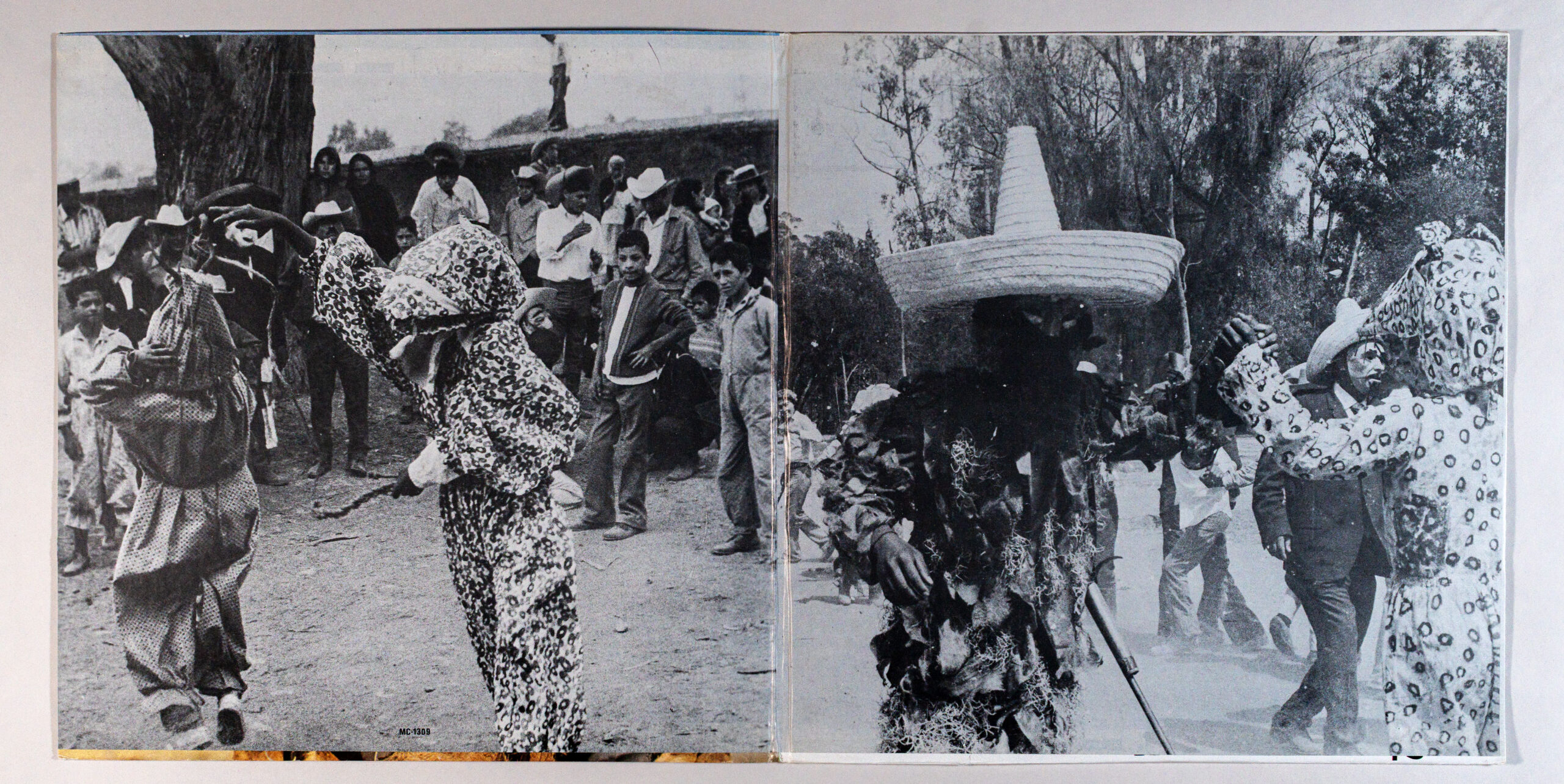
The costume of the five dogs is made of two pieces of cotton fabric, with drawings that try to resemble the skin of the dogs. On the legs, waist and ankles, they have a spring or drawstring to adjust the suit to the body. The collar of the shirt is high and the sleeves are long. Their headdresses, in the form of a mask that has a reed frame, lined with the same fabric as the costume, have small ears and fangs that stick out from their half-open mouth, wanting to show, with a certain ingenuity, the ferocity of hunting dogs.
The tiger is also dressed in a two-piece suit made of light cotton fabric and dark-colored patterned circles, simulating the animal’s skin; It is fitted to the body with drawstrings at the waist, ankles and cuffs. In his hand he carries an ixtle screech to defend himself. His mask-headdress, also built on a reed frame, lined with tiger cloth, has large reed teeth covered with tinfoil and a red cloth tongue, which help to inspire the public with a certain sympathy for this “bad” character. in the dance.
The deer suit is also two-piece and is made of printed cotton fabric, simulating the skin of the deer. His reed mask, lined with the same fabric, simulates the head of a deer with painted eyes, cloth ears and tongue, and small mazate horns.
The props used in this dance are very simple-except for the rope where the Tecuán dies, it is reduced to certain implements that emphasize the character of the characters represented, such as Don Cleto’s cane, the nurse’s suitcase, the notary’s briefcase. and the shotguns of the shooters and Don Cleto.
The rope on which the tiger climbs is made of twisted ixtle and thick enough to support his weight, because when trying to flee from his enemies, he climbs and slides on it until death, halfway up, surprises him.
At the San Francisco festival, the dancers tie the rope to the bell tower at one end and to a tree located at a distance of approximately 15 meters at the other.
IV. CHOREOGRAPHIC ANALYSIS OF THE DANCE
CHOREOGRAPHIC FORMS
The dramatized dances that in their presentation contain something of the feeling of the people, differ in their meaning. Some are serious and ceremonious and others naive and cheerful; but in all of them the desire of the dancers to amuse themselves and to recreate the spectators is always manifested.
The performers of the dance “El Tecuán” use grotesque and laughable masks that de-individualize them and identify them with the person or animal they try to represent, giving them greater freedom of action, to link with the personality that they imitate in their movements and attitudes. .
Those who embody Don Cleto, Don Salvador and the tiger, are distinguished by the way in which they unfold to adopt the movements and attitudes in accordance with the character they imitate. The masks they wear give them a strange and comical facial expression, which produces in the public a feeling that incites a sense of humor. Vultures deserve special consideration for the ingenious headdress they wear and for the agile and attractive movements they execute to emulate the voracity of the bird of prey.
The development of the choreographic drawing with its displacements, steps and movements, complements and defines, in each case, the proposed imitation.
Due to its cheerful, funny and extroverted character, the dance “El Tecuán” must be registered as a FESTIVE DANCE, together with the manifestations that characterize both the IMITATIVE DANCE and the MASKED DANCE.
In summary, the dance “El Tecuán”, due to its content and form, is a MALE, CHORAL, FESTIVE, IMITATIVE AND MASKED THEATER DANCE.
KINETIC ASPECT
In dance, rhythm has a double meaning, the rhythm of the melody and the rhythm of the step, which make up a single rhythm, that of movement. All bodily movement in order and to the beat, obeys the vital, mental and creative impulse of the dancer who skilfully manages to express his personal emotional state with style.
The indicated premises serve us to examine the mechanics of the movements used by the members of the dance group “El Tecuán”.
- Little choral uniformity:
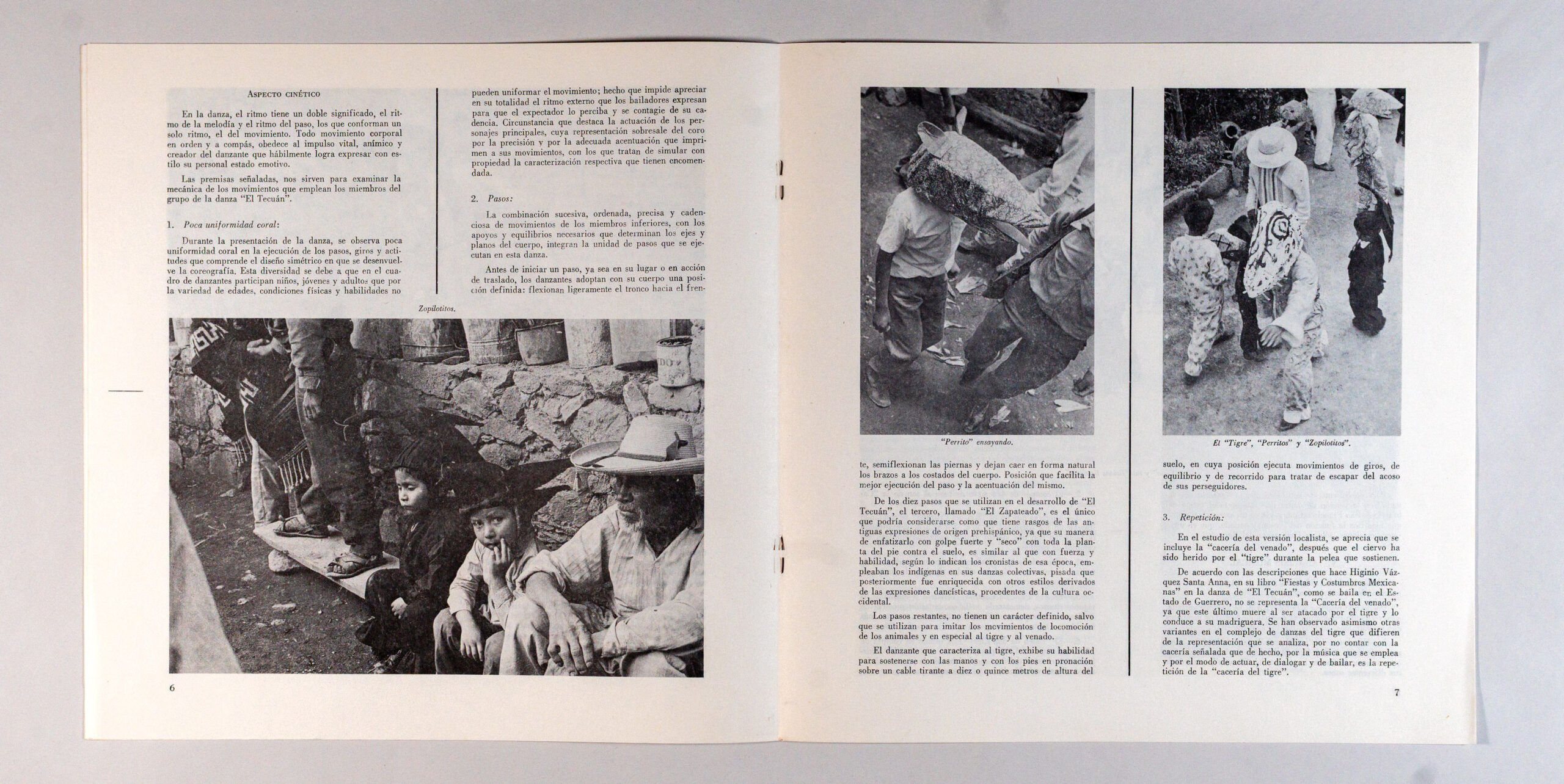
During the presentation of the dance, little choral uniformity is observed in the execution of the steps, turns and attitudes that comprise the symmetrical design in which the choreography unfolds. This diversity is due to the fact that children, young people and adults participate in the group of dancers who, due to the variety of ages, physical conditions and abilities, cannot standardize the movement; fact that prevents fully appreciating the external rhythm that the dancers express so that the viewer perceives it and is infected by its cadence. Circumstance that highlights the performance of the main characters, whose representation stands out from the chorus for the precision and for the adequate accentuation that they give to their movements, with which they try to properly simulate the respective characterization that they have been entrusted with.
- Steps:
The successive, orderly, precise and rhythmic combination of movements of the lower limbs, with the necessary supports and balances that determine the axes and planes of the body, make up the unit of steps that are executed in this dance.
Before beginning a step, either in place or in a transfer action, the dancers adopt a defined position with their bodies: they slightly flex their trunks forwards, semi-flex their legs and naturally drop their arms to the sides of the body. body. Position that facilitates the best execution of the step and its accentuation.
Of the ten steps that are used in the development of “El Tecuán”, the third, called “El Zapatado”, is the only one that could be considered as having features of the ancient expressions of pre-Hispanic origin, since his way of emphasizing it with strong and “dry” blow with the entire sole of the foot against the ground, is similar to the one that with strength and skill, according to what the chroniclers of that time indicate, used the indigenous people in their collective dances, a footstep that was later enriched with other styles derived from dance expressions, from Western culture.
The remaining steps do not have a defined character, except that they are used to imitate the locomotion movements of animals, especially the tiger and the deer.
The dancer who characterizes the tiger exhibits his ability to support himself with his hands and feet pronated on a taut cable ten or fifteen meters above the ground, in which position he performs movements of turns, balance and travel to treat to escape the harassment of his pursuers.
- Repetition:
In the study of this local version, it can be seen that the “deer hunt” is included, after the deer has been injured by the “tiger” during the fight they are having.
According to the descriptions made by Higinio Vázquez Santa Anna, in his book “Fiestas y Costumbres Mexicanas” in the dance of “El Tecuán”, as it is danced in the State of Guerrero, the “Deer Hunt” is not represented, since that the latter dies when attacked by the tiger and leads him to his lair. Other variants have also been observed in the complex of tiger dances that differ from the representation that is analyzed, due to not having the indicated hunt that in fact, due to the music used and the way of acting, conversing and speaking. dance, is the repetition of the “tiger hunt”.
Consequently, it is considered that the “deer hunt” in the dance version performed by the group from the neighborhood of San Francisco Coaxusco, is a recent addition, which modifies the function of the deer-character, which in other interpretations is only easy tiger prey.
V. MUSICAL ANALYSIS
The study of the different sounds of this dance provided us with the following data:
Regarding the METRIC, it is quite varied, even when the 6/8 beat predominates. The compasses that we find, in addition, are the following:
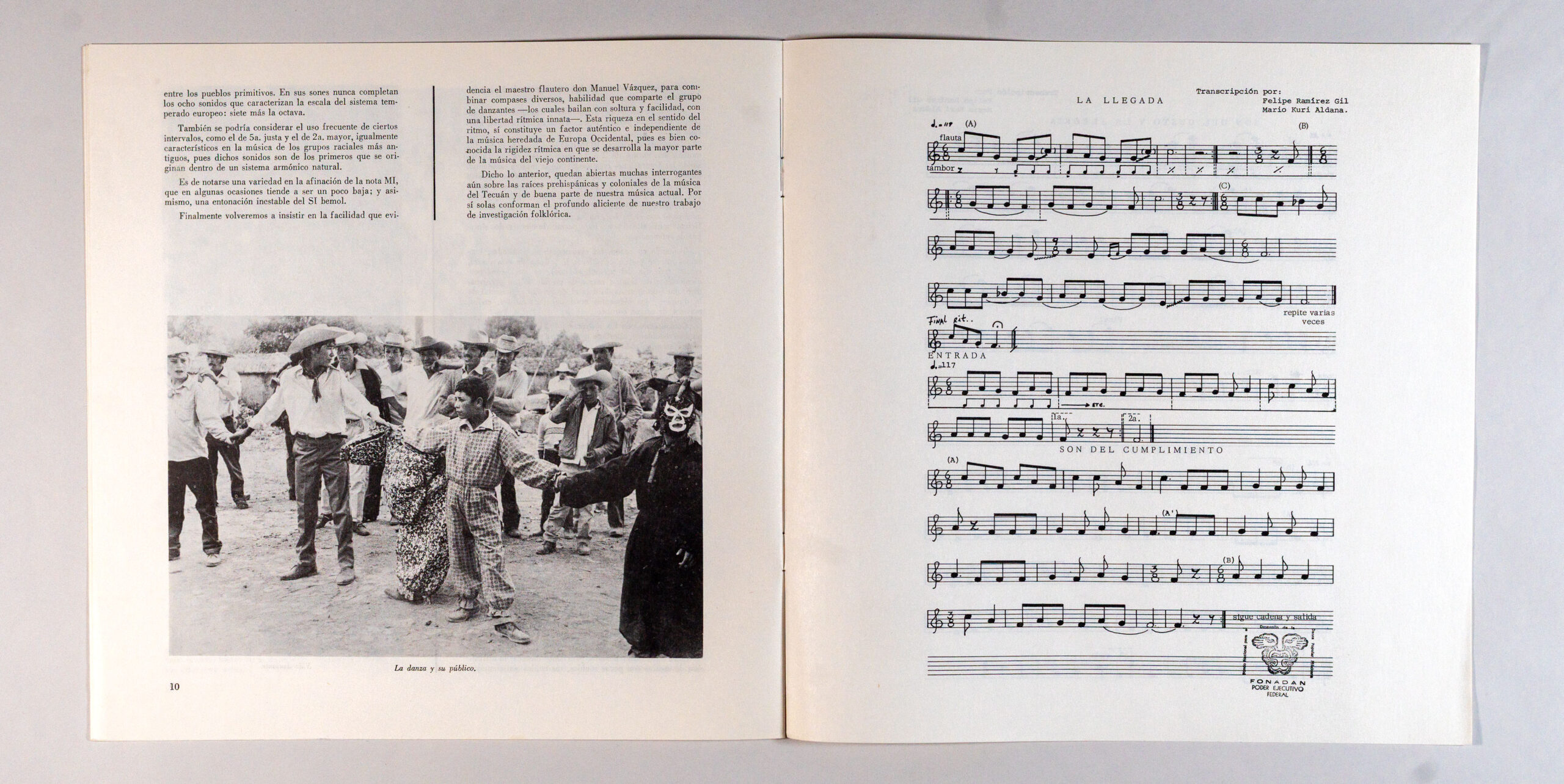
1.–In the son of “La Llegada”, the bars of 6/8, 3/8 and 9/8 are combined, typifying the group of three eighths as basic in the music of “Tecuán”, through its different sounds.
2.–The 4/4 time signature serves as the basis for the sound of the “Cadena”.
3.–While in the “Son del Cruzado” the time signatures of 2/4, 4/4 and 3/4 are freely combined, demonstrating the ease with which certain indigenous groups use time signature changes.
4.–The son of the “Lancita” is made in 2/4 time, naively using the rhythmic cells of four semiquavers and 2 eighths.
5.–In the “Paso de Camino” we rediscovered the rhythmic richness, demonstrated in the successive combination of 3 different measures: 6/8, 3/4 and 2/4; here it is even more notable for dealing with bars with a different denominator.
6.–The “Paseo de don Cleto” is played in 12/8 time, marked in 4 times and shows a singular resemblance to the theme of the 3rd. Movement from Beethoven’s seventh symphony. Much has been said that the great German composer took this and some other theme from Mexican folk music.
7.–In the sound of the “Farewell”, we find the compasillo or broken compass, that is, writing in 4 times, marked at 2.
Regarding the RHYTHMIC aspect itself, the motifs are short, almost always 2 or 3 measures, using the most usual figurations of Western music, although enriched with the aforementioned successive combination of different measures. It is also noteworthy the appearance of sporadic syncopations exclusively in the performance of the flute player Don Manuel Vázquez, since his son, who accompanied him on the drum, has not yet developed enough musicality to allow him to play the reference syncopations.
Taking into account the characteristics studied, we think that the music of this dance could be considered as originating from the colonial period, since -regardless of some features of possible pre-Hispanic origin, which we found during the plot development of the dance-, its musical elements they seem to be, for the most part, of European origin.
Let’s start with the instruments: flute (metal) and snare drum, the latter provided by the musicians who accompanied the conquerors.
Continuing, in the rhythmic aspect we find that all the meters (or compasses) used in dance were known in Europe, when later, from the 17th century, being the compass of 6/8 –in combination with that of ¾– , one of the most widespread in Spanish popular music.
Likewise, the shape of the sones, structured in phrases and regular periods of 2, 3, 4, 6 or 8 bars, denotes a scholastic origin, possibly because the first teacher of this dance had a European academic background.
As for the melody (with its understood harmony), although it is developed on different scales of 3, 4, 5, 6 and 7 sounds, all of them can be accommodated within the diatonic key of F major, with the only variation being son. “De la Despedida”, which, to further establish ourselves in the European tonality, is elaborated on seven sounds in a descending scale, which can be considered as belonging to the tonality of C major, dominant of F major and, therefore, , preferential modulation of said tone in the diatonic system.
However, and despite all that has been said above, to which should be added the fact that the harmony that is inferred from the melodic analysis constantly and almost exclusively gives us the cadential link of tonic and dominant (I and V degrees of the diatonic scale), we will have to accept the folkloric phenomenon of survival of racial characteristics in the music of “Tecuán”. Let’s see why:
Among other reasons, we could highlight the use of scales with few sounds, which are common among primitive peoples. In their sones they never complete the eight sounds that characterize the scale of the European tempered system: seven plus the eighth.
Frequent use of certain intervals, such as 5a, could also be considered. just and the 2a. major, equally characteristic in the music of the oldest racial groups, since these sounds are among the first to originate within a natural harmonic system.
It is noteworthy a variety in the tuning of the MI note, which on some occasions tends to be a little low; and likewise, an unstable intonation of the SI flat. Finally, we will once again insist on the facility shown by the master flute player, Manuel Vázquez, to combine different beats, an ability shared by the group of dancers – who dance with ease and ease, with an innate rhythmic freedom. This richness in the sense of rhythm does constitute an authentic and independent factor of the music inherited from Western Europe, since the rhythmic rigidity in which most of the music of the old continent develops is well known.
That said, many questions remain open about the pre-Hispanic and colonial roots of the music of Tecuán and a good part of our current music. By themselves they make up the deep incentive of our folkloric research work.
“THE DANCE OF THE TECUAN”
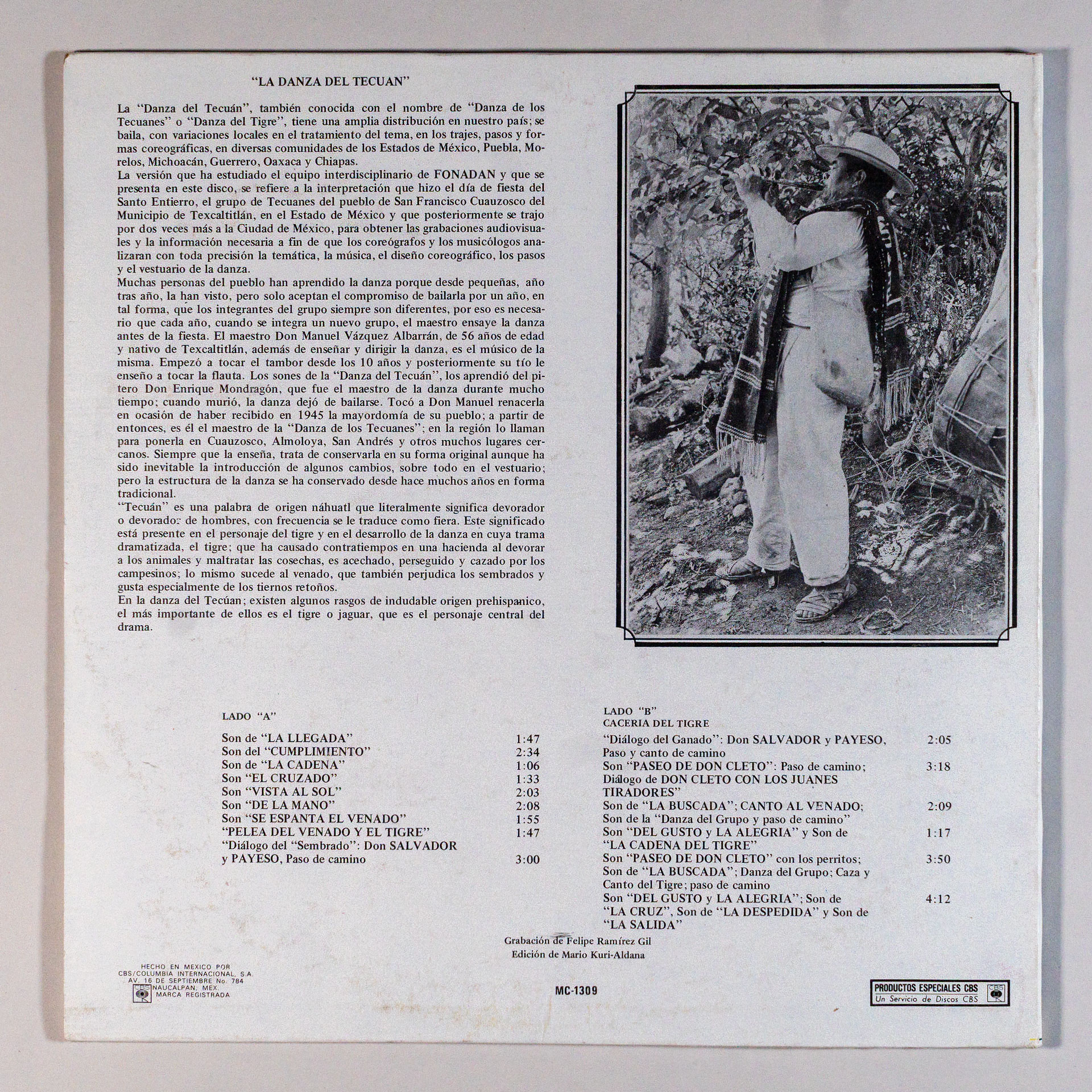
The “Dance of the Tecuán”, also known by the name of “Dance of the Tecuanes” or “Dance of the Tiger”, has a wide distribution in our country; It is danced, with local variations in the treatment of the theme, in costumes, steps and choreographic forms, in various communities in the States of Mexico, Puebla, Morelos, Michoacán, Guerrero, Oaxaca and Chiapas.
The version that has been studied by the interdisciplinary team of FONADAN and that is presented on this record refers to the interpretation made on the feast day of the Holy Burial, by the group of Tecuanes from the town of San Francisco Coaxusco in the Municipality of Texcaltitlán, in the State of Mexico and which was later brought twice more to Mexico City, to obtain the audiovisual recordings and the necessary information so that the choreographers and musicologists could accurately analyze the theme, music, design choreography, steps and costumes of the dance.
Many people from the town have learned the dance because since they were little, year after year, they have seen it, but they only accept the commitment to dance it for one year, in such a way that the members of the group are always different, that is why it is necessary that each year, when a new group is integrated, the teacher rehearses the dance before the party. The maestro Don Manuel Vázquez Albarrán, 56 years old and a native of Texcaltitlán, in addition to teaching and directing the dance, is its musician. He started playing the drum at the age of 10 and later his uncle taught him to play the flute. He learned the sounds of the “Danza del Tecuán” from the pitero Don Enrique Mondragón, who was the teacher of the dance for a long time; when he died, the dance stopped being danced. It fell to Don Manuel to reborn it on the occasion of having received in 1945 the stewardship of the town from him; from then on, he is the teacher of the “Dance of the Tecuanes”; in the region they call it to put it in Coaxusco, Almoloya, San Andrés and many other nearby places. Whenever he teaches it, he tries to keep it in its original form although it has been inevitable to introduce some changes, especially in the wardrobe; but the structure of the dance has been preserved for many years in traditional form.
“Tecuán” is a word of Nahuatl origin that literally means devourer or devoured: of men, it is often translated as beast. This meaning is present in the character of the tiger and in the development of the dance in whose dramatized plot, the tiger; that has caused mishaps on a farm by devouring the animals and mistreating the crops, is stalked, persecuted and hunted by the peasants: the same happens to the deer, which also damages the crops and especially likes the tender shoots.
In the dance of the Tecuan; there are some features of undoubtedly pre-Hispanic origin, the most important of which is the tiger or jaguar, which is the central character of the drama.
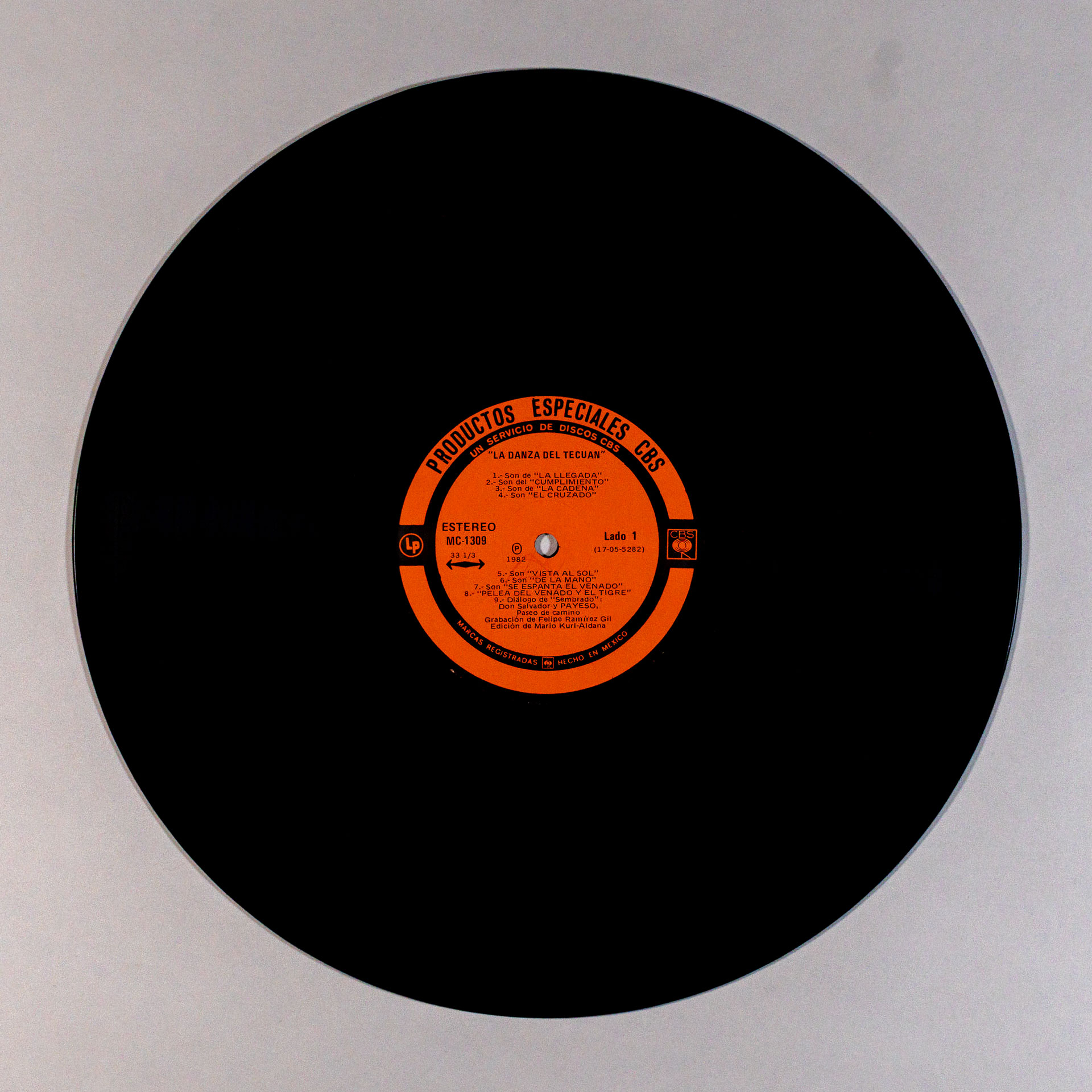
“A” SIDE
Sound of “THE ARRIVAL” 1:47
Sound of “COMPLIANCE” 2:34
Sound of “THE CHAIN” 1:06
Sound of “THE CRUSADER” 1:33
Sound of “SUN VIEW” 2:03
Sound of “HAND IN HAND” 2:08
Sound of “THE DEER IS SCARED” 1:55
“FIGHT OF THE DEER AND THE TIGER” 1:47
“Dialogue of the “Sown”: Don SALVADOR and PAYESO, Way step 3:00
“B” SIDE
TIGER HUNT
“Cattle Dialogue”: Mr. SALVADOR and CLOWN, Step and road song 2:05
Sound of “DON CLETO WALK”: Way step; DON CLETO’S DIALOGUE WITH THE JUANES TIDADORES” 3:18
Sound of “THE SEARCHED”; I SONG TO THE DEER; Sound of the “Group Dance and Road Step” 2:09
Sound of “OF TASTE AND JOY” and Sound of “THE TIGER CHAIN” 1:17
Sound of “DON CLETO WALK” with the puppies; Sound of “THE SEARCHED”; Group Dance; Hunting and Song of the Tiger; road step 3:50
Sound of “OF TASTE AND JOY”; Sound of “THE CROSS”, Sound of “THE FAREWELL” and Sound of “THE EXIT” 4:12
Recording by Felipe Ramírez Gil
Editing by Mario Kuri-Aldana
MC-1309
MADE IN MEXICO BY CBS/COLUMBIA INTERNACIONAL, S. A.
AV. 16 DE SEPTIEMBRE No. 784
NAUCALPAN, MEX.
CBS TRADEMARK
CBS SPECIAL PRODUCTS
A CBS Record Service
Gallery:


Tracklist:
THE DANCE OF THE TECUAN
SIDE 1
- A1 Sound Of “The Arrival” 1:47
Performer(s): Group from the neighborhood of San Francisco Coaxusco - A2 Sound Of “Compliance” 2:34
Performer(s): Group from the neighborhood of San Francisco Coaxusco - A3 Sound Of “The Chain” 1:06
Performer(s): Group from the neighborhood of San Francisco Coaxusco - A4 Sound Of “The Crusader” 1:33
Performer(s): Group from the neighborhood of San Francisco Coaxusco - A5 Sound Of “Sun View” 2:03
Performer(s): Group from the neighborhood of San Francisco Coaxusco - A6 Sound Of “Hand In Hand” 2:08
Performer(s): Group from the neighborhood of San Francisco Coaxusco - A7 Sound Of “The Deer Is Scared” 1:55
Performer(s): Group from the neighborhood of San Francisco Coaxusco - A8 “Fight Of The Deer And The Tiger” 1:47
Performer(s): Group from the neighborhood of San Francisco Coaxusco - A9 “Dialogue Of The “Sown”: Don Salvador And Payeso, Way Step 3:00
Performer(s): Group from the neighborhood of San Francisco Coaxusco
SIDE 2 TIGER HUNT
- B1 “Cattle Dialogue”: Mr. SALVADOR and CLOWN, Step and road song 2:05
Intérprete(s): Grupo del barrio de San Francisco Coaxusco
- B2 Sound of “DON CLETO WALK”: Way step; DON CLETO’S DIALOGUE WITH THE JUANES TIDADORES” 3:18
Intérprete(s): Grupo del barrio de San Francisco Coaxusco
- B3 Sound of “THE SEARCHED”; I SONG TO THE DEER; Sound of the “Group Dance and Road Step” 2:09
Intérprete(s): Grupo del barrio de San Francisco Coaxusco
- B4 Sound of “OF TASTE AND JOY” and Sound of “THE TIGER CHAIN” 1:17
Intérprete(s): Grupo del barrio de San Francisco Coaxusco
- B5 Sound of “DON CLETO WALK” with the puppies; Sound of “THE SEARCHED”; Group Dance; Hunting and Song of the Tiger; road step 3:50
Intérprete(s): Grupo del barrio de San Francisco Coaxusco
- B6 Sound of “OF TASTE AND JOY”; Sound of “THE CROSS”, Sound of “THE FAREWELL” and Sound of “THE EXIT” 4:12
Intérprete(s): Grupo del barrio de San Francisco Coaxusco
Credits:
ETHNOMUSICOLOGY: Mario Kuri-Aldana, coordinator; Felipe Ramirez Gil.
CHOREOGRAPHY: Luis Felipe Obregón, coordinator; Evelia Beristain.
DISSEMINATION: Xóchitl Medina, coordinator.
AUDIOVISUAL DEPARTMENT: Rodolfo Velazco R, Coordinator; Alejandro Loranca, Photographer; Rubén Prado, Audio Technician; Sergio Abel Severiano, Cartoonist.
GENERAL MANAGEMENT: Josefina Lavalle.